Best Temperature for Sleeping
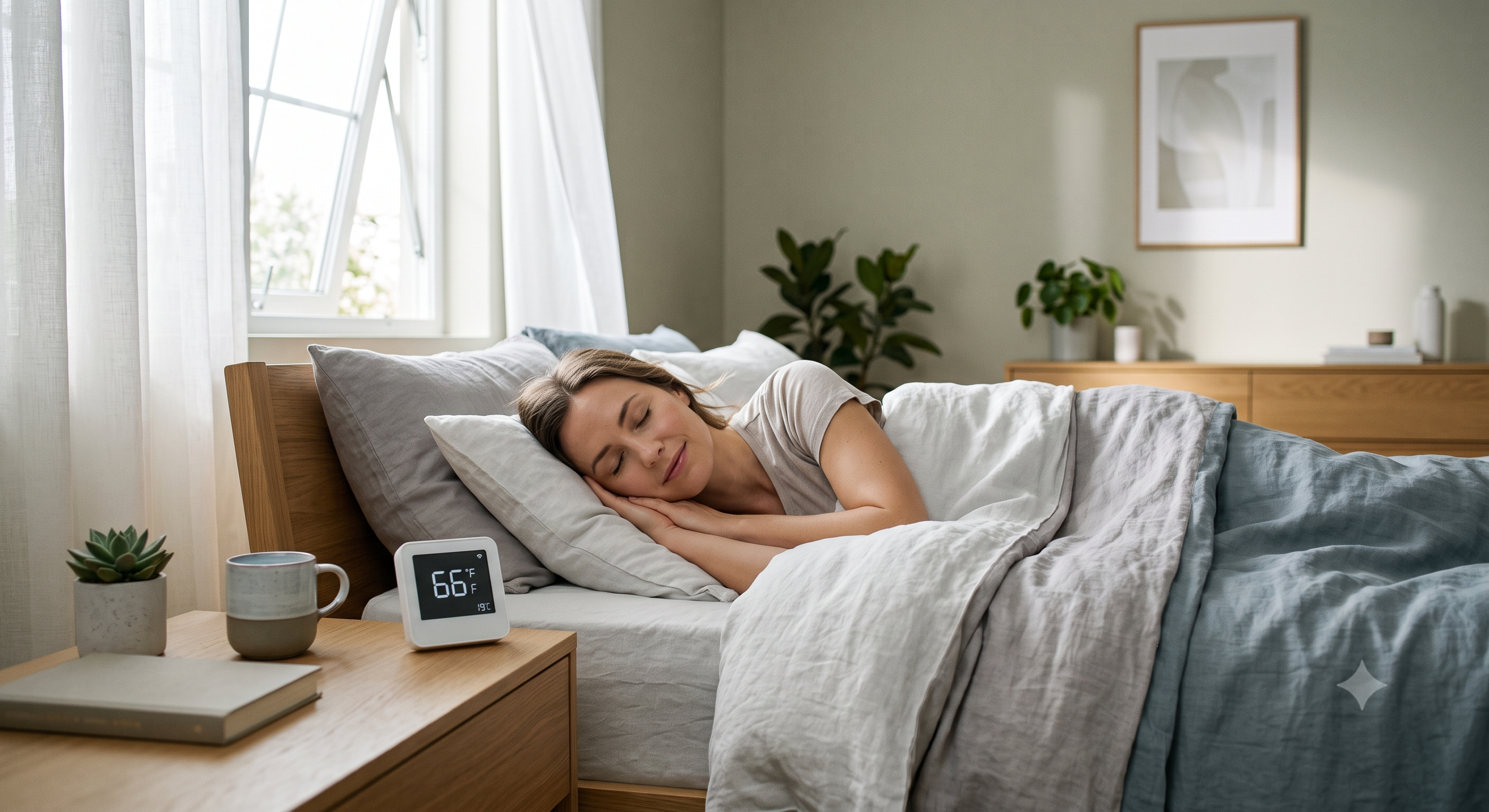
The best temperature for sleeping is about 65°F (18.3°C), with a comfortable range of 65-68°F. A cooler bedroom supports the body's natural nighttime cooling, while humidity should stay balanced, not too dry and not too muggy, for the most comfortable night's sleep.
Anyone searching for the best temperature for sleeping usually gets a wide range of guesses. The evidence-based answer is narrower than most people expect: a bedroom set to 65°F (18.3°C), within a broader comfortable range of 65-68°F (about 15.6-20°C), is the setting most consistently recommended for good sleep. That range shows up whether the question is phrased as the perfect sleeping temperature, the ideal sleep temperature, the best room temperature, or simply what temperature to sleep in.
The best temperature for sleep sits at roughly 65°F (18.3°C), with 65-68°F treated as the acceptable comfort band for most adults. This is the figure cited by sleep researchers as the target for a bedroom thermostat, and it applies broadly rather than being a niche recommendation for one type of sleeper.
When people ask about the perfect sleeping temperature, they are really asking for a single number to set the thermostat to. That number is around 65°F (18.3°C). It is "perfect" in the sense that it sits at the cool end of comfortable, cool enough to avoid overheating through the night without dropping so low that the cold itself becomes disruptive.
The ideal sleep temperature is best understood as a range rather than one fixed number: 65-68°F (roughly 18-20°C). Staying inside that range gives some room for personal preference, bedding thickness, and sleepwear, while still keeping the bedroom on the cool side that sleep researchers recommend.
The best room temperature for sleeping is the same 65-68°F range, applied to the whole bedroom environment rather than just body temperature. A consistent thermostat setting in that window, combined with good airflow and breathable bedding, keeps the room from swinging warm during the night. If a partner's snoring or outside noise also disrupts sleep, pairing a cool room with a sound machine for sleep addresses two common bedroom disruptions at once.
Simple habits that help hold a bedroom in the ideal range include closing blinds during the day to block heat buildup, running a fan for airflow rather than relying on temperature alone, and avoiding heavy blankets or heaters that push the room warmer than 68°F.
Temperature is only part of a comfortable bedroom; humidity matters too. There is no single number that applies to everyone, but the general goal is a moderate, balanced humidity level, neither too dry nor too damp. Air that is too dry can leave the nose, throat, and skin feeling irritated overnight, while air that is too humid feels sticky, makes a warm room feel even hotter, and can be harder to cool efficiently.
Keeping humidity balanced alongside a 65-68°F room temperature is the practical target: a bedroom that feels neither parched nor muggy is doing its job. A humidifier, dehumidifier, or simple ventilation can be used depending on which direction a bedroom tends to drift.
Pulling it together: the best temperature to sleep in is 65-68°F (18.3-20°C), with 65°F as the most commonly cited single target. This applies whether the question is about a bedroom thermostat, a nursery, or a guest room, though individual comfort and health needs can shift the exact number a degree or two in either direction.
For a baby's room specifically, the same general guidance toward a cool, comfortable environment applies rather than a warm nursery, but parents should confirm current safe-sleep and room-temperature guidance with their pediatrician alongside broader routine questions, such as those covered in a baby sleep schedule guide, since infant recommendations can differ from adult ones. Parents assembling a nursery may also find it useful to review baby sleep gear and common baby sleep problems, and some families use baby sleep music alongside a cool, quiet room.
Adjusting bedroom temperature and humidity solves most comfort-related sleep complaints, but see a doctor if:
For infants, discuss any persistent sleep or breathing concerns with a pediatrician rather than relying on temperature adjustments alone.