Baby Sleepers & Bassinets (Buying Guide)
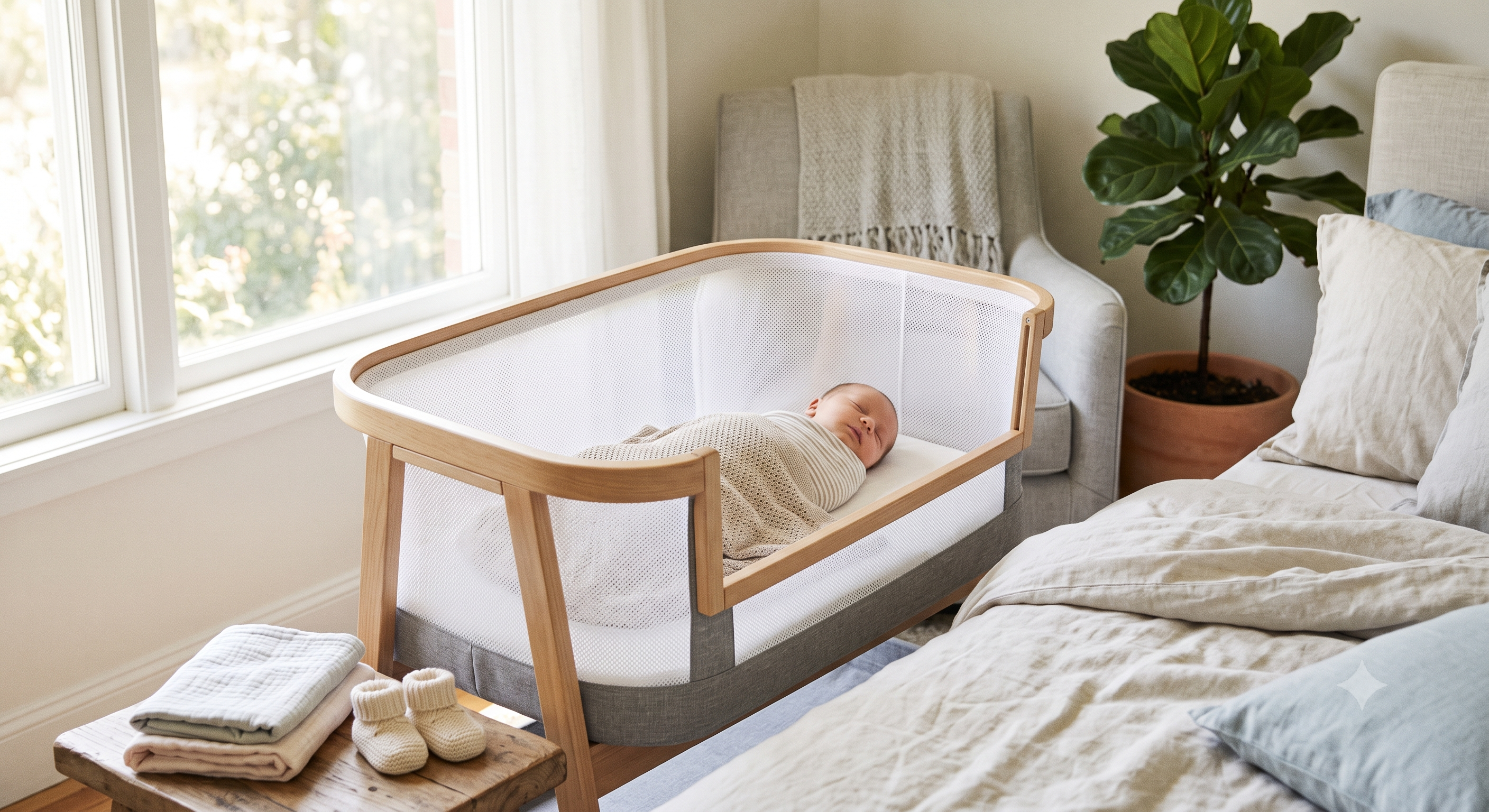
Every baby sleeper — Halo, Snoo, bedside, pod, or Rock 'n Play style — should still meet the same safe sleep basics: back sleeping, a firm flat surface, and no loose bedding. Room-sharing with a separate bassinet can lower SIDS risk by up to 50%, so choose the style that fits your room and routine, not just the features.
Shopping for a bassinet or baby sleeper can feel like comparing five completely different products, when really every option should pass the same test first: the Back, Firm, Share framework. Babies should always sleep on their back, on a firm, flat surface with nothing loose in it, and ideally in the parents' room (room-sharing, not bed-sharing) for at least the first months. Any bassinet, sleeper, or pod is worth buying only if it lets you do all three comfortably, night after night.
That framework matters because the CDC reports that placing a baby on a soft surface, on their stomach or side, or on a sofa or other sitting-style furniture raises SIDS risk, while keeping the baby's own sleep surface in the parents' room — not in the parents' bed — can lower that risk by up to 50%. Below, each popular category of baby sleeper is compared against that same standard, in order of how often people search for it, so you can see where the trade-offs really are. For the newborn stretch that goes with any of these products, our baby sleep schedule guide and baby sleep problems guide cover the routine side of things.
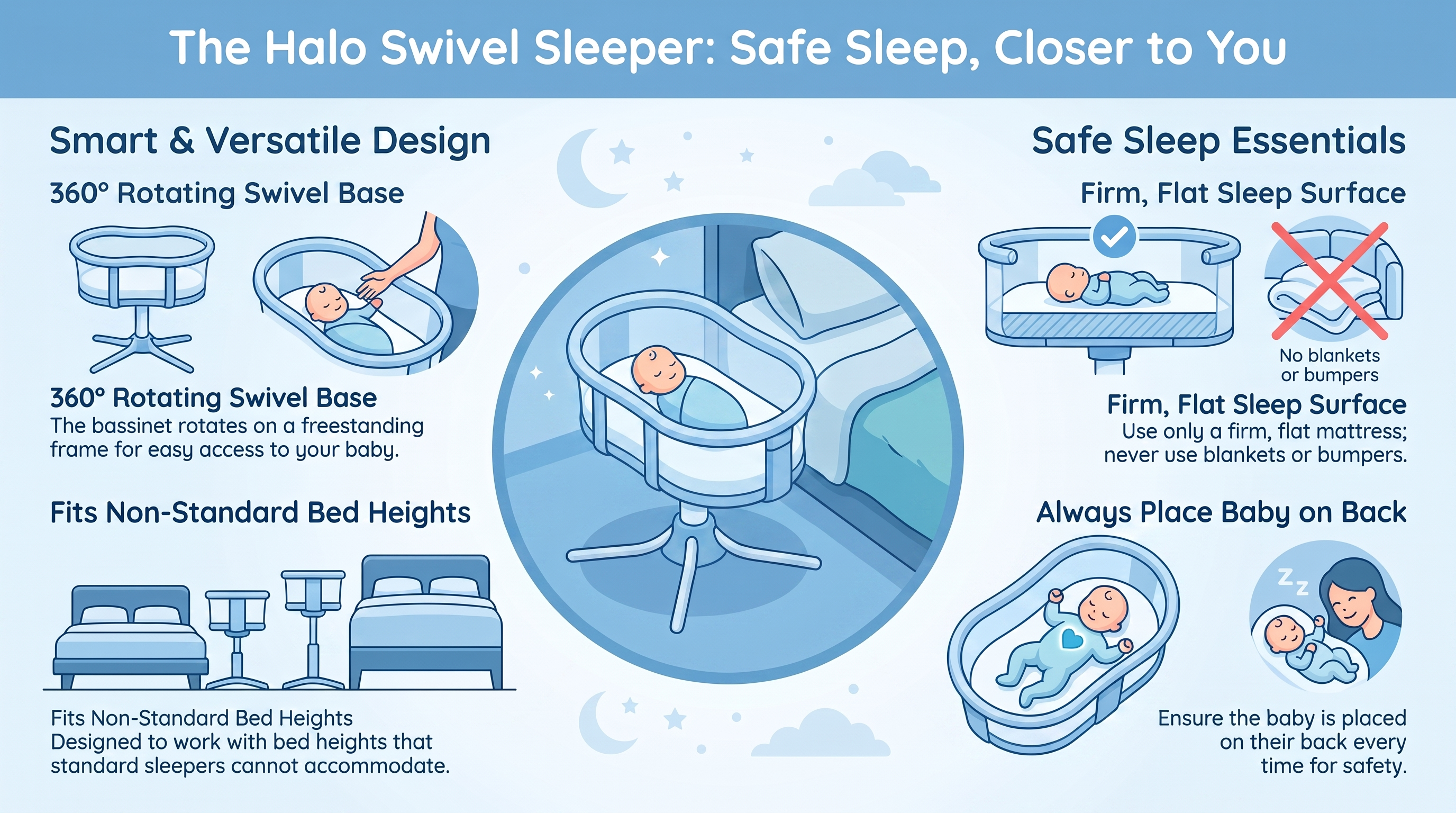
The Halo-style bassinet is a freestanding sleeper built around a rotating base, so it can swivel to sit right beside the parents' bed for easy nighttime reach and then turn back into the room during the day. Because it stands on its own frame rather than attaching to the bed, it works in rooms where the mattress height or bed frame would make a true bedside sleeper awkward to fit.
As with any bassinet, the swivel feature is a convenience layer on top of the basics that actually matter for safety: a firm, flat mattress pad, no loose blankets or bumpers, and the baby placed on their back every time. If the goal is room-sharing, positioning the swiveled bassinet close to the bed supports the same practice the CDC associates with lower SIDS risk.
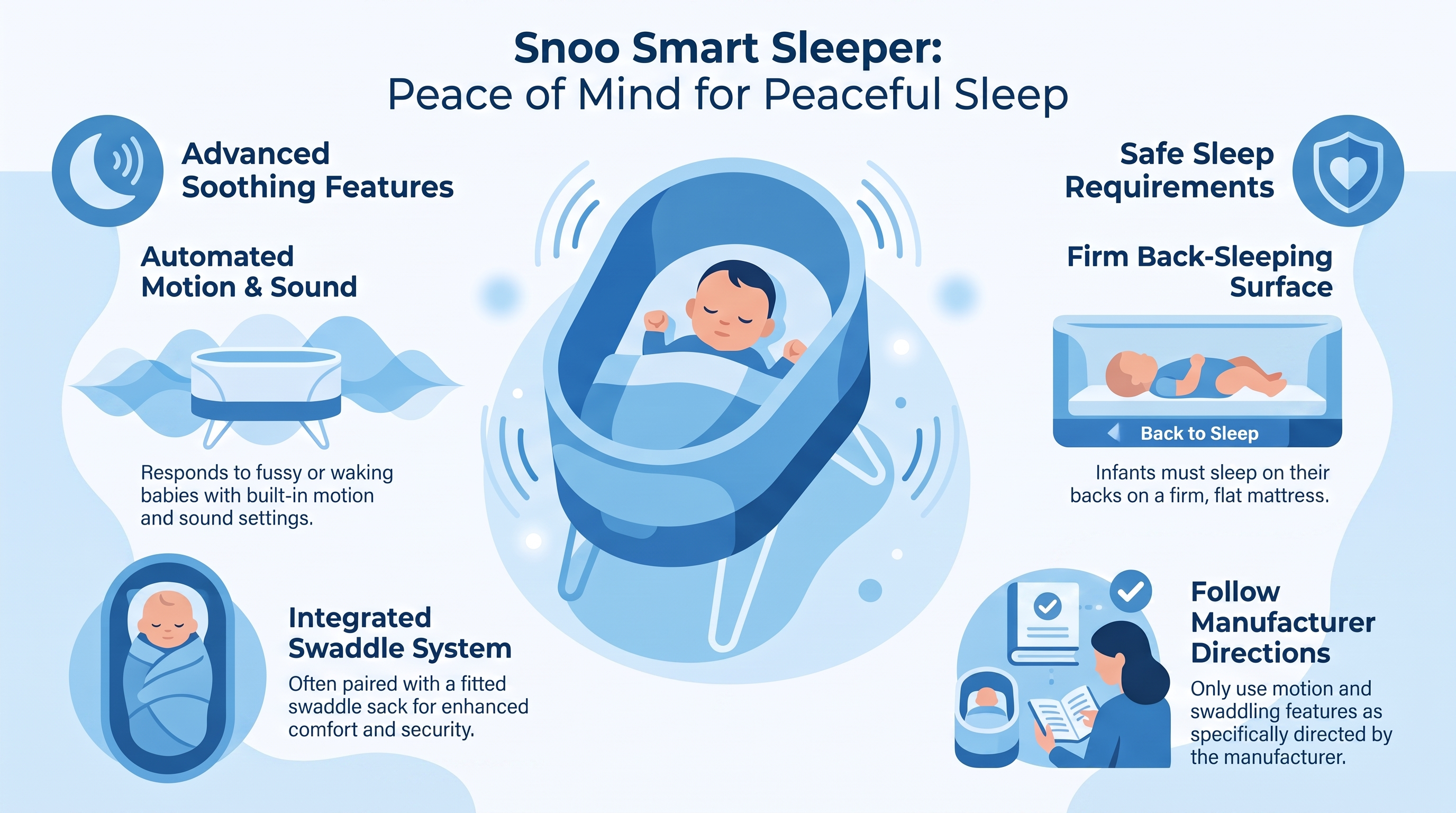
The Snoo-style bassinet is a freestanding sleeper marketed around built-in motion and sound features designed to help soothe a fussy or waking baby back to sleep, often paired with a fitted swaddle sack. It appeals to parents dealing with frequent night waking, since the appeal is largely about the soothing layer rather than the sleep surface itself.
The safe sleep basics still apply underneath the technology: back sleeping on the bassinet's firm, flat mattress, with the swaddle and any motion settings used only as directed by the manufacturer. Parents troubleshooting frequent wake-ups alongside a Snoo-style bassinet may also find our baby sleep problems guide and noise machine comparisons useful, since white noise is a common companion to motion-based soothing.
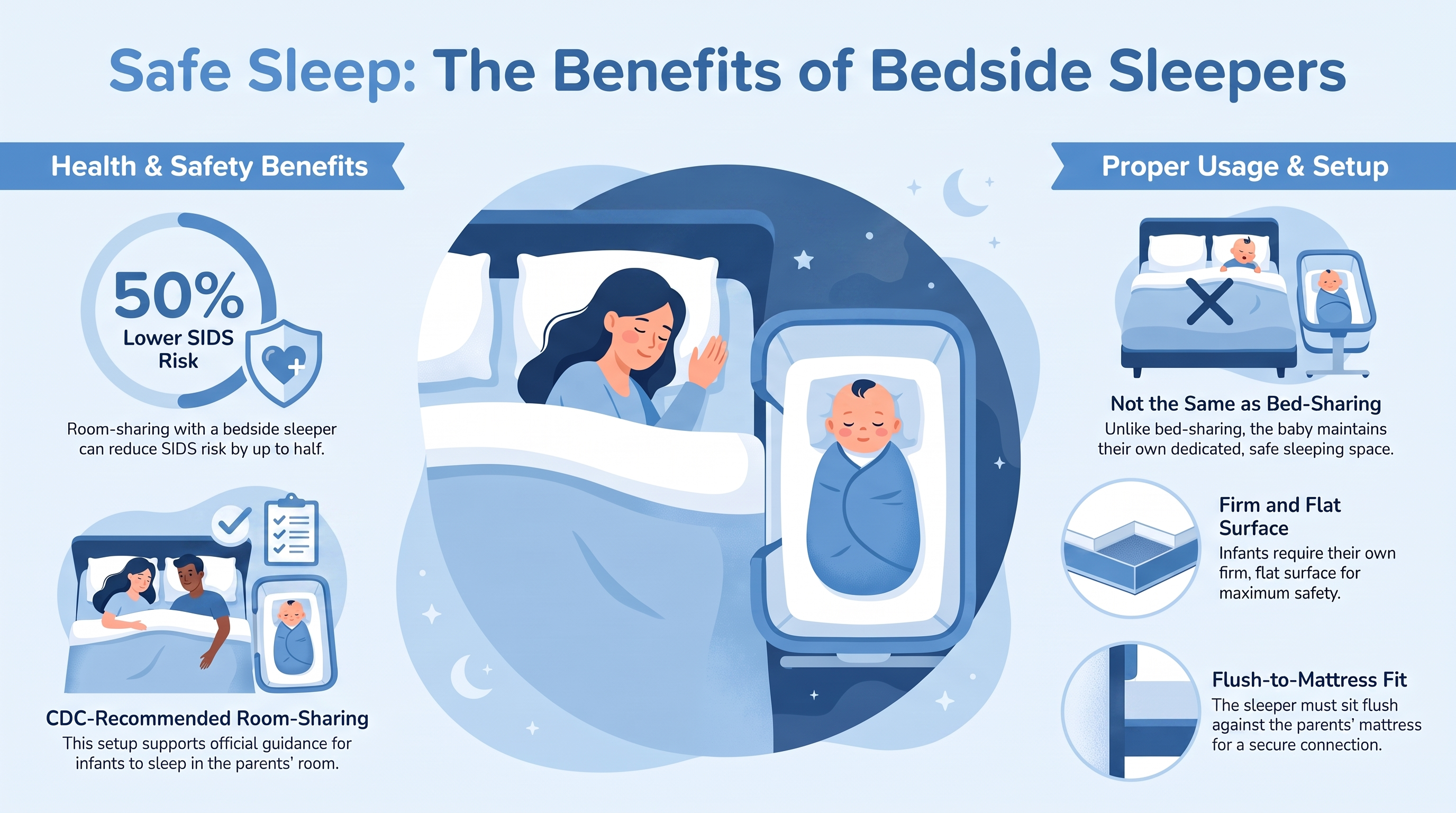
A bedside sleeper bassinet is built to sit flush against the parents' mattress, usually at the same height, so the baby has an arm's-reach spot to sleep in without being in the parents' bed itself. This style is popular specifically because it supports room-sharing: the CDC notes that keeping a baby's crib or bassinet in the parents' room, on its own separate surface, can lower the risk of SIDS by up to 50% compared with a baby sleeping in a separate room.
Because it sits directly against the adult bed, a bedside sleeper is not the same as bed-sharing — the baby still needs their own firm, flat surface rather than the parents' mattress and bedding. Families weighing a bedside sleeper against sharing a bed outright should see our co-sleeping guide for how the two are different.
An Arm's Reach style co-sleeper bassinet is one specific take on the bedside category: a bassinet frame designed to attach or sit snugly against the side of the parents' bed, with a drop-down side panel for reaching the baby without getting up. It follows the same rule as any other bedside sleeper — the baby sleeps on its own firm, flat surface, in the parents' room, not on the adult mattress.
A baby sleep pod or nest is a soft-sided, portable sleeper often marketed for lounging, tummy time, or supervised naps around the house rather than as a full-time overnight bassinet. Because the CDC's safe sleep guidance calls for a firm, flat surface and advises against soft or cushioned sleep surfaces for infants, a pod with padded or contoured sides is generally better treated as a supervised daytime item than an unsupervised overnight sleep space.
If you like the portability of a pod for travel or visiting family, pairing it with a consistent wind-down routine can help — see our baby sleep music guide for ideas on soothing sounds that travel well alongside a pod.
Fisher-Price and similar newborn sleeper products span several of the categories above, from bassinet-style sleepers to soft rocker and pod designs. Whichever specific model you're considering, check the product's own instructions for the intended sleep surface and weight range, and apply the same firm-flat-back standard before using it for actual sleep rather than supervised awake time.
The Rock 'n Play style sleeper is an inclined, rocking sleeper — the baby lies at an angle rather than fully flat, and the seat can gently rock. That design moves away from the flat sleep surface that CDC and AAP safe sleep guidance describes, which is why many pediatric sources now caution against unsupervised sleep in inclined or rocking sleepers. Before using any inclined sleeper, check the manufacturer's current instructions and any published safety notices, and talk with your pediatrician if you already have one.
A baby rocker sleeper is the broader category the Rock 'n Play sits within — any seat-style sleeper that reclines or rocks rather than lying the baby fully flat. The same caution applies: these are best treated as supervised, awake-time seats rather than an overnight sleep surface, in keeping with the back-sleeping, firm-flat-surface standard from CDC guidance.
Talk with your pediatrician before or after choosing a sleeper if any of the following apply, per AAP safe sleep guidance:
Your pediatrician's office is also the right place to confirm current recommendations, since safe sleep guidance and individual product safety notices can be updated over time.