Best White Noise & Sound Machines for Sleep
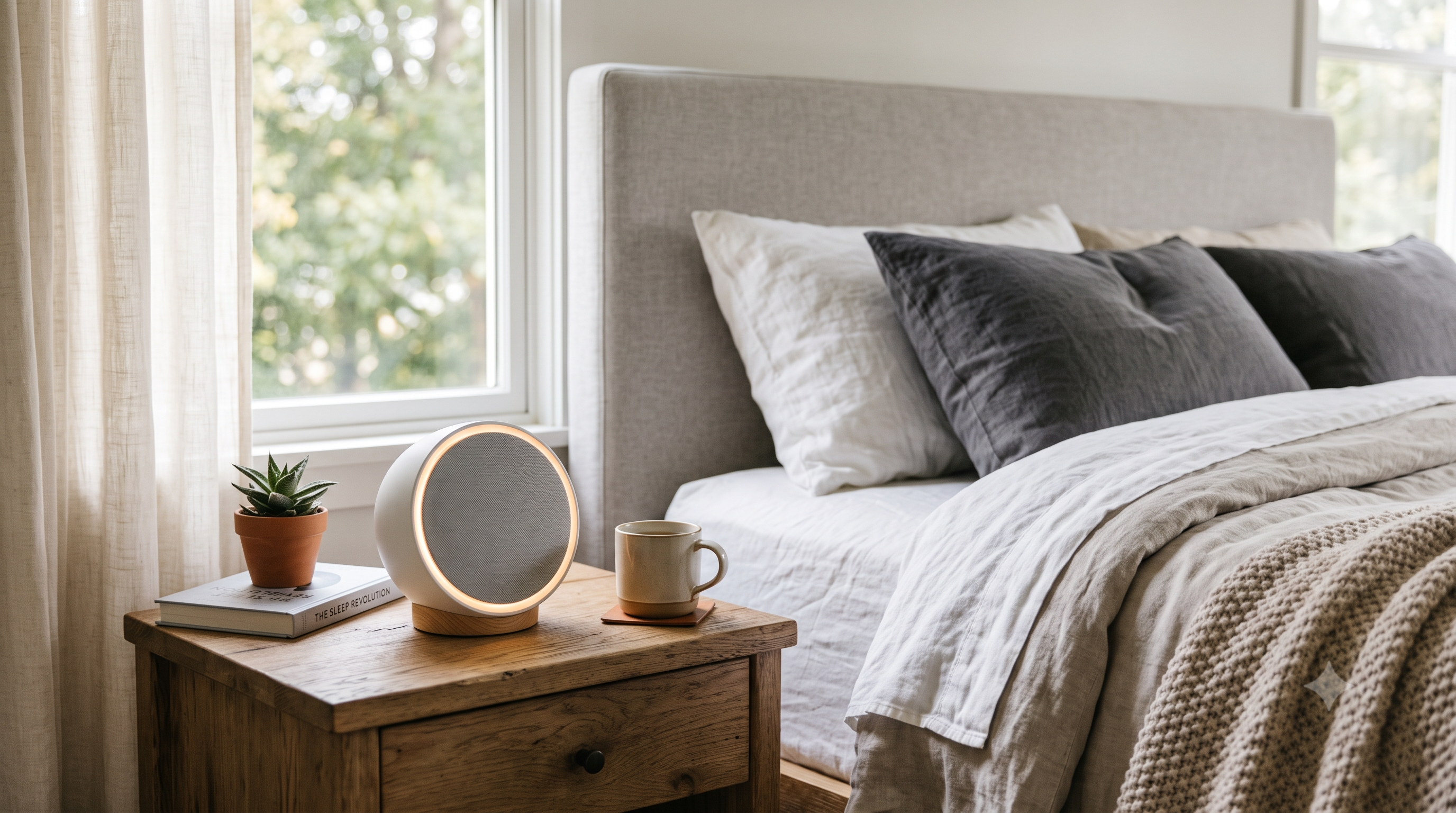
White and brown noise machines work by masking disruptive sounds, which reduces the chance of waking up but hasn't been shown to improve sleep itself. Pink noise, especially when timed to your own brain wave rhythms, has small, preliminary studies linking it to more deep sleep and better memory the next day.
Choosing the best white noise machine for sleeping comes down to one distinction most buying guides skip: the Mask-or-Enhance test. A machine either masks disruptive sound so it doesn't wake you, or it aims to actively enhance your sleep architecture. White noise, brown noise, and most sound machines fall firmly into the mask camp. Pink noise is the only color with early evidence pointing toward the enhance camp. Knowing which job you actually need solves most of the confusion around white noise machine for sleep shopping, and it's worth reading alongside a broader look at colored noise for sleep if you want the full breakdown of every noise color.
A white noise machine reproduces an even mix of every audible frequency at once, similar to the steady hum of a fan or an untuned radio. That flat, broadband sound is effective at covering up sudden noises, a car passing outside, a door closing down the hall, a partner's breathing, so they don't register loudly enough to interrupt you. This masking effect is the entire reason white noise machines are popular: they reduce disturbance from your surroundings rather than changing anything about your own sleep physiology.
What a white noise machine does not do is make your sleep measurably better on its own. It has not been shown to improve sleep the way it improves your tolerance of a noisy environment. If your bedroom is already quiet, a white noise machine may add little value; if street noise, a snoring partner, or a shared wall is your main problem, masking is exactly the tool you need.
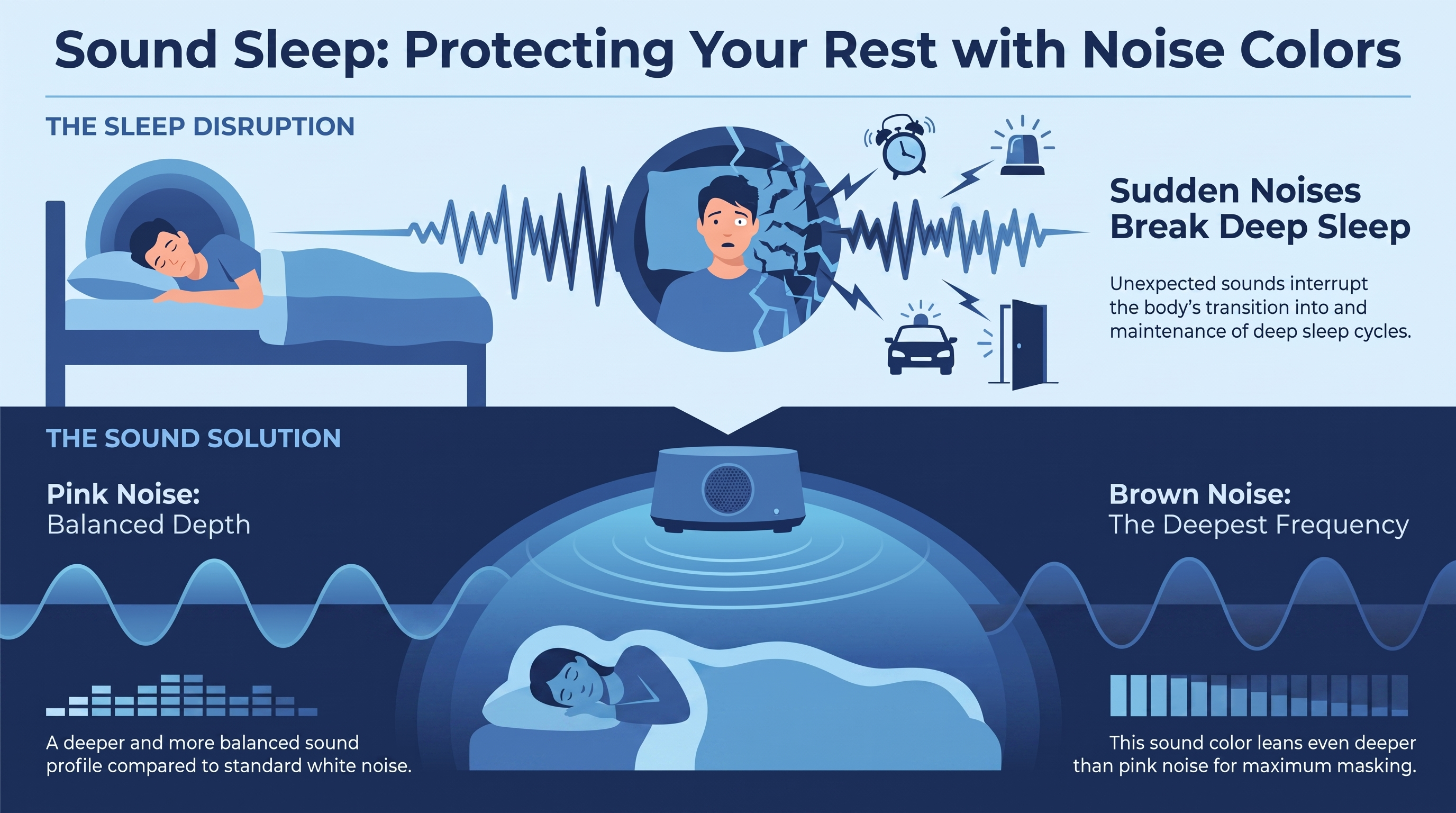
Most noise machines for sleeping are built around a handful of noise "colors," each with a different balance of frequencies. White noise sits in the middle, pink noise leans deeper and more balanced, and brown noise leans deeper still. Some machines also offer nature sounds like rain or waves, which are variations on the same masking principle rather than a separate category. For a full side-by-side of brown, pink, and green noise, see colored noise for sleep.
When picking between them, think about what you're trying to mask. A thin apartment wall with sudden voices calls for a fuller-spectrum sound like white noise. A partner's steady snoring or traffic rumble is often better covered by the lower, heavier tone of brown noise. If you're specifically chasing the deep-sleep angle, pink noise is the one with early supporting research, covered in more detail below.
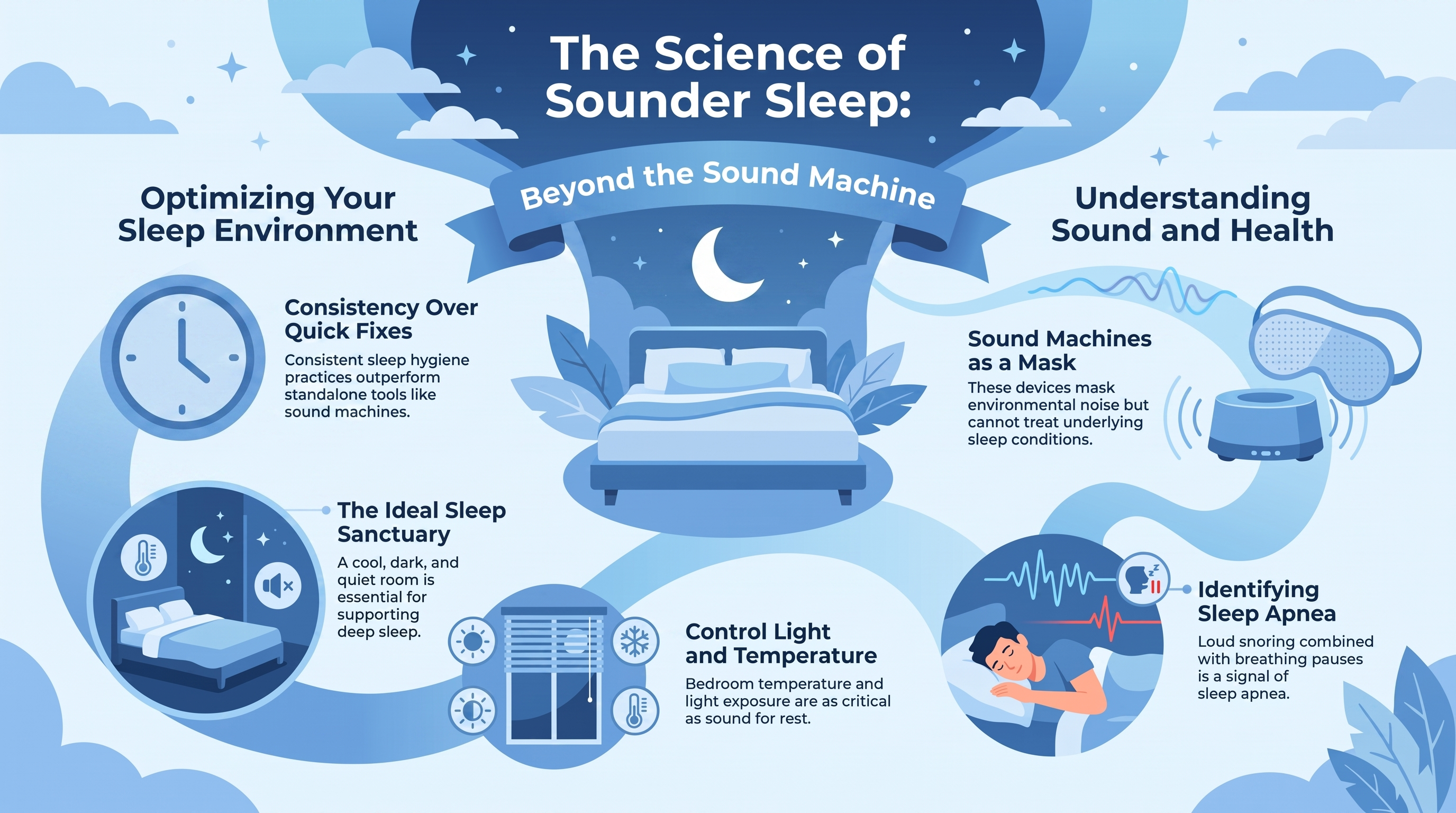
A sound machine is one piece of a broader sleep environment, alongside factors like room temperature and light exposure. It works best as part of consistent sleep hygiene rather than as a standalone fix. Pairing a sound machine with a cool, dark, quiet room supports the conditions your body needs to move through lighter sleep into deep sleep each night.
It's also worth being clear about what a sound machine can't fix. If snoring is loud, includes pauses in breathing, or is paired with daytime exhaustion, that pattern can point to sleep apnea rather than ordinary noise sensitivity. A sound machine will mask the sound for a bed partner, but it does nothing for the underlying condition; see CPAP machines and sleep apnea for what actually treats it.
A brown noise sleep machine emphasizes the lowest frequencies even more heavily than pink noise, producing a deep, rumbling sound often compared to a waterfall, distant thunder, or a low-flying plane. Many people find this heavier tone more soothing to fall asleep to than the thinner hiss of classic white noise, though that's a matter of personal preference rather than a documented sleep benefit. There isn't strong published evidence that brown noise improves sleep quality beyond the same masking effect that any noise color provides.
If you've tried a white noise machine and found it too sharp or "hissy," a brown noise machine is a reasonable next option to test, since it covers the same disruptive sounds with a softer-feeling tone.
There's no single best white noise machine for sleeping for everyone, because the right choice depends on what's disrupting your sleep in the first place. The practical way to shop is to match the noise color to your specific problem using the Mask-or-Enhance test from above: pick white or brown noise if your goal is purely masking a noisy environment, and consider pink noise if you want the option with the most (still preliminary) evidence toward improving deep sleep itself.
Beyond noise color, a few practical features matter more than brand: a timer or continuous-play option so the sound doesn't cut out mid-night, volume control fine enough to keep the sound below disruptive levels, and, if it will sit in a nursery, placement well away from the crib. If your interest in a sound machine started with a baby's bedroom, review it alongside baby sleep music for the fuller picture of sound-based sleep aids for infants.
A pink noise machine is the one noise-color option with research pointing toward more than masking. Pink noise reduces the volume of higher frequencies relative to lower ones, giving it a fuller, steadier character than white noise, often described as sounding like rainfall or wind. Sound delivered in sync with a sleeper's own brain wave rhythms has been linked, in small studies, to increased slow-wave deep sleep and improved next-day memory. These findings are described as preliminary, and pink noise has not been shown to be a guaranteed fix for poor sleep, but it's the strongest evidence-based reason to choose one noise color over another.
A noise machine is a comfort and masking tool, not a treatment. Talk to a doctor rather than relying on a sound machine if: