Weighted Blankets and Sleep

A weighted blanket supports sleep best as one part of a comfortable sleep environment: a bedroom kept around 65–68°F, calm and muted colors, and a few well-placed plants. None of these replace medical care if insomnia or another sleep problem persists.
A weighted blanket is usually marketed on its own, but it does not work in isolation — it sits inside the same bedroom as your wall color, your lighting, your plants, and your thermostat, and all of those factors interact. This article uses a simple Environment Reset framework to place a weighted blanket in context: three layers you can check in order — Temperature, Color, and Air & Greenery — before assuming the blanket itself is doing all the work.
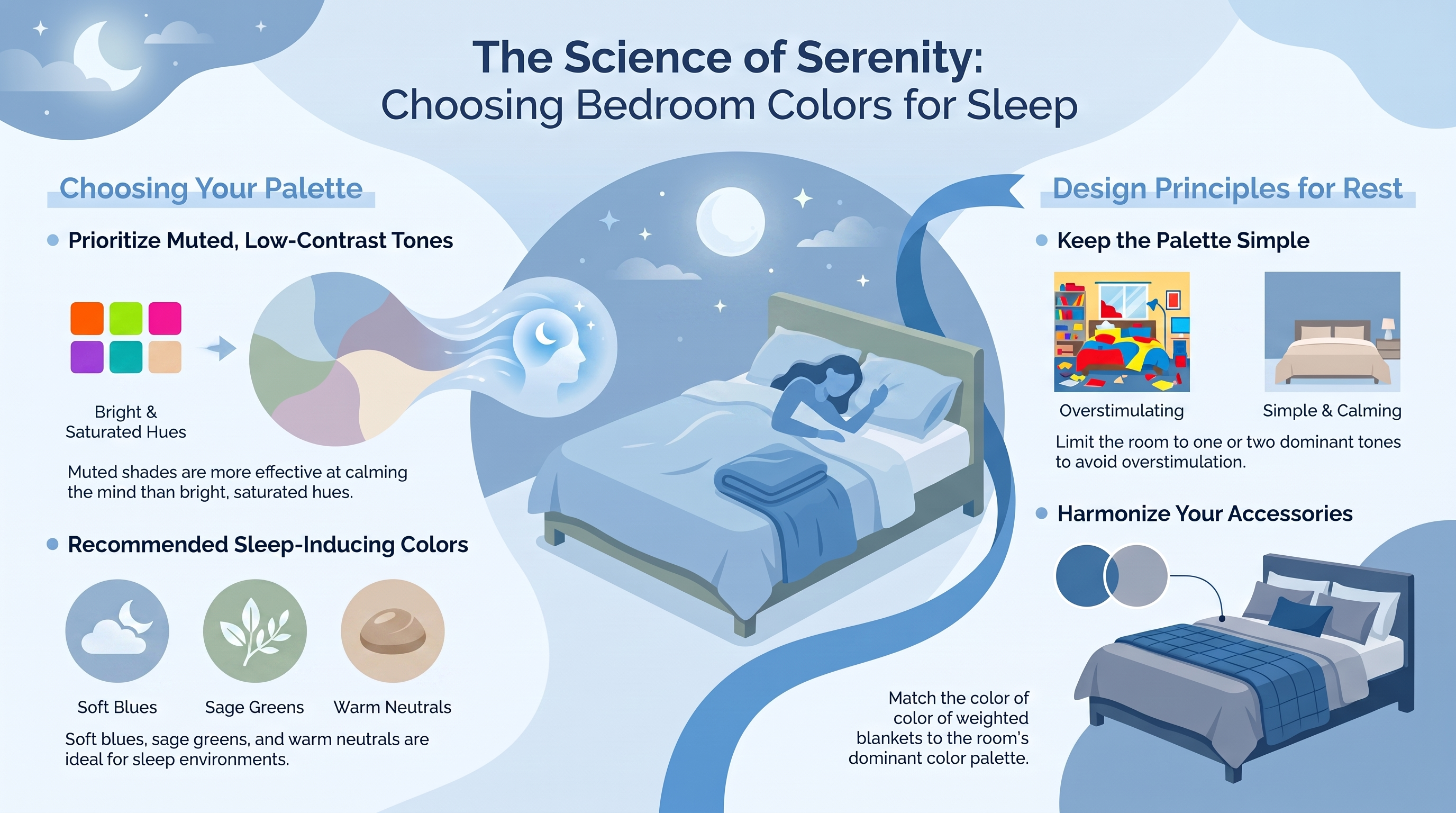
There is no single scientifically proven "best" color for sleep, so treat color choice as a matter of reducing visual stimulation rather than chasing an exact shade. In general, cooler and more muted tones read as calmer than bright, saturated, or high-contrast ones, which is why they show up repeatedly in bedroom design guidance aimed at rest rather than energy or focus.
If you are picking a single color for a bedroom built around sleep, look for something desaturated and low-contrast rather than a specific hue. Soft blues, sage or muted greens, warm neutrals, and gentle grays are common choices because they tend to feel restful rather than stimulating. What matters more than the exact color name is keeping the palette simple: one or two dominant tones, limited clutter, and warm, dim lighting in the evening so the room reads as a place to wind down rather than a space that keeps your attention active.
A weighted blanket fits naturally into this kind of room. Because it is meant to be a calming, tactile layer rather than a visual focal point, a neutral or muted blanket color that matches the rest of the palette avoids adding visual stimulation right where you are trying to relax.
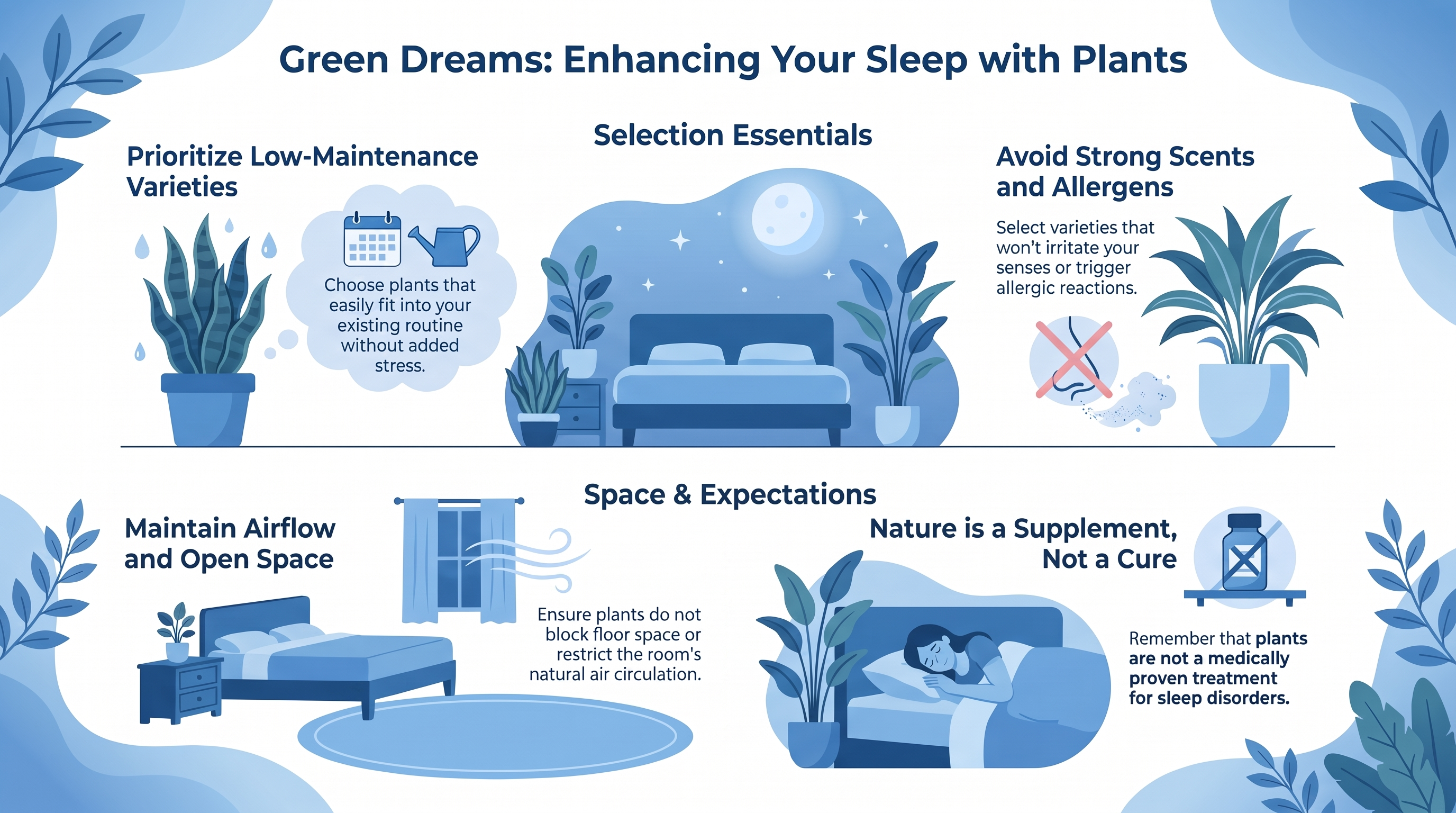
Bedroom plants are a popular way to make a sleep space feel calmer and more natural, and they are often recommended alongside color and lighting changes as part of a general "wind-down" bedroom setup. That said, plants are not a medically proven treatment for sleep problems — think of them as a supporting detail rather than a solution, similar to how a weighted blanket supports rather than replaces good sleep habits.
If you want to add a few plants to a sleeping room, keep the basics in mind: choose low-maintenance varieties that will not need frequent care that disrupts your routine, avoid anything with a strong scent or known allergen if you are sensitive, and leave enough open floor and airflow space that the room does not feel cluttered. A crowded, busy-looking bedroom works against the same calm, low-stimulation environment that muted colors are meant to create.
Color and plants are both part of a larger idea: building a bedroom that supports sleep rather than working against it. Temperature is the piece with the clearest evidence behind it — sleep experts point to roughly 65–68°F (about 18–20°C) as the range most people sleep best in. A weighted blanket adds insulating warmth on top of whatever the room itself is doing, so if you use one, it helps to keep the room on the cooler side of that range and pair it with breathable sheets underneath so you do not overheat.
Light also plays a role beyond just color. Bright artificial light in the evening, including light-emitting screens, can interfere with the body's natural wind-down signals, so dimming lights and reducing screen brightness before bed complements a muted color scheme rather than working against it. Between a stable, cooler temperature, a calm color palette, minimal clutter, and a few plants if you like them, a weighted blanket becomes one comfortable layer in a room that is already set up to support sleep, rather than something asked to compensate for a room that is not.
Other everyday habits affect this same environment — for example, evening alcohol use can work against the same restfulness a comfortable bedroom is meant to support; see alcohol and sleep for more on that connection.
A weighted blanket, bedroom color, or bedroom plants are comfort measures, not treatments for a sleep disorder. Talk to a doctor if any of the following apply, regardless of how comfortable your bedroom setup is:
This article is informational and does not replace medical advice or a sleep evaluation from a qualified clinician.