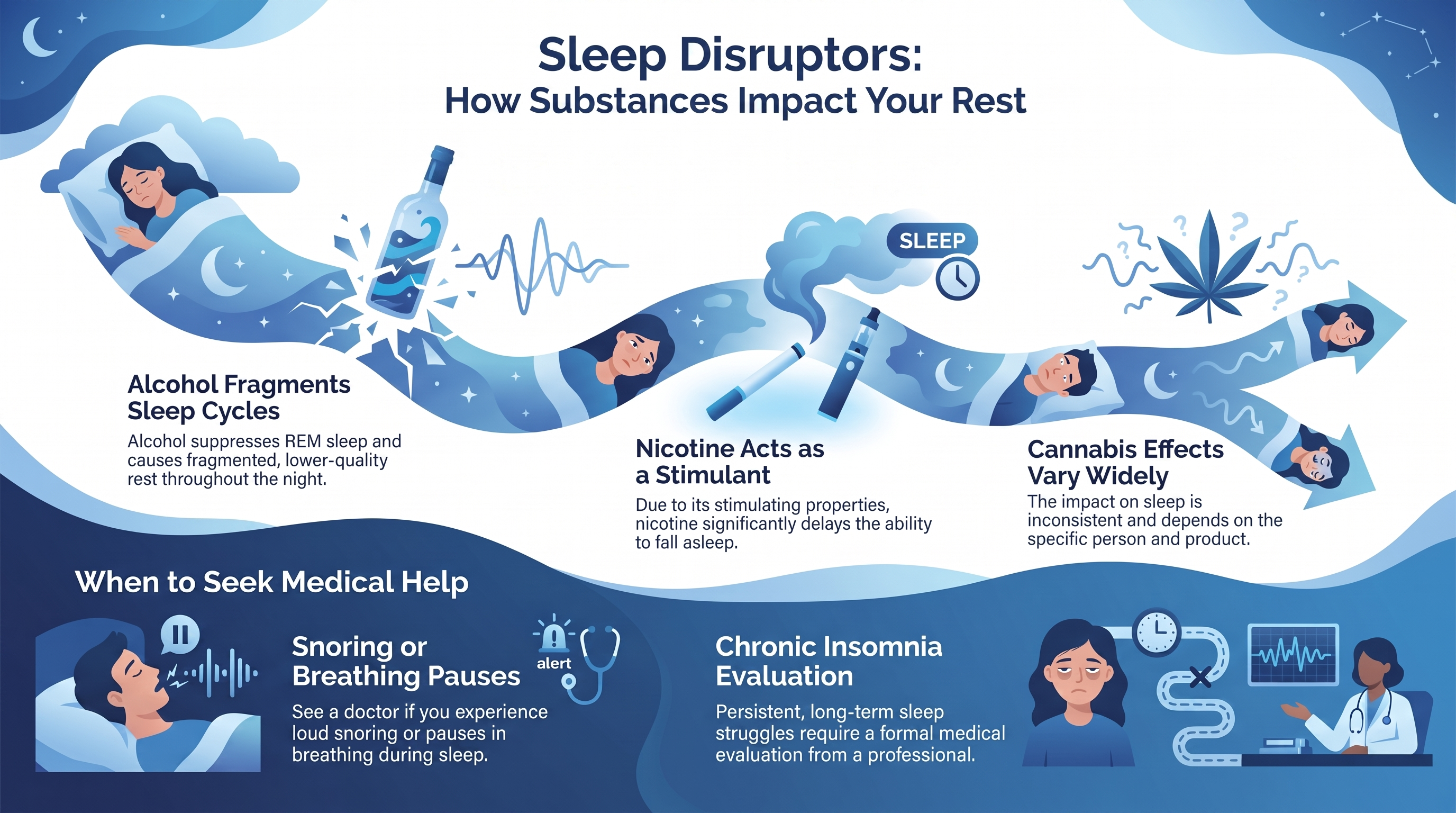
Alcohol, nicotine, and cannabis all change sleep, but not the way people expect. Alcohol sedates at first, then suppresses REM sleep and fragments the second half of the night. Nicotine is a stimulant that disrupts falling and staying asleep. Cannabis effects vary widely by person and are not a reliable sleep aid.
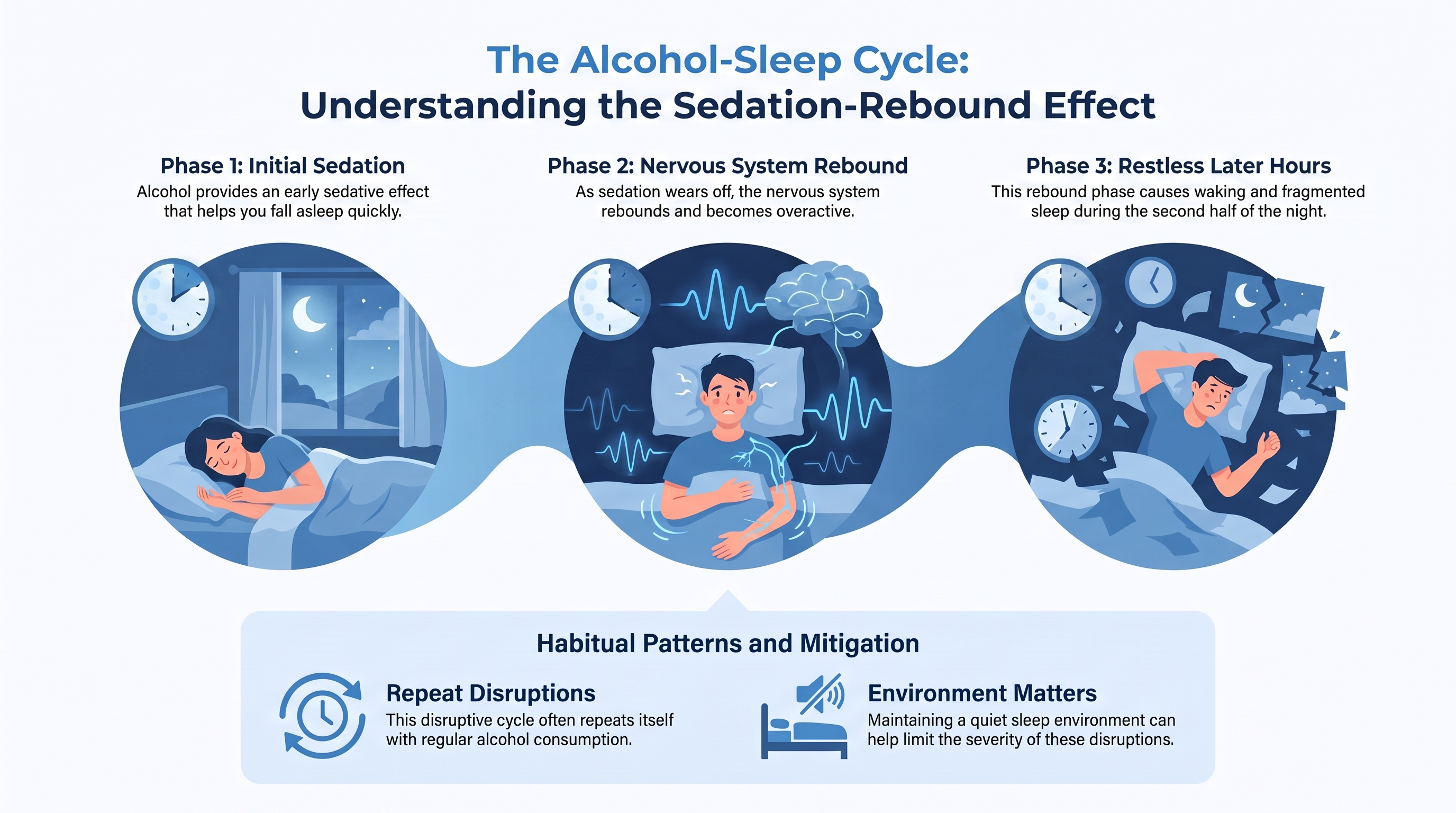
It helps to think of these substances through one lens: the Sedation-Rebound Cycle. Anything that sedates the brain early in the night — alcohol most of all — tends to trigger a rebound in nervous system activity later, once the substance is metabolized. That rebound is what fragments sleep, cuts into REM, and leaves you awake in the middle of the night even though you felt sleepy at bedtime. Nicotine skips the sedation step entirely and goes straight to arousal, while cannabis sits somewhere in between, with effects that vary too much person to person to generalize.
How Does Alcohol Affect Sleep
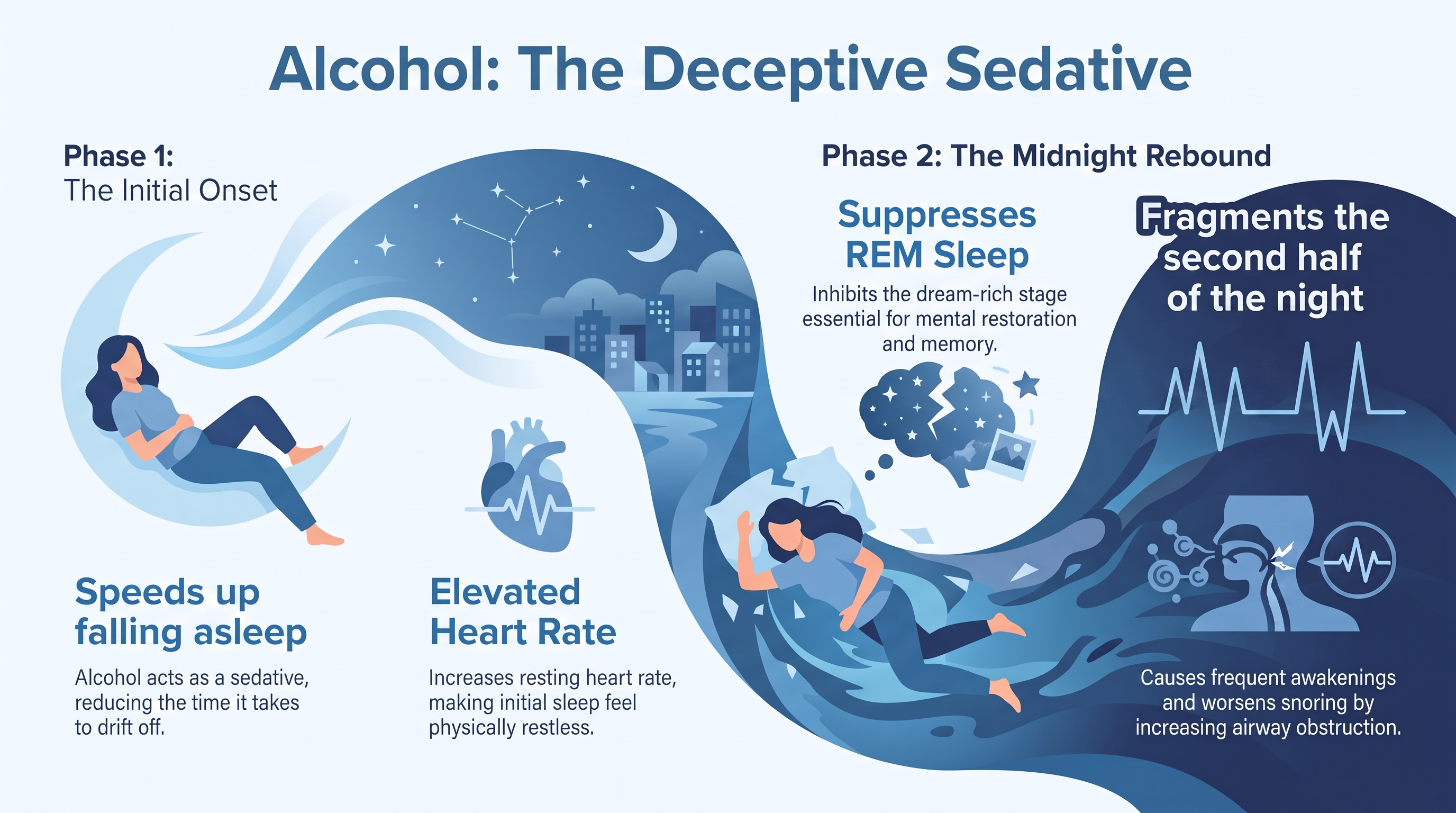
Alcohol acts as a sedative, so it can make you feel drowsy and fall asleep faster. But that early effect is misleading: alcohol suppresses REM sleep, the dream-rich stage tied to emotional processing and memory, and it fragments the second half of the night as the sedative effect wears off. It also worsens sleep-related breathing problems, relaxing the muscles of the upper airway in a way that can increase snoring and airway obstruction during sleep.
Does Alcohol Increase Heart Rate While Sleeping
As the body processes alcohol overnight, it acts as a cardiovascular stimulant, and many people notice their heart rate feels faster or less steady during sleep after drinking. This is part of why sleep after alcohol can feel restless or shallow even when total time in bed seems adequate. Anyone with ongoing or concerning heart rhythm changes during sleep should bring it up with a doctor rather than trying to self-diagnose.
Alcohol and Sleep — Early Night vs. Later Night
Sleep Effect
🌙 Early Night
🌅 Second Half of Night
Sedation
Sedative effect helps you fall asleep faster.
Sedative effect fades as alcohol is metabolized.
REM sleep
REM is suppressed from early in the night.
Reduced REM overall, even if total hours look normal.
Continuity
Sleep may feel deep at first.
Sleep becomes fragmented; more awakenings.
Breathing
Upper airway muscles relax.
Snoring and breathing disruptions can worsen.
Alcohol's sedative effect early in the night gives way to REM suppression, fragmentation, and worse breathing later on.
Can't Sleep After Drinking
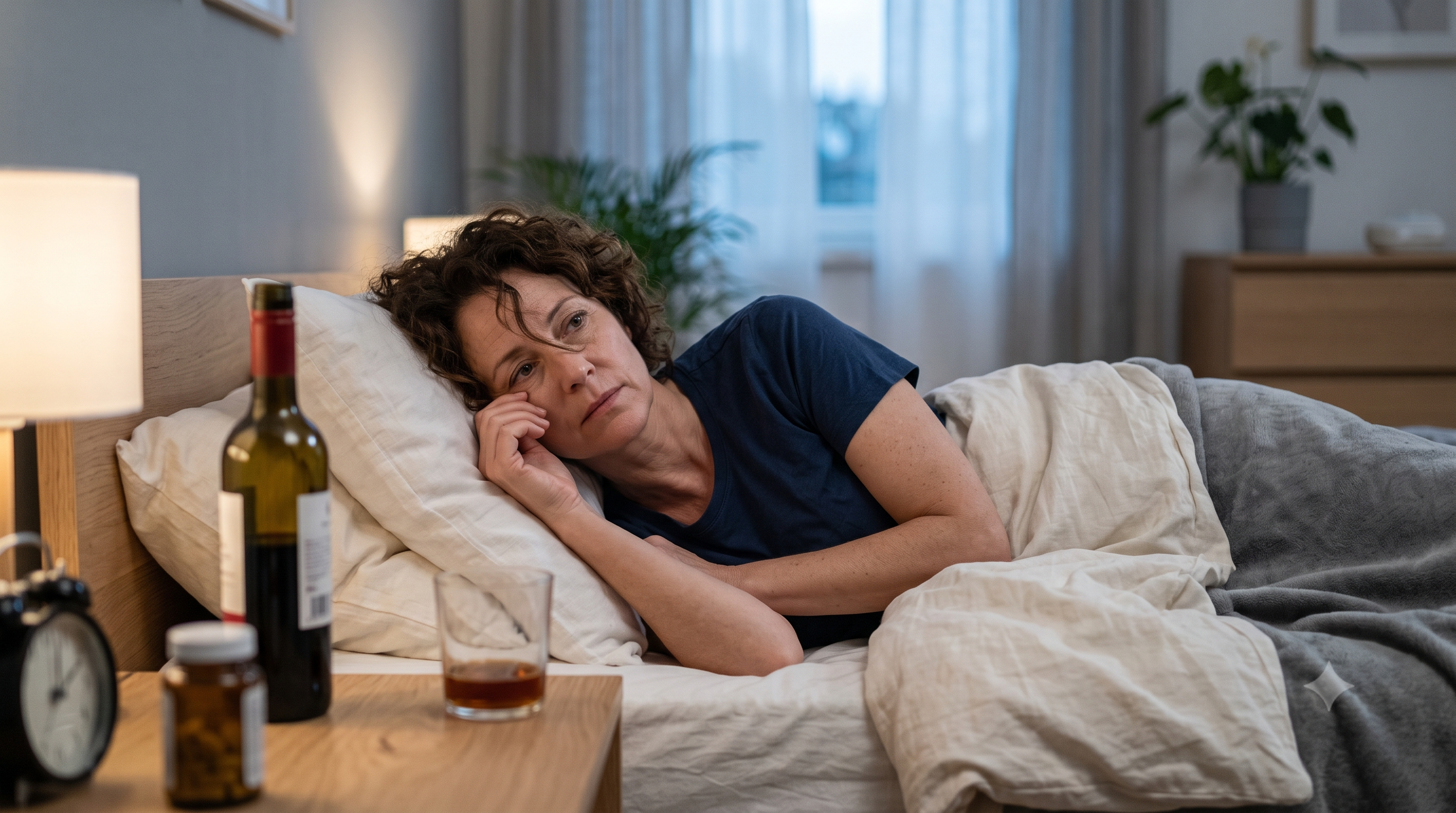
Waking up in the middle of the night after drinking, and struggling to fall back asleep, is a direct result of the Sedation-Rebound Cycle. Alcohol's sedative effect is short-lived; once it wears off, the nervous system rebounds, fragmenting sleep in the second half of the night. That is why the earlier hours of sleep after drinking can feel fine, while the later hours feel restless, light, or interrupted.
This pattern tends to repeat with regular drinking, since the same sedation-then-rebound cycle plays out each night. Keeping a consistent, quiet sleep environment can help limit some of the disruption; for background sound that masks awakenings, see the best noise machines for sleep. Ultimately, though, the fragmentation traces back to alcohol itself, not the environment.
Does Alcohol Help You Sleep
No — this is one of the most common myths about sleep. Alcohol is sedating, so it can feel like it helps, but it suppresses REM sleep and fragments the second half of the night, and it can worsen sleep-related breathing problems. The short-term drowsiness comes at the cost of lower-quality sleep overall, so alcohol should not be relied on as a sleep aid.
Nicotine and Sleep
Nicotine works differently from alcohol: it is a stimulant, not a sedative, so it tends to increase alertness rather than induce drowsiness. Using nicotine close to bedtime can make it harder to fall asleep, and for regular users, overnight withdrawal from nicotine can interrupt sleep and contribute to a lighter, more fragmented night. Unlike alcohol's delayed rebound, nicotine's stimulating effects can work against sleep from the very start of the night.
What Happens When You Sleep High (Cannabis and Sleep)
Cannabis effects on sleep are far less consistent than alcohol or nicotine. Some people report falling asleep more easily, while others experience more vivid dreams, lighter or more disrupted sleep, or grogginess the next day. Because these effects vary so much by person, product, and amount used, and long-term effects are not well established, cannabis should be treated as a qualitative, individual consideration rather than a dependable sleep aid.
When to See a Doctor
Talk to a doctor if any of the following apply, especially if alcohol, nicotine, or cannabis use is part of the picture:
Loud snoring with observed pauses in breathing, gasping for air, or heavy daytime sleepiness — possible sleep apnea, which remains widely undiagnosed
Trouble falling or staying asleep at least three nights a week for three months or more, despite adequate time for sleep — a pattern suggesting chronic insomnia
A noticeably fast, irregular, or concerning heart rate during sleep
Difficulty cutting back on alcohol, nicotine, or cannabis, or sleep that does not improve after stopping use
This article is educational and does not diagnose conditions or recommend doses of any substance or medication.
Alcohol can make you feel drowsy and fall asleep faster because it acts as a sedative, but it does not actually help you sleep. It suppresses REM sleep and fragments the second half of the night, so the overall quality of sleep is worse even though the time to fall asleep may be shorter.
Why can't I sleep after drinking?
As your body processes alcohol overnight, its sedative effect fades and a rebound in nervous system activity can follow, which is why many people wake up in the second half of the night and struggle to fall back asleep. This fragmentation is a well-documented effect of alcohol on the sleep cycle.
Does alcohol affect REM sleep?
Yes. Alcohol suppresses REM sleep, the dream-rich stage associated with emotional processing and memory. Even when total sleep time seems normal, a night with alcohol tends to have less REM sleep and more fragmented sleep in the second half of the night.
Can alcohol increase your heart rate while sleeping?
Alcohol is a known cardiovascular stimulant as it is processed by the body, and many people notice a faster or less steady heart rate during sleep after drinking. This is one reason sleep after alcohol can feel restless even when it seems like enough hours were logged. Anyone with ongoing heart rhythm concerns during sleep should discuss it with a doctor.
Does nicotine affect sleep?
Nicotine is a stimulant, so it tends to increase alertness and can make it harder to fall asleep or stay asleep, especially when used close to bedtime. Overnight withdrawal from nicotine can also interrupt sleep for regular users, contributing to a lighter, more fragmented night.
What happens when you sleep after using cannabis?
Effects vary widely by person, product, and dose. Some people feel it is easier to fall asleep, while others notice more vivid dreams, lighter sleep, or grogginess the next day. Because effects are inconsistent and not fully established for long-term use, it is best treated as a personal and qualitative consideration rather than a reliable sleep aid.
Does alcohol make sleep apnea worse?
Yes. Alcohol relaxes the muscles of the upper airway, which can worsen snoring and sleep-related breathing problems. Anyone with loud snoring, witnessed pauses in breathing, or gasping during sleep should be evaluated for sleep apnea, since it remains widely undiagnosed.
Sources
Internal Research — Human Sleep Physiology Research (alcohol is sedating but suppresses REM sleep, fragments the second half of the night, and worsens sleep-related breathing disorders).