Latest Sleep Research and Science News
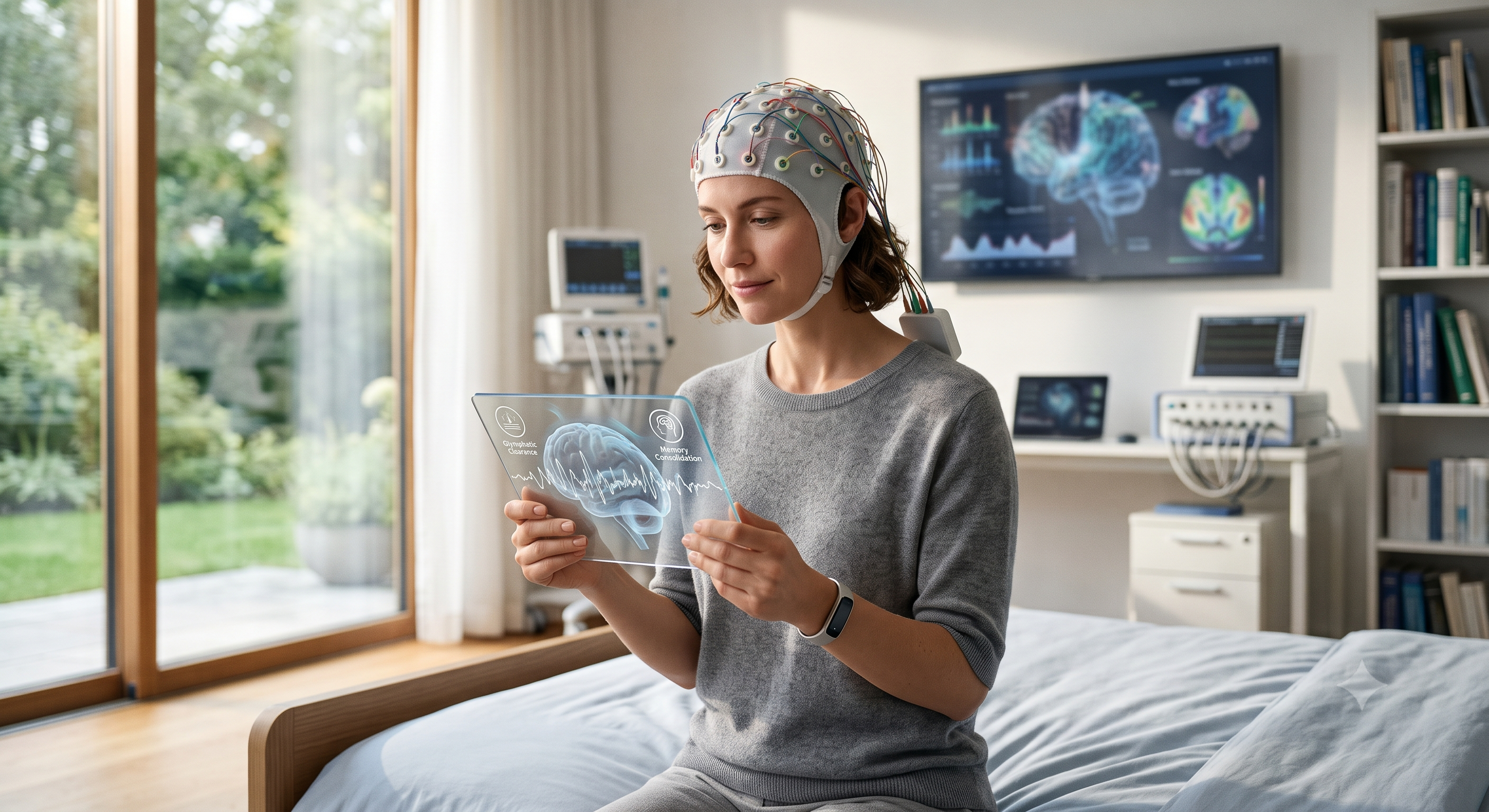
Sleep health research today is converging on a few themes: the brain's overnight glymphatic cleanup, how poorly consumer wearables track real sleep versus lab studies, and why CBT-I beats sleep medication long-term. Sleep Awareness Week and World Sleep Day exist to turn this research into everyday habits.
"Sleep research news" is not one story — it is several overlapping fields moving at once: population sleep-health surveillance, laboratory sleep science, clinical sleep medicine, and the public-awareness campaigns built to translate all of it into habits people can act on. The clearest way to track what matters is a simple lab-to-life framework: findings start in sleep science (what happens in the brain and body during sleep), move into sleep medicine (how clinicians diagnose and treat sleep disorders), and finally reach the public through awareness events like Sleep Awareness Week and World Sleep Day. This article walks through each layer using only verified, sourced findings.
At the population level, sleep health research keeps circling back to one core fact: sleep duration and mortality risk trace a U-shaped curve, with the lowest risk sitting around 7–8 hours a night. Sleeping consistently under 7 hours carries a hazard ratio of about 1.14 for all-cause mortality, while sleeping 9 or more hours a night carries a hazard ratio of about 1.34 — a reminder that "more sleep is always better" is not supported by the data. Long sleep is often a marker of an underlying condition rather than a cause of harm on its own.
Immune-function research is another recurring theme: people who sleep less than 7 hours a night have roughly 2.94 times the risk of catching a common cold compared with those sleeping 8 or more hours, and poor sleep efficiency (below 92%) raises that risk roughly 5.5-fold. Metabolic research tells a similar story — even one week of restricting sleep to 5 hours a night can lower peripheral insulin sensitivity by up to 16% and reduce testosterone in young men by 10–15%, while short sleep also shifts appetite hormones (leptin down about 18%, ghrelin up about 28%), driving roughly 385 extra calories a day.
Framed this way, the "news" in sleep research is less about single dramatic headlines and more about a steady accumulation of evidence confirming that sleep duration and quality function as vital signs on par with diet and physical activity. Recurring, replicated findings — the mortality curve, the immune-risk multiplier, the metabolic cost of short sleep — are what keep showing up across new studies, rather than one-off discoveries that overturn prior consensus.
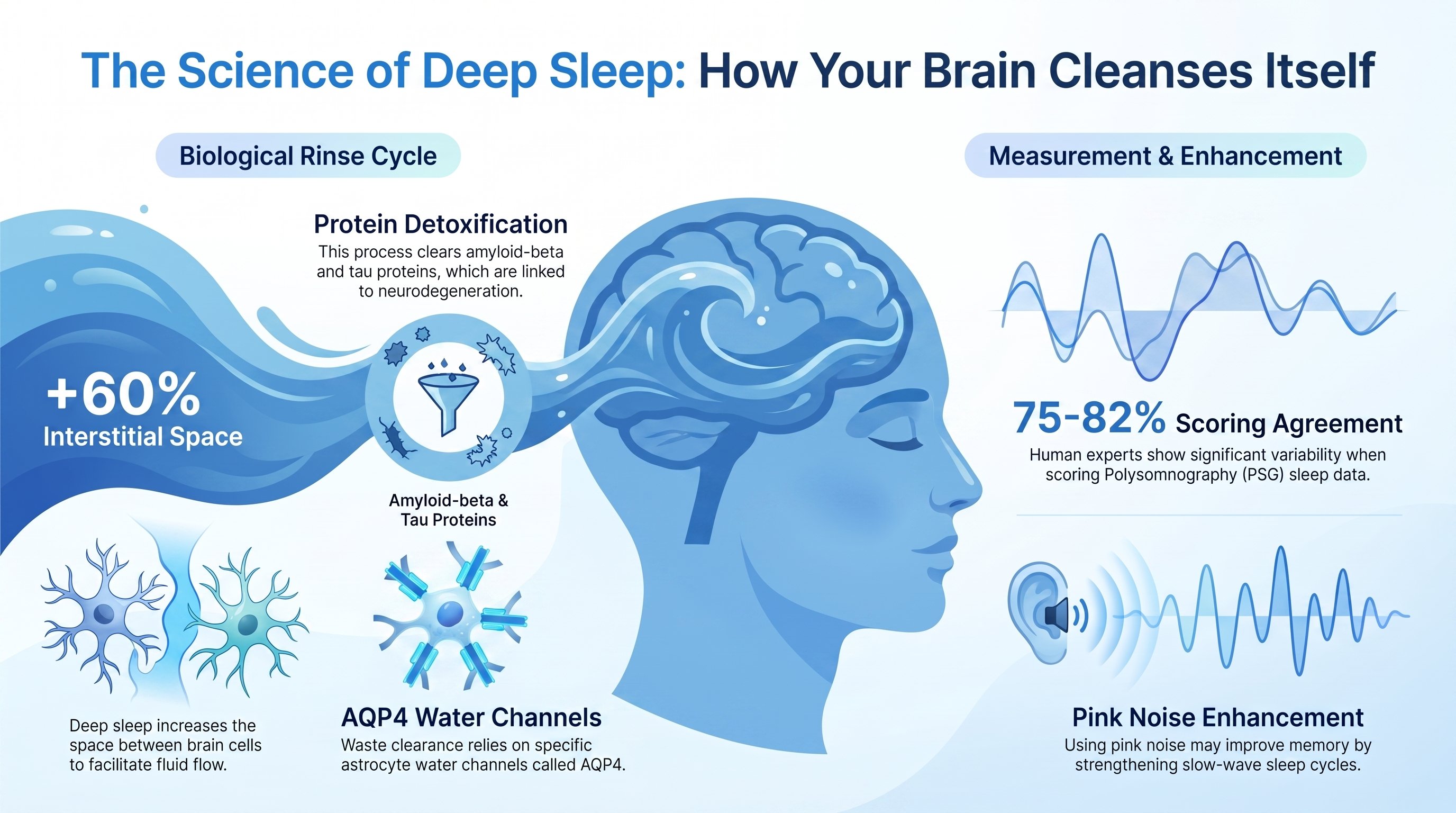
On the basic-science side, one of the most active areas is the brain's glymphatic system. During deep, slow-wave sleep (N3), the interstitial space between brain cells expands by roughly 60%, allowing cerebrospinal fluid to flush out neurotoxic proteins such as amyloid-beta and tau — the same proteins implicated in Alzheimer's disease. This clearance process depends on astrocyte water channels (AQP4) and is one reason deep sleep is treated as biologically distinct from lighter sleep stages, not just "more of the same."
A second major thread in sleep science is how we measure sleep in the first place. Polysomnography (PSG) remains the gold standard for staging sleep, yet even trained human scorers agree with one another only about 75–82% of the time. That matters because it sets the ceiling for how accurate any consumer device can be.
This is also where "sound and sleep" research fits into current sleep science news: white noise appears to reduce sleep disturbance mainly by masking other sounds rather than improving sleep architecture itself, while early, small studies suggest pink noise — tuned to synchronize with brain wave rhythms — may enhance slow-wave sleep and memory consolidation. The evidence for pink noise is still preliminary.
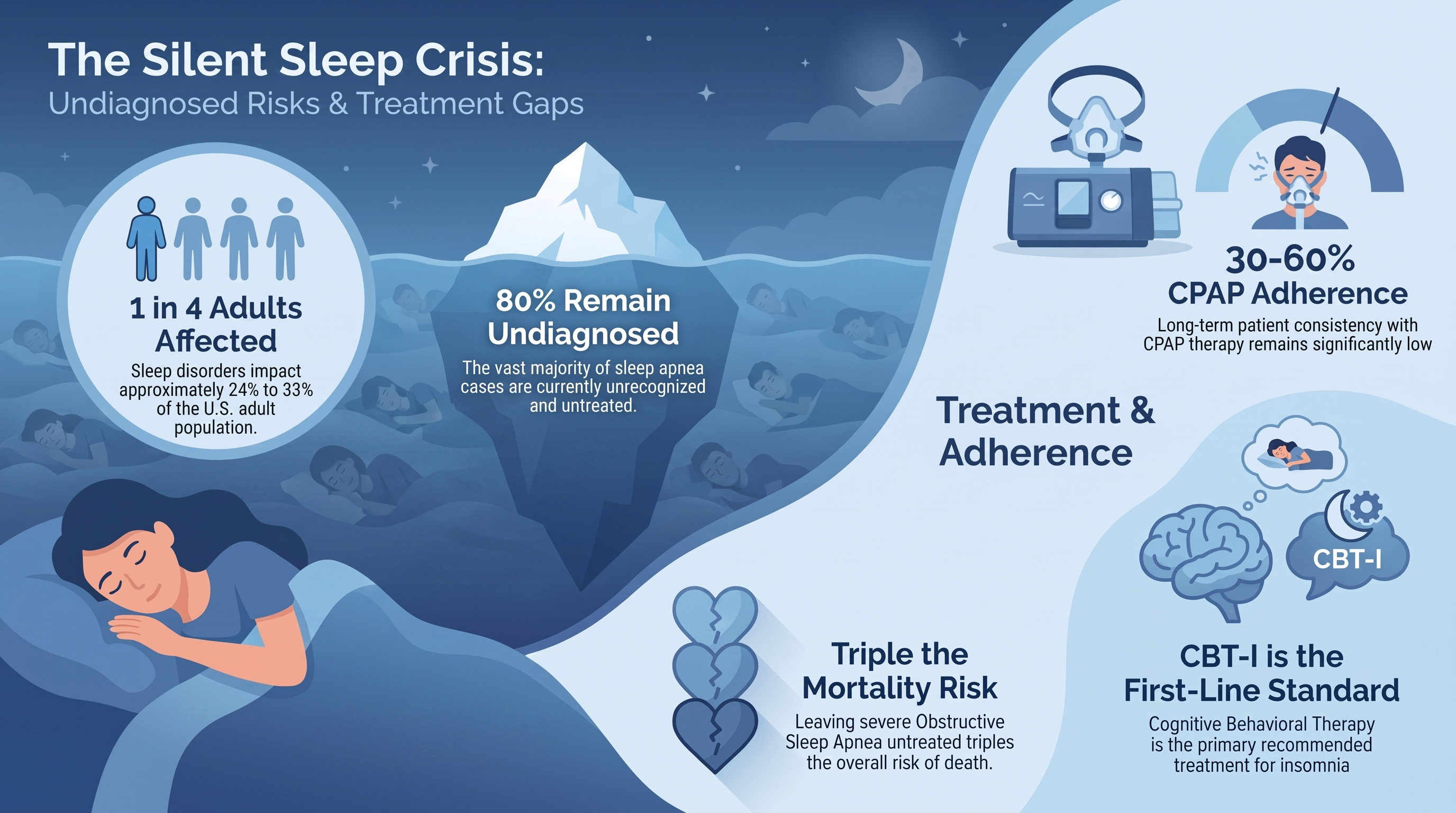
In clinical sleep medicine, obstructive sleep apnea (OSA) remains one of the most consequential and under-treated conditions. It is estimated to affect roughly 24–33% of U.S. adults — as many as 85.6 million people — and about 80% of cases go undiagnosed. Left untreated, severe OSA raises all-cause mortality by a factor of roughly 3.0 to 3.8. Even among people who are diagnosed and prescribed CPAP, long-term adherence is a persistent challenge: only about 30–60% of users stay consistent with therapy over time, which has kept alternatives such as hypoglossal nerve stimulation (Inspire) in the clinical conversation for CPAP-intolerant patients with an AHI between 15 and 100.
On the insomnia side, professional sleep medicine bodies such as the American Academy of Sleep Medicine treat cognitive behavioral therapy for insomnia (CBT-I) as the first-line treatment for chronic insomnia — a condition affecting roughly 10–15% of adults, diagnosed when trouble falling or staying asleep occurs at least three nights a week for three months or more. Research comparing CBT-I with sleep medication finds CBT-I produces better long-term remission (odds ratio around 1.82 at one year), without the dependence or rebound insomnia that can follow stopping a sleep drug. Chronic insomnia itself is not just a quality-of-life issue: it is associated with a higher risk of dementia (hazard ratio ≈ 1.36) and Alzheimer's disease (hazard ratio ≈ 1.49).
Much of the practical, public-facing guidance that clinicians and journalists cite traces back to the National Sleep Foundation's SleepFoundation.org, covering everyday levers such as bedroom temperature (a recommended range of roughly 65–68°F, with 65°F often cited as optimal), caffeine timing (an average half-life of about 5 hours, ranging 1.5–9.5 hours depending on genetics), and melatonin dosing (starting at 0.5–1 mg, with doses above 5 mg showing no added benefit). This is also the kind of guidance that intersects with alcohol and sleep, since alcohol suppresses REM sleep and fragments the second half of the night rather than improving sleep quality, despite its sedative effect.
Sleep Awareness Week is best understood as the delivery mechanism for the research above — a yearly prompt to turn sleep science and sleep medicine findings into habits. The guidance typically promoted during this kind of observance week lines up directly with the evidence already covered here: keep the bedroom in the 65–68°F range, taper caffeine well ahead of bedtime given its roughly 5-hour half-life, and match sleep duration to age-appropriate targets rather than a one-size-fits-all number. It is a communication effort built on existing research rather than a source of new clinical findings itself.
One myth this kind of awareness messaging regularly has to correct is the idea that everyone needs exactly 8 hours. Sleep need is polygenic and normally distributed across roughly 6.5–8.5 hours for most adults; treating 8 hours as a rigid target can itself create sleep-related anxiety. Another persistent myth is that lost sleep can simply be "made up" on weekends — catch-up sleep restores acute alertness but does not reverse the chronic metabolic, inflammatory, and epigenetic effects of ongoing sleep restriction.
World Sleep Day serves a similar function on a global scale, spotlighting sleep disorders that remain widely under-recognized. The undiagnosed-OSA statistic — roughly 80% of an estimated 24–33% of U.S. adults with the condition — is exactly the kind of gap these campaigns exist to close, since undiagnosed and untreated OSA carries a 3.0–3.8-fold increase in all-cause mortality. The same is true of chronic insomnia (10–15% of adults) and REM sleep behavior disorder, a much rarer condition (prevalence of roughly 0.3–1.15%) that matters disproportionately because it can be an early warning sign for neurodegenerative disease, with about 73.5% of cases progressing to Parkinson's disease or Lewy body dementia within 12 years.
World Sleep Day messaging also tends to reinforce safe-sleep guidance for infants, an area where the public-health impact has been measurable: since the "Safe to Sleep" campaign began in 1994, SIDS incidence has fallen by more than 50%, and placing babies on their backs to sleep with room-sharing (not bed-sharing) is associated with up to a 50% reduction in SIDS risk. Families navigating this stage may find it useful to read about baby sleep schedules and common baby sleep problems alongside this guidance.
Sleep need itself changes dramatically by age: newborns (0–3 months) need 14–17 hours, infants (4–12 months) need 12–16 hours, toddlers (1–2 years) need 11–14 hours, preschoolers (3–5 years) need 10–13 hours, school-age children (6–12 years) need 9–12 hours, teens (13–18 years) need 8–10 hours, and adults (18 and older) need 7 or more hours, per CDC guidance. What changes across generations is not just quantity but quality: older adults do not need less sleep than younger adults, but research shows their brains have a reduced capacity to generate deep, slow-wave sleep as they age — a generational shift in sleep architecture rather than sleep need. This is one reason "sleep quality across generations" is treated as a distinct research question from simple sleep-duration statistics, and it is also why families setting up baby sleep gear or using baby sleep music for younger children are dealing with a very different sleep-architecture picture than adults managing age-related changes in deep sleep.
Sleep research points to specific patterns that go beyond general awareness messaging and warrant medical evaluation:
For infants, discuss any persistent breathing or sleep irregularities with a pediatrician, in line with safe-sleep guidance from national health authorities.