Sleep Apnea Treatment Options
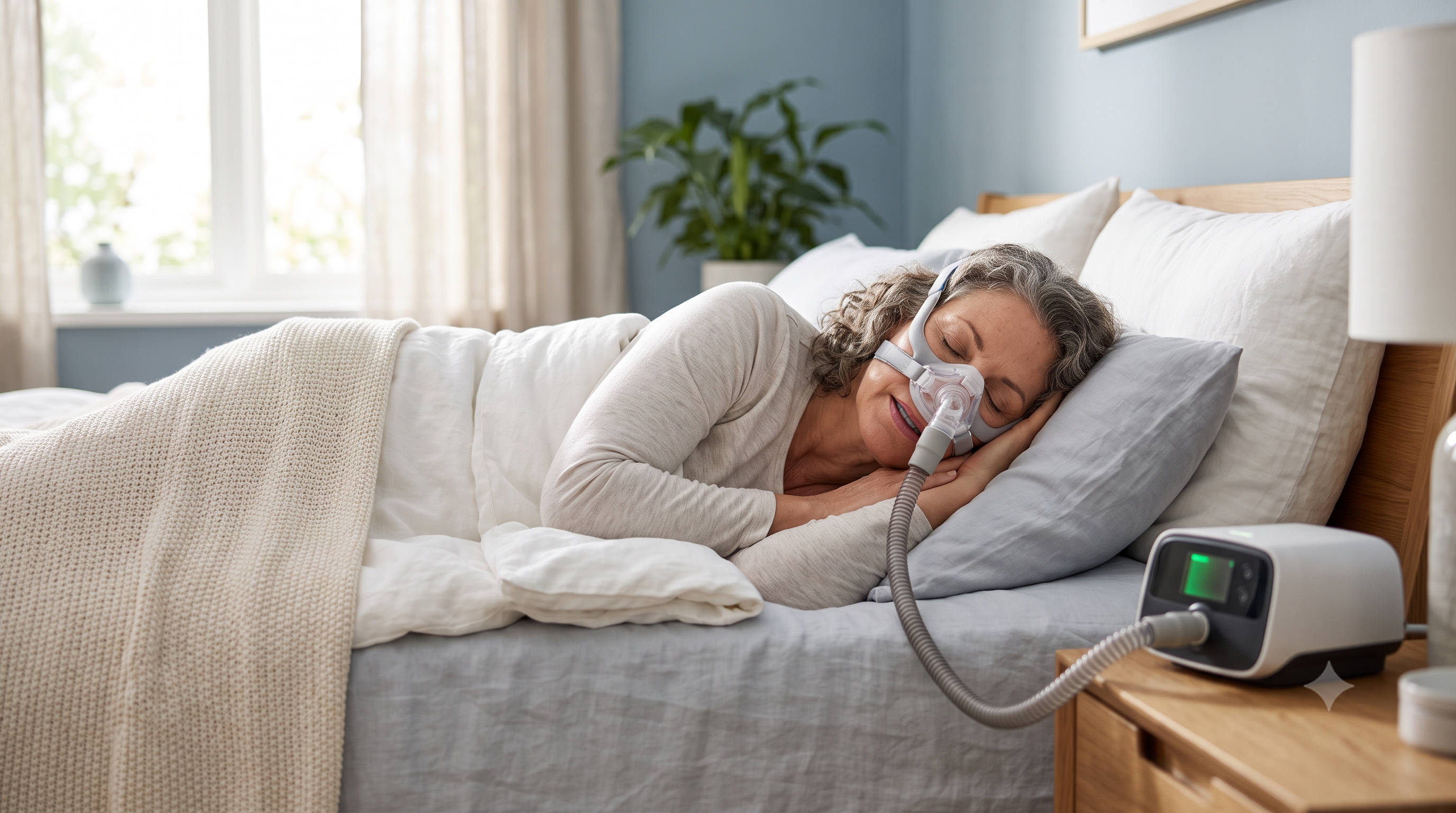
Sleep apnea treatment ranges from CPAP to alternatives like the Inspire implant, oral appliances, GLP-1 medications, and surgery. The right choice depends on severity (AHI), anatomy, and CPAP tolerance — since only about 30-60% of CPAP users stay adherent long-term.
Choosing among sleep apnea treatment options is easier with one framework in mind: the Severity-and-Tolerance filter. Two variables drive almost every treatment decision — how severe the apnea is (the Apnea-Hypopnea Index, or AHI, measured in a sleep study) and how well a person tolerates the first-line therapy, CPAP. Mild cases with good CPAP tolerance often stay on CPAP; mild-to-moderate cases with poor tolerance move toward oral appliances or lifestyle change; moderate-to-severe cases that fail CPAP are the population most often considered for Inspire or surgery. This guide walks through each option in that context. For background on what obstructive, central, and mixed apnea are and how AHI severity is scored, see sleep apnea.
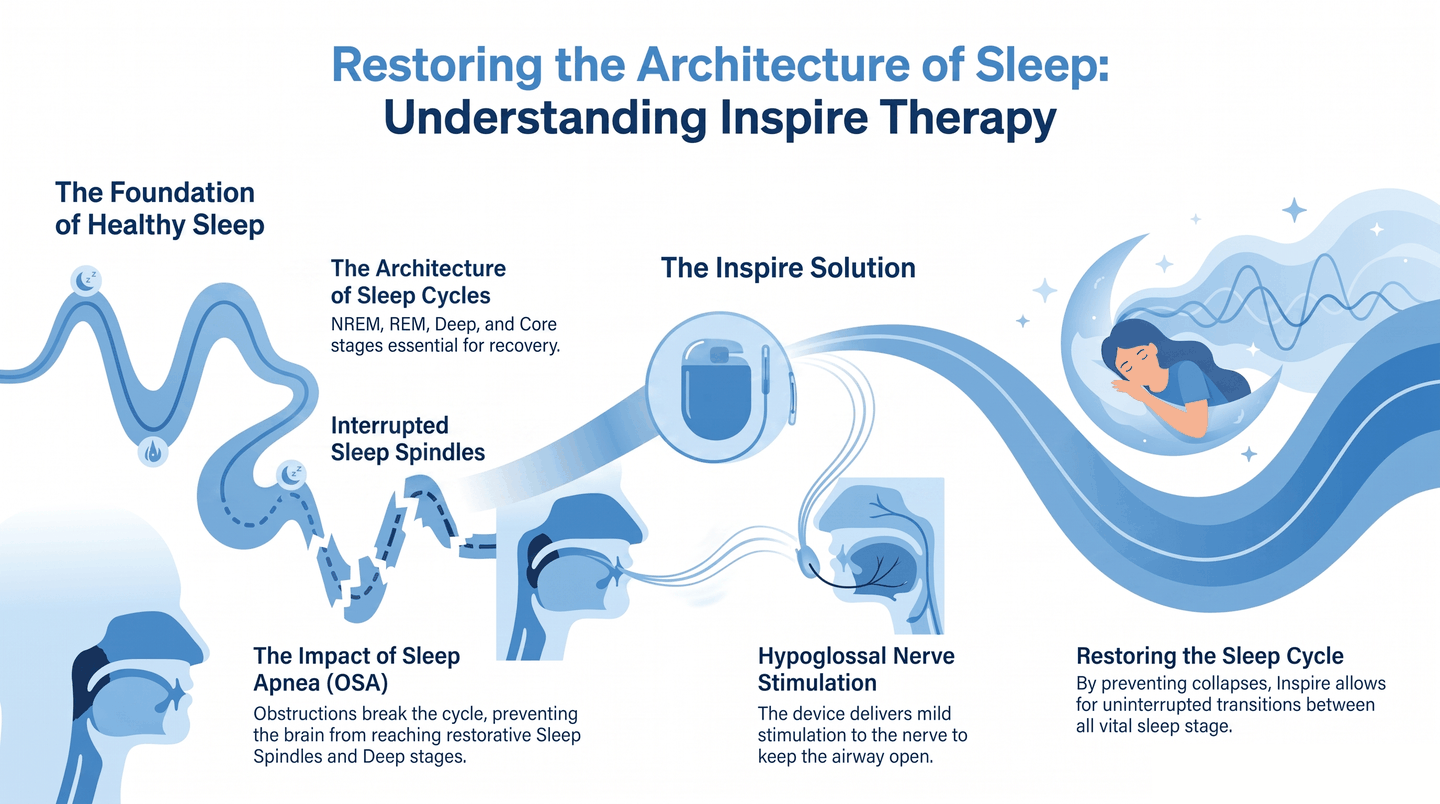
Inspire is an implanted hypoglossal nerve stimulator: a small device is placed under the skin and delivers mild stimulation to the nerve controlling tongue movement, timed to breathing, so the tongue does not collapse back into the airway during sleep. The FDA has cleared Inspire for adults with obstructive sleep apnea who meet specific criteria: an AHI between 15 and 100, a body mass index of 40 or lower, and central or mixed apneas making up less than 25% of the total AHI. It is generally considered after CPAP has failed or proven intolerable, not as a first-line therapy.
Inspire falls under the broader category of obstructive sleep apnea (OSA) treatment, which targets a physically collapsing airway rather than a signaling problem in the brain (as in central apnea). Other OSA-specific options covered in this guide — oral appliances, positional therapy, weight-loss medication, and upper-airway surgery — all work by the same basic goal: keeping the airway open, whether mechanically, anatomically, or through nerve stimulation. Because OSA is diagnosed by AHI (5 or higher with symptoms, or 15 or higher without), the severity score from a sleep study is usually the starting point for deciding which of these options applies.
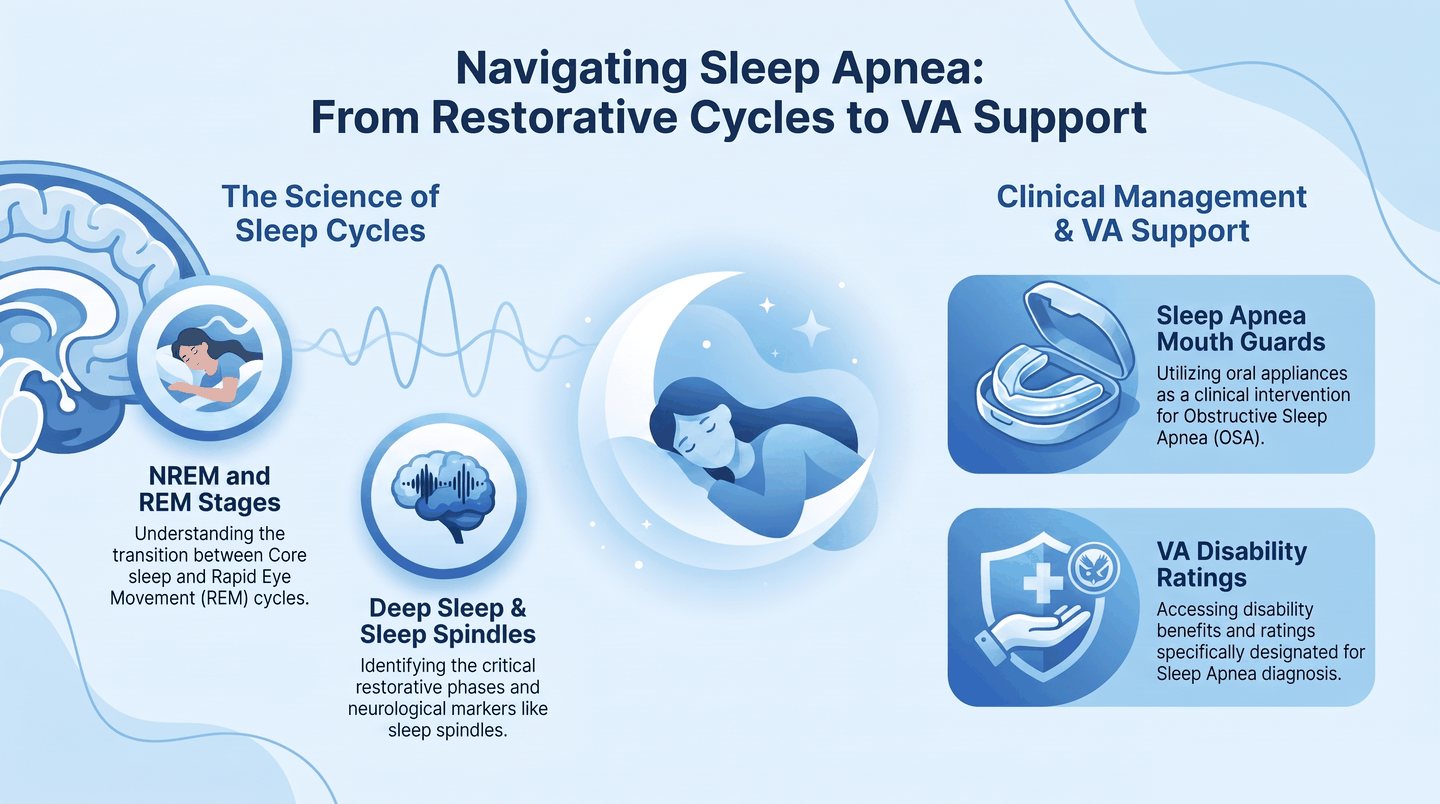
Oral appliances, sometimes called mandibular advancement devices, are custom-fitted mouthpieces worn during sleep that hold the lower jaw slightly forward or keep the tongue from falling back, reducing airway collapse. They are typically considered for mild-to-moderate OSA or for people who cannot tolerate CPAP, and are fitted and monitored by a dentist experienced in sleep medicine, often working alongside a sleep physician. Unlike over-the-counter night guards used to protect teeth from grinding (bruxism), a sleep apnea oral appliance is specifically designed and titrated to open the airway, and effectiveness should be confirmed with a follow-up sleep study rather than assumed from symptom relief alone.
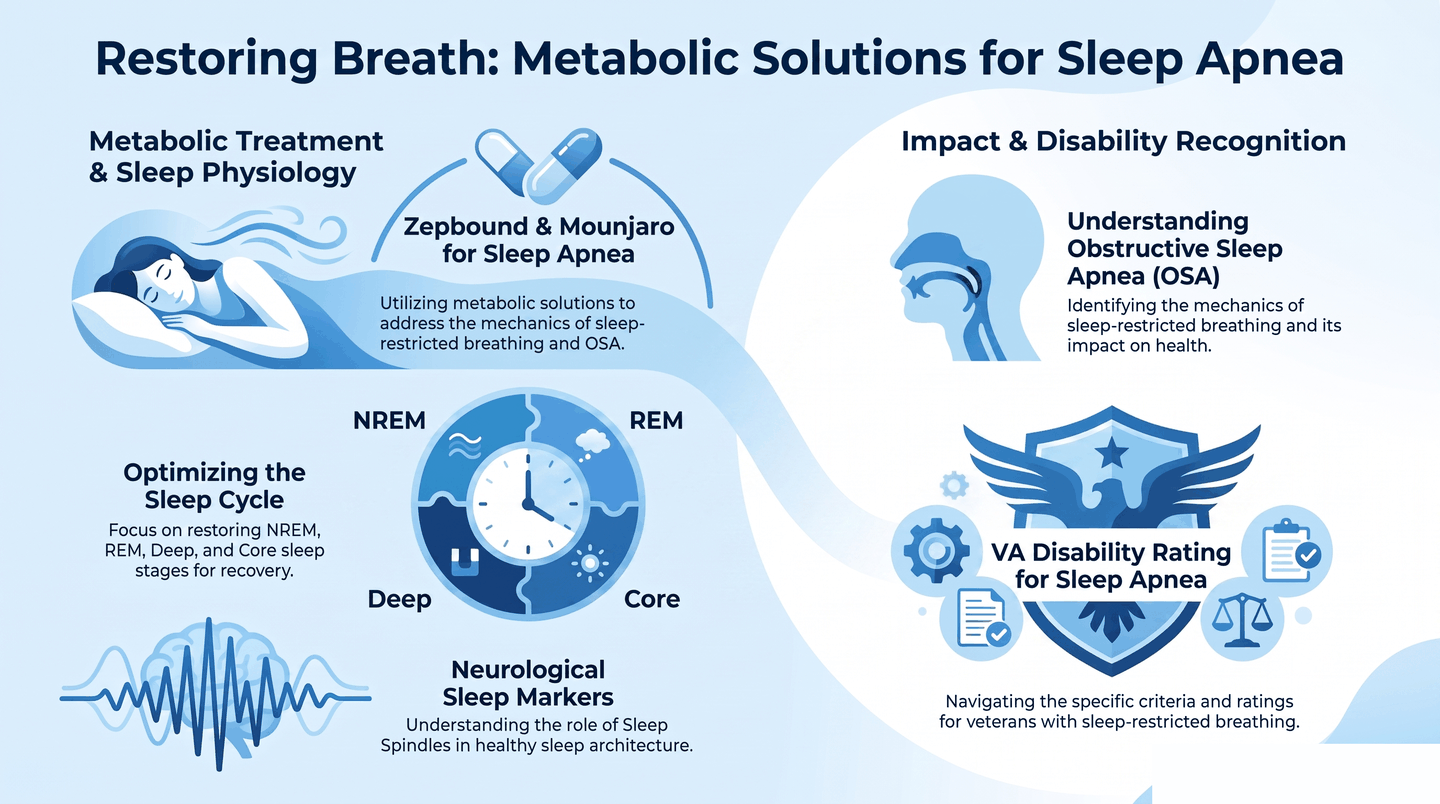
Zepbound and Mounjaro (tirzepatide) are GLP-1/GIP receptor agonist medications originally developed for type 2 diabetes and weight management. Because excess weight and neck fat are major contributors to airway collapse in obstructive sleep apnea, weight loss achieved with these medications can lower AHI in people whose apnea is weight-related. They are not a mechanical airway treatment like CPAP, Inspire, or an oral appliance, and are not a substitute for those therapies in every patient — they are best understood as one lever within a broader treatment plan, prescribed and monitored by a physician.
Coverage for Zepbound or Mounjaro specifically for a sleep apnea indication depends on the insurer, the specific plan, and how the prescription is coded — some plans distinguish between a weight-management indication and an obstructive-sleep-apnea indication, with different prior-authorization requirements for each. Because policies vary and change, the only reliable way to confirm coverage is to check directly with the insurance plan and prescribing physician rather than assume based on general weight-loss drug coverage.
Surgical options for sleep apnea range from soft-tissue procedures on the palate or throat to jaw repositioning surgery, and — as covered above — implanted nerve stimulators like Inspire. Surgery is generally discussed when anatomy is a clear contributor (such as enlarged tonsils or a recessed jaw), when other therapies have failed or are not tolerated, or when a patient specifically wants a non-nightly solution rather than a device worn every night. As with any surgical decision, the right procedure, if any, depends on an individualized evaluation by an ENT or sleep surgeon, and outcomes vary by procedure and by patient anatomy.
For mild obstructive sleep apnea, several non-device measures can meaningfully reduce airway collapsibility: losing excess weight, sleeping on the side rather than the back (positional therapy), reducing alcohol close to bedtime (alcohol relaxes upper-airway muscles and worsens apnea), and treating chronic nasal congestion. These measures do not reverse the underlying anatomy for everyone, and moderate-to-severe cases (AHI 15 or higher) typically still need a device, appliance, or procedure in addition to lifestyle change. Anyone attempting a natural approach should have their progress checked with a follow-up sleep study rather than relying on how rested they feel, since subjective improvement does not always match the AHI.
Resistance training and weight lifting can support sleep apnea management indirectly, mainly through weight loss and improved muscle tone, including in the muscles that support the upper airway. It is not a direct or proven cure for OSA on its own, and heavy lifting close to bedtime, or breath-holding techniques used during lifting (Valsalva maneuvers), are worth discussing with a physician if apnea symptoms are present, since airway and breathing mechanics during exercise differ from those during sleep.
Day-to-day self-care for sleep apnea generally means consistent use of whatever therapy has been prescribed (CPAP, an oral appliance, or Inspire), maintaining a healthy weight, avoiding alcohol and sedatives before bed, sleeping on the side, keeping a regular sleep schedule, and tracking symptoms like snoring, gasping, or daytime sleepiness to report back to a sleep physician. Self-care supports a prescribed treatment; it is not a replacement for one in moderate-to-severe OSA.
There is currently no medication approved as a standalone, mechanical cure for obstructive sleep apnea in the way CPAP or Inspire physically keep the airway open. Medication's role is generally supportive: treating an underlying contributor (such as nasal congestion or excess weight, as with Zepbound and Mounjaro above), or, in select cases, addressing a specific subtype of apnea under a physician's care.
Some anti-seizure medications have been studied off-label for their effects on breathing stability during sleep, since certain seizure medications influence upper-airway muscle tone or central respiratory drive. This is a specialized, individualized area of care rather than a standard first-line sleep apnea treatment, and any such medication should only be used under the direction of a sleep physician or neurologist familiar with the specific diagnosis, not self-initiated.
Supportive therapies are the measures used alongside a primary treatment device, appliance, or medication — humidified air with CPAP to reduce dryness, nasal decongestants or nasal strips to ease airflow, myofunctional (tongue and throat muscle) exercises, and the lifestyle measures discussed above. They are meant to improve tolerance and outcomes of the main treatment, not to replace it.
The total cost of Inspire therapy — the device itself, the implant surgery, and follow-up titration visits — is typically estimated around $30,000 to $40,000. For patients with Medicare coverage, reported out-of-pocket costs commonly fall in the $2,000 to $6,000 range, though the exact amount depends on the specific insurance plan, deductible status, surgeon, and facility. Because Inspire requires meeting FDA eligibility criteria (AHI 15-100, BMI ≤40, limited central/mixed apnea), a sleep study and ENT evaluation are the first steps before cost becomes relevant.
CPAP remains the standard first-line therapy for obstructive sleep apnea, but adherence is a well-documented challenge — research indicates only about 30-60% of CPAP users stay adherent to the therapy long-term, often due to mask discomfort, nasal dryness, or noise. Because untreated moderate-to-severe OSA is associated with a 3.0 to 3.8-fold higher risk of overall mortality, finding a workable alternative matters when CPAP does not stick. The non-CPAP paths covered in this guide — Inspire, oral appliances, surgery, GLP-1 medication when weight is a factor, and lifestyle measures — are the main categories clinicians consider, chosen based on AHI severity, anatomy, and prior treatment history rather than preference alone.
"Mouthpiece" and "oral appliance" typically refer to the same category of device discussed above, but it is worth separating two distinct products: a custom-fitted, dentist-prescribed mandibular advancement device titrated specifically for sleep apnea, versus over-the-counter "boil-and-bite" mouthpieces sold for snoring. Only the custom, medically fitted version has documented use as a sleep apnea treatment with physician and dentist oversight; over-the-counter snoring mouthpieces are not a substitute for a diagnosed OSA treatment plan and their effect on AHI is not verified the way a prescribed appliance's is.
Whether sleep apnea can be "cured" depends on the cause and severity. Weight-related OSA can sometimes resolve, or drop to a much lower AHI, with substantial weight loss. Anatomical causes (such as enlarged tonsils in children, corrected surgically) can be permanently resolved. But for many adults with moderate-to-severe OSA, apnea is a chronic condition managed rather than cured — with CPAP, Inspire, an oral appliance, or ongoing lifestyle measures keeping the AHI controlled rather than eliminating the underlying tendency for the airway to collapse. A follow-up sleep study is the only reliable way to confirm whether AHI has genuinely improved after any intervention.
Sleep apnea is estimated to affect roughly 24-33% of US adults, and up to about 80% of cases go undiagnosed. Seek medical evaluation if you notice:
This article is educational and does not diagnose sleep apnea or recommend a dose or device for any individual; treatment decisions should be made with a sleep physician based on a sleep study. For general symptoms and severity scoring, see sleep apnea.