Why Can't I Sleep? Causes and What to Do
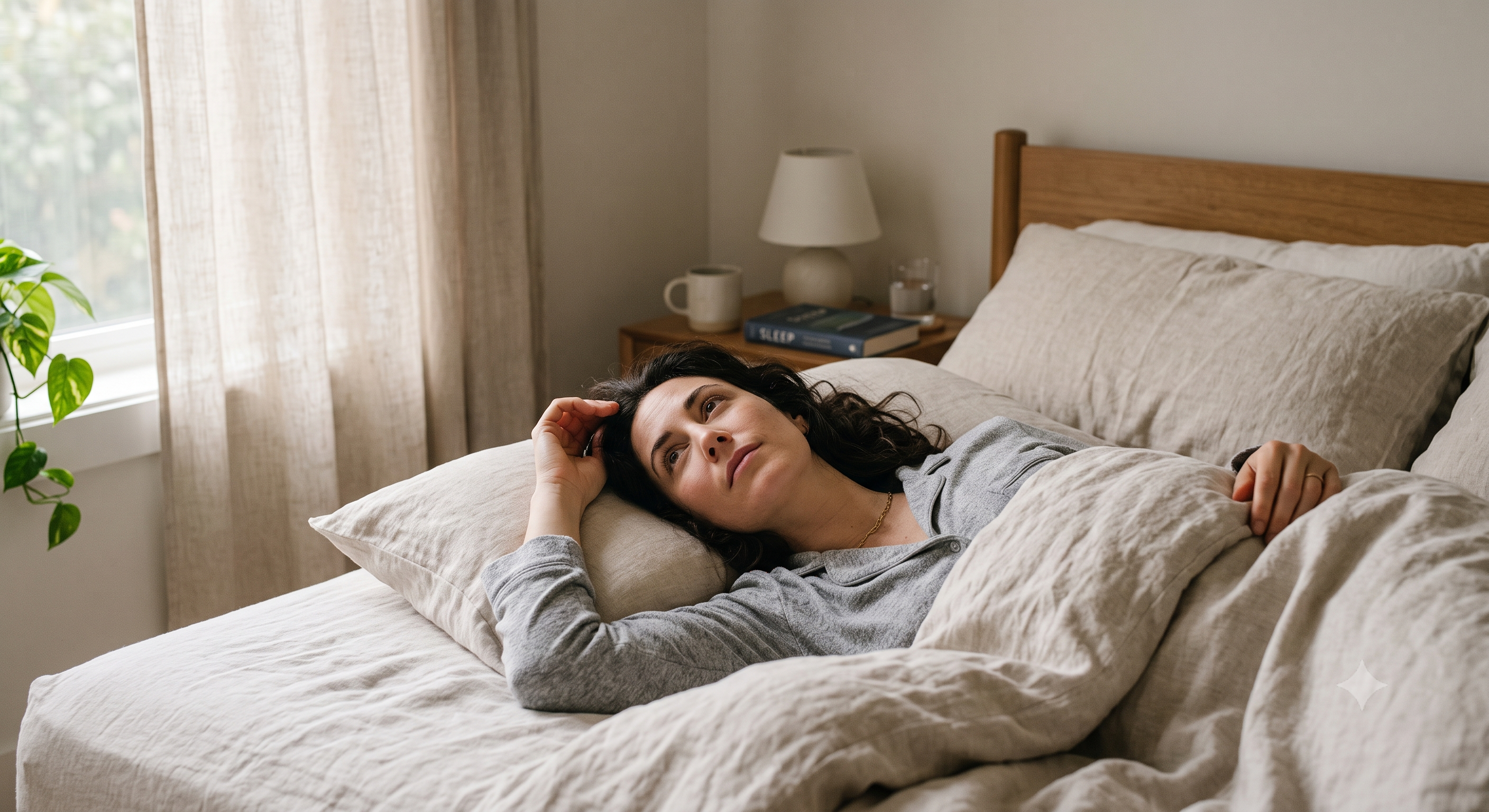
You usually can't sleep because one of two systems is out of sync: your homeostatic sleep drive (how much pressure to sleep has built up) or your circadian clock (your body's internal timing). Caffeine, light, stress, an irregular schedule, or illness can override both. If it happens 3+ nights a week for 3+ months, that pattern is chronic insomnia and worth discussing with a clinician.
Sleep is controlled by two separate systems working together, known as the two-process model: Process S, your homeostatic sleep drive, which builds as adenosine accumulates in the brain the longer you're awake, and Process C, your circadian rhythm, timed by the suprachiasmatic nucleus (SCN) in response to light. A useful way to work through "why can't I sleep" is what this article calls the Two-Process Check: is your sleep pressure too low (Process S), is your internal clock misaligned with your bedtime (Process C), or is something actively overriding both, like stress, caffeine, or illness? Most sleeplessness traces back to one of these three.
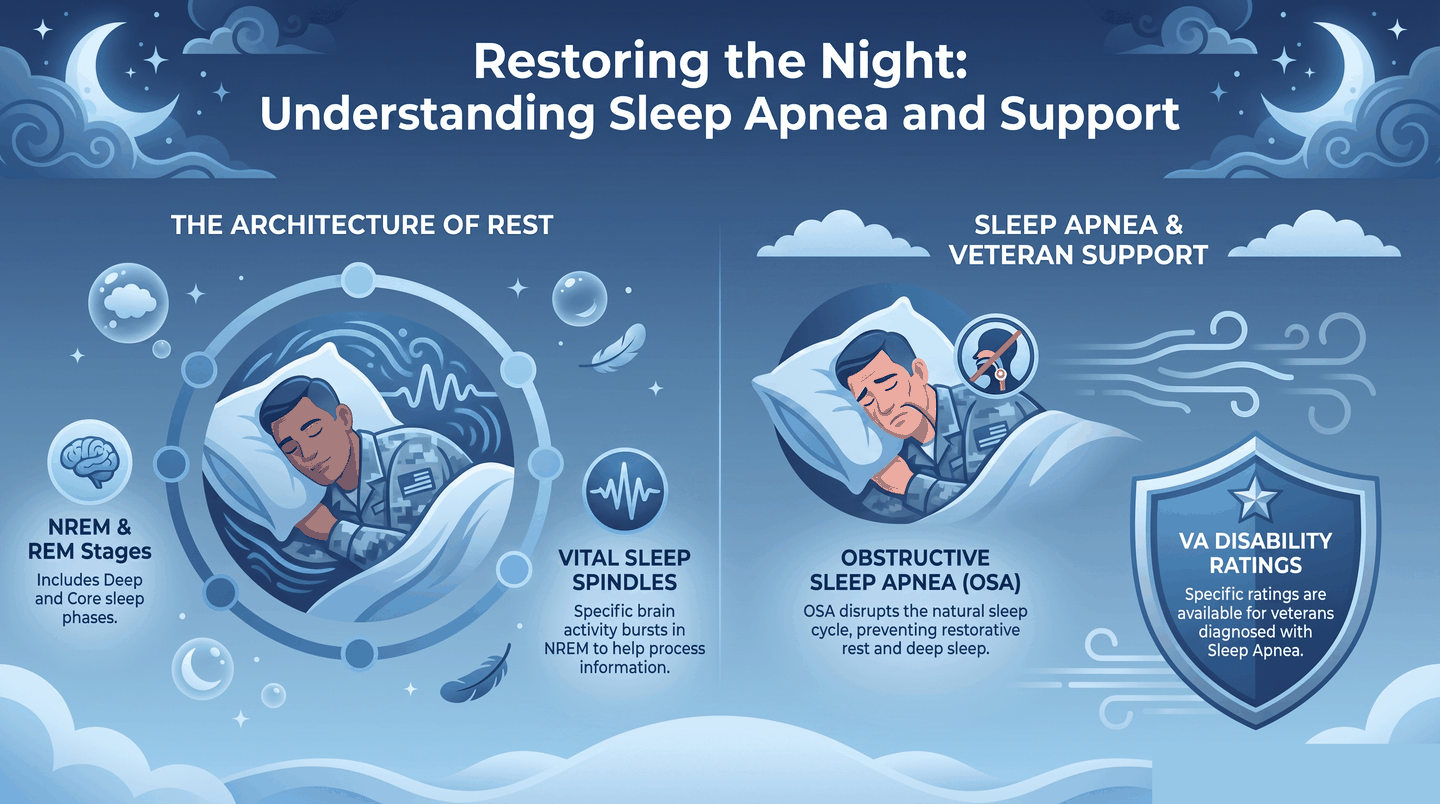
Lying awake at night usually means your arousal systems are still active when they should be winding down. Wakefulness is maintained by the ascending reticular activating system through norepinephrine, serotonin, dopamine, and histamine, while a separate brain region, the ventrolateral preoptic nucleus (VLPO), is responsible for switching the brain into sleep. A hormone called orexin helps stabilize the transition between the two states. When stress, light, or stimulants keep the wake-promoting side switched on, that transition stalls.
Caffeine is one of the most common reasons for this. It works as a competitive antagonist at adenosine receptors, meaning it blocks the very molecule your brain uses to signal sleep pressure. Its average half-life is about 5 hours, with a genetically determined range of roughly 1.5-9.5 hours, so even a dose taken 6 hours before bed, such as 400 mg, can measurably disrupt sleep that night. Light matters too: bedrooms kept near 65-68°F (about 18.3°C) are considered the optimal range for sleep, and evening light, especially blue light around 480 nm, is detected by specialized cells in the eye (ipRGCs) that suppress melatonin and delay the body's readiness for sleep.
Not being able to sleep despite lying in bed for a long stretch is often the arousal system winning out over the sleep-promoting one. It's not that your body has "forgotten how" to sleep; the neural switch between wake and sleep is simply being held in the wake position by an active input, whether that's light, temperature, caffeine still in your system, or racing thoughts. Addressing the specific input, rather than trying to force sleep, is usually more effective.
A single bad night is common and usually not a sign of a disorder on its own; travel, an unfamiliar bed, or a stressful day can all disrupt one night without lasting effects. Trying to "catch up" the next weekend only partly helps: extra sleep can restore acute alertness, but it does not reverse the metabolic and inflammatory effects of chronic short sleep. The pattern to watch for is repetition: the same difficulty on most nights, across weeks, is a different situation than one rough night.
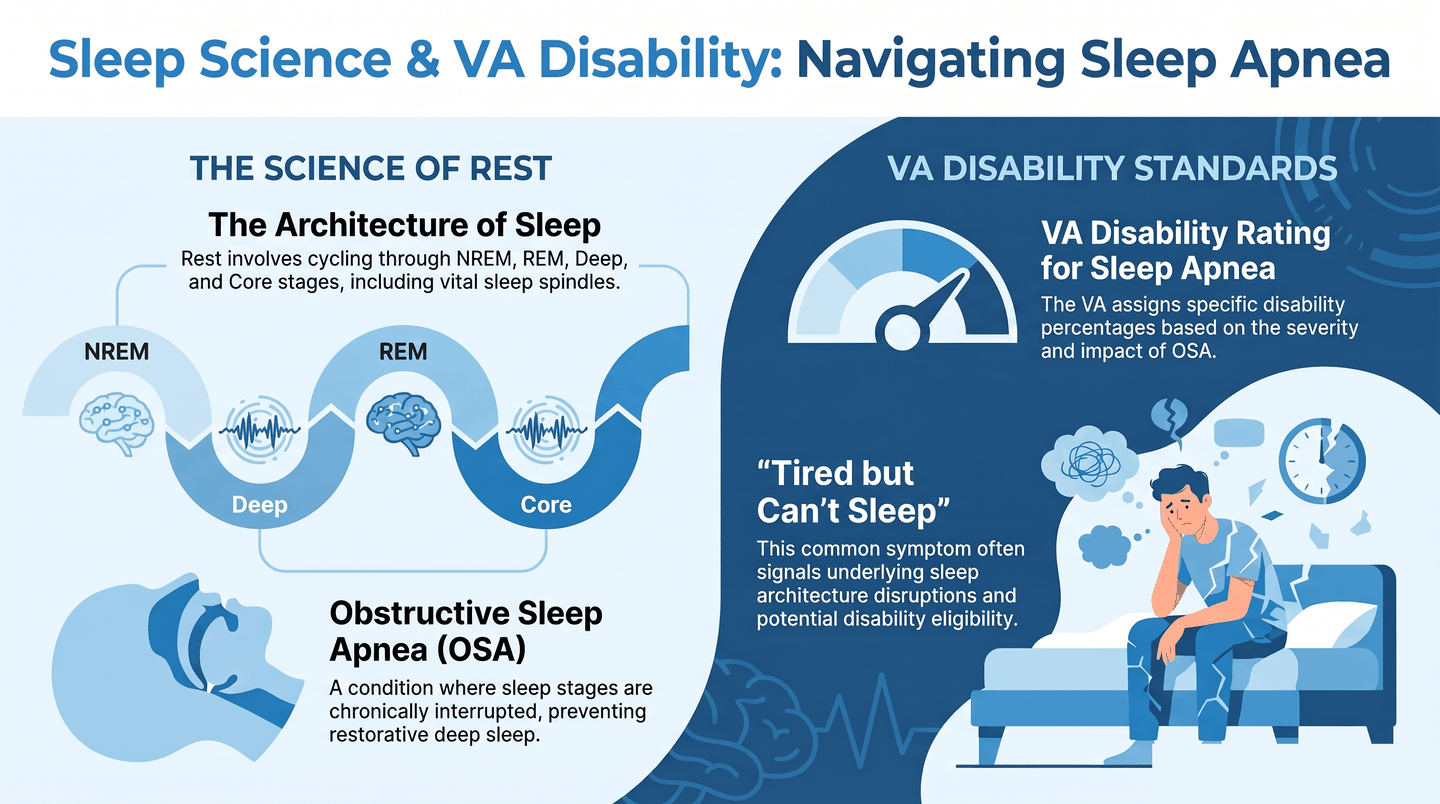
Feeling exhausted yet unable to fall asleep is a common sign that Process S and Process C are mismatched, or that an arousal override is running underneath the fatigue. You can have high sleep pressure (you genuinely feel tired) while your circadian clock, run by the roughly 20,000 neurons of the SCN, is still signaling daytime, particularly if your schedule is irregular or you've had recent evening light exposure. Stimulants compound this: because caffeine's half-life is around 5 hours, an afternoon coffee can still be blocking adenosine receptors well into the night, even though you feel worn out.
Occasional difficulty falling or staying asleep is common and often resolves once the trigger (caffeine timing, light, an irregular schedule) is addressed. It becomes chronic insomnia when it happens at least 3 times a week for 3 months or longer despite having adequate opportunity to sleep — a pattern estimated to affect 10-15% of adults. The first-line treatment for chronic insomnia is cognitive behavioral therapy for insomnia (CBT-I), which has been shown to produce more durable remission than sleep medication over a year and does not carry the dependence or rebound risk that medication can.
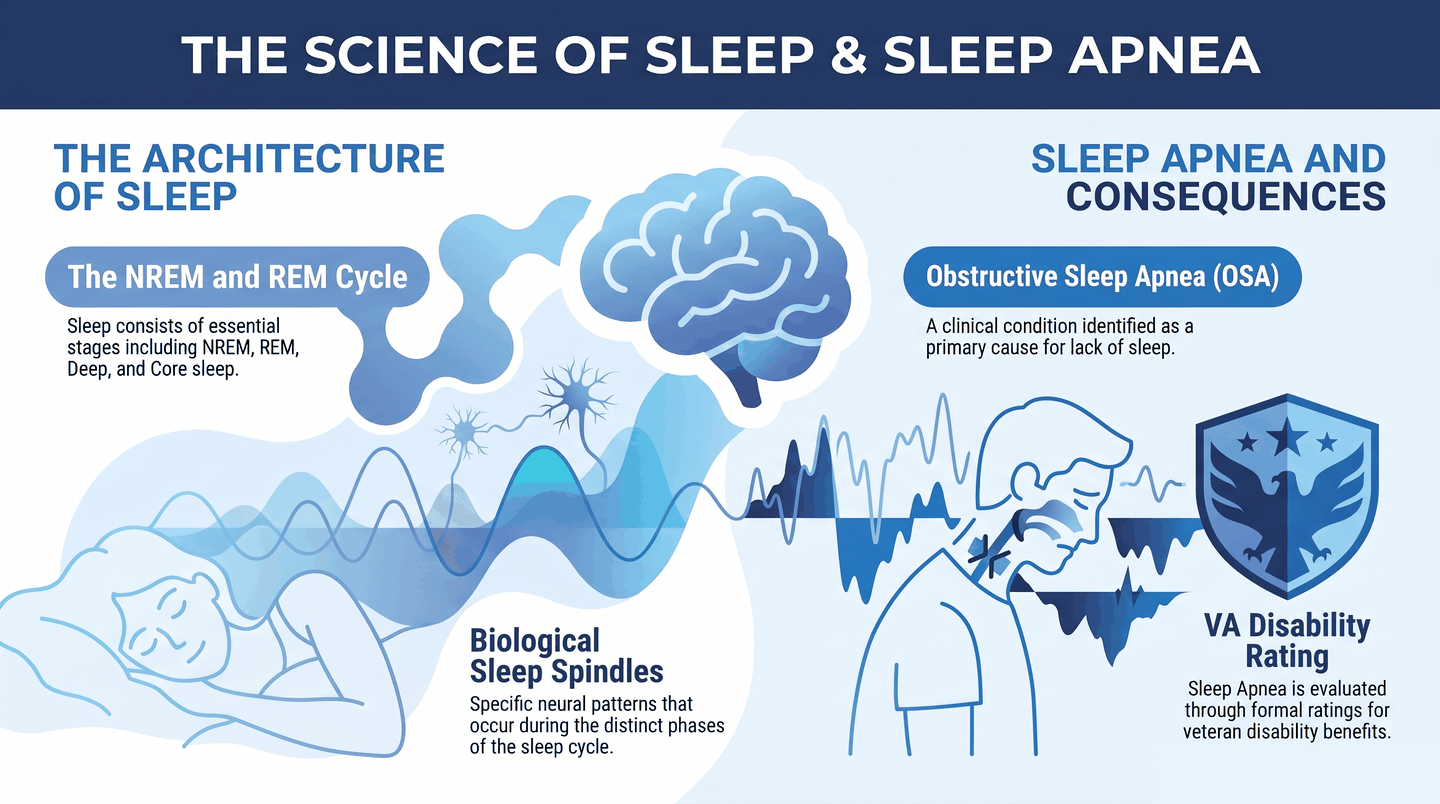
Lack of sleep usually comes from one or more of a handful of causes: stimulants, light and schedule disruption, stress, an underlying sleep or breathing disorder, or illness.
Illness and sleep influence each other in both directions. Fever, congestion, coughing, and body aches can physically interrupt sleep, making it harder to fall or stay asleep while you're unwell. The relationship also runs the other way: people who consistently sleep less than 7 hours a night have been found to have about 2.94 times the risk of catching a cold compared with those getting 8 hours or more, and sleep efficiency below 92% was linked to a roughly 5.5 times higher risk. In other words, poor sleep and being sick can reinforce each other, which is part of why prioritizing sleep during illness matters.
A normal night of sleep moves through repeating cycles of about 90-110 minutes each, alternating between NREM stages (light sleep, then deep slow-wave sleep) and REM sleep. Deep, slow-wave sleep dominates the earlier cycles of the night, while REM sleep, which is lighter and associated with dreaming, becomes more prominent in the second half. Trouble sleeping can show up as difficulty falling asleep, difficulty staying asleep, or waking too early, and any of these can stem from the causes above: stimulants, light, stress, or an underlying disorder such as sleep apnea.
It's also worth being cautious about over-interpreting a sleep tracker if trouble sleeping seems to conflict with how a wearable scores your night. Polysomnography (PSG) in a sleep lab remains the gold standard, and even trained experts staging sleep by hand agree with each other only about 75-82% of the time. Consumer wearables are noticeably less accurate: one study found an Apple Watch's agreement with PSG on sleep versus wake was low (kappa ≈ 0.53) and it overestimated total sleep time by nearly 20 minutes on average.
Brief awakenings between sleep cycles are a normal part of sleep architecture; most people don't remember them. Waking more noticeably in the second half of the night is more likely during REM sleep, which is lighter and concentrated in those later cycles. If awakenings are frequent, prolonged, or accompanied by loud snoring, gasping, or witnessed pauses in breathing, sleep apnea is a common and often undiagnosed explanation. A rarer cause of disrupted, dream-enacting sleep is REM sleep behavior disorder, which affects an estimated 0.3-1.15% of people and is worth mentioning to a doctor if it occurs.
Stress and anxiety are among the most common arousal overrides in the Two-Process Check. Falling asleep requires the brain's wake-promoting circuits, driven by norepinephrine, serotonin, dopamine, and histamine, to quiet down so sleep-promoting circuits can take over. Stress keeps those circuits active, which delays sleep onset and can cause more awakenings through the night. Because this is a behavioral and physiological pattern rather than a lack of sleep opportunity, it responds well to CBT-I, the same first-line treatment used for chronic insomnia generally.
A few supplements have some supporting evidence for stress-related sleeplessness, though none are a substitute for addressing the underlying stress or a diagnosed condition. Magnesium in the range of 200-400 mg elemental, taken 30-60 minutes before bed, has shown benefit in a randomized trial using magnesium bisglycinate, which reduced time to fall asleep by 17.8 minutes and increased deep sleep by 19.3%. L-theanine has been shown to improve subjective sleep quality and is well tolerated at doses up to 450 mg per day, though its objective effects are modest. Ashwagandha (KSM-66) at 600 mg or more per day has shown moderate evidence for improving sleep onset time and sleep efficiency. Melatonin, by contrast, is a chronobiotic that shifts the timing of your internal clock rather than sedating you, so it tends to help more with circadian misalignment (like jet lag) than with stress-driven wakefulness; typical doses run 0.5-1 mg to start, commonly up to 1-3 mg about 30 minutes before bed, with no added benefit shown above 5 mg.
Run the Two-Process Check: rule out an obvious override first (caffeine still active, a too-warm room, light exposure, stress), address what you can, and get out of bed if you're lying awake and frustrated rather than forcing it, since that itself can add stress-related arousal. If the pattern keeps repeating at least 3 nights a week for 3 months or more, or if stress-driven sleeplessness isn't improving with basic changes, that's the point to bring it to a clinician rather than keep troubleshooting alone. See the guidance on sleep hygiene and how to sleep better for the everyday habits that support this.
Most sleeplessness resolves with time or habit changes, but see a doctor if you notice any of the following:
This article is for general information only and is not a substitute for personalized medical advice.