Sleep Apnea: What It Is, Types and Dangers
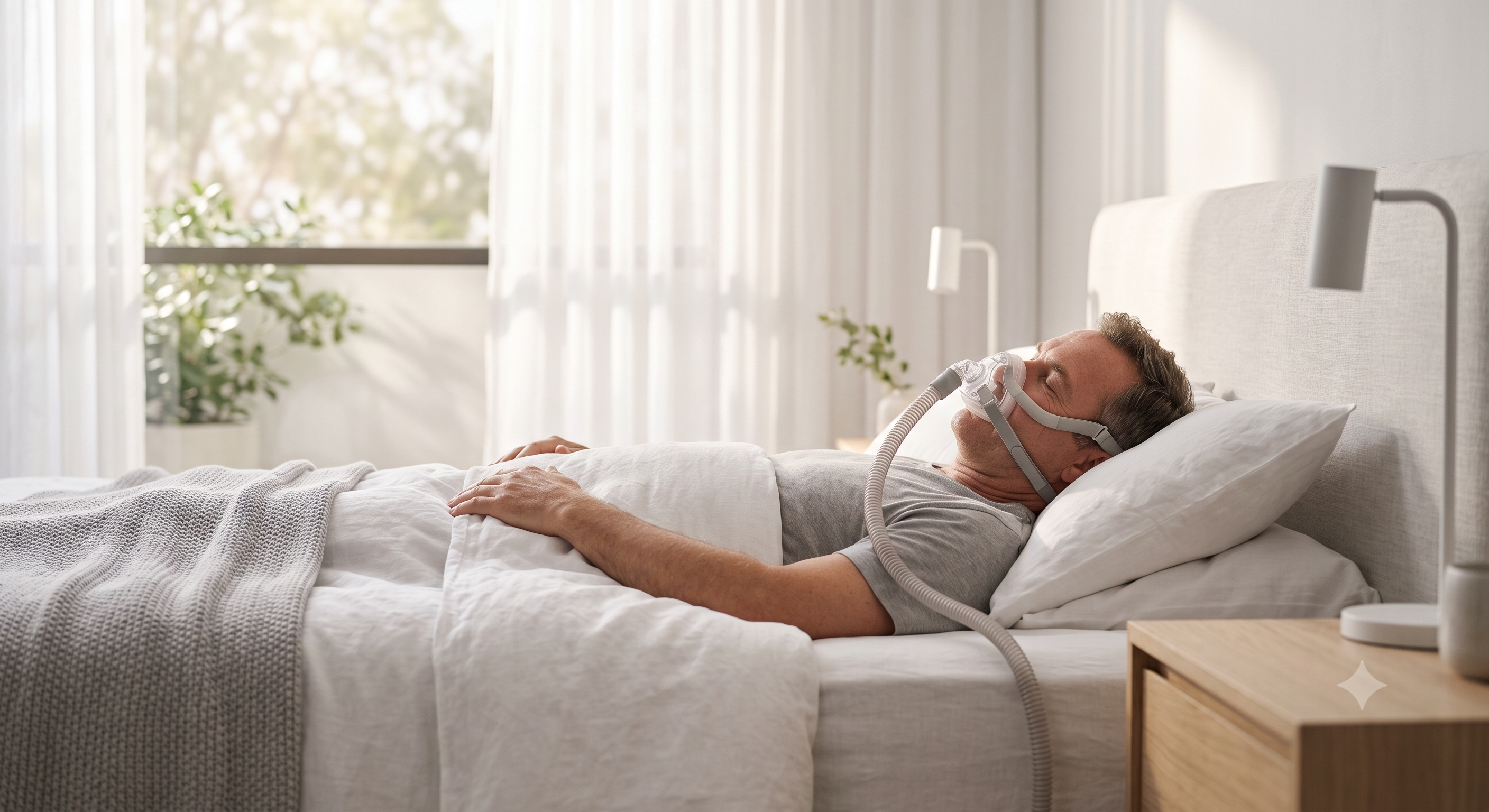
Sleep apnea is repeated stopping and starting of breathing during sleep, measured by the apnea-hypopnea index (AHI). It affects an estimated 24-33% of U.S. adults, with about 80% undiagnosed. Left untreated, severe obstructive sleep apnea raises overall mortality risk 3.0-3.8 times. The main types are obstructive, central, and mixed.
Sleep apnea is a breathing disorder in which airflow during sleep repeatedly pauses or drops, fragmenting sleep even when the person does not fully wake up. It is estimated to affect roughly 24-33% of U.S. adults — as many as 85.6 million people — and about 80% of cases go undiagnosed, often because the most obvious sign, loud snoring, happens while the person is asleep and unaware of it. Diagnosis and severity are both built around one measurement, the apnea-hypopnea index (AHI), covered in detail further down this page. If poor sleep in general is the bigger concern, why can't I sleep and sleep hygiene cover causes and habits that are not specific to apnea.
In plain terms, sleep apnea is repeated stopping and restarting of breathing during sleep. An "apnea" is a pause in airflow lasting at least 10 seconds; a "hypopnea" is a partial reduction in airflow that still disrupts sleep. Depending on what is causing the pauses — a blocked airway or a signal that misfires in the brain — sleep apnea is classified into different types, covered below under types of sleep apnea.
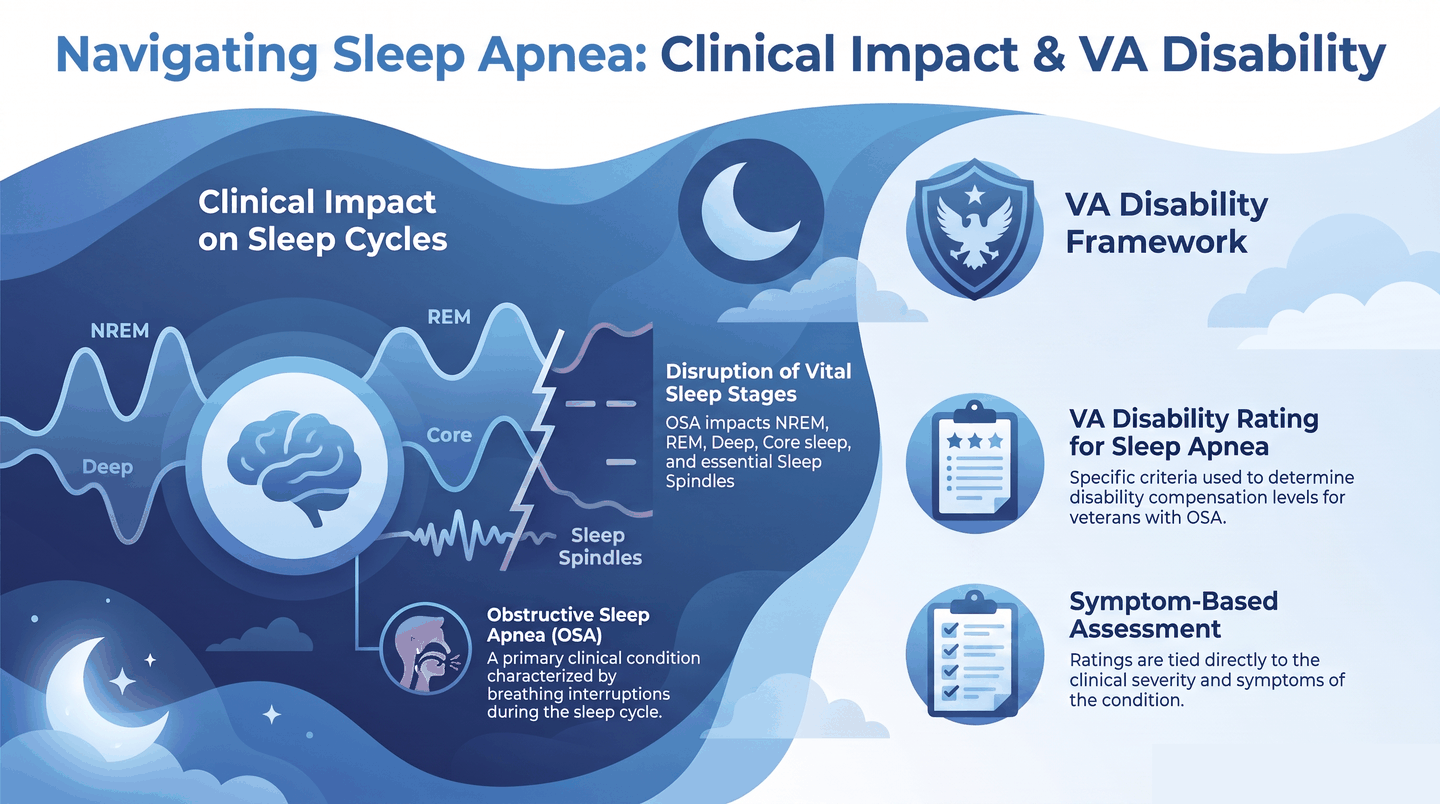
The symptoms of sleep apnea show up both during the night and during the day, and often the nighttime signs are noticed by a bed partner rather than the person experiencing them. Common nighttime symptoms include loud, habitual snoring; silent pauses in breathing followed by gasping, snorting, or choking sounds; and restless, frequently interrupted sleep. Because the underlying cause is 80% of cases going undiagnosed, many people live with these symptoms for years before they are recognized as a medical condition rather than "just snoring."
Daytime symptoms tend to follow directly from the fragmented, lower-quality sleep that apnea causes: morning headaches, a dry or sore throat on waking, difficulty concentrating, irritability, and heavy daytime fatigue.
Yes. Because breathing pauses repeatedly interrupt the deeper stages of sleep — even when they are too brief to cause full waking — the overall quality and restorative value of a night's sleep drops sharply, which shows up the next day as excessive daytime sleepiness. This is one of the most reported symptoms of sleep apnea and a common reason people first seek an evaluation, even before recognizing the nighttime breathing pauses themselves.
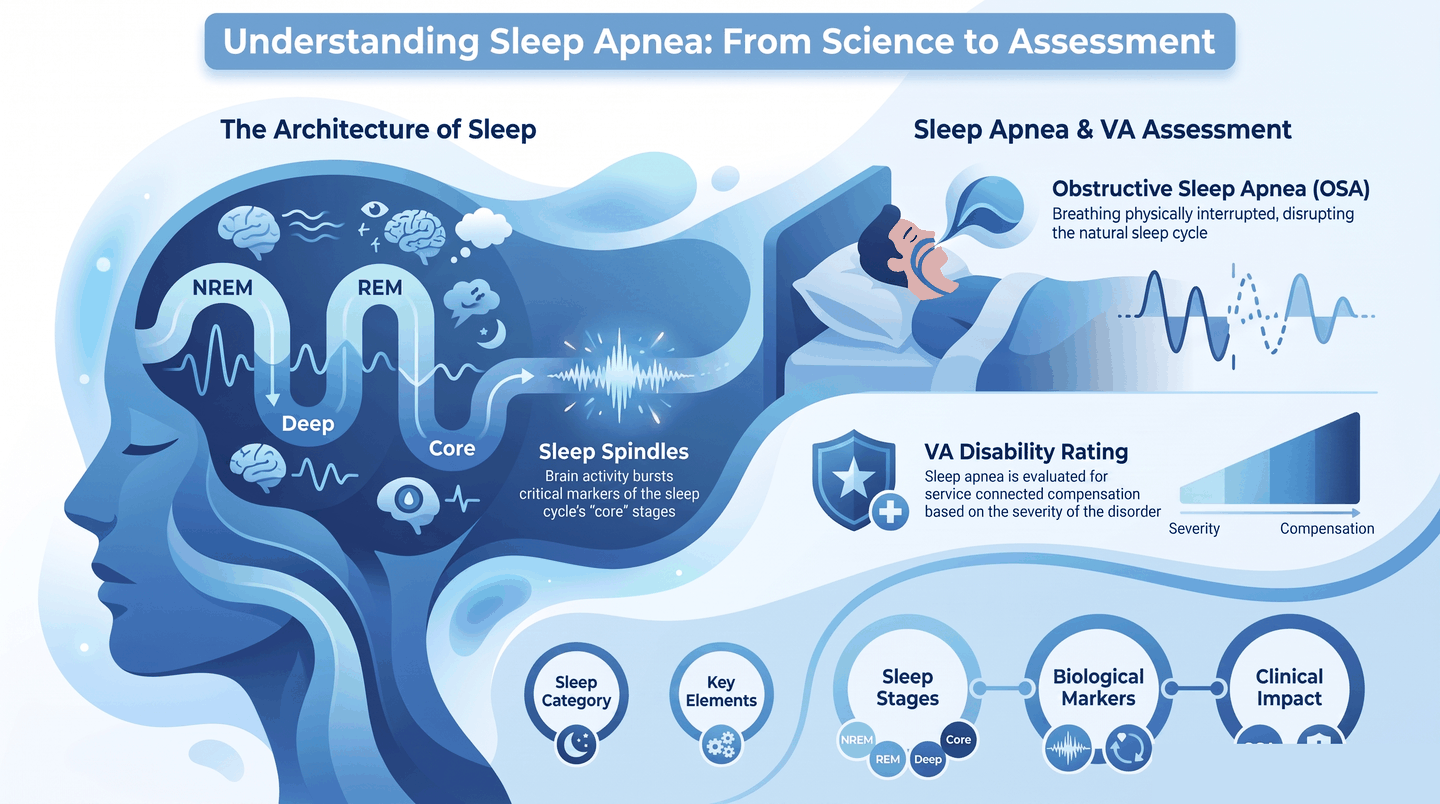
What causes sleep apnea depends on the type. Obstructive sleep apnea, the most common form, happens when the soft tissue at the back of the throat relaxes and collapses during sleep, physically narrowing or blocking the airway even though the brain is still signaling the body to breathe. Central sleep apnea has a different cause entirely: the airway stays open, but the brain temporarily stops sending the signal to breathe.
Several factors raise the risk of the obstructive form specifically, including excess weight and fat around the neck and airway, the natural narrowing of the airway with age, alcohol use before bed (which relaxes throat muscles further), sleeping on the back, and jaw or facial structure that leaves less room in the airway. Family history also plays a role, discussed in more detail under is sleep apnea genetic below.
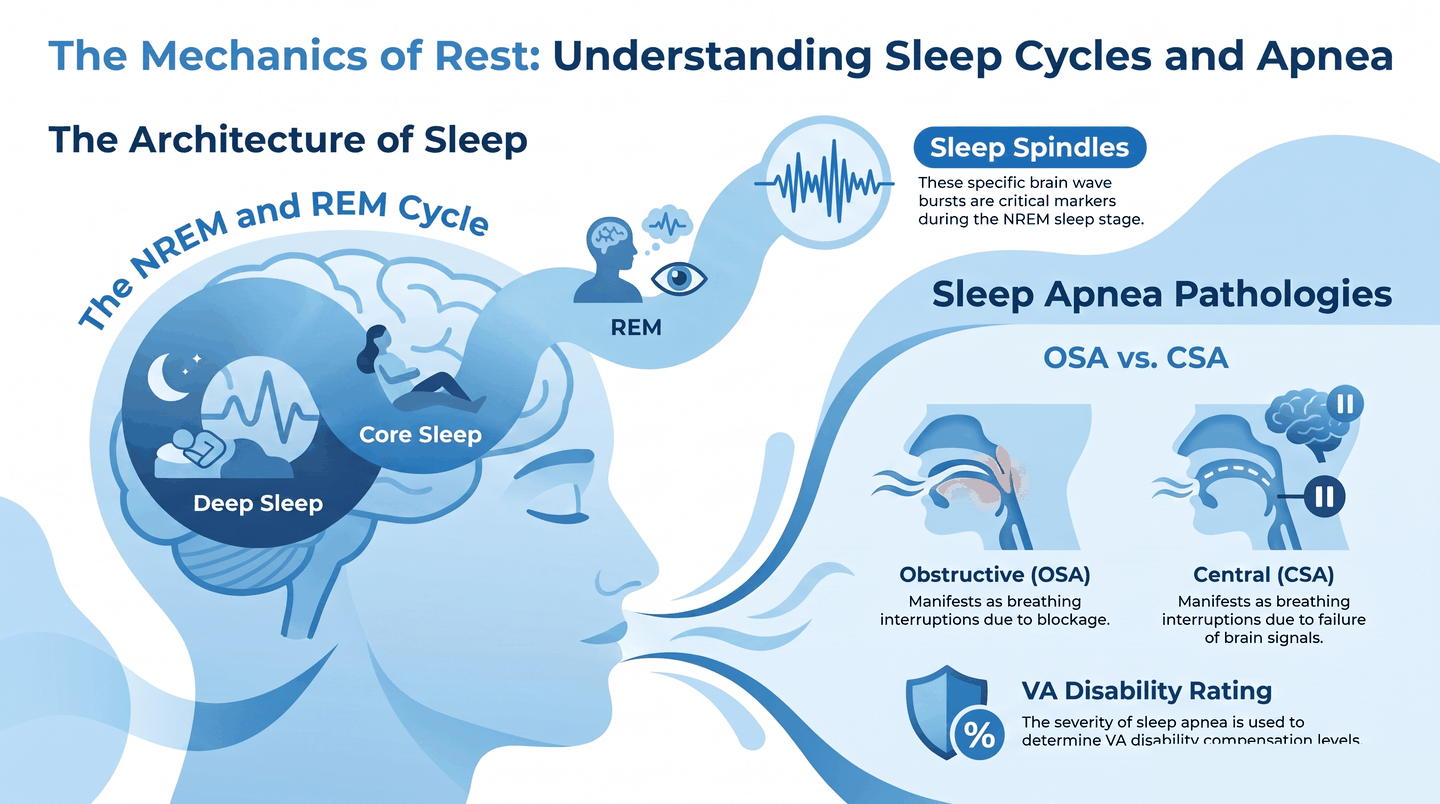
Central sleep apnea (CSA) is a form of sleep apnea in which the airway itself is not blocked — the problem is that the brain temporarily fails to send the signal to the muscles that control breathing. This is different from obstructive sleep apnea, where the airway physically collapses while the brain is still trying to trigger a breath. CSA is much less common than the obstructive form and is more often associated with other underlying conditions affecting the brainstem's breathing control, such as heart failure or use of certain opioid medications, rather than airway anatomy.
Because central and obstructive apnea have different underlying mechanisms, they are not always treated the same way, and a sleep study is generally needed to tell them apart. A "mixed" or complex pattern, where central and obstructive events both occur, is also possible.
There are three recognized types of sleep apnea: obstructive sleep apnea (OSA), caused by a physical blockage of the airway and by far the most common type; central sleep apnea (CSA), caused by the brain failing to signal the breathing muscles even though the airway is open; and mixed (complex) sleep apnea, in which a person has features of both obstructive and central events, sometimes emerging after treatment for one type reveals the other. Distinguishing between the types matters because the underlying cause, and therefore the most appropriate treatment path, is different for each.
Sleep apnea is not only an adult condition — it can occur in children as well, most often driven by enlarged tonsils or adenoids that narrow the airway rather than the weight-related factors more common in adults. Signs in children can look different from the adult picture and may include loud snoring, breathing pauses, restless sleep, mouth breathing, bedwetting, or daytime behavior and attention problems that can be mistaken for other issues. Any suspected breathing or sleep problem in a child is a reason to talk with a pediatrician.
Sleep apnea itself is not usually fatal on the spot, but leaving it untreated carries a real, measurable long-term risk: severe obstructive sleep apnea raises overall mortality risk by 3.0 to 3.8 times compared with people who do not have it. This elevated risk is generally driven by the cumulative strain repeated breathing pauses and oxygen drops place on the cardiovascular and metabolic systems over months and years, not by a single night's events. It is one of the clearest reasons that loud snoring with witnessed pauses in breathing, or heavy unexplained daytime sleepiness, should be brought to a doctor rather than dismissed.
Obstructive sleep apnea (OSA), the most common type, has a fairly recognizable symptom pattern: loud, habitual snoring; witnessed pauses in breathing during sleep; waking up gasping, choking, or snorting; a dry mouth or sore throat on waking; morning headaches; and significant daytime sleepiness or fatigue despite what seems like enough time in bed. Because OSA is estimated to affect 24-33% of U.S. adults with roughly 80% of cases undiagnosed, recognizing this specific pattern — rather than snoring alone — is often what leads someone to finally seek an evaluation.
Not necessarily. Snoring on its own, without breathing pauses, gasping, or choking sounds, does not automatically mean a person has sleep apnea, and plenty of people snore without having the condition. What tends to point toward obstructive sleep apnea specifically is a pattern where loud snoring is interrupted by silent gaps in breathing, followed by a gasp, snort, or choking sound as breathing restarts. That combination — snoring plus witnessed pauses — is the detail worth mentioning to a doctor.
Sleep apnea is not the result of one single inherited gene, but family history is recognized as a contributing risk factor, particularly for the obstructive type. Traits that are influenced by genetics — such as jaw and facial structure, the natural size of the airway, and a tendency toward weight gain — can all make a person more prone to airway collapse during sleep, and these traits often run in families. That said, non-genetic factors like body weight, alcohol use, and sleeping position also play a major role, so a family history of sleep apnea raises the odds without making the condition inevitable. Anyone with close relatives who have sleep apnea, combined with symptoms of their own, has good reason to bring it up with a doctor.
In U.S. medical records and insurance billing, sleep apnea is documented using a specific diagnostic code from the ICD-10 classification system, with separate codes distinguishing obstructive sleep apnea, central sleep apnea, and unspecified sleep apnea. The exact code a provider uses depends on the type confirmed by a sleep study, and it is what insurers, including Medicare, use to determine coverage for testing (such as CPT codes for in-lab or home sleep studies) and treatment like CPAP or Inspire therapy. Because coding affects both diagnosis records and insurance coverage, the correct ICD-10 code is something a treating physician or sleep specialist assigns directly, based on the specific test results — it is not something to self-diagnose or select without a formal evaluation.
Sleep apnea in women can present differently than the "classic," more male-associated pattern of loud snoring and witnessed breathing pauses. Women with sleep apnea more often report symptoms such as fatigue, low energy, morning headaches, insomnia-like difficulty sleeping, and mood changes, rather than snoring being the most obvious complaint. Because these symptoms overlap with other common conditions, sleep apnea in women is thought to be under-recognized, which fits within the broader pattern of roughly 80% of sleep apnea cases overall going undiagnosed. Anyone experiencing persistent unexplained fatigue alongside poor sleep quality has reason to raise sleep apnea specifically with a doctor, even without loud snoring.
Severe sleep apnea describes a case with a high number of breathing interruptions per hour of sleep, well above the minimum diagnostic threshold. Diagnosis in general requires an AHI (apnea-hypopnea index) of at least 5 per hour together with symptoms, or at least 15 per hour even without reported symptoms — severe cases sit far above either threshold. The stakes of severity are significant: untreated, severe obstructive sleep apnea is linked to a 3.0 to 3.8 times higher risk of death overall, which is why severe cases are typically prioritized for active treatment such as CPAP rather than lifestyle changes alone.
Mild sleep apnea sits at the lower end of the severity range, closer to the minimum diagnostic threshold (an AHI of 5 or more per hour with symptoms) than to the sharply elevated risk seen in severe cases. Even mild sleep apnea is still a real diagnosis worth treating and monitoring, since breathing interruptions and their effect on sleep quality and daytime functioning can still be meaningful, and mild cases can also progress over time, particularly with weight gain or aging.
AHI stands for apnea-hypopnea index — the number of apneas (breathing pauses) and hypopneas (partial reductions in airflow) counted per hour of sleep, typically measured during a sleep study. The AHI is the central number used both to diagnose sleep apnea and to describe how severe it is. A diagnosis generally requires an AHI of at least 5 per hour together with symptoms, or at least 15 per hour even without symptoms. From there, a higher AHI generally corresponds to more severe disease and a stronger case for active treatment, since the elevated mortality risk associated with untreated severe obstructive sleep apnea (3.0-3.8 times higher) is tied to the cumulative burden of frequent, sustained breathing interruptions.
AHI is measured using a sleep study. In-lab, attended polysomnography (billed under CPT codes 95810/95811) is the traditional standard, while an unattended home sleep apnea test (CPT 95806) is a more accessible option for many patients. Cost differs meaningfully between the two: Medicare-based comparisons put a home test around $169 versus roughly $625 for an in-lab study, and another cost analysis found home testing averaging about $419 versus about $746 for in-lab testing.
Talk to a doctor if any of the following apply:
Sleep apnea is confirmed with a sleep study, not by symptoms alone. Given that roughly 80% of cases go undiagnosed and that untreated severe cases carry a meaningfully higher mortality risk, evaluation and, if needed, treatment are best guided by a doctor rather than self-diagnosis.