Sleep Hygiene: The Complete Guide to Better Sleep Habits
🕐 9 min read📅 Updated July 2026
Quick Answer
Sleep hygiene is the set of habits and bedroom conditions that support consistent, good-quality sleep: a fixed wake time, a dim wind-down routine, a cool dark room (around 65–68°F), and limiting caffeine within about six hours of bedtime. It works by supporting the body's homeostatic sleep drive and circadian rhythm together.
Good sleep is governed by two coordinated internal systems: a homeostatic sleep drive that builds pressure to sleep the longer you are awake, and a circadian rhythm, run by the brain's suprachiasmatic nucleus, that times sleep to roughly a 24-hour light-dark cycle. Sleep hygiene is simply the practical framework for supporting both of these systems at once — call it the Drive-and-Rhythm framework. Habits like a consistent wake time and a dark bedroom reinforce the circadian side; avoiding long naps and heavy late caffeine protects the homeostatic side. When both are supported, falling asleep and staying asleep both get easier.
What Is Sleep Hygiene
Sleep hygiene refers to the everyday behaviors and environmental factors that either support or undermine sleep quality. It is not one action but a collection of habits working together: when you go to bed and wake up, how much light and stimulation you get before bed, what you eat and drink in the hours beforehand, and the physical setup of the room you sleep in.
The reason these habits matter comes down to basic sleep biology. Wakefulness is maintained by an arousal system in the brain, while sleep is triggered by a different set of brain regions that release calming signals once the pressure to sleep is high enough and the internal clock says it is nighttime. Sleep hygiene habits work by removing the things that interfere with that handoff — a bright phone screen, a hot room, caffeine still active in the bloodstream — so the body's own sleep systems can do their job.
Good Sleep Hygiene
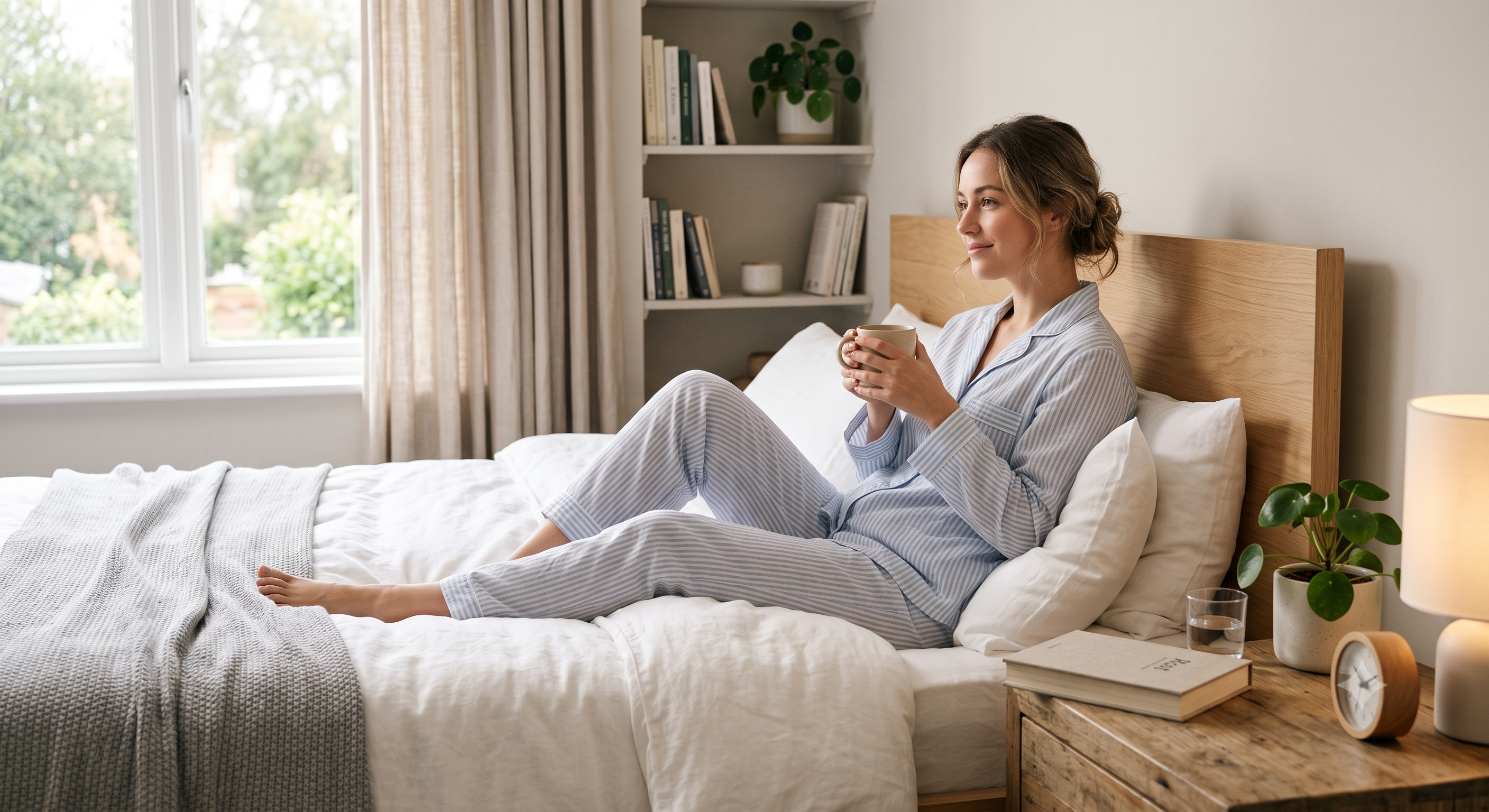
Good sleep hygiene looks like a set of habits that reliably line up with the body's natural rhythms: a bedtime and wake time that barely change from day to day, a dim and quiet environment in the hour before bed, and a bedroom kept cool, dark, and comfortable. None of these habits work in isolation — the value comes from doing most of them most nights, not from any single "trick."
Poor Sleep Hygiene
Poor sleep hygiene shows up as the mirror image: an irregular schedule that shifts by hours from weekday to weekend, bright screens and overhead lighting late at night, caffeine or alcohol close to bedtime, and a bedroom that is too warm, too bright, or too noisy. Alcohol in particular is worth flagging because it is commonly assumed to help sleep — in fact it suppresses REM sleep and fragments the second half of the night, and it can worsen sleep-related breathing problems. Over time, these patterns can chip away at the deep, slow-wave sleep the body relies on for physical repair and memory processing.
Good vs. Poor Sleep Hygiene — Key Habits
Habit
Good Hygiene
Poor Hygiene
Schedule
Same wake time every day, including weekends.
Wake time shifts by hours between weekdays and weekends.
Caffeine
None within about 6 hours of bedtime (average half-life ~5 hours).
Caffeine within a few hours of bed, still active overnight.
Bedroom temperature
Cool, roughly 65–68°F.
Warm room that fights the body's natural temperature drop.
Light
Dim lights before bed, blackout curtains block outside light.
Bright screens and light leak disrupt the circadian rhythm.
The habits that support sleep and the ones that undermine it both act on the same two systems: the circadian rhythm and the homeostatic sleep drive.
How to Improve Your Sleep Hygiene
Improving sleep hygiene works best as a small set of consistent changes rather than an overnight overhaul. The habits below all target either the circadian side (timing and light) or the homeostatic side (sleep pressure) of the Drive-and-Rhythm framework.
Anchor your wake time. A fixed wake time, seven days a week, is one of the strongest signals for the circadian system, since it is driven largely by light exposure timed to your internal clock.
Wind down without screens. Dim the lights and step back from bright screens in the hour before bed. Blue light is a well-known melatonin suppressor, but overall light intensity and timing matter too, not just screen color.
Cut off caffeine early. Caffeine's average half-life is about 5 hours (with a genetically driven range of roughly 1.5 to 9.5 hours), and even a dose taken 6 hours before bed can measurably disrupt sleep. As a practical rule, avoid caffeine within about 6 hours of bedtime.
Skip the nightcap. Alcohol may feel sedating, but it suppresses REM sleep and fragments the later part of the night.
Keep naps short. Short naps of 20–30 minutes can aid recovery, but long or frequent naps can eat into the sleep pressure you need to fall asleep easily at night.
Cool the room down. A bedroom around 65°F (about 18.3°C), within a comfortable range of roughly 65–68°F, supports the body's natural overnight temperature drop.
If you want the full list to keep on hand, see the checklist in the next section.
Sleep Hygiene Checklist & Practices
Use this checklist as a practical reference — a version you could print or save as a personal sleep hygiene tips PDF for quick nightly review.
Sleep Hygiene Tips PDF (Printable Checklist)
Wake up at the same time every day, including weekends.
Get natural light exposure earlier in the day to reinforce your circadian rhythm.
Stop caffeine at least 6 hours before bedtime.
Avoid alcohol close to bedtime — it suppresses REM sleep and fragments later sleep.
Dim household lights and step away from bright screens an hour before bed.
Keep naps to 20–30 minutes, earlier in the day.
Set the bedroom temperature to roughly 65–68°F.
Use the bed only for sleep, keeping the bedroom associated with rest.
Block outside light with blackout curtains and reduce noise where possible.
Consistency matters more than perfection: a habit followed most nights outperforms an occasional "perfect" night surrounded by irregular ones.
Healthy Sleep Habits & Bedtime Routine
A bedtime routine works by cueing both the body and the mind that sleep is coming, gradually lowering arousal in the run-up to lights-out. A simple, repeatable sequence — dim lights, a quiet low-stimulation activity, then bed — is more effective than an inconsistent one, because predictability itself is part of what makes the routine work.
Consistent Sleep Schedule
A consistent sleep schedule is arguably the single highest-leverage habit in sleep hygiene, because sleep timing is governed by the circadian rhythm, run by the suprachiasmatic nucleus, which relies on regular timing cues to stay stable. Shifting your schedule by hours between weekdays and weekends effectively creates a mild, recurring "jet lag." Recommended sleep duration also varies by age: adults generally need at least 7 hours a night, and research shows a U-shaped relationship between sleep duration and mortality risk, with the lowest risk around 7–8 hours. Sleeping consistently short (under 7 hours) or consistently long (9 or more hours) is each associated with somewhat higher mortality risk in population studies.
Sleep Etiquette
Sleep etiquette refers to the habits that respect a shared sleep environment — for a partner, a household, or roommates. That includes keeping noise and light considerate of someone else's sleep, communicating about schedule differences, and being mindful that habits like late-night screen use or snacking can affect a shared bedroom. Where a fan or other steady background sound is used, white noise mainly works by masking disruptive sounds rather than proven to independently improve sleep quality.
Sleep Hygiene for Teenagers
Teenagers need more sleep than adults — generally 8 to 10 hours a night for ages 13–18 — yet their schedules are often pushed later by school start times, homework, social life, and evening screen use. The same core sleep hygiene principles apply, but they are harder to maintain against these competing pressures.
For teens specifically, the most useful levers are the same ones that matter for adults: a consistent wake time even on weekends, reducing bright screen use in the hour before bed, and keeping the bedroom cool and dark. Because the circadian system responds to light regardless of age, irregular sleep timing during the teen years disrupts the same underlying rhythm as it does in adults — it is just more often triggered by school and social schedules than by choice.
Blackout Curtains & Sleep Environment
Light is the single strongest external timing cue for the circadian rhythm. Light, particularly blue light, is detected by specialized light-sensitive cells in the eye and relayed to the suprachiasmatic nucleus, which uses it to set the body's internal clock. Artificial light at night can suppress melatonin and shift that internal timing later, which is part of why a dark bedroom is such a consistently recommended habit.
Blackout curtains address this directly by blocking outside light, streetlights, and early morning sun, removing one of the most common and easily fixed disruptions to a stable sleep environment. Beyond light, a supportive sleep environment also means a cool room (roughly 65–68°F), reduced noise, and a bed reserved mainly for sleep rather than other activities.
When to See a Doctor
Sleep hygiene habits help with everyday sleep quality, but they are not a substitute for medical evaluation. Consider seeing a doctor if:
You or a bed partner notice loud snoring with pauses in breathing, gasping for air at night, or heavy daytime sleepiness despite adequate time in bed — these can point to sleep apnea, which is estimated to go undiagnosed in about 80% of cases.
You have trouble falling or staying asleep at least 3 nights a week for 3 months or more despite good sleep habits — this pattern defines chronic insomnia, for which cognitive behavioral therapy for insomnia (CBT-I) is the recommended first-line treatment.
You or your child act out dreams physically during sleep, which can be a sign of a rarer sleep disorder worth discussing with a physician.
You grind your teeth at night with jaw pain or tooth damage — a dentist can evaluate for a night guard.
This article is educational and does not replace personalized medical advice.
Frequently Asked Questions
What is sleep hygiene in simple terms?
Sleep hygiene is the set of habits and environmental conditions that support consistent, good-quality sleep, such as a regular sleep schedule, a dark and cool bedroom, and limiting caffeine and screens before bed. It is not a single action but a collection of routines that work together to support the body's natural sleep drive and circadian rhythm.
What is an example of good sleep hygiene?
Good sleep hygiene includes going to bed and waking up at the same time every day, keeping the bedroom around 65 to 68 degrees Fahrenheit, dimming lights and avoiding screens in the hour before bed, and avoiding caffeine within about six hours of bedtime since its effects can last roughly five hours on average. Each habit supports either the body's homeostatic sleep drive or its circadian rhythm.
What are signs of poor sleep hygiene?
Signs of poor sleep hygiene include an irregular bedtime and wake time, using screens or bright light late at night, drinking caffeine or alcohol close to bedtime, and a bedroom that is too warm, bright, or noisy. Over time these habits can fragment sleep and reduce the deep, slow-wave sleep the body needs for physical repair and memory consolidation.
How can I fix my sleep hygiene?
Start with one consistent change: fix your wake-up time seven days a week, since a stable wake time anchors the circadian rhythm more reliably than a fixed bedtime. Then layer in a dim, screen-free wind-down routine, a cool dark bedroom around 65 to 68 degrees Fahrenheit, and cut off caffeine at least six hours before bed. Small, consistent changes tend to hold up better than overhauling everything at once.
Is a consistent sleep schedule really that important?
Yes. Sleep timing is governed by the circadian rhythm, driven by the brain's suprachiasmatic nucleus, which reinforces itself through repetition. An irregular schedule keeps shifting that internal clock, which can make falling asleep and waking up feel harder even when total sleep time looks adequate. A consistent schedule, especially a fixed wake time, helps stabilize the body's internal clock.
What temperature is best for sleep hygiene?
The generally recommended bedroom temperature for sleep is around 65 degrees Fahrenheit (about 18.3 degrees Celsius), with a comfortable range of roughly 65 to 68 degrees Fahrenheit. A cooler room supports the body's natural overnight drop in core temperature, which is part of how the body signals that it is time to sleep.
Do blackout curtains actually improve sleep?
Blackout curtains address a core driver of the circadian rhythm: light. The brain's suprachiasmatic nucleus uses light, especially blue light detected by specialized receptors in the eye, as its main timing cue, and artificial light at night can suppress melatonin and shift sleep timing. Blocking outside light and streetlight with blackout curtains removes one of the more common, avoidable disruptions to that signal.
Is sleep hygiene different for teenagers?
The core principles are the same, but teenagers need more total sleep than adults, generally 8 to 10 hours a night, and their schedules are often pushed later by school, social life, and evening screen use. Applying the same fundamentals, consistent timing, a dark cool room, and limited late caffeine and screens, matters just as much for teens, since irregular schedules disrupt the same circadian system at any age.
Sources
CDC — About Sleep (recommended sleep duration by age).