Best Pillows & Sleep Positions for Sleep Apnea
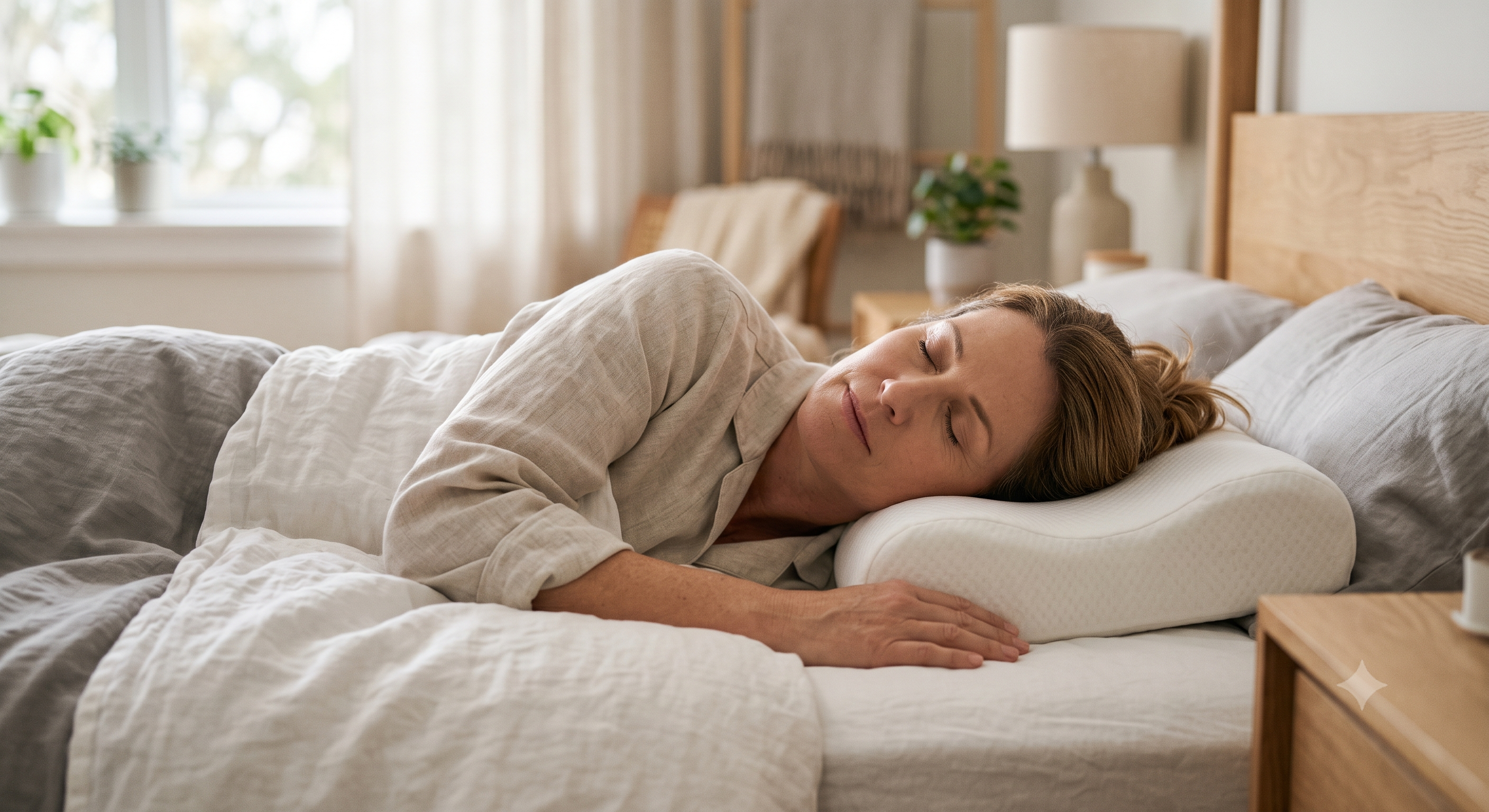
Side sleeping is generally the best position for sleep apnea, since back sleeping lets gravity narrow the airway. Wedge, cervical, and side-sleeper pillows can help maintain that position or add upper-body elevation, but no pillow cures sleep apnea — it supports a doctor-directed plan such as CPAP, not a substitute for one.
Choosing a pillow or position for sleep apnea is easiest to think through with a simple three-part framework: Side, Support, Stay. Side asks whether the sleep position itself is working against you; Support asks what kind of pillow best reinforces the position you need; and Stay asks the honest question of whether a pillow can actually keep you there — and whether that is enough on its own. This page walks through all three, in that order, and points out where a pillow is genuinely useful versus where it stops and a doctor's evaluation needs to start. For the condition itself, see sleep apnea, and for confirming a diagnosis, see sleep apnea test.
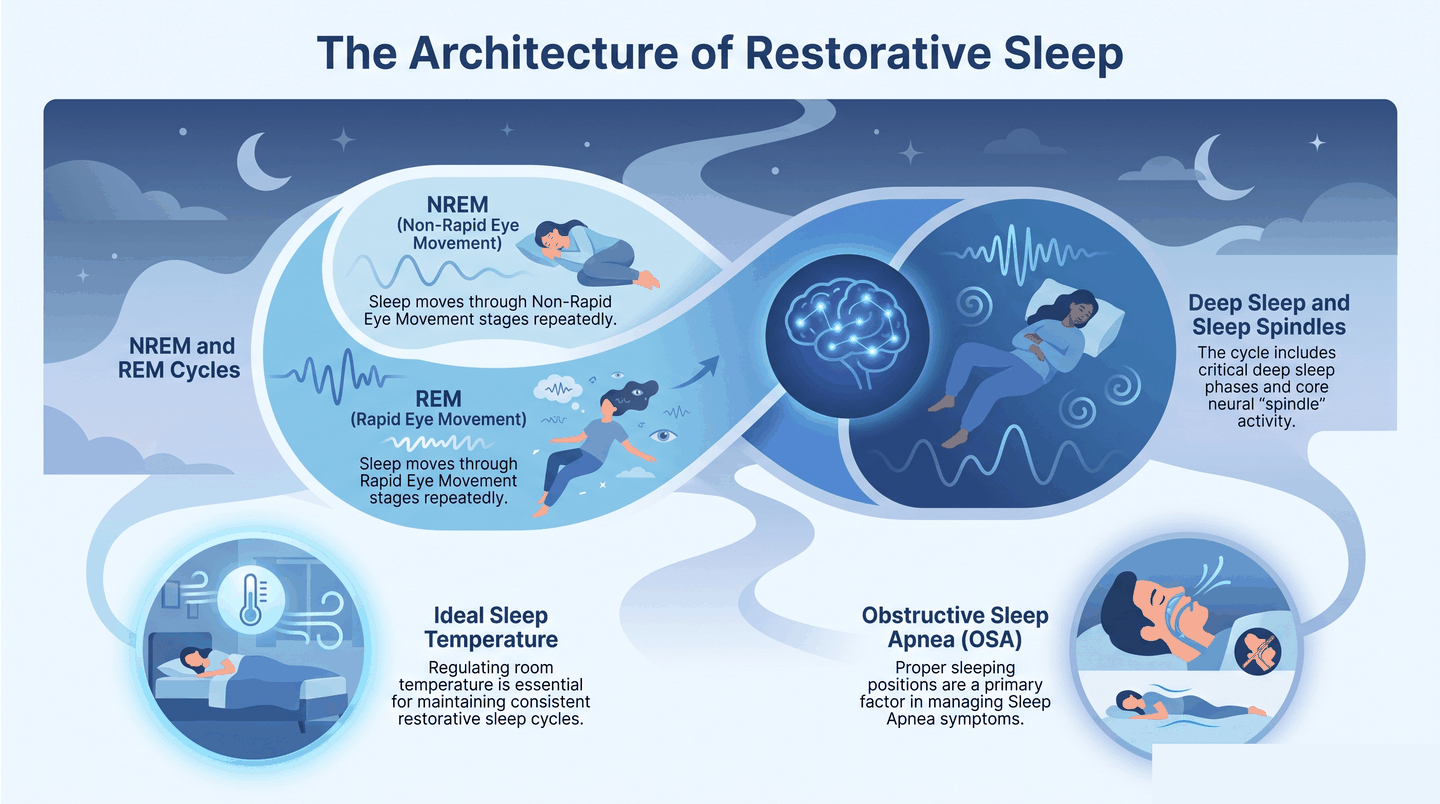
The position most commonly recommended for obstructive sleep apnea is side sleeping. Lying flat on the back allows gravity to pull the tongue and the soft tissue at the back of the throat backward, which narrows an already vulnerable airway — sleeping on the back is one of several recognized factors that can make obstructive sleep apnea worse, alongside excess weight, airway anatomy, and alcohol use before bed. Turning onto the side reduces that direct backward pull, which is why "positional therapy" — simply changing sleep position — is a strategy some people with mild cases use alongside, not instead of, medical guidance.
It is worth being clear about the limits here: changing position is a supportive habit, not a treatment that reverses a diagnosed case. Sleep apnea is confirmed through a sleep study measuring the apnea-hypopnea index (AHI), and moderate to severe cases still need an evaluated treatment plan. Anyone unsure whether their case is mild enough for position alone to matter should review sleep apnea test options or talk to a doctor.
For someone trying to stay on their side through the night, the most useful pillow is one that keeps the neck and spine aligned while making it harder to comfortably roll onto the back. Contoured cervical pillows, firmer side-sleeper pillows, and long body pillows placed against the back or between the knees all serve this purpose in different ways — the common thread is stability, not a specific material or brand. A pillow that is too soft or too low tends to let the head tip forward or the body drift back toward a supine position over the course of the night, which defeats the purpose.
None of these pillow types are a diagnosis-level fix. They work by making a helpful position easier to hold, which is useful groundwork whether or not someone also uses a CPAP machine as part of their treatment.
A wedge pillow raises the upper body at an incline instead of lying completely flat. The idea is the same gravity logic that favors side sleeping: elevating the head and chest reduces how much the tongue and throat tissue can fall backward and narrow the airway, compared with lying flat on a standard pillow. Some people combine a wedge with side sleeping, using the incline for elevation and the side position to further reduce airway narrowing.
A wedge pillow is a positional aid, not a medical device, and it has not been shown to replace a diagnosed treatment plan. It may be worth trying alongside other habits covered in how to sleep better, but it should not delay evaluation if snoring, witnessed breathing pauses, or daytime sleepiness are present.
There is no single "best" sleep apnea pillow for everyone, because the right choice depends on what a person actually needs help with. In general, the most commonly recommended options fall into two categories: a wedge pillow for upper-body elevation, and a contoured or firm side-sleeper pillow for staying off the back. Some combination pillows attempt to do both at once. Whichever type is chosen, comfort matters as much as design — a pillow that is not comfortable enough to sleep through the night will not be used consistently, no matter how well it is designed.
The honest answer is: partially, and only for part of the problem. A supportive pillow can help someone maintain a side or elevated position that reduces mild airway narrowing tied to back sleeping. What it cannot do is treat the underlying condition. Obstructive sleep apnea is diagnosed using the apnea-hypopnea index (AHI) — generally an AHI of at least 5 per hour with symptoms, or at least 15 per hour without — and untreated severe cases carry a substantially higher long-term mortality risk. A pillow does not change that diagnostic picture or that risk on its own.
It also helps to see pillows in context next to standard treatment. CPAP therapy is the most established treatment for moderate to severe obstructive sleep apnea, yet long-term adherence is a real challenge — only an estimated 30-60% of CPAP users stay consistent with it over time. That adherence gap is one reason positional aids like pillows get attention: they are easy to use and low-effort. But "easy to use" is not the same as "clinically proven to treat," and a pillow should be treated as a complement to a doctor-directed plan, not a stand-alone alternative to it — especially given that sleep apnea is estimated to affect roughly 24-33% of U.S. adults, with about 80% of cases going undiagnosed in the first place.
A pillow or sleep position change is not a substitute for medical evaluation. See a doctor if any of the following apply:
Sleep apnea is confirmed with a sleep study, not by pillow choice or sleep position alone. Given that roughly 80% of cases go undiagnosed and untreated severe cases carry a meaningfully higher mortality risk, evaluation and treatment decisions are best guided by a doctor.