CPAP Machines for Sleep Apnea: Guide & Alternatives
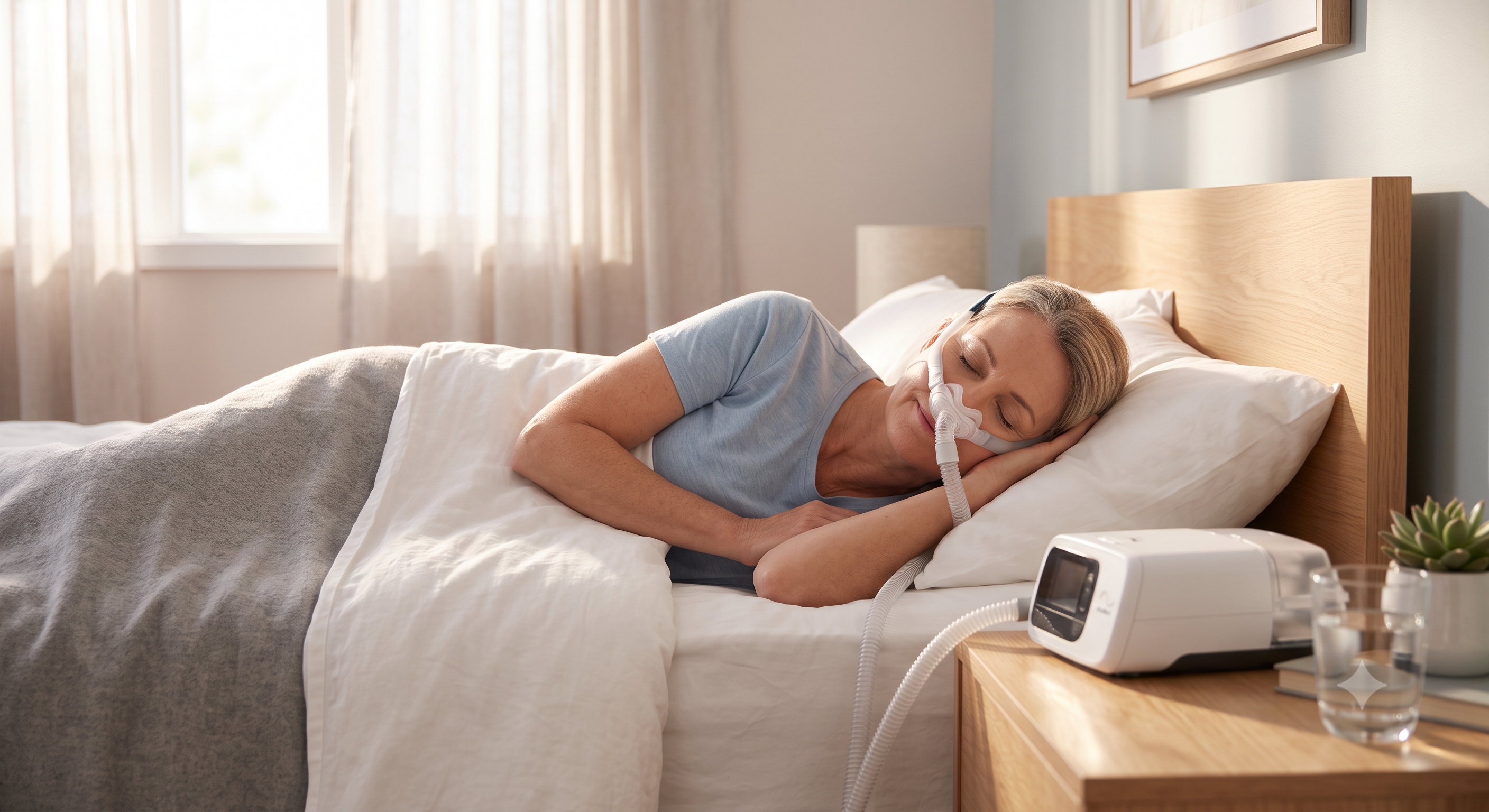
A CPAP machine treats sleep apnea by delivering steady pressurized air through a mask to keep the airway open overnight. It is the standard first-line device-based therapy, though only about 30 to 60% of users stay adherent long-term, which is why mask fit, machine type, and alternatives all matter.
Choosing and living with a CPAP machine for sleep apnea is easiest to think through with one framework: Diagnose → Device → Data. First, a sleep study establishes the Apnea-Hypopnea Index (AHI) that confirms obstructive sleep apnea and its severity. Second, that AHI and a person's anatomy point toward a specific device — CPAP, BiPAP, or APAP — and a mask style. Third, ongoing data from the machine, reviewed through its own app or third-party software, shows whether the therapy is actually working night to night. This guide walks through each stage, plus the devices, masks, and typical costs involved.
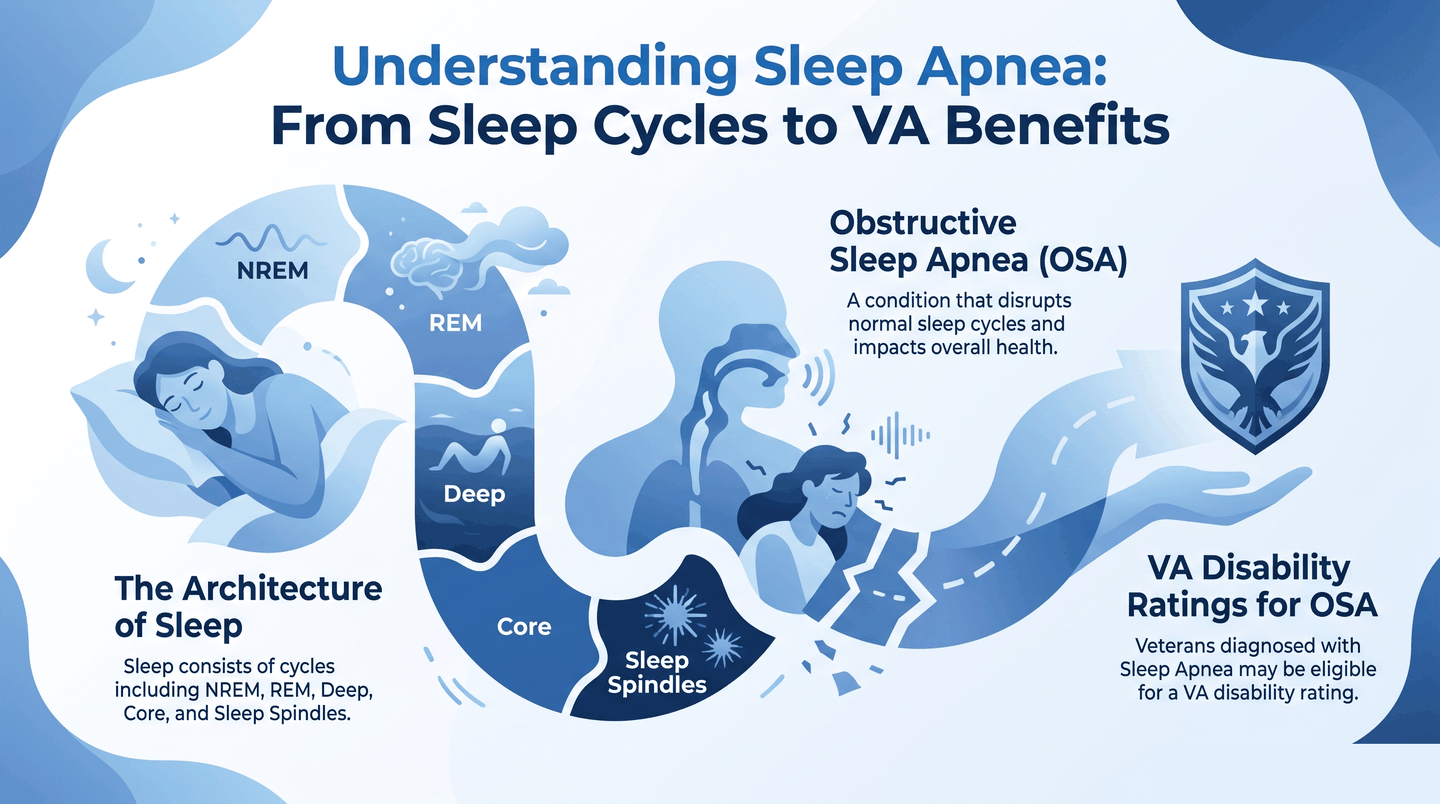
Sleep apnea itself is far more common than diagnosed. Obstructive sleep apnea (OSA) is estimated to affect roughly 24 to 33% of U.S. adults — up to about 85.6 million people — and an estimated 80% of cases go undiagnosed. A CPAP machine only becomes part of the picture once a sleep study confirms an AHI of 5 or higher with symptoms, or 15 or higher without symptoms, since that threshold is what defines a clinical diagnosis rather than occasional snoring. For background on symptoms and severity, see sleep apnea.
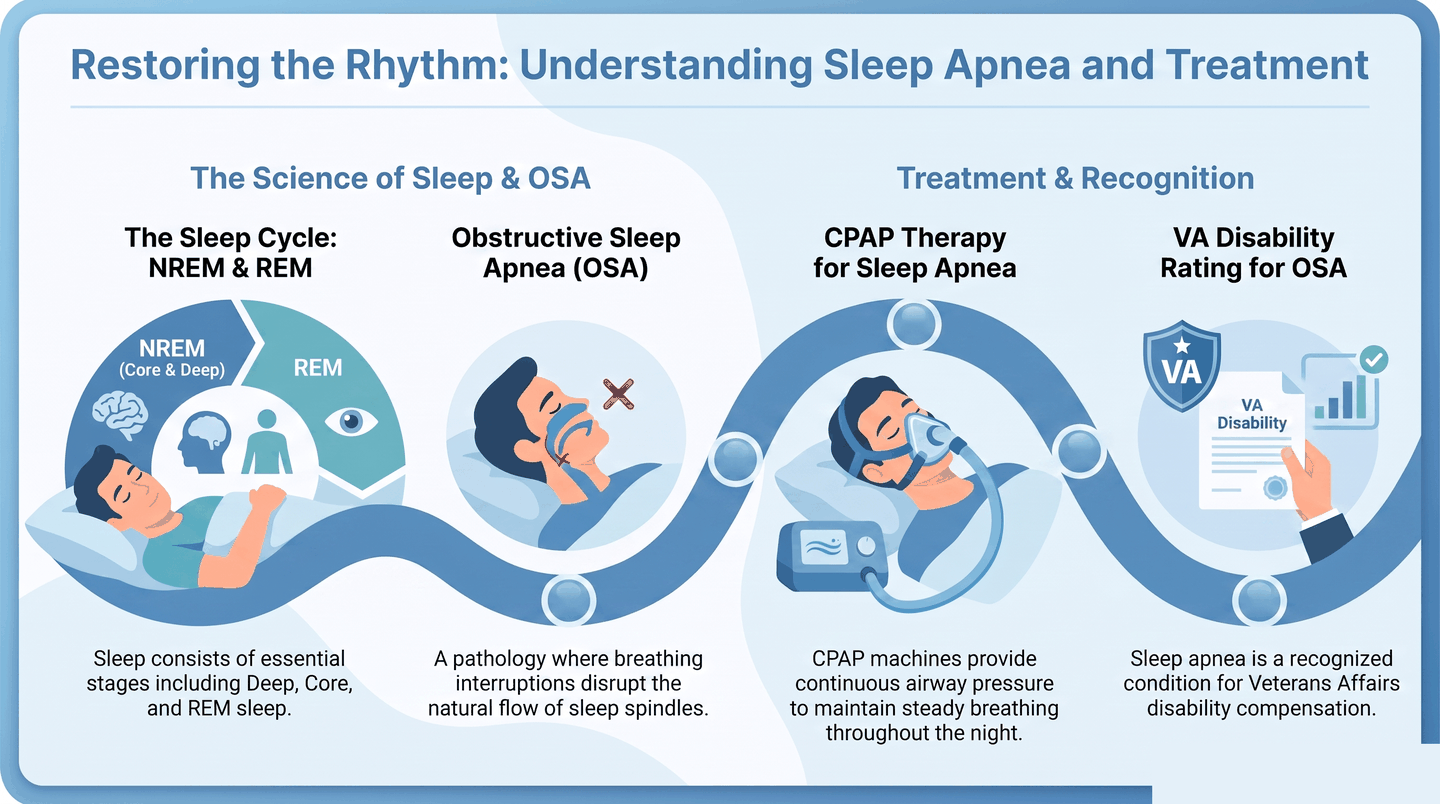
A CPAP (continuous positive airway pressure) machine is a bedside device that pushes a steady stream of pressurized air through tubing and a mask, splinting the airway open so it cannot collapse during sleep. It remains the standard first-line therapy for obstructive sleep apnea because it directly addresses the physical airway collapse that causes breathing pauses, rather than only managing symptoms.
The catch is adherence. Research shows only about 30 to 60% of CPAP users remain adherent to the therapy long-term, most often because of mask discomfort, air leaks, machine noise, or nasal dryness. That adherence gap matters clinically: untreated moderate-to-severe OSA is associated with a 3.0 to 3.8-fold higher risk of overall mortality, which is why clinicians often revisit mask fit, pressure settings, or alternative therapies rather than simply telling a patient to "try harder." For a fuller look at non-CPAP options, see sleep apnea treatment.
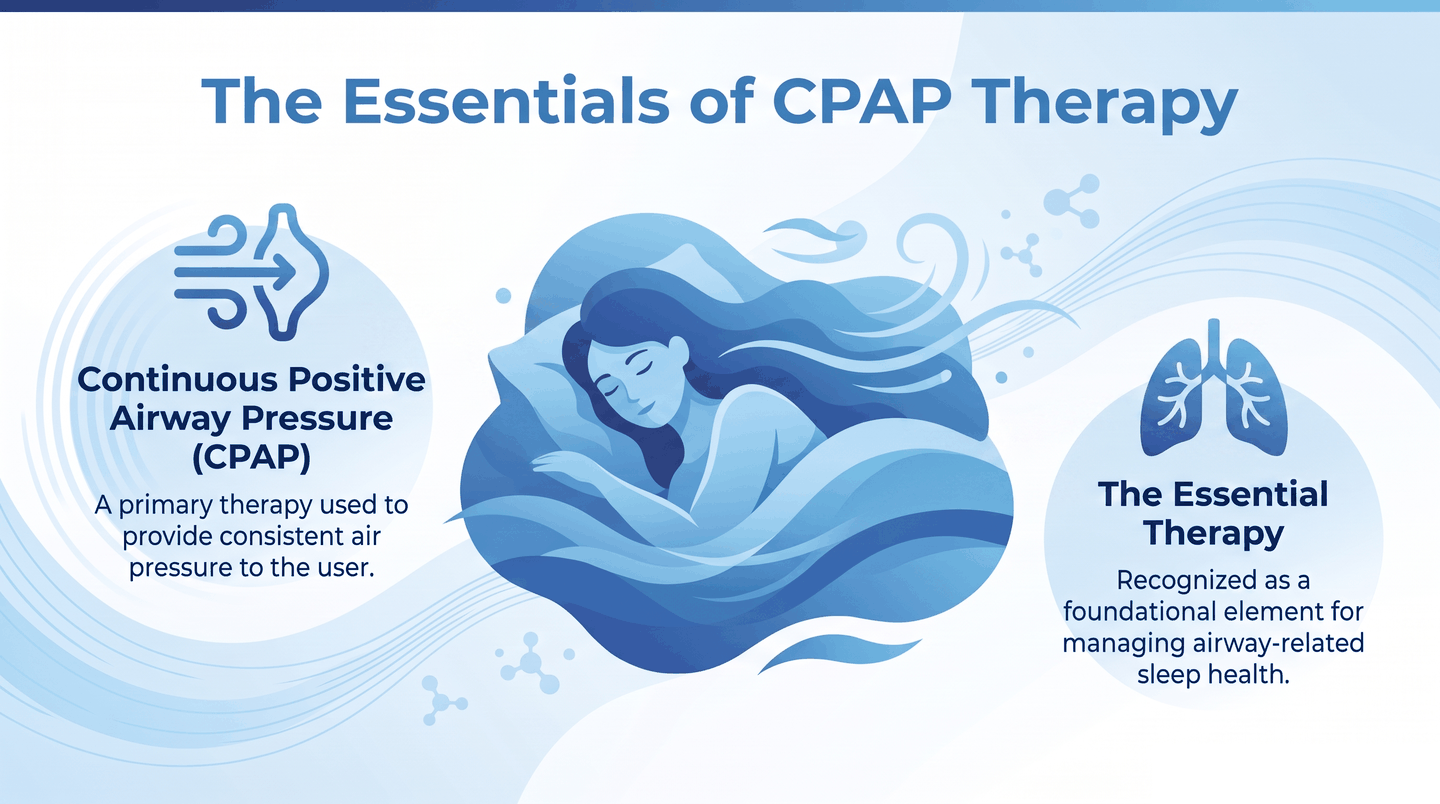
Continuous positive airway pressure describes the therapy principle behind three related device types, and understanding the difference helps explain why a sleep physician prescribes one over another:
All three work on the same core mechanism — pressurized air preventing airway collapse — and all depend on consistent nightly use to lower AHI and reduce the mortality risk tied to untreated moderate-to-severe OSA. The choice between them is a clinical decision based on sleep study results, not a matter of picking whichever sounds most advanced.
Because mask fit is one of the biggest drivers of whether someone sticks with CPAP, BiPAP, or APAP therapy, most suppliers offer three broad mask categories:
None of these mask types is universally "best" — the right choice depends on sleep position, whether someone is a mouth breather, and personal tolerance for material touching the face. Since mask discomfort is a leading reason people abandon therapy, most sleep clinics and DME suppliers allow mask exchanges within an initial trial period.
Beyond the CPAP, BiPAP, or APAP machine itself, a full sleep apnea equipment setup typically includes a mask, tubing, a humidifier chamber, disposable filters, and — for many patients — a home sleep test device used before treatment even begins. Home sleep apnea testing (billed under CPT code 95806) is generally far less expensive than an attended in-lab polysomnography study (CPT 95810/95811): Medicare-referenced pricing puts a home test around $169 versus about $625 for an in-lab study, while another published estimate lists roughly $419 for an at-home test versus about $746 in-lab.
For patients who cannot tolerate CPAP after a genuine trial, equipment options move beyond the mask-and-machine category entirely. The Inspire hypoglossal nerve stimulator, for example, is an implanted device rather than a nightly mask; it is FDA-approved for patients with an AHI between 15 and 100, a BMI of 40 or under, and central or mixed apneas making up less than 25% of their AHI, generally after CPAP has not worked. More on device and therapy alternatives is covered in sleep apnea treatment.
Replacement masks, tubing, filters, and humidifier chambers are usually ordered through a durable medical equipment (DME) supplier that is in-network with your insurance, since CPAP supplies are typically billed the same way other prescribed medical equipment is. A sleep clinic, home sleep testing provider, or pharmacy that carries respiratory equipment can also point patients to a local or mail-order DME supplier. Because supplies wear out and lose their seal over time, many suppliers set up a recurring replacement schedule once a prescription and insurance authorization are on file, rather than requiring a new order every time.
OSCAR (Open Source CPAP Analysis Reporter) is free, open-source software that reads the data card or built-in memory from a CPAP, BiPAP, or APAP machine and turns it into detailed charts covering AHI trends, mask leak rate, and pressure changes over time. It is popular with patients who want a more granular view of their therapy data than a manufacturer's companion app provides, and clinicians sometimes reference the same underlying data during follow-up visits. OSCAR is a data-review tool, not a diagnostic or treatment tool — any changes to pressure settings or therapy should still go through a sleep physician.
ResMed is one of the best-known manufacturers of CPAP, BiPAP, and APAP machines, alongside several other established brands in the category. The brand of machine is a secondary factor compared with the fundamentals that actually determine whether therapy works: an accurate AHI from a sleep study, a correctly prescribed pressure setting, and a mask that fits well enough to be worn consistently. Since adherence challenges (only 30 to 60% of users stay consistent long-term) are tied more to mask comfort and daily habit than to any single manufacturer, the practical advice is the same regardless of brand — confirm the specific model and features with a DME supplier or sleep clinic, since machine specifications and available options change over time and should be verified directly.
There is no single verified retail figure for a CPAP, BiPAP, or APAP machine itself, since pricing depends heavily on insurance coverage, supplier, and machine features — that number is best confirmed directly with a DME provider or insurer rather than estimated. What is documented is the cost of the diagnostic step and of one major device alternative. A home sleep apnea test runs roughly $169 to $419 depending on the source, versus about $625 to $746 for an attended in-lab study. For patients whose OSA does not respond to CPAP, the Inspire implant is a documented reference point: total cost is typically estimated around $30,000 to $40,000, with Medicare patients commonly reporting $2,000 to $6,000 out of pocket.
Cost also carries a different weight for a severe sleep apnea machine, since untreated moderate-to-severe OSA is linked to a 3.0 to 3.8-fold higher risk of overall mortality — a factor that often pushes both patients and clinicians toward pursuing therapy even when out-of-pocket costs or mask discomfort are a barrier. For U.S. veterans, cost also intersects with VA disability policy: the VA currently rates sleep apnea at 0%, 30%, 50%, or 100%, and a veteran who requires a CPAP machine is automatically rated at 50%. A proposed 2025 policy change would shift ratings toward treatment effectiveness, meaning some veterans with well-controlled CPAP therapy could see their rating fall to 10%, though veterans already rated are expected to be protected by grandfathering provisions.
A CPAP machine only helps if sleep apnea is properly diagnosed and the therapy is actually working. Seek medical evaluation if:
This article is educational and does not diagnose sleep apnea or recommend a specific device, pressure setting, or mask for any individual. Therapy decisions should be made with a sleep physician based on a sleep study. See sleep apnea for general symptoms and severity information.