Sleep Masks: Best Eye Masks for Sleeping
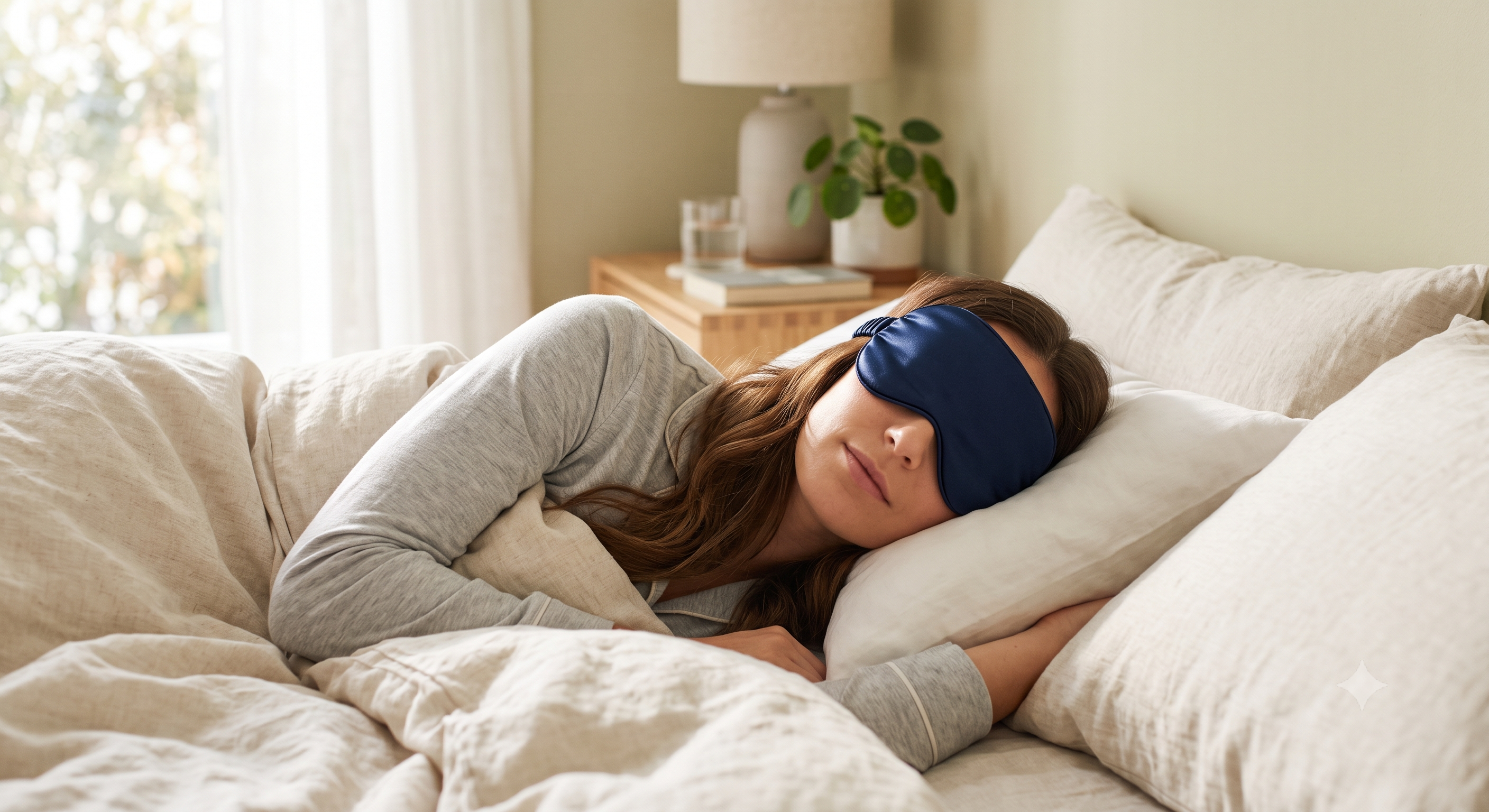
The best sleep mask depends on your main problem. A silk sleep mask suits sensitive skin and hot sleepers, a weighted sleep mask adds gentle pressure some people find calming, a 100% blackout mask blocks the most light for bright rooms or shift work, and a sleep mask with headphones adds audio for people who also want to block sound.
Shopping for the best eye mask for sleeping gets simpler with one framework: the Block, Weight, or Boost test. Every sleep mask is built around one primary job — blocking light (silk, blackout, contoured styles), adding weighted pressure, or boosting the experience with built-in audio. Most buying guides mix these together, but knowing which job you actually need narrows a crowded market fast. Light matters more than most people assume: artificial light at night is picked up by light-sensitive cells in the retina and can suppress melatonin and shift your body's internal clock, so a mask that fully blocks light is doing more than just making a room feel darker.
A silk sleep mask is the most common style because the fabric itself is the selling point. Silk's smooth, low-friction surface is marketed as gentler on skin and eyelashes than cotton or polyester, which is why silk masks are often recommended for people with sensitive skin, contact lens wearers, or anyone who has eyelash extensions. Some sleepers also find silk more temperature-regulating, feeling less clammy against the face than synthetic fabric. These are comfort and marketing claims rather than clinically studied outcomes, so the right material still comes down to personal skin sensitivity and how warm or cool you tend to sleep.
Fit matters as much as fabric. A silk mask that sits flat against the face can shift during the night and let light in around the nose or temples, especially for side sleepers. Look for an adjustable strap and enough width to stay in place without pressing directly on closed eyelids.
A weighted sleep mask applies gentle, even pressure across the eyes and forehead using small beads or padded fill sewn into the fabric shell. The idea borrows from weighted blankets: distributed pressure that many people describe as calming or grounding. That description is a comfort and marketing claim, not a medically proven sleep treatment, and independent evidence specific to weighted eye masks is limited, so results are highly individual. If you're sensitive to warmth or dislike anything touching your face while you sleep, a lighter, unweighted mask is the safer starting point.
The Nodpod weighted sleep mask is one of the best-known products in this category, built with a soft fabric shell filled with tiny beads that mold loosely to the shape of your face rather than sitting flat like a strapped mask. It's typically worn without a tight elastic band, relying instead on its own weight to stay in place, which some side sleepers find more comfortable than a mask with a snug strap. As with any weighted mask, treat the calming effect as a comfort preference rather than a clinical benefit.
Choosing the single best eye mask for sleeping comes down to how completely it blocks light and how well it fits your sleep position. Flat, single-panel masks are the cheapest and most common, but they're also the most likely to let light leak in at the edges. Contoured masks, built with raised eye cups, solve that problem by keeping fabric off your eyelids and eyelashes entirely, which also lets you blink freely inside the mask.
A mask marketed as a 100% blackout sleep mask is designed to seal out light completely around the nose bridge, temples, and cheeks, usually with a molded or contoured shape plus an adjustable strap. This matters more than it might seem: light exposure at night is detected by light-sensitive cells in the retina and can suppress the hormone that times your sleep-wake cycle. A full light seal is most valuable for shift workers sleeping during the day, people in bright bedrooms, or anyone using a mask on a plane or during travel across time zones.
The Alaska Bear sleep mask is a widely recommended budget-friendly option, typically made from mulberry silk with a contoured or slightly padded shape designed to reduce pressure on the eyes while still blocking light. It's frequently used as an entry point into silk masks because it combines the fabric benefits of silk with a low price point, rather than as a specialized blackout or weighted product.
The Manta Sleep Mask takes the contoured approach further with fully adjustable eye cups that let each cup be moved independently to match your eye shape and depth, so nothing touches your eyelids or lashes at all. That design is aimed squarely at side sleepers and people who want to be able to open their eyes fully inside the mask in total darkness, at the cost of a bulkier profile than a flat silk mask.
A sleep mask with headphones combines light-blocking fabric with built-in audio, usually through flat fabric speakers sewn into the strap rather than hard earbuds, so lying on your side is more comfortable. These masks are aimed at people who already fall asleep to music, podcasts, or a sound machine and want to block light at the same time instead of using two separate products. It's worth knowing that audio like white noise mainly works by masking disruptive sounds so you're less likely to wake up; that masking effect is well established, but it hasn't been shown to directly improve sleep quality on its own. For a full breakdown of which audio actually helps versus just masks noise, see best noise machines for sleep.
A Bluetooth sleep mask connects wirelessly to a phone or tablet, removing the tangled cord problem that comes with plugging standard headphones into a mask. The trade-off is a built-in battery and charging module, which adds a small amount of bulk and weight compared to a plain silk or blackout mask, and means one more device to keep charged before bed.
If you searched for "sleeping mask" and landed here looking for the Laneige Lip Sleeping Mask, it's worth clarifying up front: it's an overnight lip skincare product you apply before bed, not an eye mask. It shares the word "sleeping mask" with the products on this page purely by naming convention and has nothing to do with blocking light, adding weight, or playing audio. If you're after an eye mask for sleeping, the silk, weighted, blackout, and headphone options above are the relevant category.
A sleep mask is a comfort and light-blocking tool, not a medical treatment. Talk to a doctor rather than relying on a mask if: