Best Sleep Headphones and Earbuds
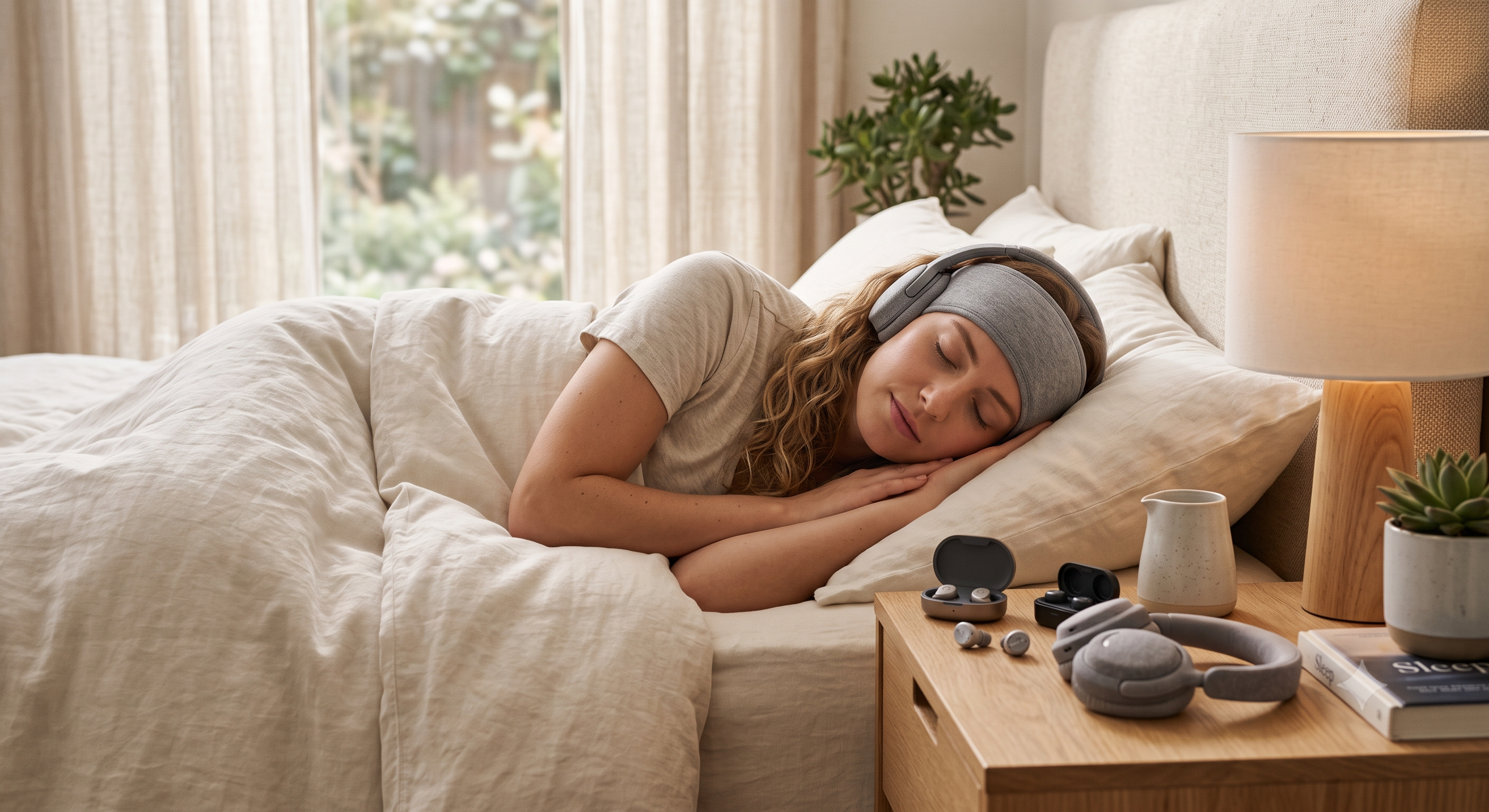
The best sleep headphones fit flat against or over the ear so side sleeping is comfortable — flat earbuds, headband speakers, or true sleep-earbud designs like Ozlo or Soundcore's sleep line. Noise cancelling and sound masking (white or pink noise) can reduce disruption, but comfort for your sleep position matters most.
Choosing among sleep headphones, earbuds, and headbands comes down to one practical framework: the Comfort-Isolation-Wake test. Comfort asks whether the device presses painfully into a pillow when you lie on your side. Isolation asks whether it blocks or masks the sound that is disturbing you. Wake asks whether it still lets you hear something urgent, like an alarm. A style that fails the comfort check will not stay on your head all night, no matter how good its sound or isolation is.
Unlike daytime headphones, sleep headphones are judged first by how they lie against a pillow for hours, not by studio sound quality. That is why the market has split into a few distinct shapes — small in-ear buds, over-ear noise cancelling designs repurposed for sleep, flat headband speakers, and dedicated "sleep earbud" products — each trading off comfort, isolation, and battery life differently.
Earbuds are the most common sleep headphone format because they are small enough to disappear under a blanket and light enough not to tug at the ear when you turn over. The design detail that matters most for sleep is profile: a bud with a long stem or a bulky housing pressing outward from the ear canal will dig into a pillow the moment you roll onto your side. Sleep-specific earbuds are built flush or nearly flush with the outer ear for exactly this reason.
Fit and seal also affect how much outside noise gets blocked passively, before any noise cancelling or masking sound is added. A snug silicone tip that seals the ear canal reduces incoming sound on its own, similar in principle to how a physical barrier reduces disturbance before any active technology is involved.
Ozlo Sleep Buds are part of a newer category of earbuds designed specifically around sleep rather than adapted from everyday wireless earbuds, with a low-profile shape intended to sit comfortably against a pillow. As with any sleep-specific product, exact comfort, battery life, and noise-blocking specifications vary by model and are best checked directly against the manufacturer's current listing rather than assumed.
If you sleep on your side, prioritize a flat, low-profile earbud shape or a headband style over anything with a protruding stem or hard shell. The Comfort-Isolation-Wake test is especially useful here: hold the earbud against your ear the way it would sit while lying down, and check whether it would press uncomfortably into a pillow before you buy.
Within the side-sleeper category, the earbuds that tend to work best are the ones built with a flush, rounded housing and a soft, low-pressure tip rather than a firm daytime-style tip. Testing comfort for at least one full night, if a return window allows it, is the most reliable way to confirm fit, since ear shape varies enough from person to person that no single earbud works comfortably for everyone.
Active noise cancelling headphones reduce steady, low-frequency sounds like engine hum or HVAC noise by generating an inverse sound wave, which is different from sound masking. Masking, such as white noise, works by covering a disruptive sound with a steadier one rather than cancelling it outright. Consistent background sound like a fan is understood to reduce how much a sudden noise disturbs sleep through this masking effect, though it has not been shown to improve sleep quality on its own beyond that.
A newer angle in the sound research is pink noise, which is tuned closer to the rhythm of natural brain wave activity. In small, still-preliminary studies, pink noise playback has been associated with an increase in slow-wave (deep) sleep and next-day memory performance, though the body of evidence remains limited. If you want to compare dedicated sound-generating devices rather than headphones, see our guide to the best noise machines for sleep.
Because over-ear noise cancelling headphones were designed for sitting or walking rather than lying down, they are usually the least comfortable option for side sleeping among the styles covered here; they tend to suit back sleepers better.
There is no single "best" headphone for sleep because the right choice depends on sleep position, sensitivity to in-ear pressure, and whether you want noise masking, noise cancelling, or simple passive blocking. Run each candidate through the Comfort-Isolation-Wake test: confirm it will not hurt against a pillow, confirm it blocks or masks the sound that is actually disturbing you, and confirm you can still hear something important if you need to.
Wired sleep earphones remain a straightforward option for some sleepers because they have no battery to manage and are often lighter without a charging case built in, though a cord can catch or pull if you move a lot overnight. Wireless sleep earbuds remove the cord problem but need regular charging and add a small amount of extra weight and electronics to the earpiece. Neither format is inherently better for sleep — the tradeoff is cord management versus charging routine.
A sleep headphone headband uses thin, flat speaker discs built into a soft fabric or fleece band worn over the ears, so nothing sits inside the ear canal at all. This avoids the in-ear pressure and earwax contact that can bother some earbud users, and the flat shape is naturally suited to side sleeping since there is no bud protruding outward. The tradeoffs are a bulkier item to pack for travel and, on some models, less precise or private sound than an in-ear seal provides.
Headband styles are also a common choice for people who find any in-ear object irritating, or who want to combine sound with an eye mask in one piece of gear.
Soundcore markets an earbud line specifically positioned for sleep, following the same low-profile, in-ear approach as other dedicated sleep earbuds. As with Ozlo and other sleep-specific brands, treat marketed comfort claims, battery figures, and noise-blocking ratings as manufacturer specifications to verify directly rather than figures to take at face value, since independent, sleep-lab-grade testing of specific consumer earbud models is not part of the general sleep research base.
Sleep headphones are a comfort tool, not a medical device, and masking a sound is not the same as treating what is causing it. Talk to a doctor if:
Wearing headphones to mask disruptive sound is a comfort choice; it does not rule out or replace evaluation for conditions like sleep apnea or chronic insomnia.