Silk Bonnets, Caps and Hair Wraps for Sleeping
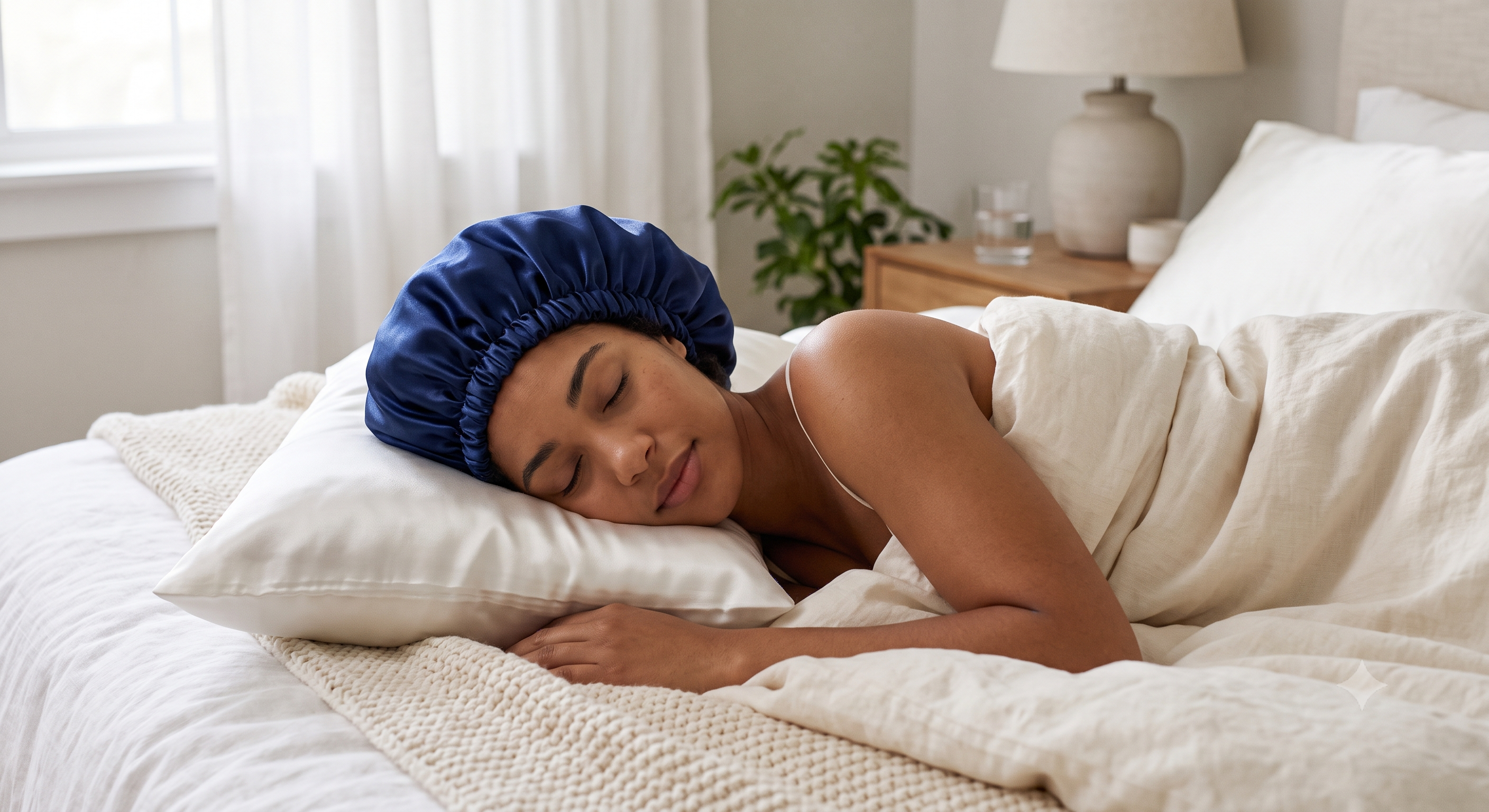
Silk bonnets, sleep caps, and hair wraps all work by reducing friction between hair and a pillowcase overnight, which helps limit tangling, breakage, and frizz. Satin and silk bonnets suit most hair types and are the most common option, sleep caps offer a snugger fit, and hair wraps are better suited to longer hair or protective styles. Curly hair generally benefits most from a loose, breathable covering.
Choosing between a satin sleep bonnet, a sleep cap, and a hair wrap comes down to one simple framework: coverage vs. fit. A bonnet gives broad, loose coverage that is quick to put on. A cap fits more snugly against the head, which can help it stay put through the night. A wrap gives the most control, since the fabric is wound and tied around the hair itself, which makes it a common choice for protective styles like braids or twists. None of these products are medical devices — they are simply fabric barriers designed to reduce the rubbing that happens naturally as you move in your sleep.
A satin sleep bonnet is the most widely used option because it is affordable and works for nearly every hair type. Satin fabric is typically woven from polyester or a similar synthetic fiber to create a smooth, glossy surface that mimics the low-friction feel of silk. That smooth surface is the whole point: rougher fabrics like cotton grip onto hair strands as you turn in your sleep, while satin lets hair glide instead of catching, which can help reduce tangling and frizz over time.
Most satin bonnets use a wide elastic band at the opening to hold the bonnet in place without pulling tightly on the hairline. Because satin does not breathe as well as natural silk, some people find a satin bonnet feels warmer overnight, which is worth considering if you tend to run hot while sleeping or prefer a cooler bedroom.
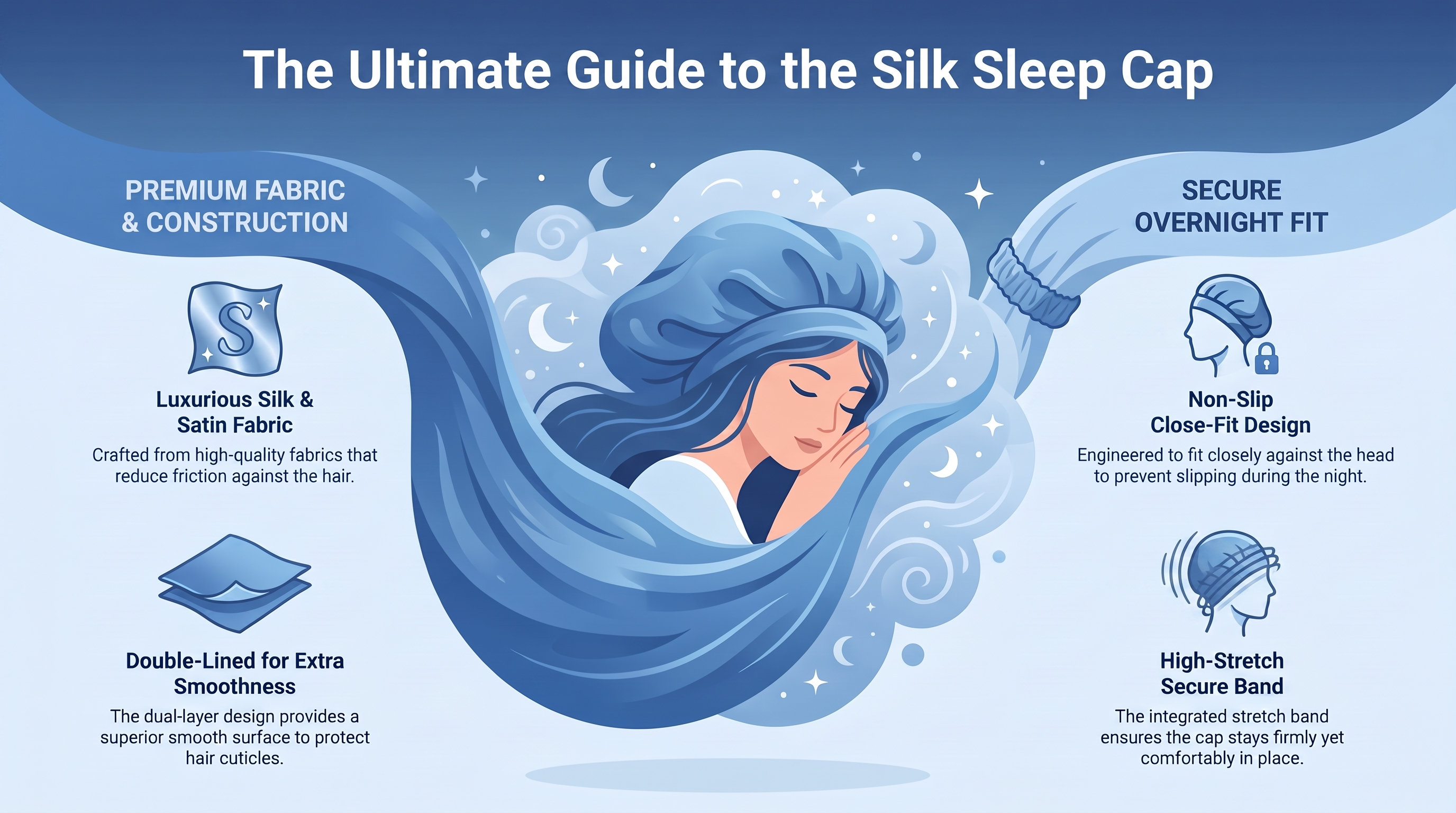
A sleep cap takes a different approach to the same goal. Rather than sitting loosely over the hair like a bonnet, a cap is cut to fit more closely against the head, similar to a knit or fitted hat. This closer fit can make a cap less likely to slip off during the night, which is useful for people who toss and turn or who have shorter hair that a looser bonnet does not hold well.
When shopping for a hair cap for sleeping, the fabric matters as much as the fit. A cap made from silk or satin gives the same friction-reducing benefit as a bonnet, just in a snugger silhouette. Look for a cap with some stretch in the band so it feels secure without pressing uncomfortably on the hairline or forehead, and consider a double-lined design if you want extra smoothness against both the hair and the scalp.
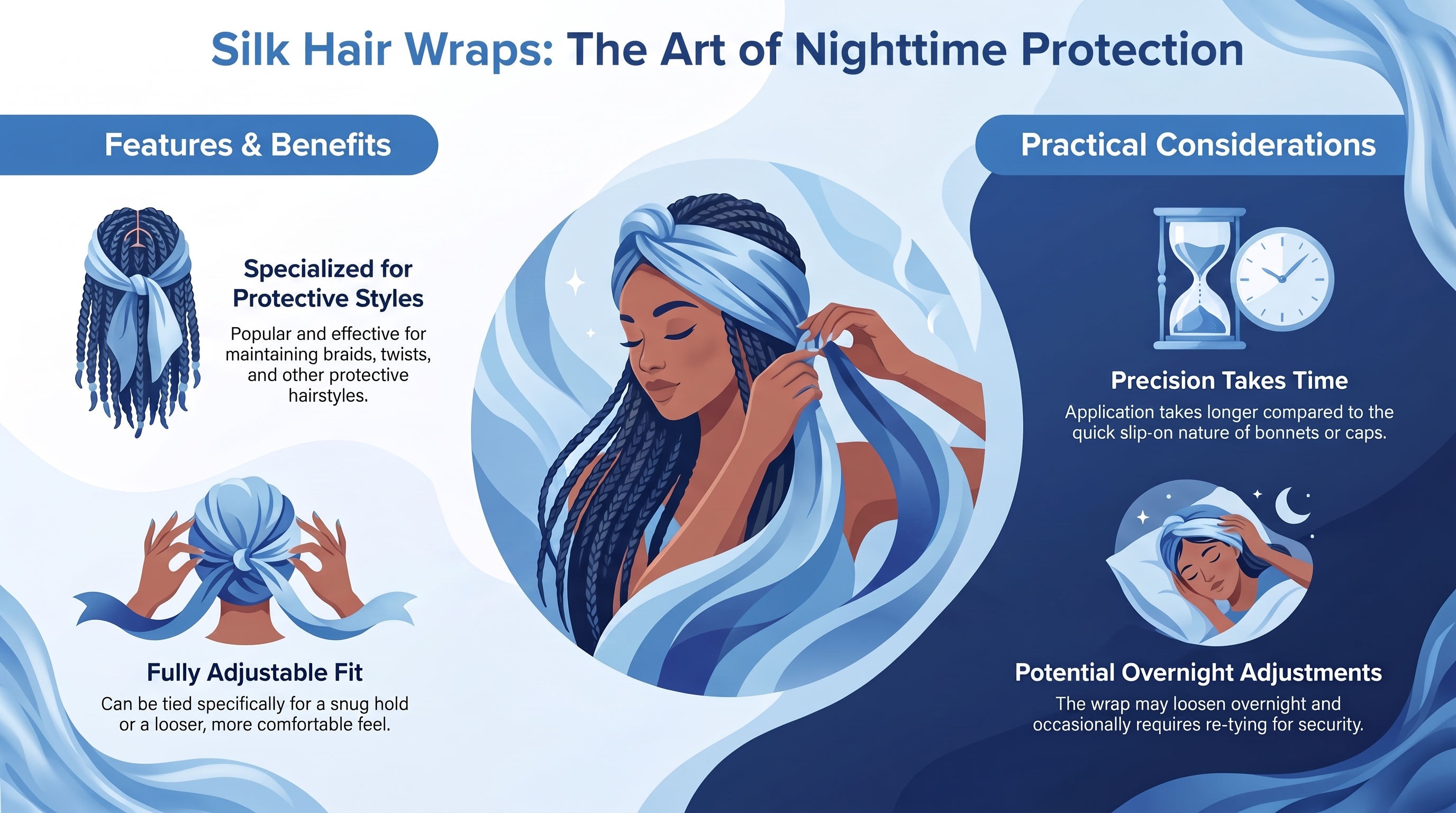
A silk hair wrap for sleeping is a long piece of fabric that is wound around the head and tied, rather than pulled on like a cap. This style gives more control over how the hair is secured, which is why it is a popular choice for people wearing braids, twists, or other protective styles that benefit from being fully gathered and covered rather than left loose under a bonnet.
Because a wrap is adjustable, it can also be tied more loosely for comfort or more snugly to keep longer hair fully contained. The trade-off is that a wrap generally takes longer to put on correctly than slipping on a bonnet or cap, and it may need to be re-tied if it loosens overnight.
Beyond the basic satin bonnet, hair bonnets for sleeping come in a few variations worth knowing about. Single-layer bonnets are lightweight and breathable, while double-lined bonnets add a second layer of fabric for extra smoothness and durability. Some bonnets include an adjustable drawstring or elastic toggle instead of a fixed band, which allows for a more customized fit as hair volume changes — for example, after adding a protective style or on wash day.
Whichever style you choose, a bonnet that touches hair and scalp every night should be washed regularly to prevent a buildup of natural oils, hair products, and sweat, which can transfer back onto hair and reduce how smooth the fabric feels over time.
Sleeping with wet hair is not dangerous, but it is not ideal either. Hair is generally more fragile when wet, so the added friction of moving against a pillowcase overnight can make tangling and breakage more likely compared to sleeping with dry hair. Wet hair pressed against fabric for hours can also take longer to fully dry, which some people find uncomfortable. Where possible, letting hair air-dry partially before bed, or covering damp hair with a smooth, breathable bonnet or wrap, can help reduce the friction-related wear that comes with sleeping on wet strands.
Curly hair tends to need a slightly different approach than straight hair because curls are more prone to frizz and losing their shape from friction. A common method is gathering hair loosely on top of the head — sometimes called "pineappling" — using a soft, silk or satin scrunchie rather than a tight elastic, which avoids creasing the curl pattern. Covering the gathered hair with a silk or satin bonnet or wrap adds another layer of protection against rubbing on the pillowcase.
Protective hairstyles for sleep — such as loose braids, twists, or a low bun — are another way to reduce overnight friction, especially for curly or textured hair. These styles gather and secure hair so fewer strands are exposed to direct contact with a pillowcase. Pairing a protective style with a silk or satin bonnet or wrap generally gives the most complete protection, since the style controls the hair while the fabric covering reduces friction on whatever is still exposed.
Hair bonnets, caps, and wraps are simple fabric accessories, not medical devices, and most hair and scalp concerns are unrelated to the sleepwear itself. That said, it's worth checking in with a doctor or dermatologist if you notice:
These symptoms fall outside what any sleepwear accessory can address and are best evaluated by a medical professional.