Dust mites in bed are almost universal, and there is a simple reason: the bed is their perfect home. It stays warm through the night, it turns humid from body sweat, and it collects the dead skin flakes they feed on. Put those three together and your mattress, pillows, and bedding become the single richest habitat for dust mites in the whole house.
Dust mites live in bed because it is warm, humid, and full of shed skin flakes — their ideal conditions. They gather most in the mattress, pillows, and bedding, and spread to carpet and upholstery too. They do not bite or spread disease; the problem is the allergens in their waste.
Below we walk through exactly where dust mites settle — mattress, carpet, pillows, couch, and clothes — and finish with a control routine we call the 130-50-HEPA Rule: hot-wash at 130°F, keep humidity under 50 percent, and vacuum with HEPA. First, the numbers worth knowing.
millionsMites a used mattress & bedding can hold, per allergy sources (AAFA)
Dust Mites in Mattress
Dust mites in a mattress are the core of the problem, because the mattress gathers more skin flakes and holds more warmth and moisture than anything else you own. Over years of nightly use, a mattress and its bedding can build up a very large mite population — on the order of tens of thousands to millions, according to allergy sources such as the Asthma and Allergy Foundation of America.
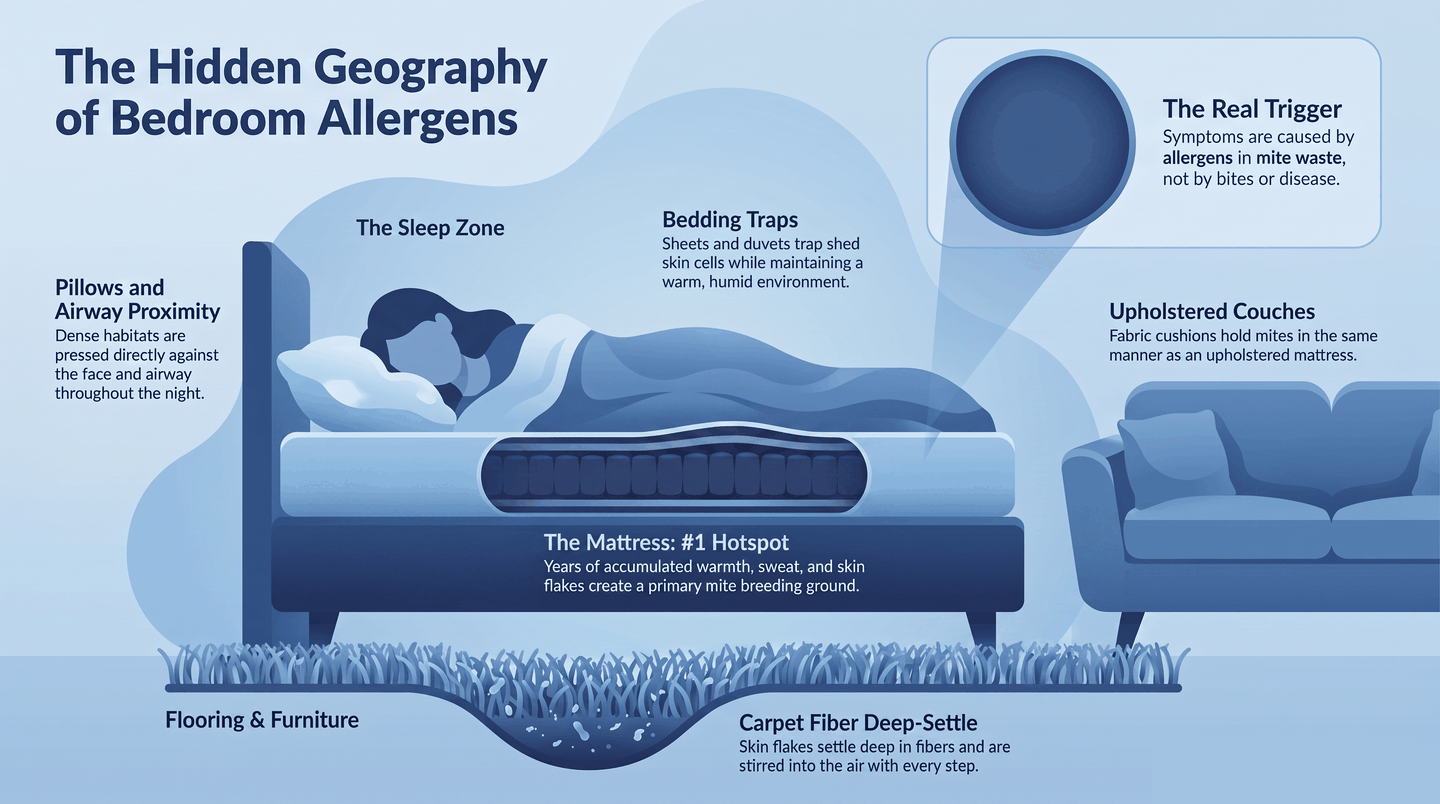
The mites burrow into the surface layers, not just the top. Body heat, overnight sweat, and a steady supply of shed skin keep them fed and breeding deep in the padding, where vacuuming alone cannot reach them. That is why an allergen-proof encasement — a zippered cover over the whole mattress — is the single most effective step: it traps mites and their allergens inside, away from your airway. For a full step-by-step routine, see our guide to dust mite removal.
Dust Mites in Carpet
Dust mites in carpet are common because carpet fibers trap the same skin flakes, warmth, and moisture that mites need — especially bedroom carpet right beside the bed. Every time you sit on the edge of the mattress or make the bed, skin cells and mite allergens drift down and settle into the pile, giving the mites a second reservoir to live in.
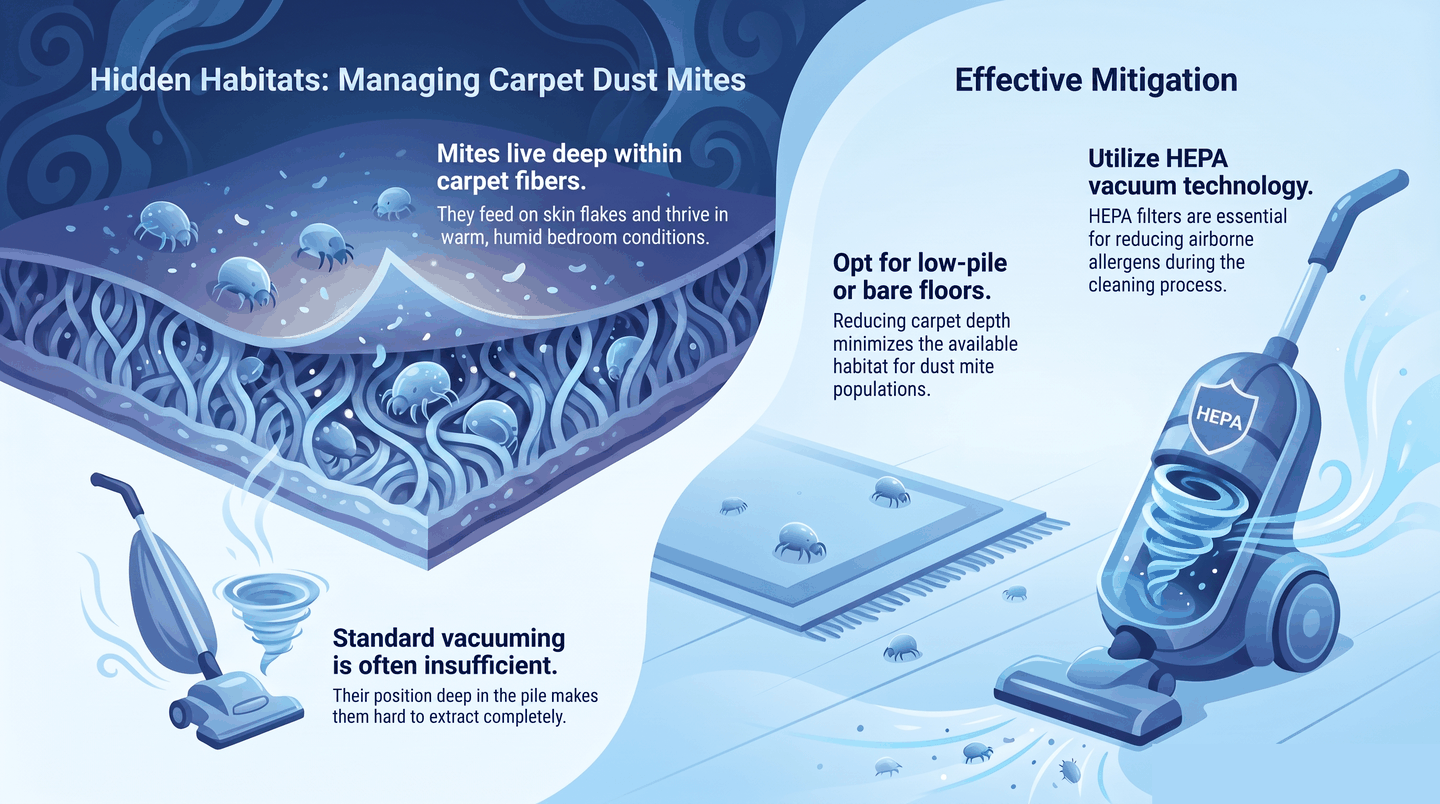
Because carpet holds allergens close to floor level, they get stirred back into the air when you walk across it. Regular vacuuming with a HEPA filter helps, but the deeper fix in a bedroom is often hard flooring or a washable rug you can launder. If you want the biology behind why carpet and bedding suit mites so well, our overview of dust mites explained covers it.
Dust Mites in Pillows
Dust mites in pillows can be even denser than in the mattress, because a pillow sits directly against your face, hair, and skin all night. It absorbs sweat, saliva, and a constant shower of skin flakes and hair oils, creating a warm, humid, food-rich pocket only inches from where you breathe.
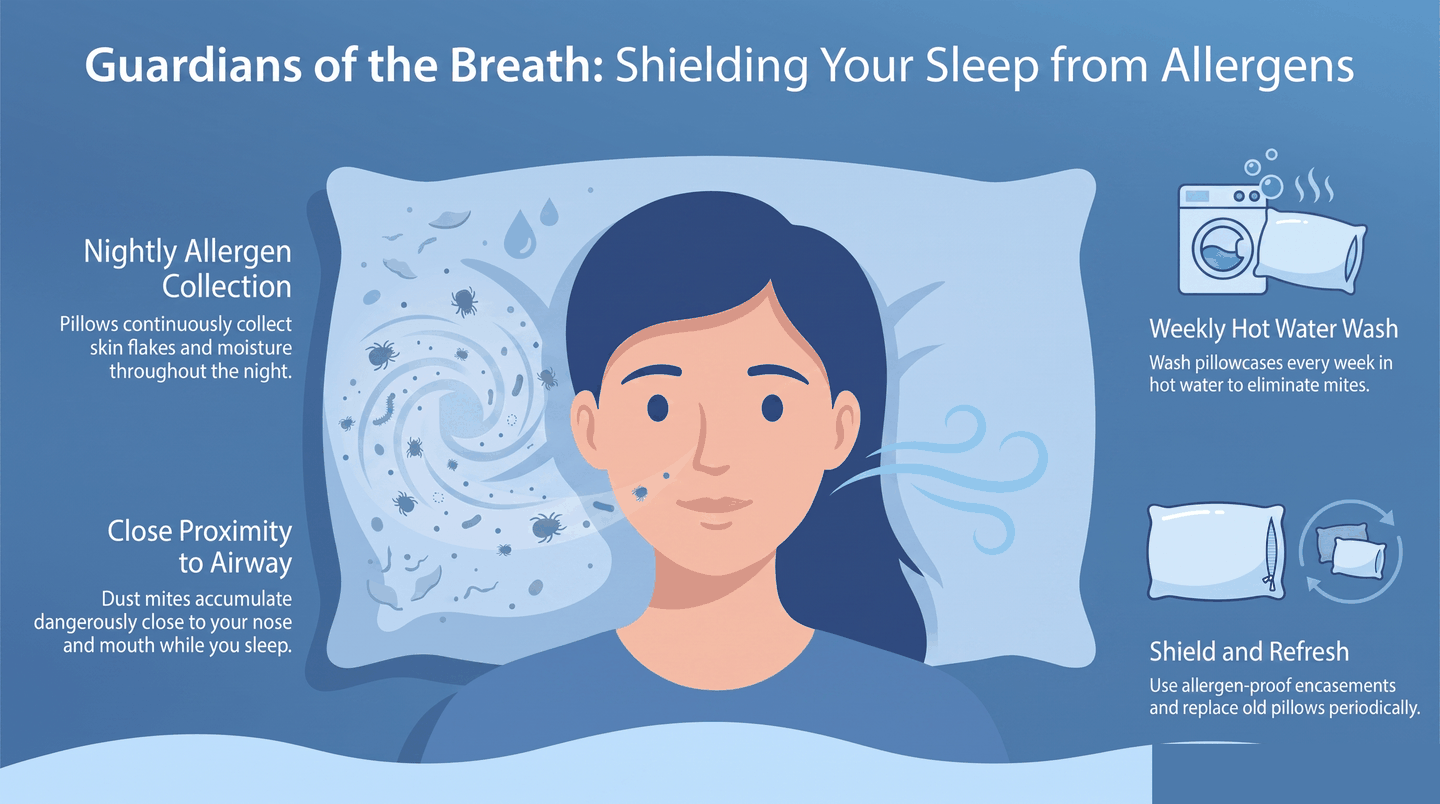
That closeness is why pillow mites matter so much for allergy symptoms. Slip each pillow into an allergen-proof pillow encasement and wash the pillowcase weekly in hot water. Many synthetic pillows can also go through a hot wash and dry, which knocks the population down. Because the allergens are so near your airway here, pillows are a top trigger for the sneezing and congestion described in our dust mite allergy guide.
Dust Mites in Couch
Dust mites in a couch are common wherever people relax for long stretches, because upholstered furniture collects skin flakes and holds humidity much like a mattress does. Cushions, seams, and fabric arms give mites plenty of shelter and food, so a well-used sofa can host a meaningful population — a reminder that dust mites reach beyond the bedroom.
Vacuum upholstery regularly with a HEPA vacuum, wash removable covers hot when the care label allows, and keep the room's humidity down. Leather or tightly woven synthetic covers give mites less to grip than deep, soft fabric.
Dust Mites in Clothes
Dust mites in clothes are far less common than in bedding, but they can settle in garments that sit unused and gather skin flakes — think a robe left on a chair, sweaters folded in a drawer, or laundry piled on the bed. Mites need humidity and food to thrive, and rarely worn items in a stuffy closet can offer just enough of both.
The fix is easy: wash worn clothing regularly, avoid draping garments on the bed where they pick up mattress allergens, and keep closets ventilated and dry. Everyday clothes you launder often are rarely a real source. For a broader look at bite-versus-allergy confusion, see dust mite bites.
Plenty of popular "fixes" waste effort because they miss how mites actually live. These do not reliably reduce dust mites in bed:
- Washing sheets in cold or warm water — mites survive anything below about 130°F (54°C)
- Vacuuming the mattress surface alone — it cannot pull mites out of the padding
- Assuming a clean-looking bed is mite-free — mites are microscopic and tied to humidity, not tidiness
- Chasing "dust mite bites" — mites do not bite; the marks are an allergic skin reaction
The reliable approach is the 130-50-HEPA Rule: encase the mattress and pillows, hot-wash bedding weekly at ≥130°F, keep indoor humidity under 50 percent, and HEPA-vacuum floors and upholstery.
Frequently Asked Questions
Sources
- Asthma and Allergy Foundation of America — Dust Mite Allergy (mite habitat, mattress populations, allergens, control).
- American Lung Association — Dust Mites (hot washing, humidity control, HEPA).
- Mayo Clinic — Dust mite allergy (symptoms, 130°F wash temperature, encasements).