A dust mite allergy is an allergic reaction to proteins found in the waste and body fragments of house dust mites. These microscopic relatives of spiders live in mattresses, pillows, and bedding, and for sensitized people they are one of the most common indoor allergy triggers in the United States.
A dust mite allergy is an immune reaction to proteins in dust mite droppings and body fragments — mainly the allergens Der p 1 and Der f 1. It causes hay-fever-like symptoms year-round and can trigger asthma in some people. It is diagnosed by an allergist with a skin prick or blood test.
Because dust mites are everywhere and cannot be seen, many people do not realize what is behind their constant sneezing and stuffy nose. Below we cover the symptoms, the tell-tale signs, how testing works, and when a severe reaction means it is time to see a doctor.
Dust Mite Allergy Symptoms
Dust mite allergy symptoms closely resemble hay fever, because the immune system reacts to inhaled allergens in much the same way. The reaction is driven by proteins in mite droppings and decaying body fragments — chiefly the major allergens Der p 1 and Der f 1 — rather than by any bite.
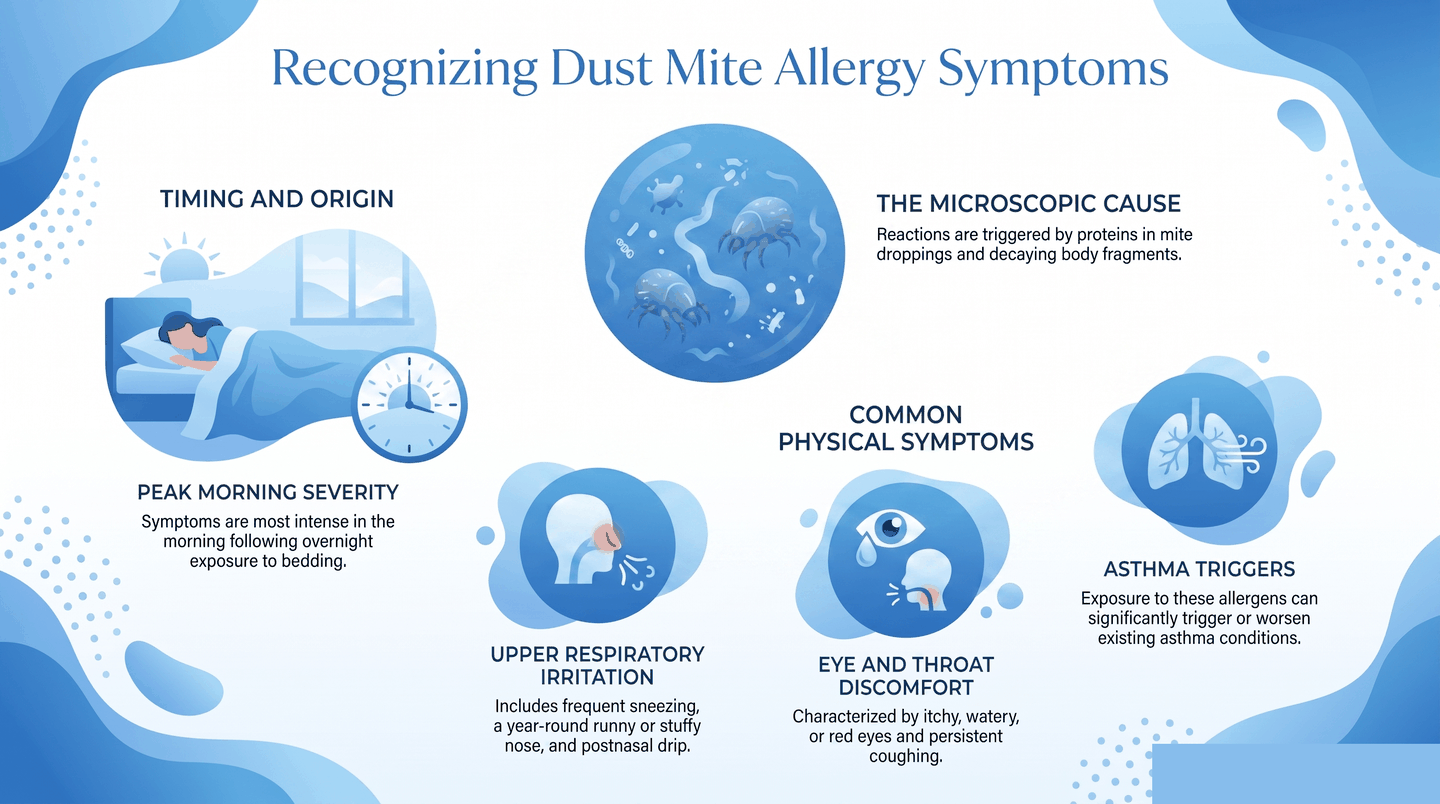
Common symptoms include:
- Sneezing
- A runny or stuffy (congested) nose
- Itchy, watery, or red eyes
- Coughing
- Postnasal drip
- Facial pressure or a feeling of sinus fullness
These symptoms are perennial, meaning they can occur year-round rather than only during a specific pollen season. Because exposure is concentrated in bedding, many people find symptoms are worse in the morning or when they make the bed and stir up dust.
Dust Mites Symptoms (The Signs to Watch For)
Dust mites symptoms go beyond the nose and eyes: in sensitive people the same allergens can affect the airways and the skin. Recognizing these signs helps separate a dust mite allergy from a cold or from another cause of itching.
Airway signs
In people who are prone to asthma, dust mites can trigger or worsen asthma. Airway signs include wheezing, shortness of breath, chest tightness, and a cough that is worse at night or in the early morning. These signs deserve medical attention rather than self-treatment.
Skin signs
Dust mite allergens can also aggravate eczema (atopic dermatitis), leading to flare-ups of dry, itchy, inflamed skin. Importantly, a dust mite allergy leaves no bite marks — the skin reaction is inflammatory, not the result of anything biting you. If you are trying to work out whether something is actually biting you, see dust mite bites.
Dust Mite Allergy Test
A dust mite allergy test is carried out by an allergist to confirm whether your symptoms are caused by dust mites rather than something else. Because a cold, another allergy, or an irritant can mimic the same congestion and sneezing, testing turns a guess into a diagnosis.
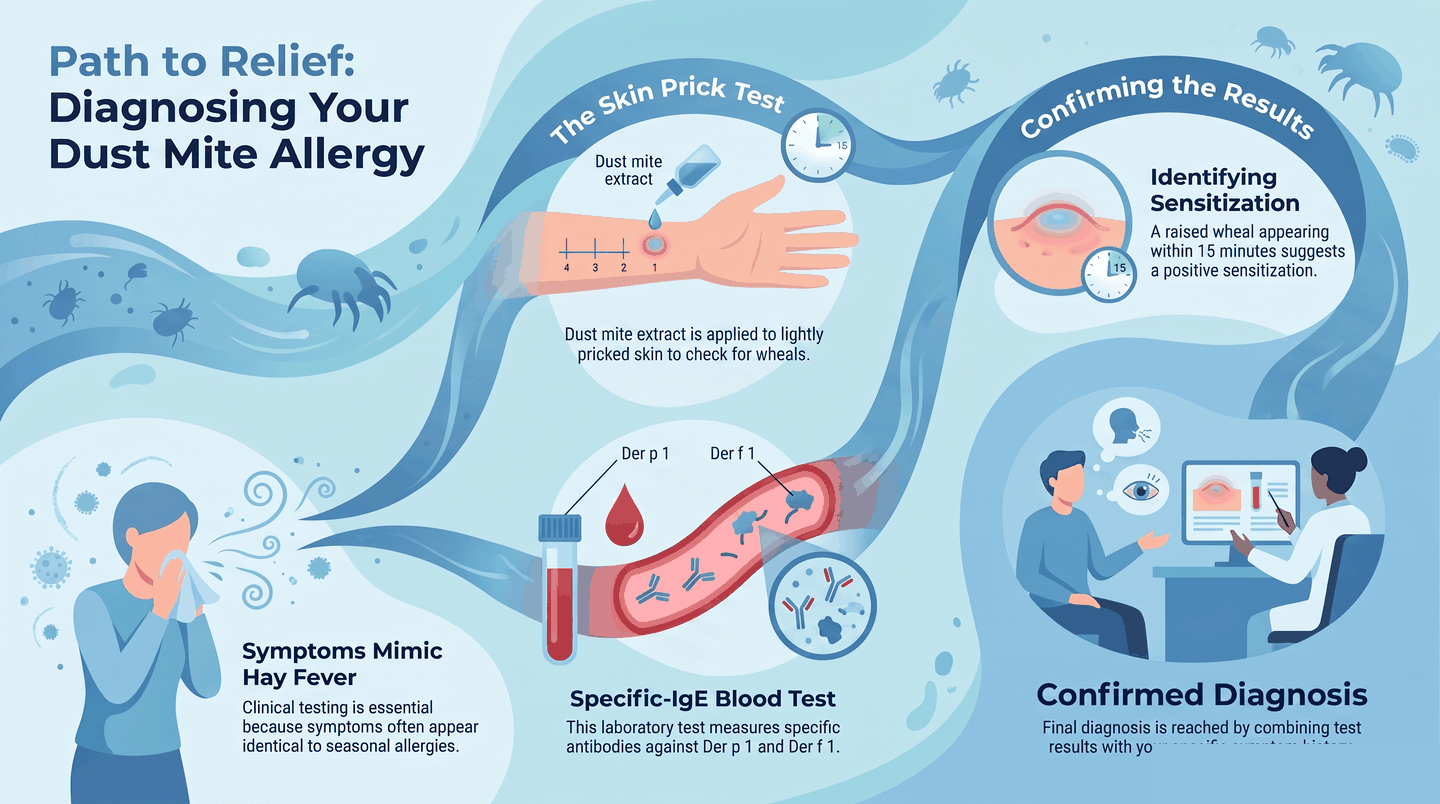
There are two main options:
- Skin prick test. A tiny amount of dust mite extract is placed on the skin, usually on the forearm or back, and the skin is lightly pricked. A raised, itchy bump (a wheal) within about 15 minutes suggests sensitization to dust mites.
- Blood test (specific IgE). A blood sample is measured for IgE antibodies against dust mite allergens. This is useful when a skin test is not suitable — for example, for people with certain skin conditions or those taking medications that interfere with skin testing.
A positive test on its own does not always mean the mites cause your symptoms; the allergist interprets the result alongside your symptom history to reach a diagnosis. If you want to reduce your exposure while you sort out testing, our guides on dust mite removal and dust mites in the bed cover practical steps.
Severe Dust Mite Allergy
A severe dust mite allergy is one where symptoms are persistent, disrupt sleep, or spill over into the airways as asthma. Instead of occasional sneezing, a severe reaction can mean frequent congestion, poor sleep, and — in people with asthma — wheezing, chest tightness, and shortness of breath that need medical management.
Severe or asthma-linked reactions should be managed by a healthcare professional. An allergist can confirm the trigger, help build an avoidance plan, and discuss treatment options appropriate for your situation.
A dust mite allergy is usually manageable, but some signs call for professional care. This page is informational only and is not a diagnosis. See a doctor if:
- You have signs of asthma — wheezing, chest tightness, or shortness of breath
- Symptoms are persistent, disrupt your sleep, or do not improve
- Eczema flares badly, or the skin becomes broken, oozing, or infected
- You want an allergist to confirm the trigger with a skin prick or blood test
Seek prompt medical care for breathing difficulty. Do not try to self-diagnose or self-treat a suspected asthma or severe allergic reaction.
Frequently Asked Questions
Not sure whether dust mites are even your problem? Start with the dust mites hub to compare symptoms, testing, and prevention across the whole topic.
Sources
- Mayo Clinic — Dust mite allergy (dust mite allergy is a reaction to tiny bugs in house dust; symptoms include sneezing, runny nose, and itchy eyes, and it can trigger asthma).
- Asthma and Allergy Foundation of America — Dust Mite Allergy (dust mites are among the most common indoor allergy triggers; the allergy is to proteins in mite waste and body fragments, and it is perennial).
- American College of Allergy, Asthma & Immunology — Dust Allergy (an allergist diagnoses dust allergy with skin prick or blood testing, and dust mite exposure can worsen asthma and eczema).