Bed bugs are small, flat, oval insects that feed on human blood. An adult is reddish-brown and about 5–7 mm long — roughly the size of an apple seed — with six legs and no ability to fly. They are visible to the naked eye but hide in seams and cracks near where you sleep.
So, what are bed bugs exactly? They are tiny, wingless insects that survive on blood, usually human blood, and live close to where people sleep. Adults are visible to the naked eye, but the eggs and newly hatched young are far harder to spot. If you want a closer visual breakdown, see what do bed bugs look like. This guide stays focused on one thing: what they are, how big they get, and what color they really are.
To make their appearance easy to remember, we use one simple idea throughout this guide: The Apple-Seed Rule. A grown bed bug is about the size of an apple seed, shaped like a flattened oval, and colored like one too — a dull reddish-brown that turns redder and darker after a meal. Keep that single picture in mind and you can recognize an adult on sight.
What Are Bed Bugs (Definition)
By definition, bed bugs are small parasitic insects of the family Cimicidae that feed exclusively on blood. The species that bothers people most is the common bed bug, Cimex lectularius. They do not live on the body like lice; instead they hide nearby and come out to feed, usually at night.
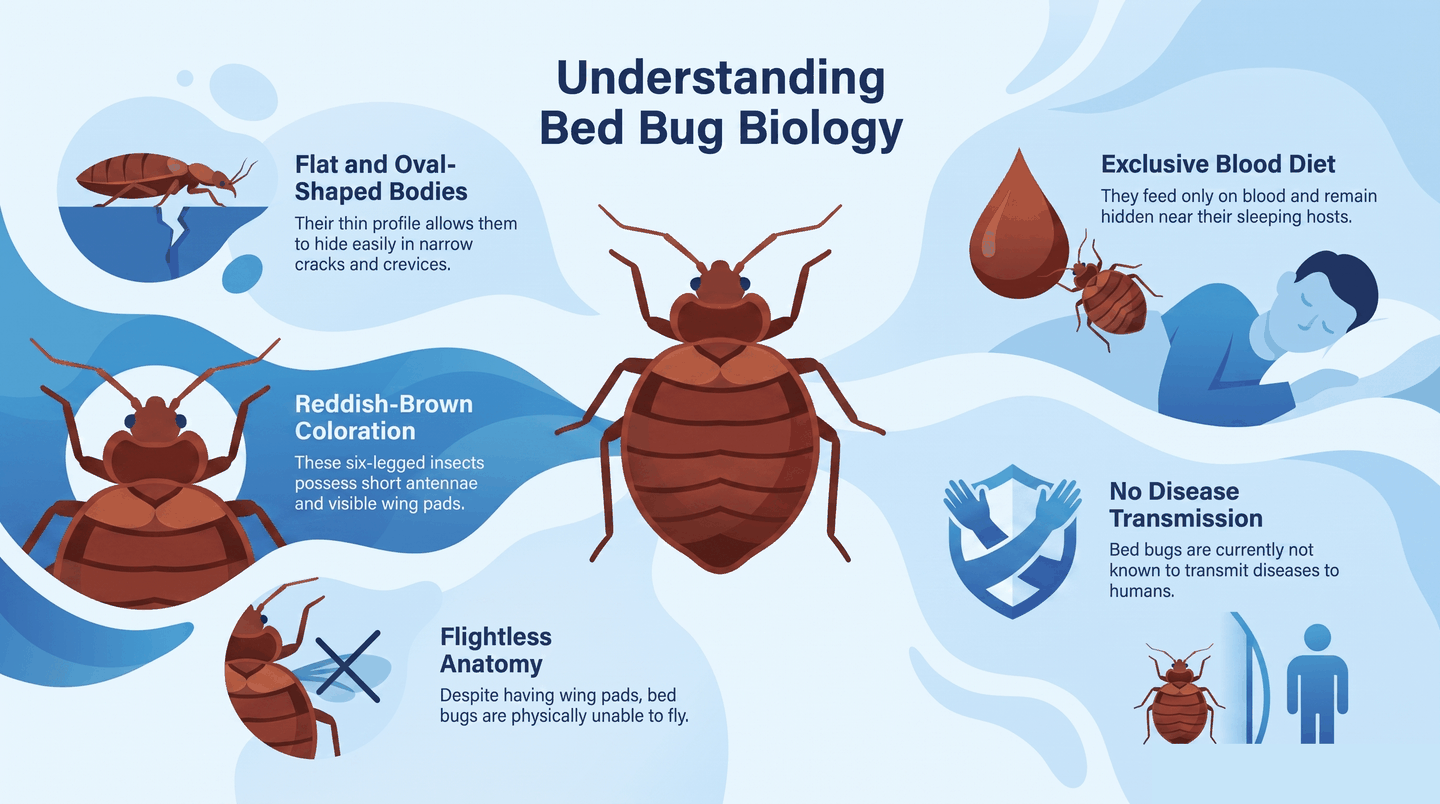
A few traits define them clearly:
- Flat, oval body that lets them slip into the thinnest cracks
- Reddish-brown color, six legs, and short antennae
- Wing pads that are present but non-functional — they cannot fly
- A diet of blood only, which is why they stay close to sleeping people
Despite the alarm they cause, bed bugs are not known to transmit diseases to people, according to the EPA and CDC. They are a nuisance pest, not a medical carrier — though their bites can itch and disrupt sleep.
How Big Are Bed Bugs (Size & Length)
The most common question is how big are bed bugs, and the short answer is small but not invisible. A fully grown adult measures about 5 to 7 mm in length — close to the size of an apple seed. That is the upper end; everything younger is smaller, and eggs are tiny.
Bed Bug Size
Bed bug size changes a lot across the life cycle. After hatching, a bed bug passes through five molting stages, called instars, getting bigger each time. The stages measure roughly 1.5 mm, 2 mm, 2.5 mm, 3 mm, and 4.5 mm before reaching the adult length of 5 to 7 mm.
One detail matters here: each stage needs a full blood meal before the bug can molt to the next size. That is why a well-fed group grows quickly, and why the baby bed bugs you may find are smaller, paler versions of the adults rather than a different insect.
Can You See Bed Bugs With the Naked Eye?
Yes — you can see adult bed bugs with the naked eye. At 5 to 7 mm, an adult is clearly visible against a mattress seam or pale sheet. No microscope is needed to spot a grown bug.
The challenge is the small stuff. The eggs are about 1 mm and pearly white, while freshly hatched young are only 1 to 1.5 mm and nearly translucent or whitish-yellow. Both blend into light fabric and tuck deep into seams, so people usually notice the larger adults first and the bed bug eggs only later.
What Color Are Bed Bugs
When people ask what color are bed bugs, the honest answer is: it depends on whether they have eaten. An unfed bed bug is a dull brownish, reddish-brown color. After a blood meal, the body swells and the color shifts to a deeper, redder, darker shade as it fills with blood.
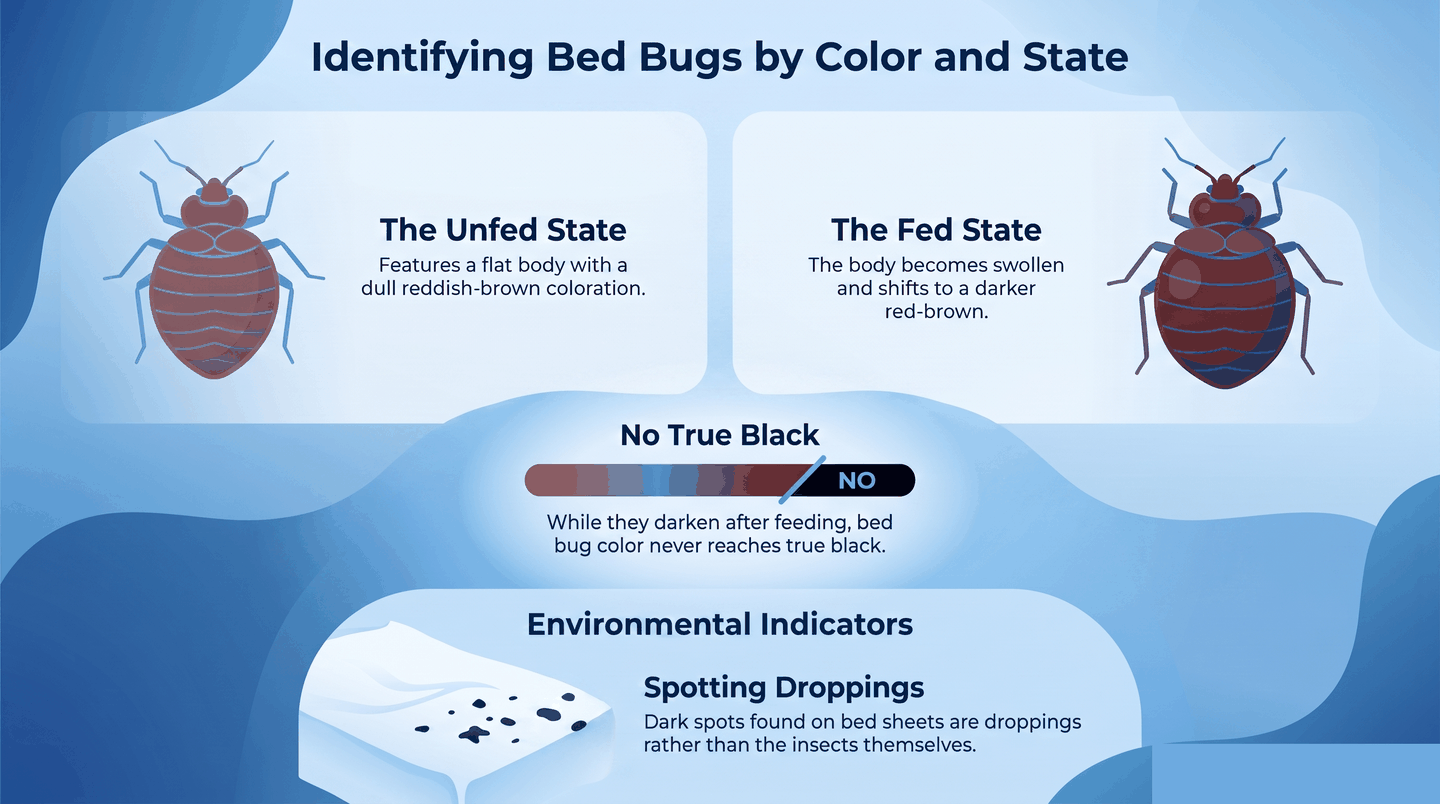
So the same bug can look noticeably different from one day to the next:
- Unfed: flat and brownish to reddish-brown
- Recently fed: swollen, rounder, and a darker red-brown
This color shift is part of the Apple-Seed Rule — think of a dried apple seed that darkens when damp. It is also why a quick glance can be misleading if you catch a bug right after it has fed.
Are Bed Bugs Black?
Bed bugs are not truly black. Even after feeding, they stay in the reddish-brown to dark brown range rather than turning a solid black. If something looks jet-black, it is probably not the bug itself.
What people often mistake for "black bed bugs" are the dark fecal spots they leave behind — small ink-like dots on sheets, mattress seams, and walls. Those stains are a classic infestation sign, but they are droppings, not the insects.
Small & Tiny Bed Bugs
The truly small and tiny bed bugs are the youngest ones. Eggs sit around 1 mm and look like pale, pearly grains. Newly hatched young are only 1 to 1.5 mm, translucent or whitish-yellow, and very hard to see — especially against light bedding.
Because they are so faint, these tiny bugs are easy to overlook until they have fed and darkened. A few things make them stand out a little more:
- After feeding, a young bug shows a reddish tint as blood fills its body
- They cluster in tight seams, folds, and cracks rather than out in the open
- They appear alongside pale eggs and shed skins, which hint at their presence
The size difference also explains a common worry about spreading. Even the smallest bugs only crawl from hiding spot to host — none of them, young or adult, can fly, which is covered in can bed bugs fly.
Types of Bed Bugs
There are a few types of bed bugs worth knowing, though one dominates in homes. The common bed bug, Cimex lectularius, is the main species that infests people and shows up across most climates.
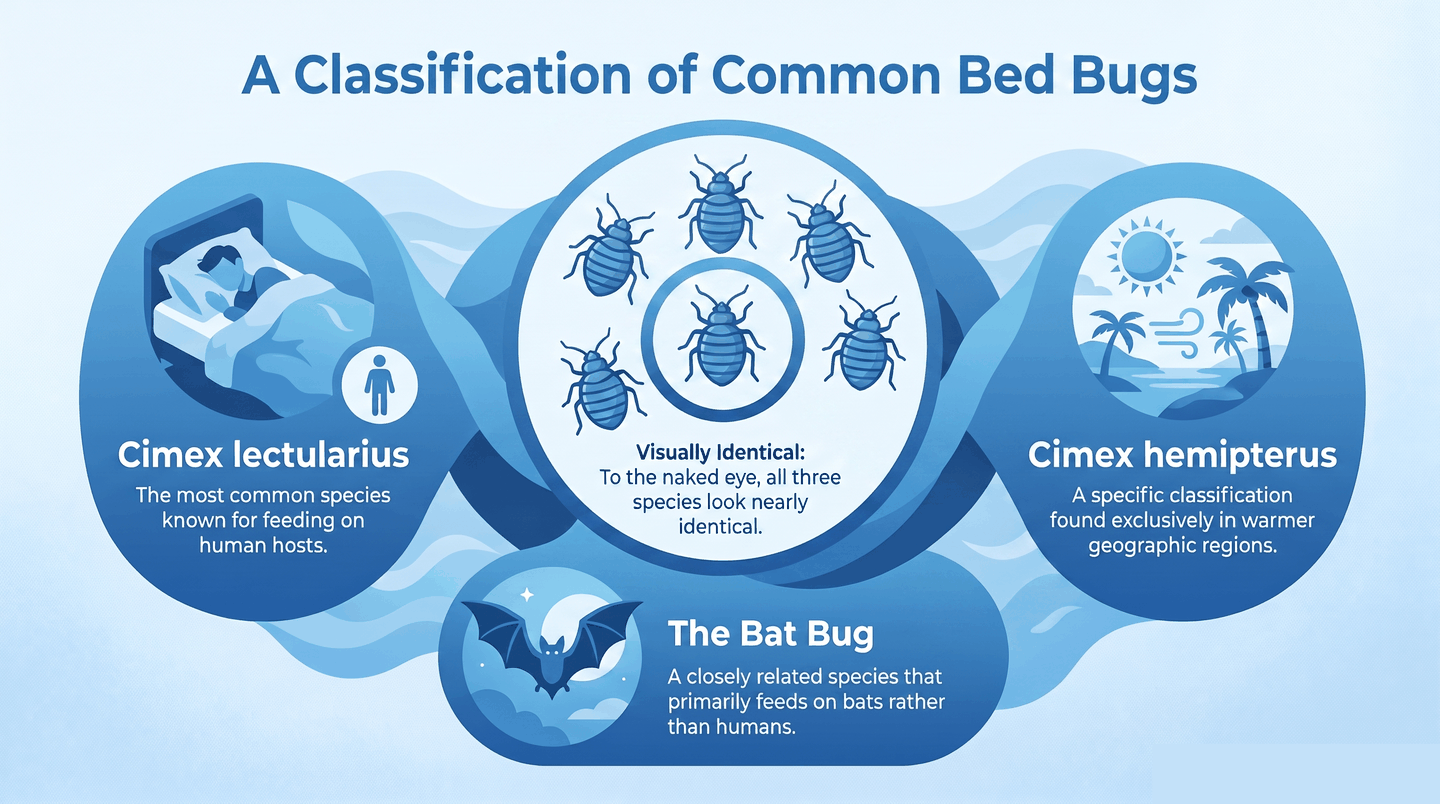
The close relatives can cause confusion:
- Common bed bug (Cimex lectularius): the primary species that feeds on humans
- Tropical bed bug (Cimex hemipterus): a related species found in warmer regions
- Bat bugs: a separate but similar-looking insect that mainly feeds on bats and is easily mistaken for a bed bug
To the naked eye these look much alike, which is why identification matters before you plan how to how to get rid of bed bugs — the approach is similar, but knowing the species rules out look-alikes.
Male vs Female Bed Bug
Telling a male vs female bed bug apart comes down to the shape of the abdomen. Females tend to be rounder and slightly larger at the rear, while males have a more pointed, narrower abdomen tip.
The difference is more than cosmetic. Bed bugs reproduce through an unusual process scientists call traumatic insemination, in which the male pierces the female's body wall rather than mating the typical way. You will never see this happen, but it is part of why a single mated female can keep a problem going on her own.
Adult Bed Bugs
Adult bed bugs are the stage most people actually recognize. At 5 to 7 mm, flat, oval, and reddish-brown, an adult fits the Apple-Seed Rule perfectly and is easy to see without any magnification.
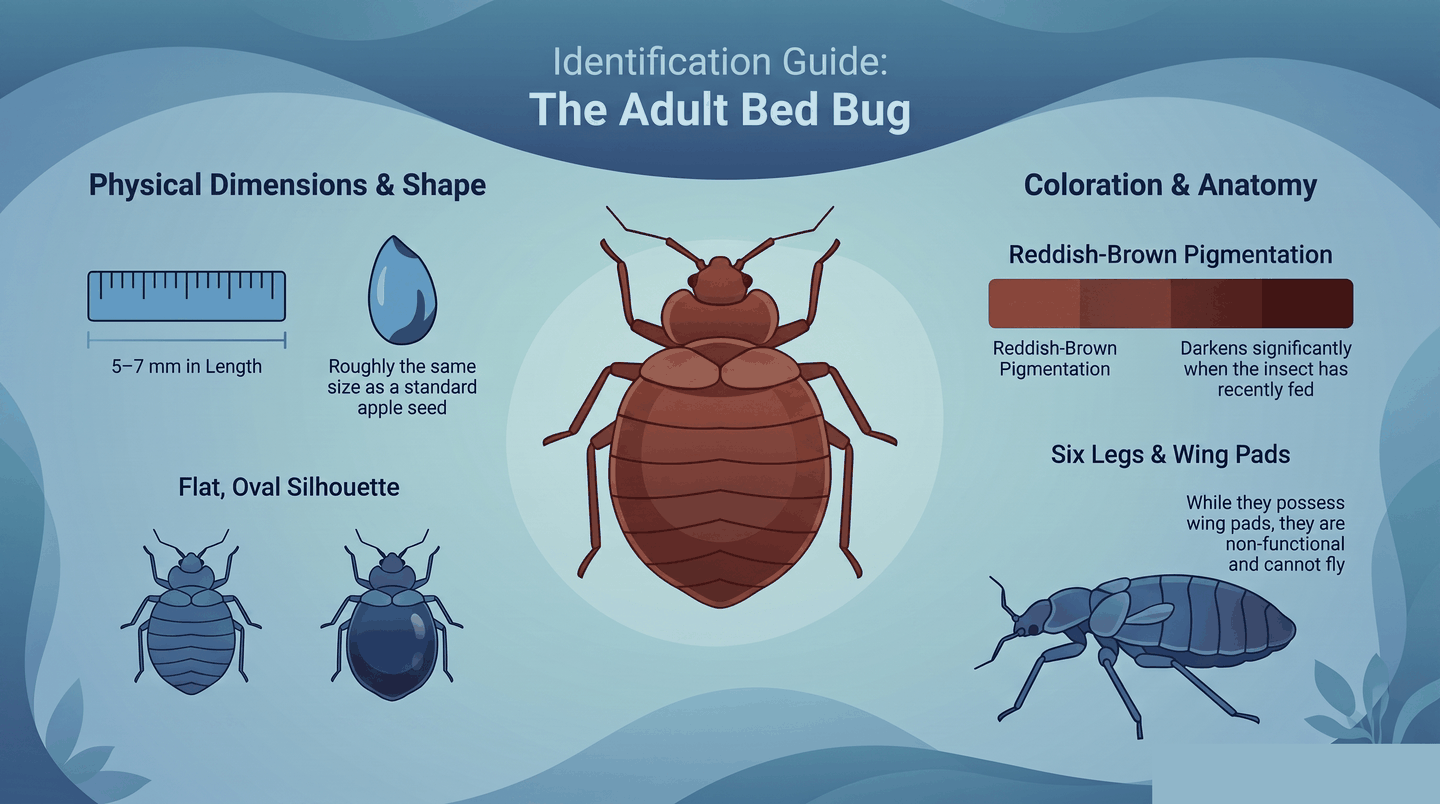
Key adult traits to confirm an identification:
- Size: about 5–7 mm, the length of an apple seed
- Shape: flat and oval when unfed, swollen and rounder after a meal
- Color: reddish-brown, turning darker and redder after feeding
- Legs & wings: six legs, with wing pads that do not work — so no flight
Adults are also the bugs you are most likely to carry home by accident, which ties into the bigger question of where do bed bugs come from and how an infestation begins in the first place.
Identifying bed bugs goes wrong when people rely on the wrong cues. These shortcuts will not give you a reliable answer:
- Assuming anything tiny and dark is a bed bug — many look-alikes exist
- Calling them "black bugs" — dark spots are usually droppings, not bugs
- Expecting them to fly toward a light — bed bugs have no working wings
- Ruling them out because the room is spotless — appearance has nothing to do with cleanliness
The reliable approach is the Apple-Seed Rule: check for a flat, oval, reddish-brown insect about 5–7 mm long, then look for pale eggs and dark fecal spots nearby to confirm.
Frequently Asked Questions
Sources
- U.S. EPA — Bed bugs appearance and life cycle (size, color, eggs, and nymph stages).
- CDC — Bed bugs (biology).
- Virginia Cooperative Extension / Virginia Tech — Bed Bug Biology and Behavior (PDF).
- Purdue Extension — Bed bugs (public health entomology).