Adult bed bugs are flat, oval, and reddish-brown, about the size of an apple seed (roughly 5 to 7 mm). They have six legs, no usable wings, and a body that swells and darkens after feeding. You can see adults with the naked eye, but young ones are smaller and paler.
You flip on the light, pull back the sheet, and there's a tiny brown speck near the seam. Your stomach drops. Is that a bed bug, or a piece of dirt? This guide shows you exactly what do bed bugs look like, with the size, shape, and color cues that separate a real bed bug from a harmless crumb.
First, a calming fact: spotting one bug does not mean your home is dirty. Bed bugs hitchhike in on bags and clothing. If you're wondering how they arrived, see where do bed bugs come from. This page stays focused on one thing: how to recognize them by sight.
To keep it simple, we use a method we call the 4-S Bug Check: Size, Shape, Shade, and Shell. Run any speck through those four cues and you'll know fast whether it's worth a closer look.
What Do Bed Bugs Look Like to the Human Eye
What do bed bugs look like to the human eye? An adult bed bug is small but visible, roughly the size and color of an apple seed. You don't need a microscope. You do need good light and a steady look.
Here's the 4-S Bug Check for a single bug:
Adults are the easiest to spot. A young bed bug, called a nymph, is a different story. Nymphs are smaller, from about 1 mm up, and nearly see-through or pale yellow-white. After they feed, they show a bright red center, which makes them easier to catch.
One detail people miss: bed bugs cannot fly. They have no working wings. So if your bug flew, it isn't a bed bug.
The eggs are even tinier. They look like pearly white grains about 1 mm long, often tucked into cracks in clusters.
Bed Bug Pictures and Images: A Photo Gallery
Seeing real photos helps more than any description. These bed bugs images on bed show what they look like in the place you're most likely to find them: along seams, in folds, and clustered in tight cracks near where you sleep.
When you scan a photo, look for the group, not just one bug. Bed bugs tend to gather. A typical scene shows:
- Live bugs, flat and brown, lined up along a seam
- Tiny dark dots, like ink spots, which are droppings
- Pale, empty shells the bugs shed as they grow
- Small white eggs wedged into folds
Why a cluster matters: a single speck is hard to judge. A group of bugs, spots, and shells together is a much stronger sign than one lone dot.
Macro and Close-Up Bed Bug Photography
Macro bed bug photography zooms in close enough to see the parts your eye can't catch from across the room. Up close, the flat oval body shows fine ridges and short hairs, and the segments of the abdomen look like banded stripes.
A close-up also makes the feeding change obvious. Before a meal, the bug is flat like a tiny shield. After feeding, it balloons into a longer, darker, reddish shape. Same bug, very different look.
These zoomed-in images are useful for one reason: they let you compare a clear reference photo against the speck you actually found, side by side.
What Do Bed Bugs Look Like on a Mattress
What do bed bugs look like on a mattress? On a mattress, you'll see more than the bugs themselves. The pictures of bed bugs on mattress that worry people most show the whole story: live bugs plus the mess they leave behind.
Start at the seams and piping, the stitched edges where the fabric folds. That's their favorite hiding line. Then check the tag, the corners, and any quilted dips.
What to look for on a mattress:
- Live bugs: flat brown ovals tucked into the seam
- Dark spots: tiny black or rust-colored dots, like a felt-tip pen bled through
- Shed skins: pale, hollow shells that look like empty bugs
- Eggs: white specks, smaller than a grain of rice
Those dark spots are digested blood, and they often smear if you wipe them with a damp cloth. That smear test is a quick way to tell droppings from plain dirt.
What Do Bed Bugs Look Like on Sheets
What do bed bugs look like on sheets? On white or light sheets, the bugs and their traces stand out far more than on a dark mattress. The contrast does the work for you.
The first thing many people notice isn't a bug at all. It's a set of small rusty or reddish smears. These come from a bug that got crushed while you slept, or from droppings rubbed across the fabric.
Common marks on sheets:
- Rust or reddish-brown smears from crushed bugs
- Tiny dark dots that don't brush off like lint
- A live bug, flat and brown, crawling slowly near a fold
Bed bugs don't live in the open weave of a sheet the way they nest in a seam. So a bug on your sheet is usually passing through, not settled in. Strip the bedding and check the mattress and frame underneath, where they actually hide.
What Do Bed Bugs Look Like on Skin
What do bed bugs look like on skin? An actual bed bug on your skin looks like a small, flat, fast-moving brown bug, not a red mark. This is the part people mix up most, so it's worth slowing down.
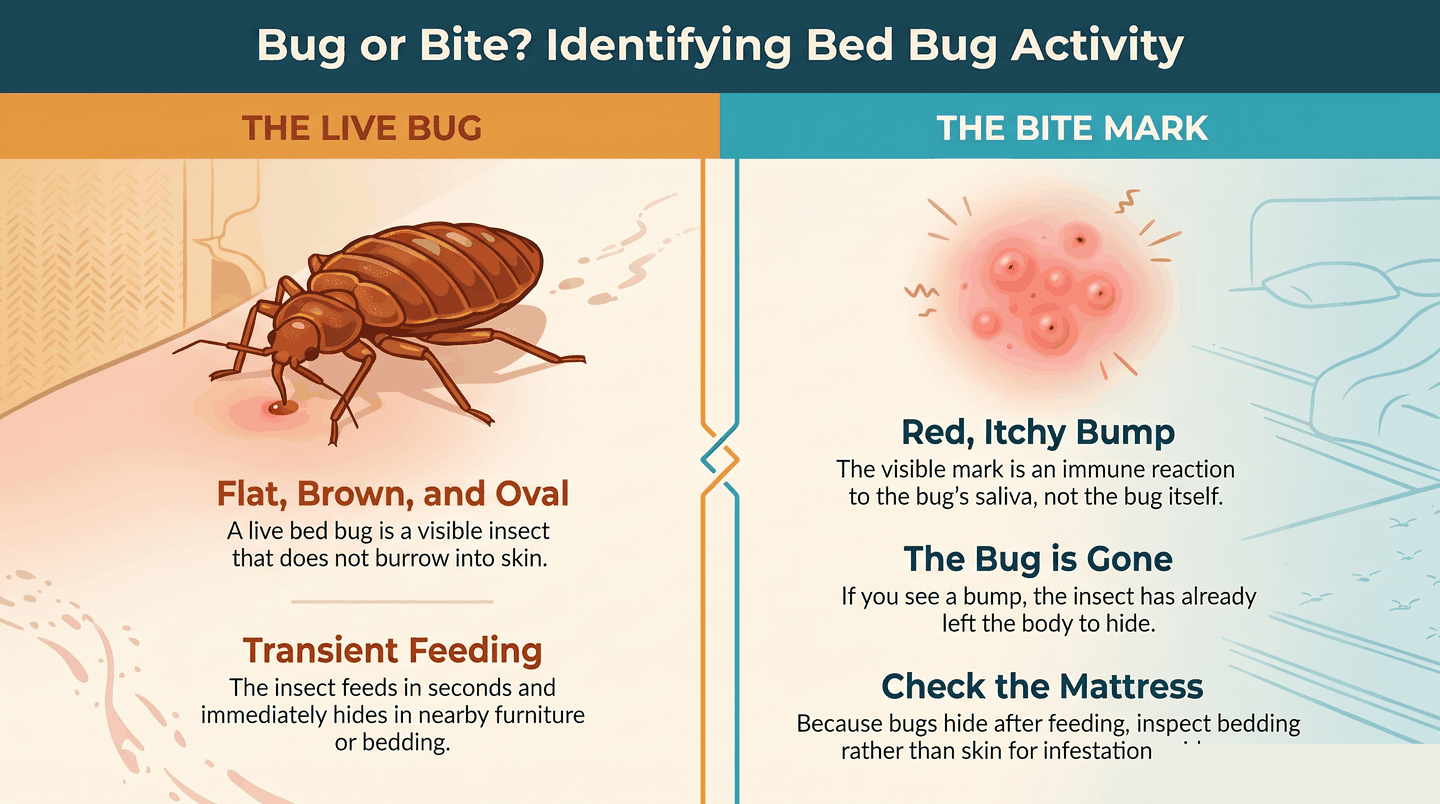
There's a big difference between two things:
- A bug on your skin: the live insect, brown and oval, crawling. This is rare, because they feed in seconds and hurry back to hiding.
- A bite on your skin: a red, itchy bump the bug leaves behind. The bump is a reaction, not the bug.
Seeing a bug on your skin is uncommon. They're shy and quick. If one is there, it's likely feeding, and it will leave on its own within minutes. They don't burrow, and they don't live on your body.
If what you're seeing is bumps rather than a bug, that's a separate question covered in what bed bug bites look like.
- Judging by one tiny speck. A single dot or one bug is hard to confirm. Lint, dirt, and other small bugs all look similar in poor light. Research suggests people misidentify both ways, calling harmless specks bed bugs and dismissing real ones. Look for a cluster of clues.
- Going by the bite alone. Bites are not a reliable ID. They look like flea, mosquito, or other insect bites, and some people show no mark at all. The bug and its traces tell you more than your skin does.
- Assuming size never changes. A flat, pale, hungry bug and a swollen, dark, fed bug look like two different insects. They're the same bed bug at different moments. Size and color shift with feeding.
- Trusting a clean home to mean safety. Bed bugs aren't a sign of dirt. A spotless room can still host them, because they arrive on bags, used furniture, and clothing, not from mess.
When Identifying Isn't Enough
Putting a name to the bug is step one. The harder part is acting on it. If your 4-S check points to bed bugs, the next move is to confirm the spread and start a plan for how to get rid of bed bugs.
If you find bugs in many rooms or across furniture, that's beyond a quick home check. A licensed pest control professional can confirm the bugs and treat the whole area properly.
Frequently Asked Questions
Sources
- U.S. EPA — Bed bugs appearance and life cycle (adult size 5–7 mm, color, eggs, nymph stages).
- CDC — Bed bugs biology.
- Virginia Cooperative Extension / Virginia Tech — Bed bug biology and behavior (size, feeding, egg appearance).
- Purdue Extension — Bed bugs (public health entomology).