No, bed bugs cannot fly. Adults have only small wing pads — undeveloped stubs, not working wings. They also cannot jump, since their legs aren't built for it. Bed bugs get around the only way they can: by crawling, and by hitchhiking on the things people carry.
Can bed bugs fly? It's one of the first things people ask after a sleepless night, and the answer is a clear no. Bed bugs have no functional wings and have never been able to fly. To make sense of how they actually move and survive, this guide uses one simple idea throughout: The Crawl-Only Rule — a bed bug only ever walks, so everything it does is shaped by that limit.
That single fact explains why they hide so close to where you sleep, how they spread, and why so many "tricks" to stop them fail. If you're still unsure what these insects even are, it helps to start with what are bed bugs before reading on.
Do Bed Bugs Jump (Can Bed Bugs Jump)
Bed bugs do not jump, and the short answer to "can bed bugs jump" is no — their legs simply aren't built for it. Unlike fleas, which spring through the air, bed bugs have legs designed for crawling across flat surfaces and gripping fabric. There is no mechanism in their body for leaping.
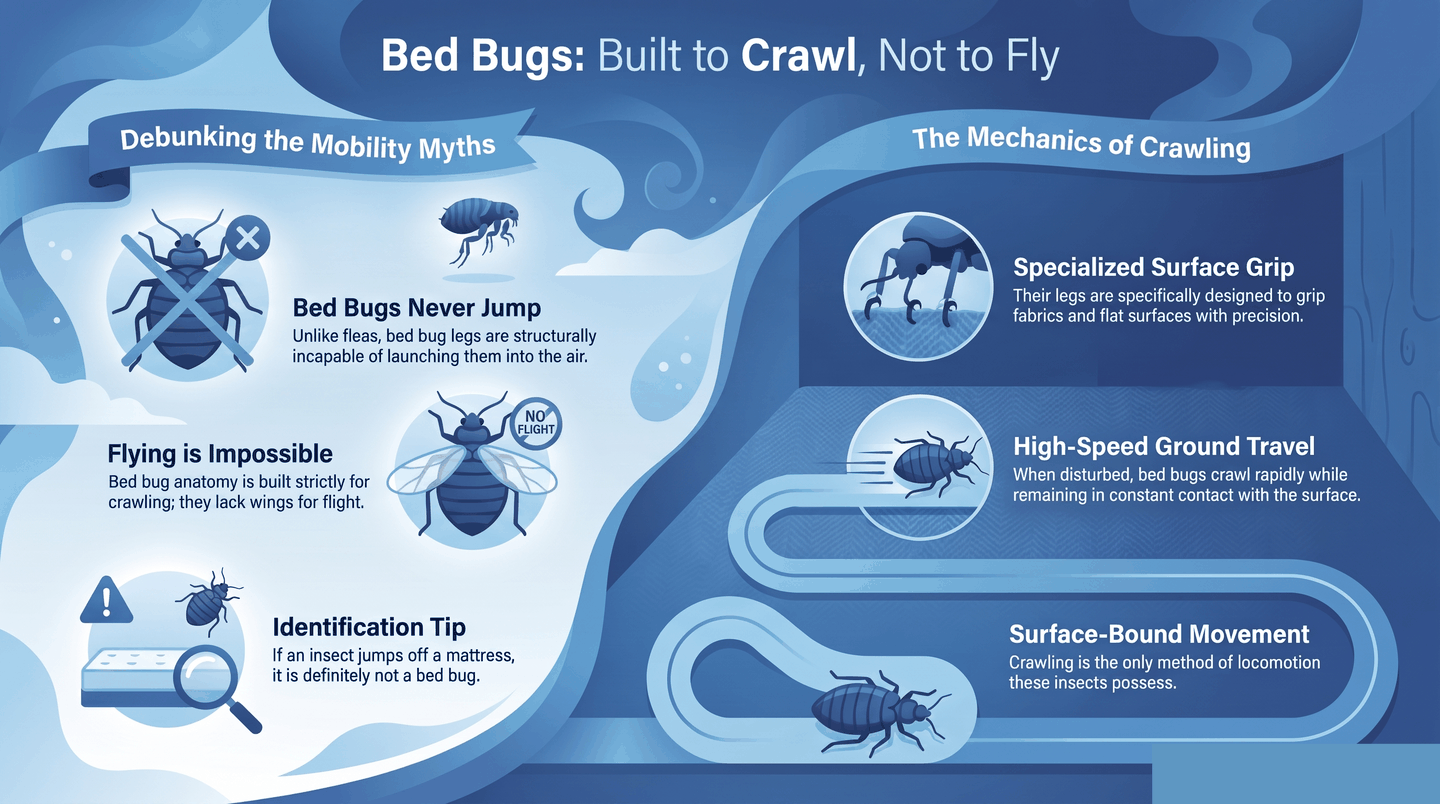
This matters because people often confuse bed bugs with fleas based on how a bug moves. If you watch an insect launch itself off a mattress, it is almost certainly not a bed bug.
- Bed bugs crawl; they never jump or hop
- Fleas jump — bed bugs do not, which is a quick way to tell them apart
- A disturbed bed bug can crawl surprisingly fast, but it stays on the surface
Do Bed Bugs Have Wings
The question "do bed bugs have wings" has a subtle answer: bed bugs have wing pads, but not true working wings. On the back of an adult, you can sometimes see small, flat pads where wings would be on other insects. These pads never develop into anything a bed bug can use.
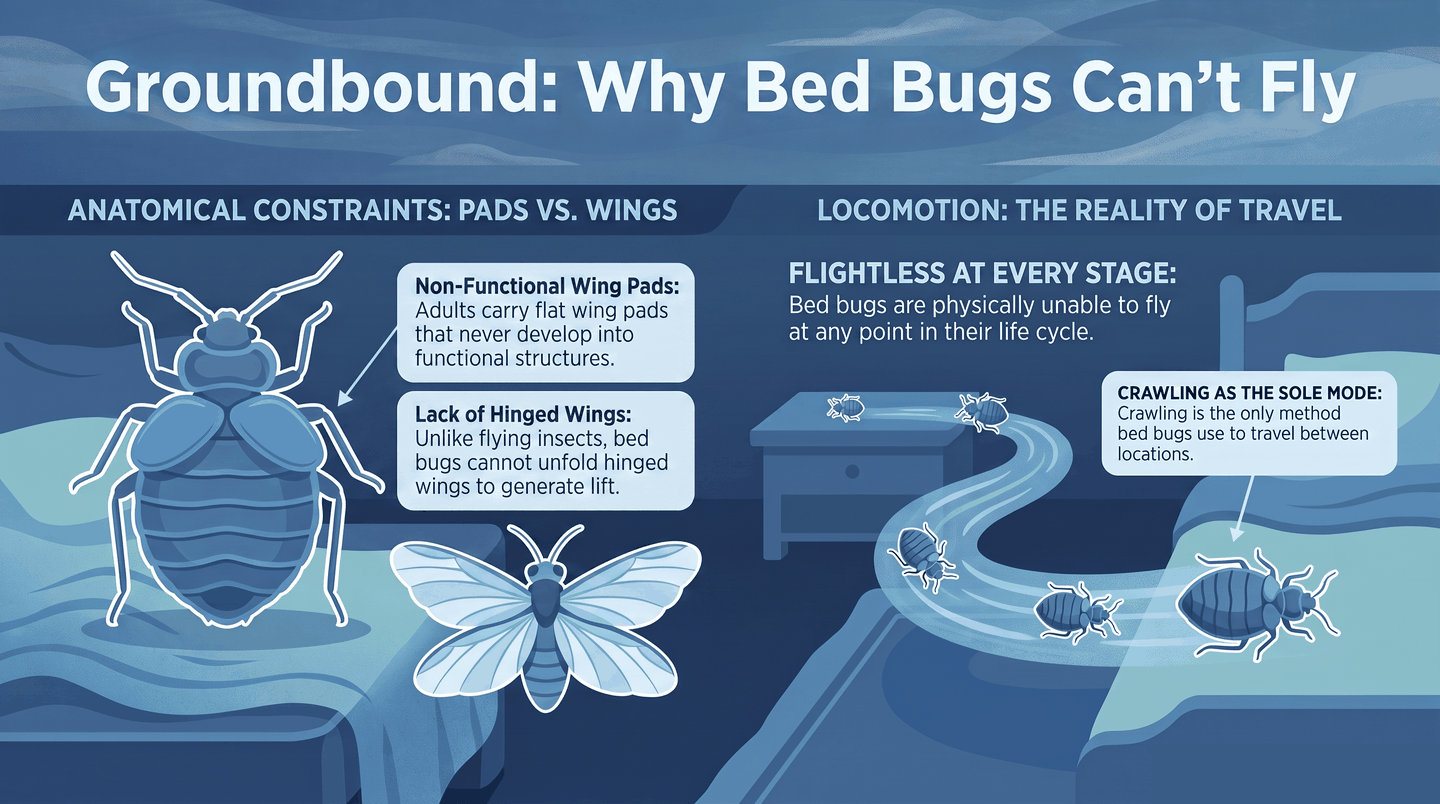
So the wing pads are essentially leftover stubs. They are not functional, they do not unfold, and they cannot lift a bed bug off a surface. This is exactly why a bed bug looks like it might have the start of wings yet remains completely flightless.
How Long Do Bed Bugs Live
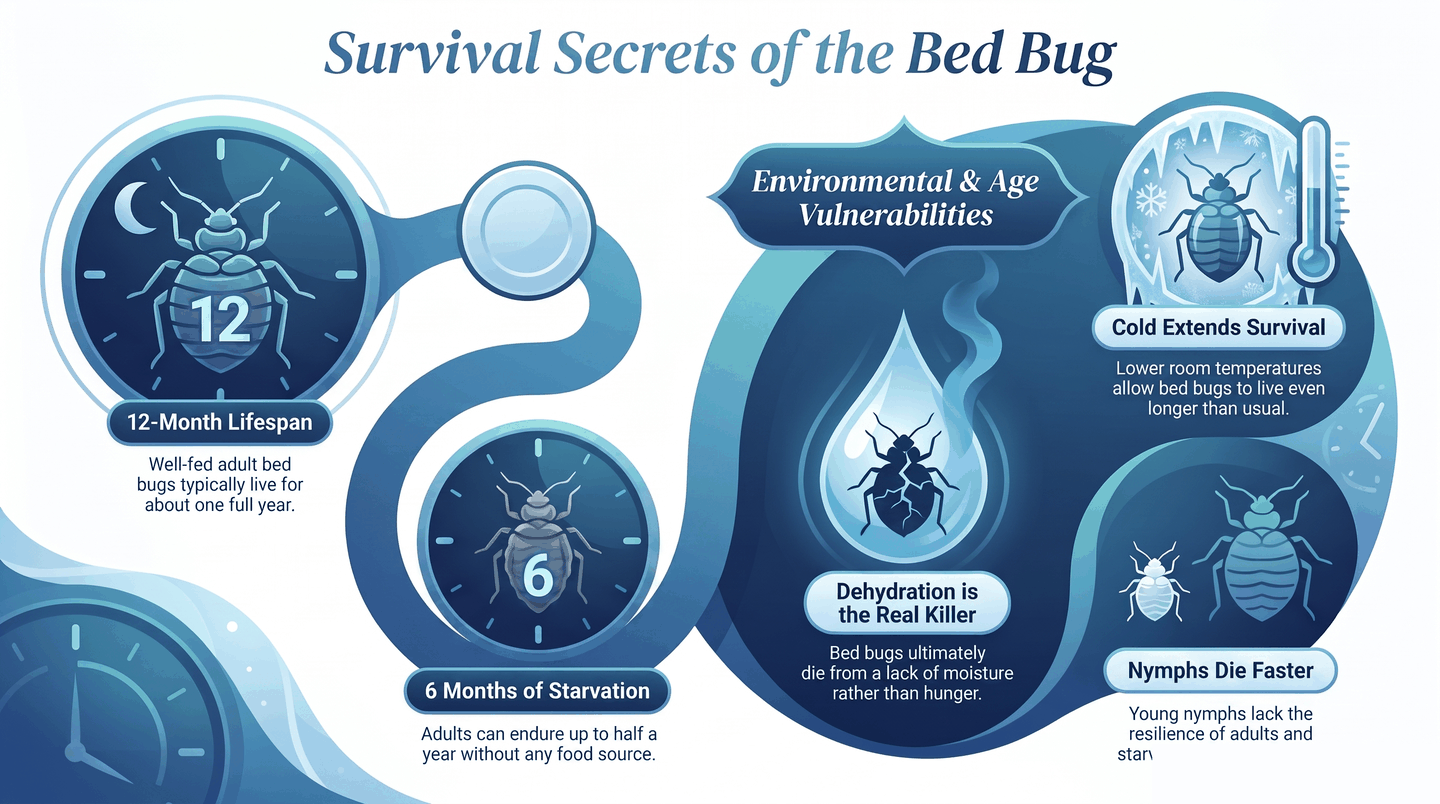
People often ask how long do bed bugs live, and the honest answer is about one year for a well-fed adult. In laboratory conditions with regular feeding, adults have lived roughly 99 to 300 days. In a real home, lifespan varies with temperature and how often they can feed.
That year-long lifespan is part of why an infestation can be so persistent — an adult that keeps finding meals can survive and reproduce for many months. Understanding their staying power also explains are bed bugs dangerous in terms of how long they can keep biting if left alone.
How Long Can Bed Bugs Live Without a Host
How long can bed bugs live without a host comes down to patience and temperature. A "host" simply means a warm-blooded animal to feed on, and without one a bed bug slows down and lives off its reserves. Even so, an adult can hold out for a long time — commonly several months, up to about six months.
Cooler rooms stretch that survival toward the top of the range, while a warm room shortens it because the bug burns energy faster. Either way, they easily outlast a short empty period.
How Long Can Bed Bugs Live Without Food
For how long can bed bugs live without food, the answer is surprisingly long: a well-rested adult can survive up to about six months without a blood meal. "Food" for a bed bug means blood — nothing else sustains them — and they simply wait when none is available.
- Adults: commonly several months, up to about six months without a blood meal
- Cooler conditions push survival toward the longer end of that range
- Young nymphs last a shorter time without food than adults
So leaving a room empty for a week or two does nothing — bed bugs can wait you out for months, which is why trying to starve them out alone rarely works.
What Do Bed Bugs Eat
What do bed bugs eat? Blood, and only blood. Bed bugs feed exclusively on the blood of humans and, occasionally, other warm-blooded animals. They do not eat crumbs, dirt, or household scraps — which is why a spotless home is no safer than a messy one.
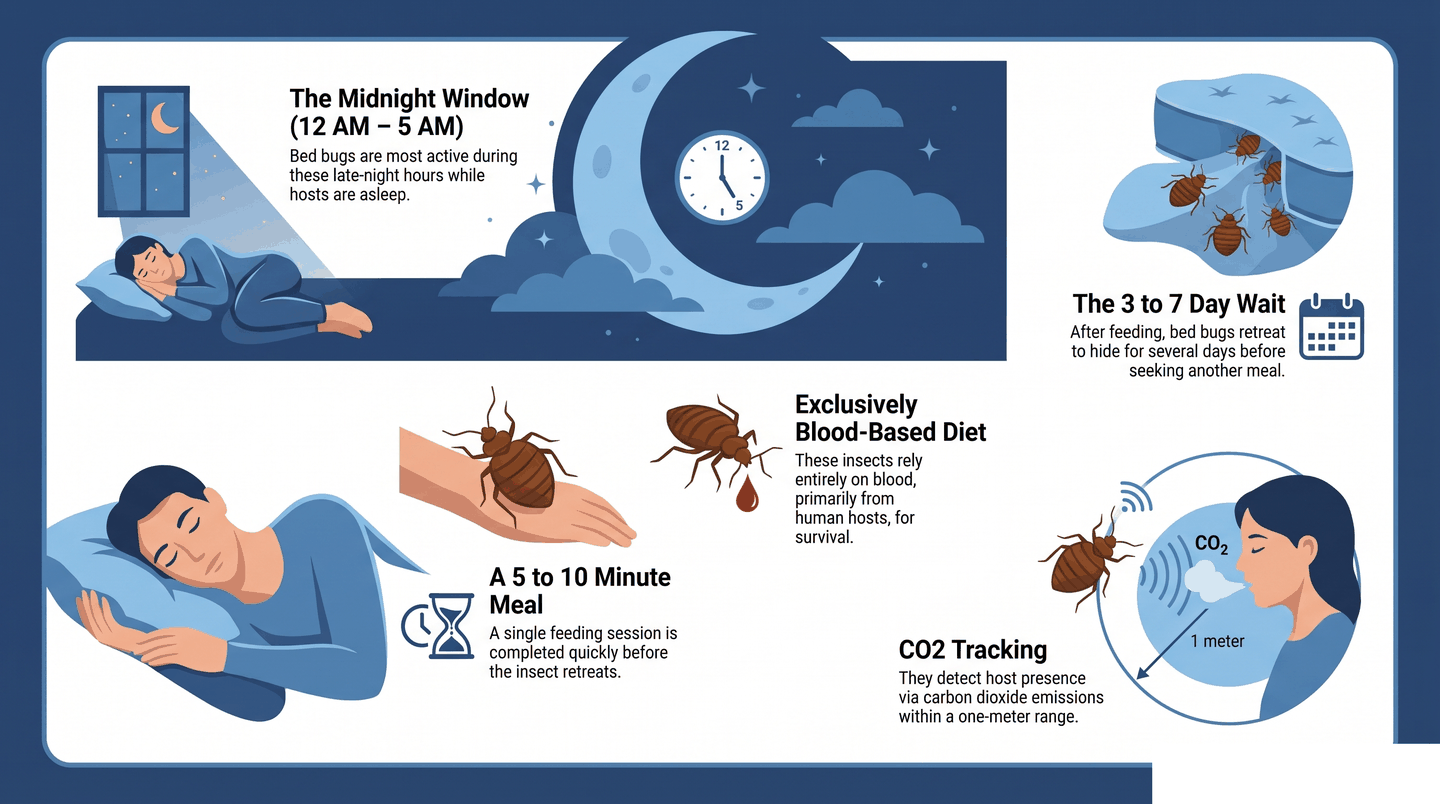
They are active at night, typically between midnight and 5 a.m., and a single meal takes about 5 to 10 minutes. After feeding, a bed bug retreats and usually waits 3 to 7 days before its next meal.
- Diet: blood only — mainly human, sometimes other warm-blooded animals
- Timing: active overnight, roughly midnight to 5 a.m.
- Meal length: about 5 to 10 minutes, then they retreat
- Cues: they home in on carbon dioxide (within about a meter) and body heat
Because they track the warmth and breath of a sleeping person, the marks they leave are predictable; you can compare yours against typical bed bug bites.
Do Bed Bugs Avoid Water?
Do bed bugs avoid water? Not in any way that helps you. Bed bugs are not aquatic, but the popular idea that water repels or deters them is a myth that needs careful framing. They simply aren't built to live in or cross open water — that is not the same as being afraid of it.
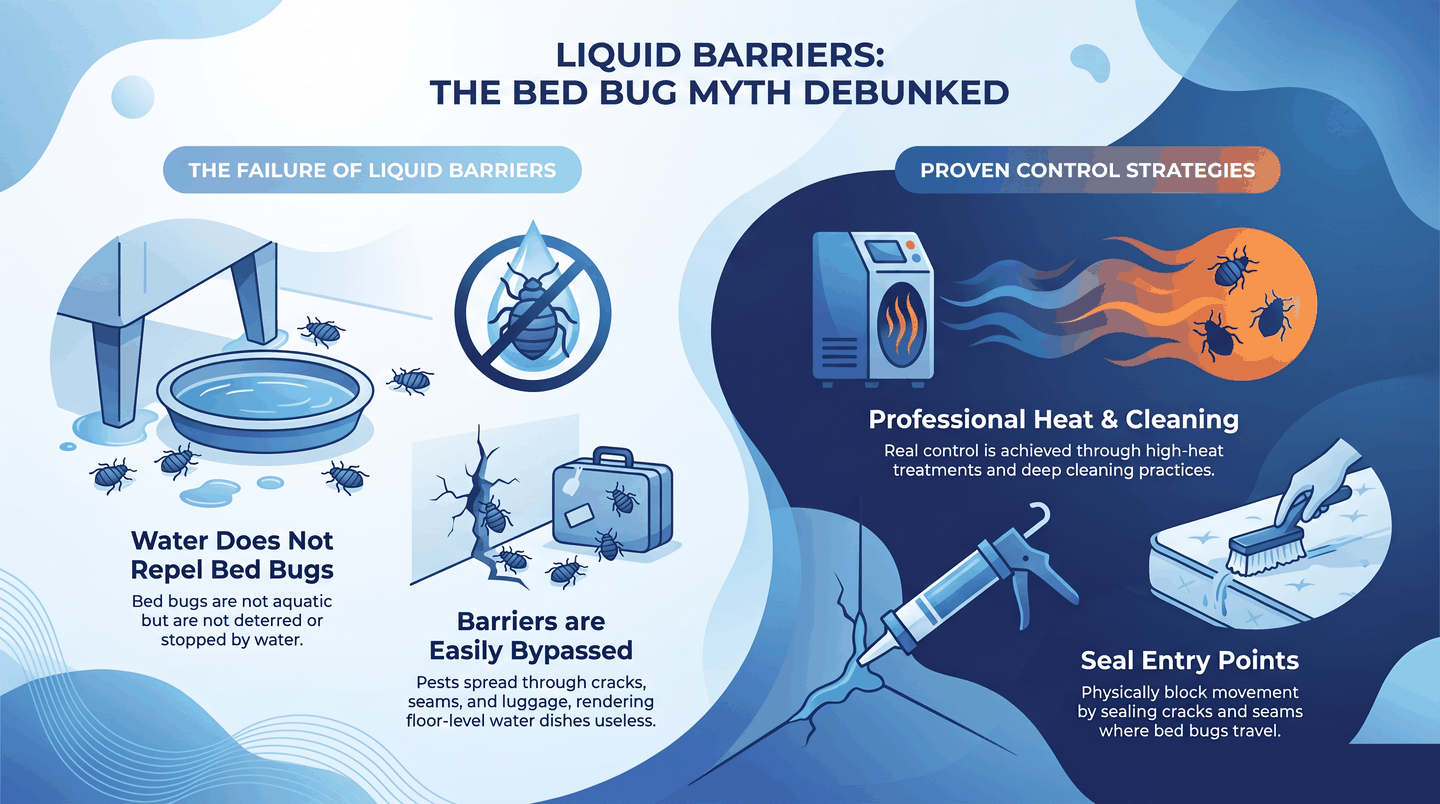
This is why water-based "defenses" are unreliable. Standing furniture legs in dishes of water or trusting a moisture barrier will not stop a determined infestation, because bed bugs reach you through cracks, seams, and the things you carry — not by swimming.
- Bed bugs are not aquatic and do not seek out water
- "Water keeps them away" is not a proven control method
- Real control relies on heat, careful cleaning, and removing hiding spots, not water tricks
Where Do Bed Bugs Hide
Where do bed bugs hide comes straight back to the Crawl-Only Rule: because they can only walk, they stay within a few feet of where you sleep. They tuck into cracks, seams, and crevices close to the bed so they never have far to crawl for a meal.
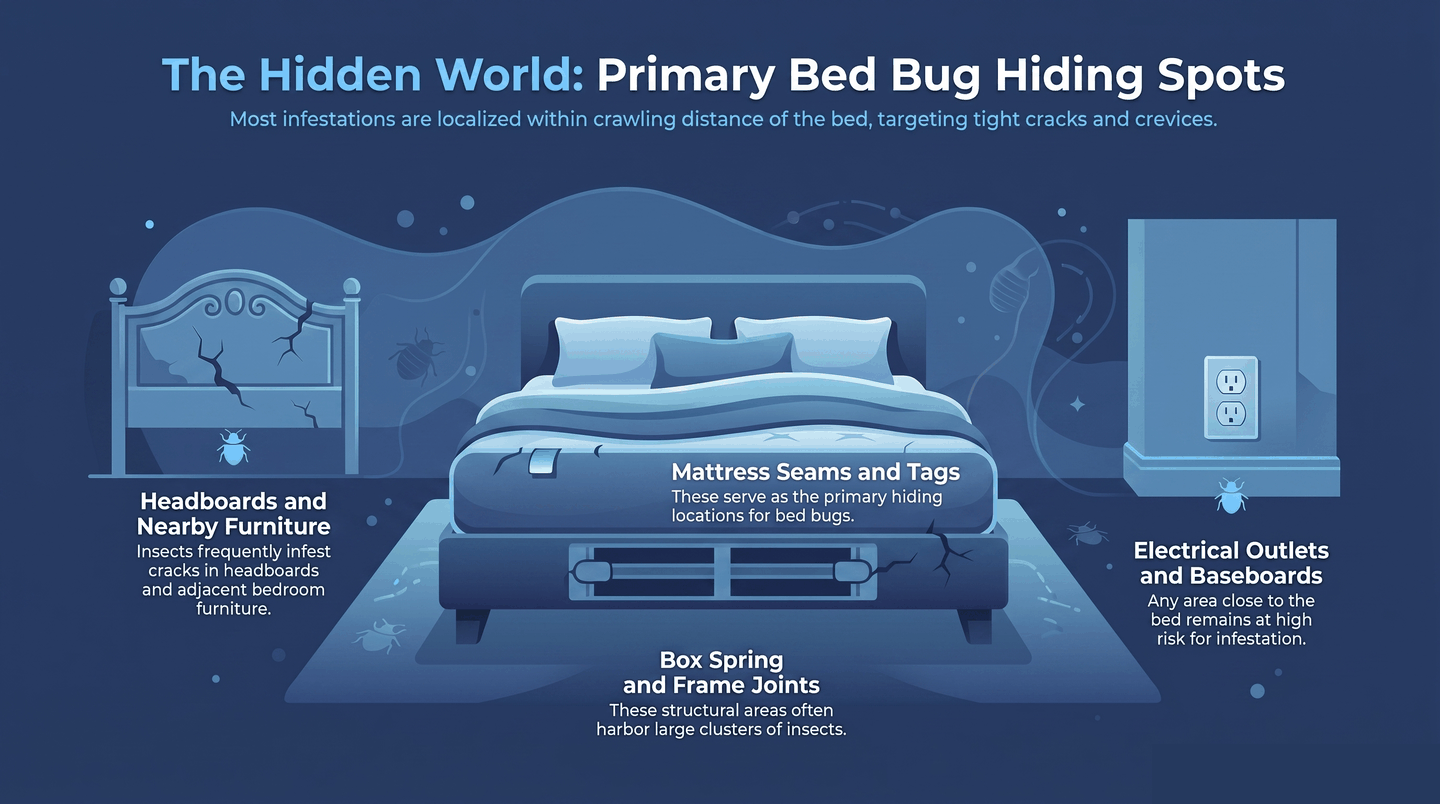
The most common hiding spots:
- Mattress seams and tags
- The box spring and bed frame joints
- Cracks in the headboard and nearby furniture
- Behind electrical outlets and along baseboards
Almost all of these sit within a few feet of the sleeping area. Knowing this also clarifies where do bed bugs come from — they don't appear from nowhere; they're carried in and then settle into the nearest cracks.
Can Bed Bugs Live in Your Hair
Can bed bugs live in your hair? No. Unlike head lice, bed bugs do not live on people at all. Their bodies and legs are not made to cling to hair or skin, so they cannot set up home on your scalp.
Instead, a bed bug climbs onto you only briefly to feed at night, then crawls back to its hiding spot. If something is living in your hair, it is far more likely to be lice than bed bugs.
Where Do Bed Bugs Hide on Your Body
Strictly speaking, bed bugs do not hide on your body — they hide near it. They climb on only long enough to feed, drawn to exposed skin while you sleep, and then leave. They are not parasites that ride along on a person through the day.
This is a key difference from lice or ticks. A bed bug treats your body as a meal stop, not a residence, which is why you almost never find them on you in daylight.
Where Do Bed Bugs Live
Where do bed bugs live, then, is best answered as: in the cracks and seams closest to a sleeping human. They cluster in the bed, the box spring, the frame, and the immediate surroundings — wherever a tight, dark gap sits within crawling distance of a meal.
Because everything depends on staying close and out of sight, clutter near the bed gives them more places to hide. Removing those hiding spots is a core part of how to get rid of bed bugs.
Several stubborn beliefs about bed bug movement lead people to waste effort. Under the Crawl-Only Rule, none of these hold up:
- "They flew in through the window" — bed bugs have no working wings and cannot fly
- "They jumped onto me" — their legs can't jump; they only crawl
- "Water around the bed legs will stop them" — water is not a reliable barrier or repellent
- "Leave the room empty and they'll starve in a week" — adults can persist for months, up to about six
Effective control comes from finding hiding spots near the bed, using heat and thorough cleaning, and sealing the cracks they crawl through — not from these shortcuts.
Frequently Asked Questions
Sources
- U.S. EPA — Bed bugs appearance and life cycle (wing pads, life cycle, and feeding).
- Virginia Cooperative Extension / Virginia Tech — Bed bug biology and behavior (PDF).
- CDC — Bed bugs biology.