Bed bug bites are small, raised, itchy red bumps that often show up in a line or a loose cluster, usually on skin left bare during sleep. They tend to appear overnight on the arms, legs, neck, or face. Most fade on their own within a week or two and aren't dangerous.
You wake up with a few itchy spots you didn't have last night. Maybe they sit in a neat little row. That's unsettling, and it's the moment most people start searching. This guide walks you through what these bites are in general: where they land, whether they itch or hurt, how long they stick around, and how they differ on different bodies and body parts. For deeper photo comparisons over time, see what do bed bug bites look like. For the medical side, see bed bug bite symptoms.
One quick relief: this has nothing to do with how clean your home is. Bed bugs find people, not mess.
Bed Bug Bites on Humans
Bed bug bites on humans happen while you sleep, when the bug feeds on a small amount of blood and then hides again. You almost never feel it happen. People often notice the marks only hours later, once the skin reacts.
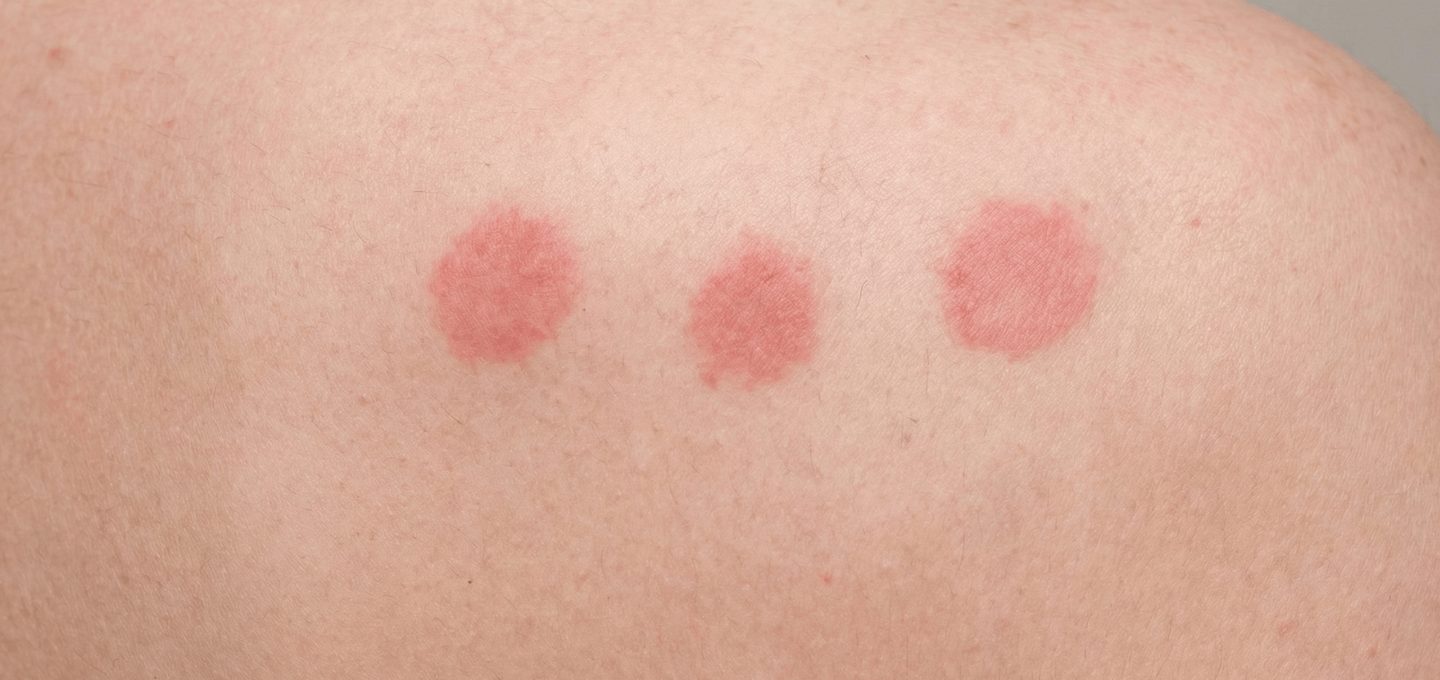
What makes a human reaction different: not everyone responds the same way. Research suggests up to a third of people show no visible mark at all, even when they're being bitten.
The bug isn't living on your body. It feeds, then crawls back to a crack near the bed. So the bites are a clue, not proof of where it hides. To confirm an actual infestation, check the bed itself for early signs of bed bugs.
Typical signs people report:
- Bumps that showed up overnight, not during the day
- A small group or short line of marks
- Itching that gets worse, not better, over a day or two
If you live with others, one person can have obvious bites while another has none. That's normal. It doesn't mean only one bed is affected.
Where Do Bed Bugs Bite
Where do bed bugs bite most often? They go for skin that's uncovered while you sleep and easy to reach from the mattress. Think of the parts that stick out from under the blanket.
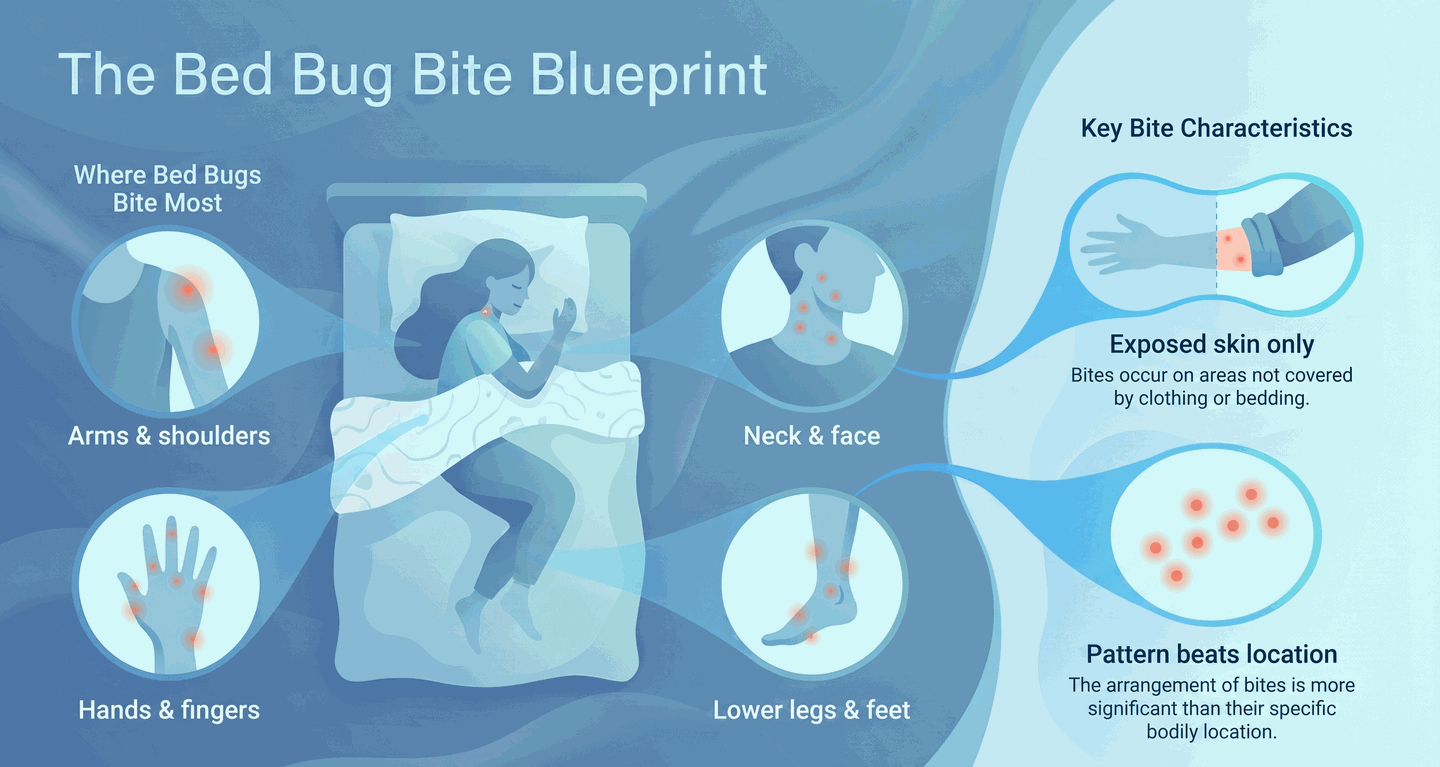
Most common spots:
- Arms and shoulders
- Hands and fingers
- Neck and face
- Lower legs and feet
They don't burrow and they don't live under your skin. They simply crawl to the nearest patch of bare skin, feed, and leave. That's why bites often follow the edge of where your sleeve or blanket ended.
Still, there's no "safe" body part. If skin is exposed and close to their hiding spot, it's fair game. People who sleep on their stomach may get bitten on the back; side sleepers more often on the arm and shoulder.
One reassuring point: the location alone can't confirm bed bugs. Many bugs bite exposed skin. Pattern and timing matter more than spot.
Do Bed Bug Bites Itch
Yes, bed bug bites itch for most people, and the itch is usually the first thing they notice. The bug leaves behind a tiny bit of saliva, and your body reacts to it. That reaction is what makes the spot swell and itch.
Why the itch often gets worse before better: the reaction can take a day or two to fully build. So a bite can feel itchier on day two than on the night it happened.
The urge to scratch is strong, but scratching can break the skin. That can lead to a sore or, in some cases, an infection. Try not to.
Simple ways people ease the itch:
- A cool, damp cloth on the spot
- A gentle over-the-counter anti-itch product
- Keeping nails short so scratching does less harm
Not everyone itches, though. Some people barely react. If the itching is severe, spreading, or paired with swelling, that points to a stronger reaction, covered in bed bug bite symptoms.
Do Bed Bug Bites Hurt
Most bed bug bites don't hurt at the moment they happen, which is part of why people sleep right through them. The bug's saliva has a mild numbing effect. You feel the itch later, not the bite itself.
So pain is usually mild. The discomfort comes from the itch and the swelling, not a sharp sting like a wasp.
When a bite can feel sore instead of itchy:
- You've scratched it raw
- It's in a tender spot, like between fingers
- The skin around it got infected
If a bite becomes very painful, hot to the touch, or oozes, that's a sign to stop guessing and see a doctor. That's not the typical course, but it can happen with heavy scratching.
For most people, though, the honest answer is simple. The bite is annoying, not painful. The itch is the real problem, not the sting.
How Long Do Bed Bug Bites Last
How long do bed bug bites last depends on your skin, but most fade within one to two weeks. A mild bite may clear in a few days. A stronger reaction can linger longer.
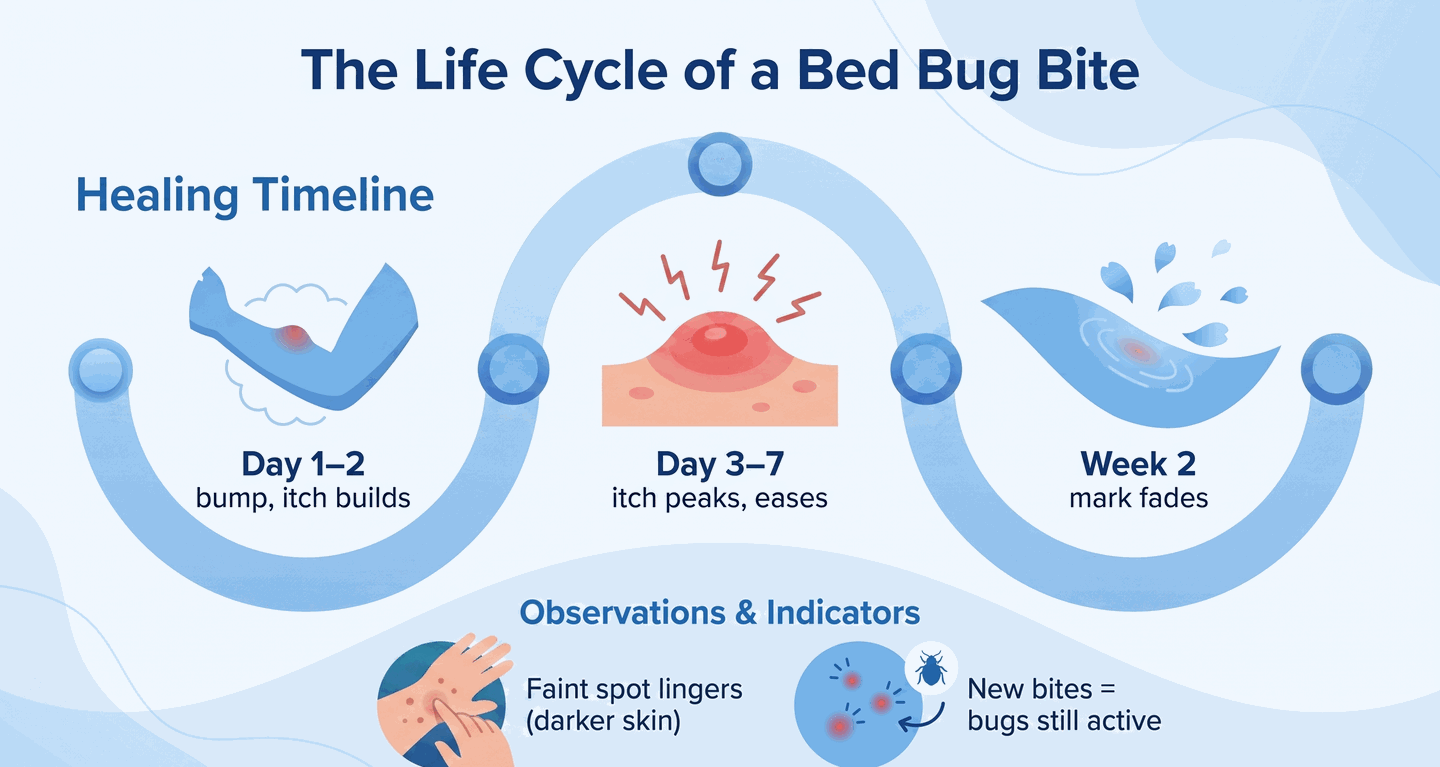
A rough timeline most people follow:
- Day 1–2: small red bump appears, itch builds
- Day 3–7: itch peaks, then slowly eases
- Week 2: the mark fades, sometimes leaving a faint spot
That faint spot can stick around for weeks, especially on darker skin. It's not the bite still active. It's just the skin healing.
Scratching makes everything last longer. A broken bite can scab and take extra time. So the kindest thing you can do is leave it alone.
If new bites keep appearing every few nights, the bites aren't lasting, you're getting fresh ones. That means the bugs are still there, and you'll want to confirm and act on early signs of bed bugs.
Bed Bug Bites on Black Skin
Bed bug bites on black skin can be harder to spot, because the classic "red bump" look doesn't always show up clearly. On deeper skin tones, a bite may look purple, dark brown, or simply like a slightly raised area rather than a bright red dot.
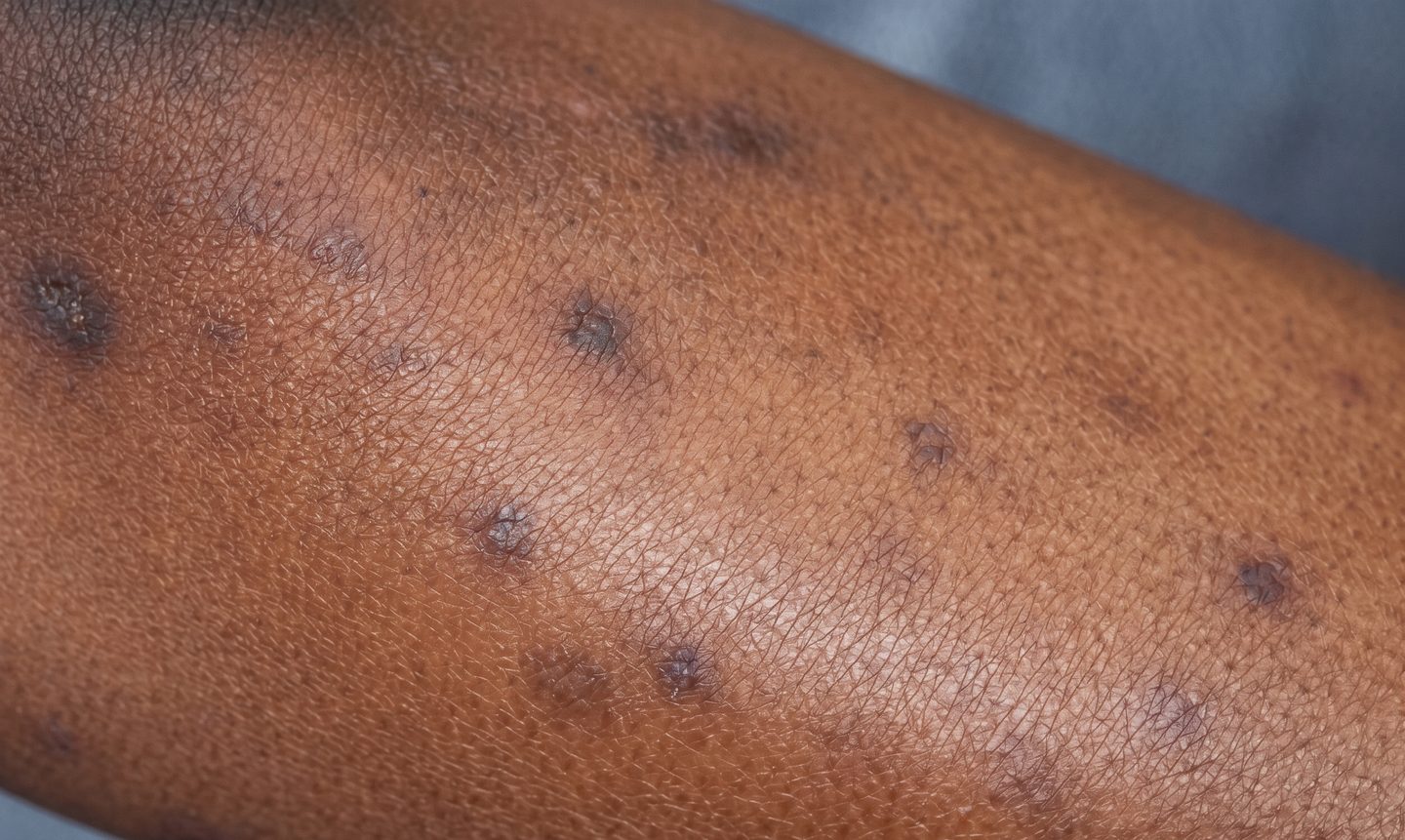
What to look for instead of redness:
- A raised bump you can feel with your fingertip
- A darker patch compared to the skin around it
- Itching in a spot that looks only slightly changed
Because the color cue is weaker, the pattern matters even more. Look for the line or small cluster, and notice if marks appeared overnight.
One frustrating side effect: after a bite heals, the skin can stay darker for weeks or months. This lingering mark is common on melanin-rich skin and isn't a sign the bite is still active.
Most photo guides online show bites on light skin. That gap is real. For more examples across skin tones, see what do bed bug bites look like.
Bed Bug Bites by Body Part
Bed bug bites on face, arms, and legs tend to look the same, small itchy bumps, but where they land changes how worried people feel. Face bites are the most distressing because they're visible. The bug doesn't prefer the face; it just reaches whatever skin is exposed above the blanket.
Below are the three spots people ask about most. The bite itself is the same. The position simply reflects how you sleep and what's uncovered.
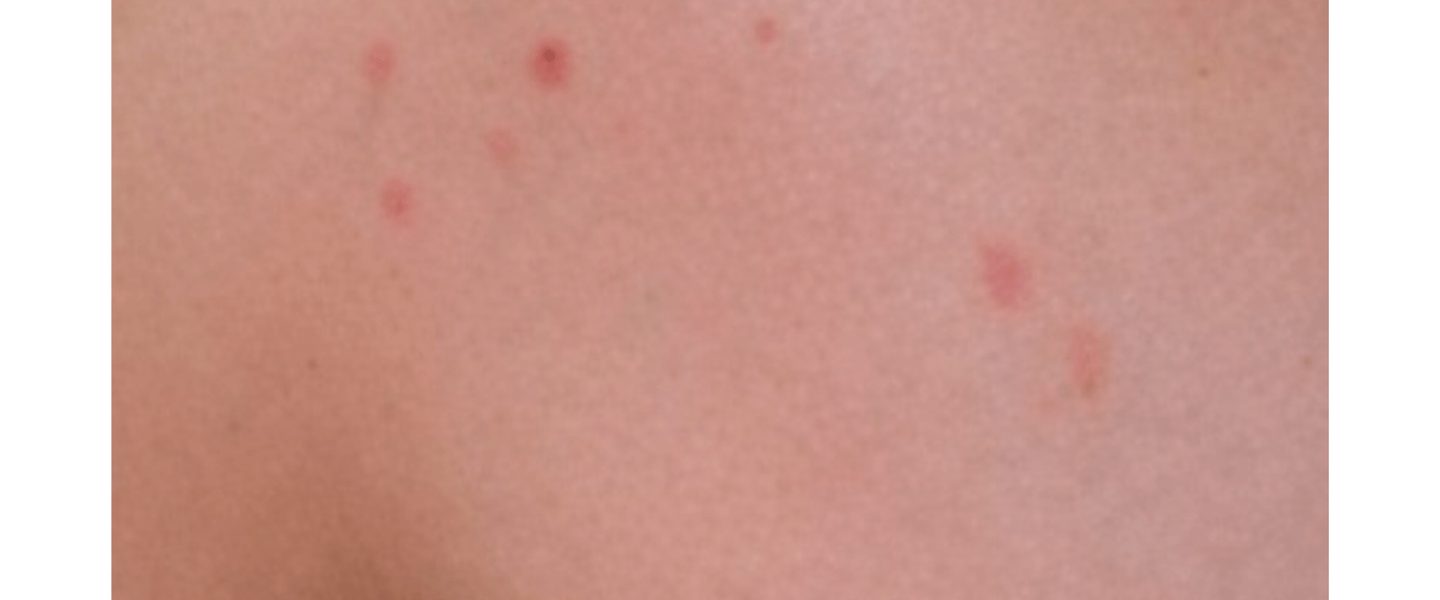
Bed Bug Bites on Arm
Bed bug bites on arm are among the most common, because arms often rest outside the covers all night. You'll often see them on the forearm, the back of the upper arm, or near the shoulder.
This is also where the classic "line" pattern shows up, since the bug can walk along an exposed stretch of skin. A short row of three or four bumps on the arm is a frequent first clue.
Bed Bug Bites on Legs
Bed bug bites on legs usually land on the lower leg, ankle, or foot, the parts that slip out from under a blanket. People who sleep in shorts often find them scattered across the calves.
Leg bites can look more spread out than arm bites. That's because legs move more in sleep, so the bug feeds in a few different spots rather than one tidy line.
Hand Bed Bug Bites
Hand bed bug bites tend to appear on the back of the hand, the knuckles, or between the fingers. These spots can feel sorer than other bites because the skin there is thin and the area is used constantly.
Bites between the fingers are easy to mistake for something else. Pair them with overnight timing and other marks before assuming bed bugs.
Bed Bug Bites on Newborns & Infants
Bed bug bites on a newborn or infant deserve extra care, because a baby's skin reacts strongly and they can't tell you what hurts. The bites look the same as on adults, small red bumps, but may swell more.
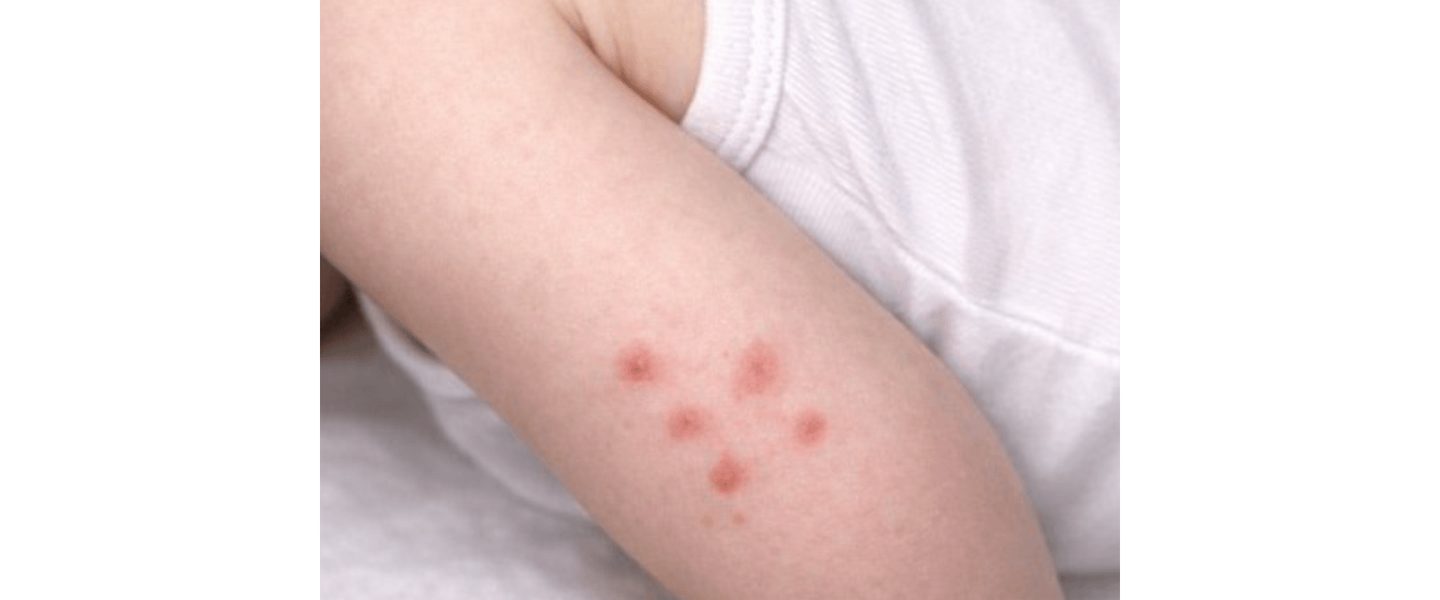
Why parents worry, and what's reassuring: bed bug bites don't spread disease to babies. The main risks are itching, broken skin from scratching, and rarely a stronger allergic reaction.
If you suspect bites on a baby, treat it as a reason to check the crib and room carefully for early signs of bed bugs right away.
One Bed Bug Bite
One bed bug bite can absolutely happen, and a single mark doesn't mean you're in the clear or that the problem is small. Bed bugs feed at different times, and a new infestation might leave just one bite at first.
Why a single bite is tricky:
- One bug, or one feeding, can leave one mark
- People react at different speeds, so other bites may show later
- A lone bite looks like many other insect bites
So one bite is hard to judge on its own. Don't panic over a single spot, but don't dismiss it either.
The smarter move is to look for backup evidence. A bite is just one clue. Check the mattress seams and headboard for tiny dark specks or shed skins. To rule out other culprits, compare against bugs that look like bed bugs.
Can Bed Bugs Bite Through Clothes
Can bed bugs bite through clothes? No, bed bugs cannot bite through fabric. Their mouthparts are built to pierce skin, not weave through cotton or a sock. They need to reach bare skin to feed.
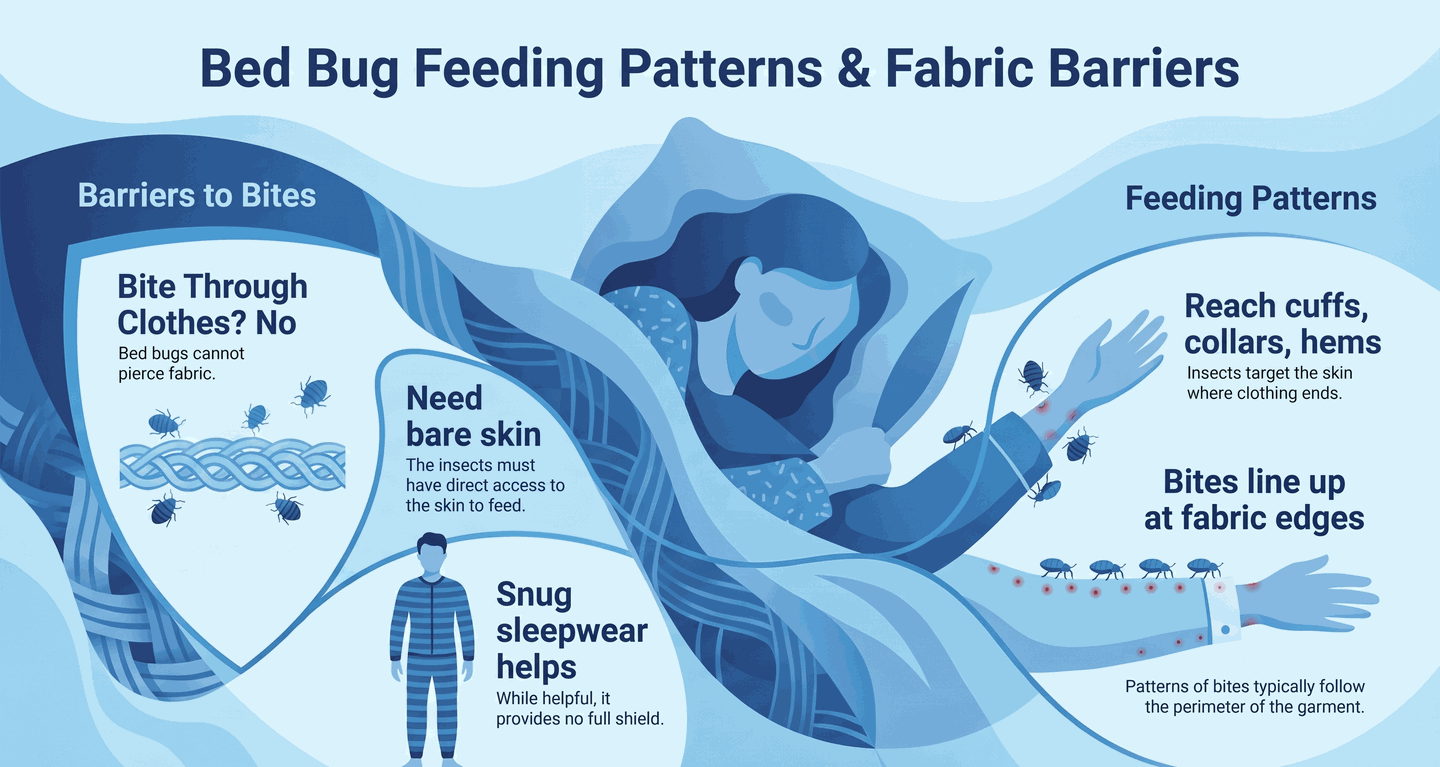
What this means in practice:
- They crawl to an opening, a cuff, collar, or hem
- They feed on the exposed skin near that edge
- Loose clothing gives them more gaps to reach
This is why bites often line up along the edge of a sleeve or pant leg. The bug found where the fabric stopped.
So covering up helps, but it isn't a full shield. A bug can still reach your ankles, neck, or wrists. Tight-woven, snug sleepwear reduces the exposed skin, which is one small, honest layer of protection, not a cure.
Bed Bug Bite Marks
Bed bug bite marks are the leftover signs after the itch fades: small flat spots, faint discoloration, or in some cases tiny scabs from scratching. The active bump heals, but the mark can linger.
What the marks tell you, and what they don't:
- A faded mark means the bite is healing, not active
- Dark marks last longer on deeper skin tones
- Scratched marks scar more easily
These marks aren't dangerous and usually fade with time. Keeping the skin moisturized and protected from sun can help them clear.
What marks can't do is prove the cause by themselves. Old marks look like many other healed bites. If you're trying to identify what bit you, the fresh bite's pattern and timing tell you more than the leftover mark. For appearance over time, see what do bed bug bites look like.
The 3-Clue Bite Check
Because one bite alone can't confirm bed bugs, use a simple method we call the 3-Clue Bite Check. It looks at three things together, not just the bite, so you don't jump to conclusions.
How to read it: one clue alone proves little. Two clues raise suspicion. All three together strongly suggest bed bugs, and it's time to act on early signs of bed bugs.
Diagnosing by the bite alone. Many people are certain they have bed bugs from a single itchy bump. But bites from fleas, mosquitoes, and other insects look nearly identical. The bite is a clue, never proof.
Counting bites to measure the problem. No bites doesn't mean no bugs, since up to a third of people don't react. And lots of bites doesn't always mean a huge infestation. Bite count is a poor gauge.
Treating only your skin. Soothing the itch is fine, but it does nothing to the bugs. If you treat the bites and ignore the bed, fresh bites keep coming.
Assuming it's about cleanliness. Bed bugs aren't drawn to dirt. Scrubbing your home won't repel them. They follow warmth and the carbon dioxide you breathe out, not mess.
Frequently Asked Questions
Sources
The information in this guide is based on the following sources:
- CDC — Bed Bugs (DPDx) (bed bug biology, bites on skin left exposed during sleep, and why bed bugs are not known to transmit disease).
- EPA — Bed Bugs: Appearance and Life Cycle (what bed bugs look like at each stage and how they develop).
- American Academy of Dermatology — How to treat bug bites (relieving itch and caring for bitten skin, including when to see a doctor).
- Virginia Tech / VDACS — Bed Bug Biology (feeding behavior, including how and how often bed bugs take blood meals at night).