Bed bug eggs are about 1 mm long — pearl-white, elongated, and slightly sticky, so they cling inside cracks and seams, usually in clusters. They are hard to see, hatch in roughly 6 to 9 days when warm, and are best killed with heat or steam rather than vacuuming.
If you have spotted bed bugs, the next worry is what they leave behind. Bed bug eggs are the hidden half of an infestation: tiny, pale, and tucked into places you rarely look. Knowing what to search for is the difference between clearing a problem and watching it return. To understand the insect behind the eggs first, see what are bed bugs. This guide stays focused on the eggs themselves — how to find them, and how to destroy them.
To keep your search simple, we use one tool throughout this guide: The 4-Point Egg Check — size, color, stickiness, and clustering. Run every suspicious speck through those four points and you can tell a real bed bug egg from a harmless crumb or a shed skin.
What Do Bed Bug Eggs Look Like
What do bed bug eggs look like up close? They are tiny, about 1 mm long — roughly the size of a pinhead or a coarse grain of salt. Each one is pearl-white to cream, elongated and oval rather than round, and coated with a slightly sticky film that cements it in place. They are usually found in clusters, not scattered alone.
That stickiness is the giveaway. Bed bug eggs do not roll loose like crumbs; they stay glued inside cracks, seams, and folds. After about five days, a faint dark eye spot can appear inside the egg, a small clue that it is developing and close to hatching.
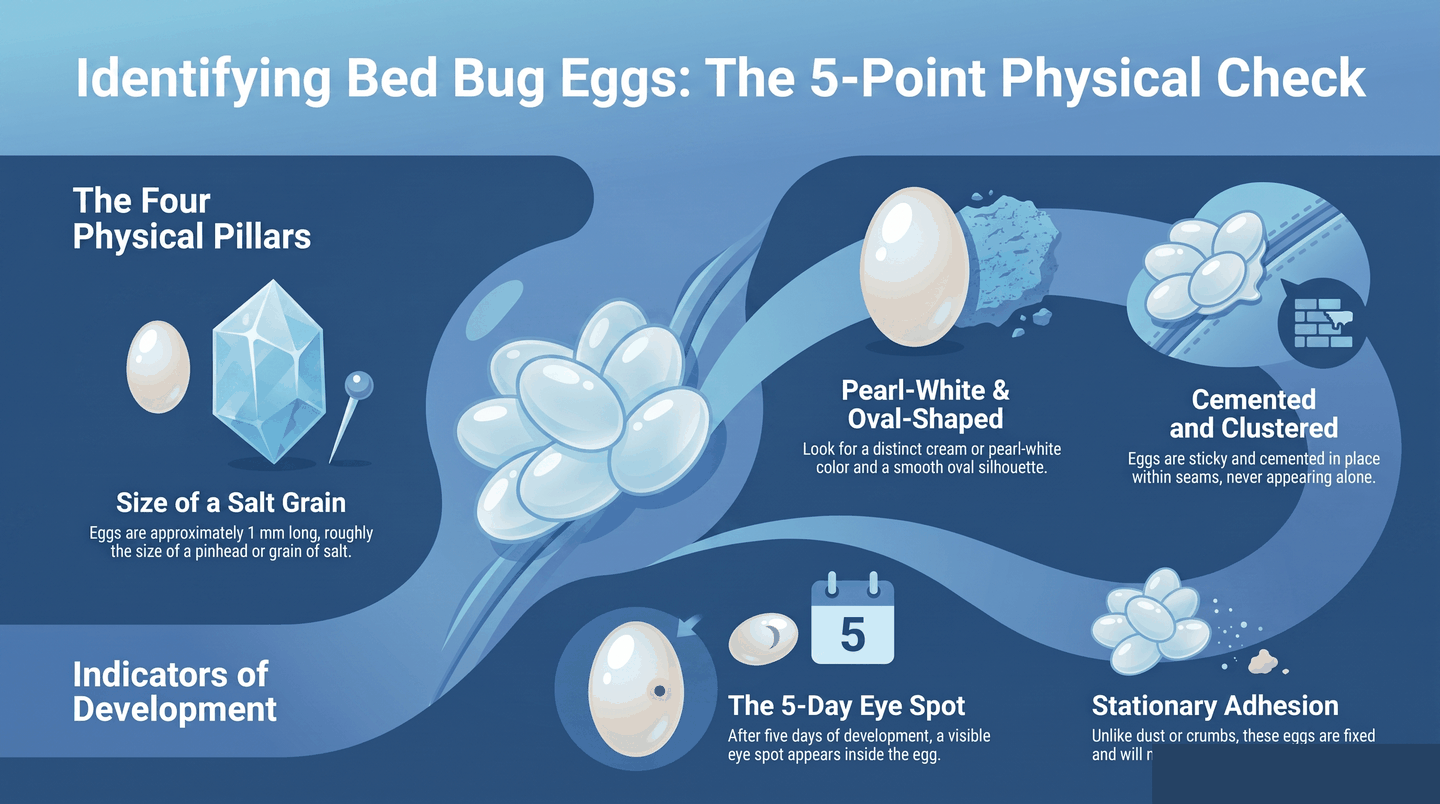
Because they are so small and pale, the eggs are hard to see with the naked eye, and white eggs on a light surface blend in almost completely. A flashlight held at a low angle and a magnifying glass make the search far easier. If you are trying to tell eggs apart from the bugs at different ages, compare them with what do bed bugs look like across the life cycle.
Dried Bed Bug Eggs
Dried bed bug eggs are the empty shells left behind after the young bug hatches out. These hatched casings look whitish and slightly collapsed, and they often stay stuck in the same seam where they were laid. Finding them is a strong sign that eggs have already hatched nearby.
One common mix-up: dried, empty egg shells can be confused with the shed skins, or molted casings, that growing bed bugs leave behind. Both are pale and brittle. The difference is shape — an egg shell is a tiny oval capsule, while a shed skin is a flat, bug-shaped husk.
Bed Bug Eggs on Sheets
Bed bug eggs on sheets are less common than eggs hidden in seams, because bugs prefer tucked-away cracks, but they do happen — especially along hems, folds, and the edges where fabric bunches. On bedding they appear as the same 1 mm pearl-white specks, sometimes in small clusters.
White eggs on white or pale sheets are easy to miss. Run your fingers along the seams and hems, use a bright light, and check the mattress piping just beneath where the sheets sit. Where you find eggs on sheets, you will usually find more in the mattress seams below.
Where Bed Bugs Lay Eggs (Hiding Spots)
Where bed bugs lay eggs follows one rule: tight, hidden, and close to where you sleep. Because the eggs are sticky, a female presses them into narrow cracks and seams where they stay protected and out of sight. They are almost always within a few feet of the bed.
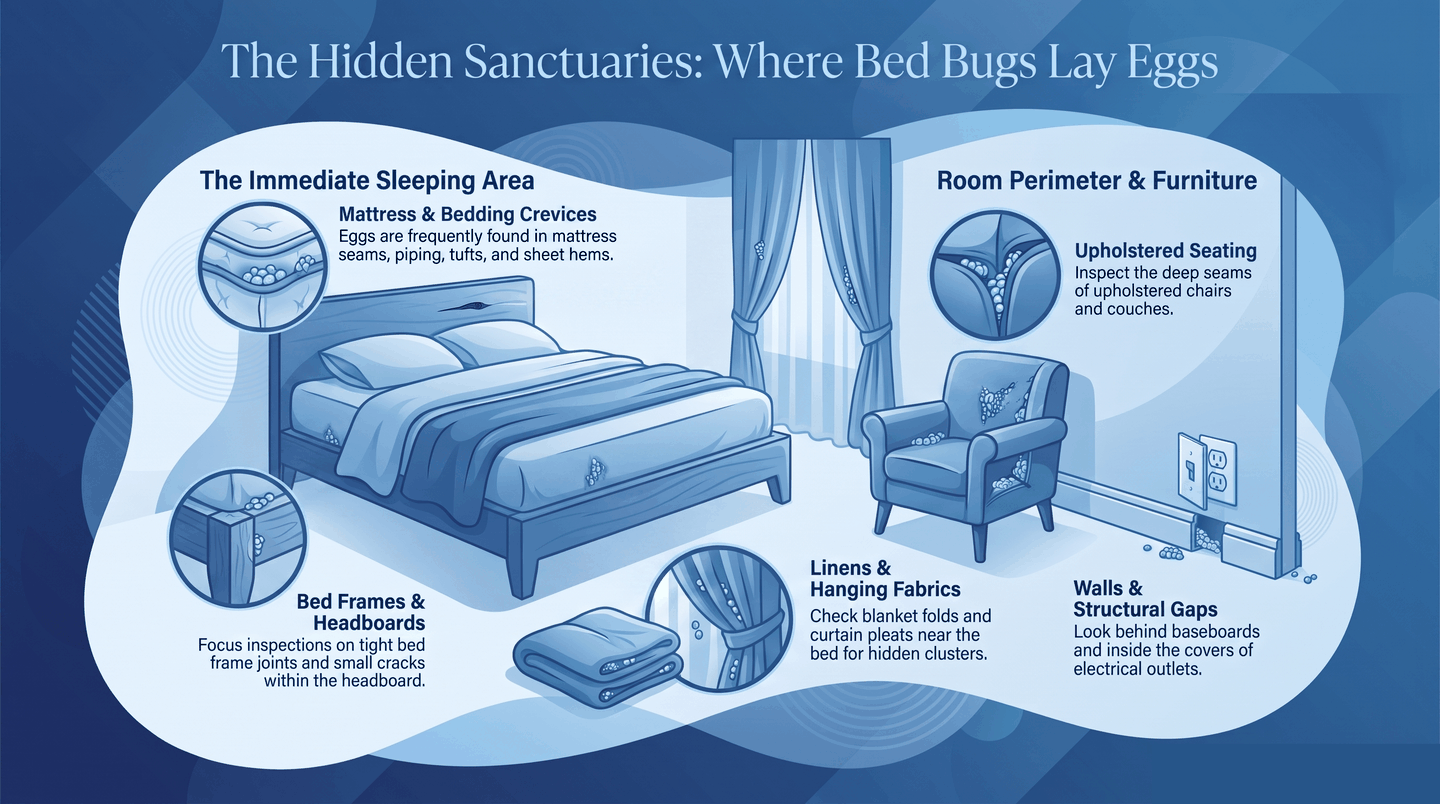
The most common egg hiding spots include:
- Mattress and box-spring seams, piping, and tufts
- Cracks and joints in the bed frame and headboard
- Folds and hems of sheets, blankets, and curtains
- Behind baseboards, loose wallpaper, and outlet covers
- Seams of nearby upholstered chairs and couches
The eggs are laid in clusters, so finding one usually means more are close by. The young that hatch from them are pale and tiny too — to recognize them, see baby bed bugs.
How Long Until Bed Bug Eggs Hatch
How long until bed bug eggs hatch depends mostly on temperature. In a warm room above about 70°F, roughly 60% of eggs hatch within 6 days and more than 90% within 9 days, with hatch rates reaching around 97% under ideal conditions. Cooler air slows everything down — at about 50°F, hatching is delayed by several extra days.
That timing matters because the numbers add up fast. A single female lays from 1 to 7 eggs per day, roughly 5 to 20 after each blood meal, and around 113 over her lifetime. A single already-mated female can start an entire infestation on her own, and a population can double about every 16 days.
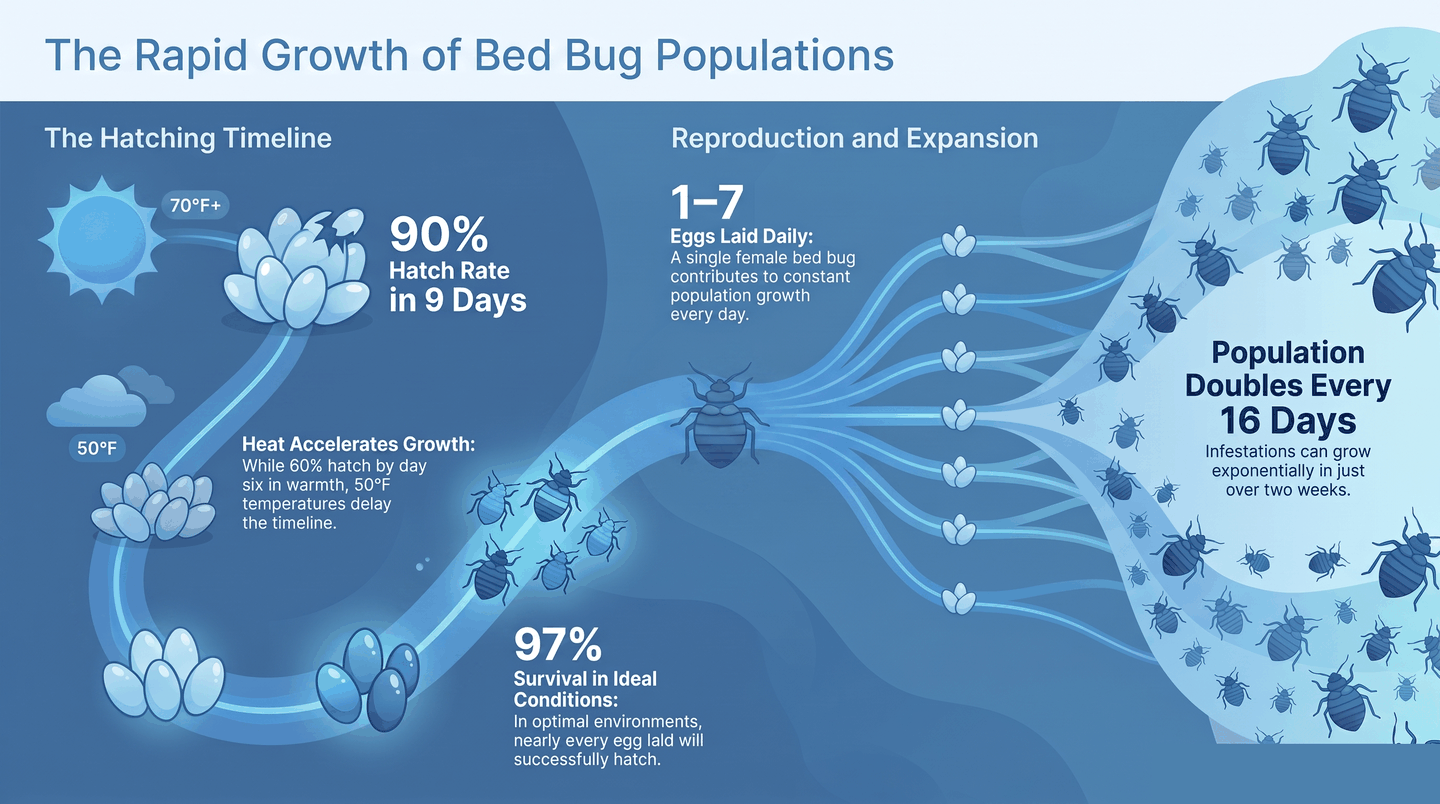
- Warm (above 70°F): ~60% hatch by day 6, over 90% by day 9
- Ideal conditions: hatch rate near 97%
- Cool (around 50°F): hatching delayed by several days
This is exactly why early action counts: every batch of eggs left to hatch becomes the next wave of biting bugs.
How to Get Rid of Bed Bug Eggs
Learning how to get rid of bed bug eggs means understanding what they survive. The eggs are cemented in place and shielded by a hard outer shell, which makes them tougher to remove and to kill than adult bugs. The reliable approach is physical: heat and steam.
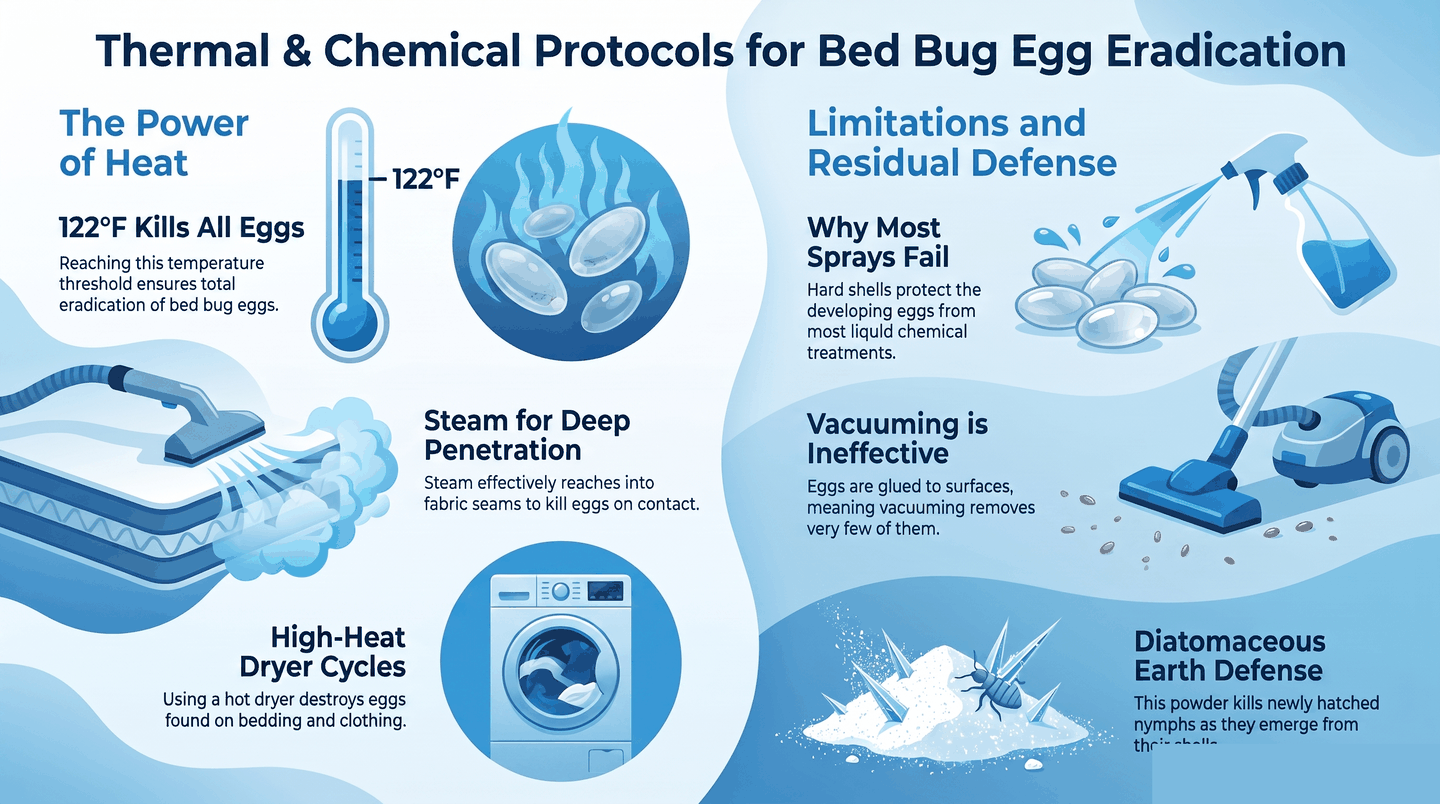
What actually works against the eggs:
- Heat: sustained temperatures around 122°F (50°C) kill bed bug eggs
- Steam: applied slowly along seams, cracks, and folds, it reaches eggs in place
- Hot laundry and dryer: high heat for bedding and washable items
For full elimination across every life stage, eggs included, follow a complete plan on how to get rid of bed bugs.
The eggs are the part most home methods fail to handle. Their sticky cement and protective shell let them survive treatments that work on adult bugs. These often fall short against eggs:
- Vacuuming alone — eggs are glued down, so they are removed far less effectively than adults
- Many over-the-counter sprays — the hard shell protects the bug inside, so chemicals often do not penetrate
- Wiping or brushing seams — cemented eggs cling and get missed
Because eggs resist both suction and many sprays, heat and steam — which act physically — are the dependable ways to destroy them.
Frequently Asked Questions
Sources
- U.S. EPA — Bed bugs appearance and life cycle (egg size, color, hatch timing, and reproduction).
- Virginia Cooperative Extension / Virginia Tech — Bed bug biology and behavior (egg laying, hatch rates, and temperature).
- CDC — Bed bugs biology.