Many bugs get mistaken for bed bugs. A real bed bug is 5–7 mm, flat, oval, and reddish-brown, with six legs and no working wings — it only crawls. If it flies, jumps, or has eight legs, it is something else, such as a carpet beetle, flea, or tick.
Found a small bug near your bed and want to know if it's a bed bug? You're not alone — several common insects look similar at a glance. This hub gives you a quick way to compare them. To use it, remember one simple framework: the SIZE-SHAPE-MOVE check — compare a bug's size, its body shape and color, and how it moves. That trio rules most look-alikes in or out fast.
Quick Comparison: Which Bug Bit Me?
The table below lines up a true bed bug against the bugs people most often confuse it with. Scan across the columns — size, shape and color, whether it flies or jumps, and the typical bite pattern. The single most useful clue is movement: a bed bug only crawls, so if it flies or jumps, it is not a bed bug.
| Bug | Size | Shape / Color | Flies / Jumps? | Bite pattern |
|---|---|---|---|---|
| Bed bug | 5–7 mm (apple-seed size) | Flat, oval, reddish-brown; 6 legs | No — crawls only | Often in lines or clusters on uncovered skin |
| Carpet beetle | ~2–3 mm | Rounded; larvae are hairy/bristly | Adults fly | Does not bite (larval hairs can irritate skin) |
| Flea | ~1.5–3 mm | Dark, narrow body | Jumps | Usually on ankles and lower legs |
| Tick | Varies (swells when fed) | Arachnid; 8 legs | No — crawls, then attaches | Embeds and stays attached while feeding |
| Booklice / baby cockroach | ~1–6 mm | Booklice pale & soft; roach nymphs longer | No (booklice); roach nymphs run fast | Do not bite — a look-alike only |
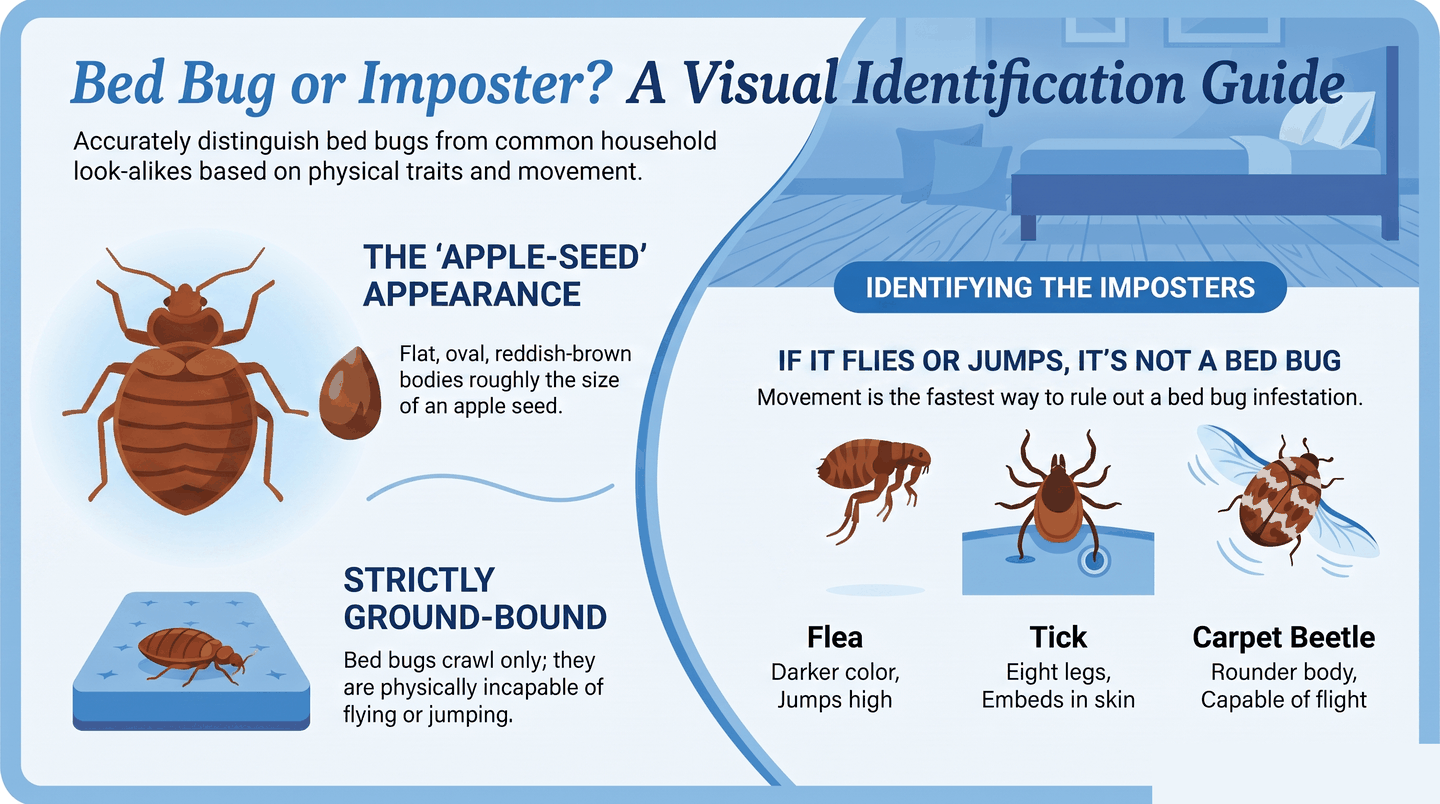
Want a closer look at the real thing before you compare? See what bed bugs look like and whether you can see bed bugs on the bed with the naked eye.
Full side-by-side comparisons: flea bites vs bed bug bites, tick vs bed bug, bed bug bites vs mosquito bites, carpet beetle vs bed bug, bat bug vs bed bug, scabies vs bed bugs, spider bites vs bed bug bites, chigger bites vs bed bug bites, bed bug bites vs hives, body lice vs bed bugs, no-see-um bites vs bed bug bites, and bed bug vs ant bites.
Bites are a weak way to identify any insect. They look different on different people, and many bugs leave similar red, itchy marks. Before you conclude it's bed bugs, look for physical evidence instead:
- The actual bug — flat, oval, reddish-brown, about apple-seed size
- Tiny dark spots on the mattress, seams, or sheets
- Shed skins or pale eggs tucked into cracks and seams
For help reading the marks themselves, compare bed bug bites and what bed bug bites look like.
One more reassurance: in everyday settings, bed bugs are not known to transmit diseases to people. They are a nuisance and can disrupt sleep, but a bite is not the health threat many people fear. If you suspect them, the next step is to look for the early physical signs — see early signs of bed bugs.
Frequently Asked Questions
Sources
- U.S. EPA — Bed bugs appearance and life cycle (size, flat oval reddish-brown body, no flight).
- CDC — Bed bugs biology.
- Virginia Cooperative Extension / Virginia Tech — Bed bug biology and behavior (PDF).