The early signs of bed bugs are physical traces near the bed: tiny dark or rust-colored fecal spots, pale shed skins, very small white eggs in seams and cracks, and the flat, apple-seed-sized bugs themselves. Bites alone are not proof — look for these marks first.
Catching bed bugs early comes down to one habit: looking in the right places for the right traces. The earliest signs of bed bugs are not the bites — they are the marks the bugs leave behind within a few feet of where you sleep. To make this easy, we use one simple idea throughout this guide: The Sleep-Zone Trace Check — inspect the small area around your bed for four physical clues. If you want a closer look at the insect itself, see what do bed bugs look like.
This guide stays focused on detection. We will walk through how to check your bed and mattress, what fecal spots and shed skins look like, why bites without other signs can be misleading, and how to inspect a hotel room before you unpack.
How to Check for Bed Bugs
To check for bed bugs, work outward from where your skin touches the bed, because bed bugs hide within a few feet of their meal. They do not live on your body or in your hair — they tuck into seams, cracks, and crevices and come out to feed. Bring a flashlight and, if you can, an old card to drag along seams.
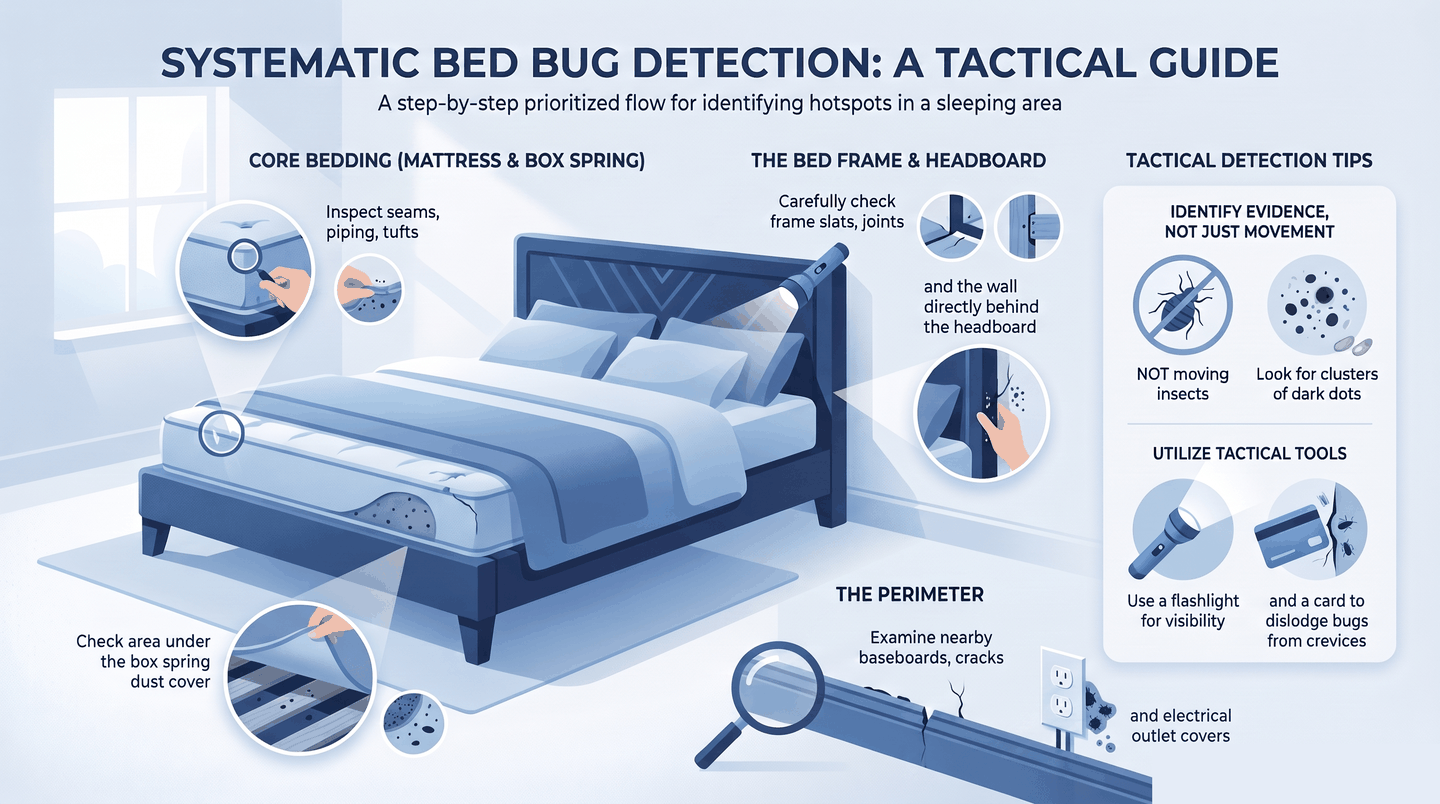
Where to inspect, in order:
- Mattress seams, piping, and tufts
- The box spring, especially under the dust cover
- The bed frame, slats, and joints
- The headboard and the wall behind it
- Nearby baseboards, cracks, and outlet covers
Move slowly and look for clusters of dots and pale skins, not just moving bugs. You can also read more about whether you can spot them directly in can you see bed bugs on bed.
How to Find Bed Bugs in Bed
To find bed bugs in bed, strip the sheets and inspect the mattress in good light. Run your eye — and a card — along every seam and fold, where the bugs and their eggs are most likely to gather.
Live bed bugs are flat, brown, and about the size of an apple seed (roughly 5–7 mm), so they wedge easily into tight folds. After a feed they look rounder and darker. Look for them in the corners and along the piping first.
- Peel back fitted sheets and check the four corners
- Drag a card along the seams to dislodge hidden bugs
- Lift the mattress and inspect the underside edge
- Check the box spring and the frame beneath it
How Do You Know if You Have Bed Bugs
You know if you have bed bugs by finding their physical traces, not by guessing from an itch. The most reliable confirmation is seeing the bugs themselves along with their droppings, shed skins, or eggs in the seams and cracks around your bed.
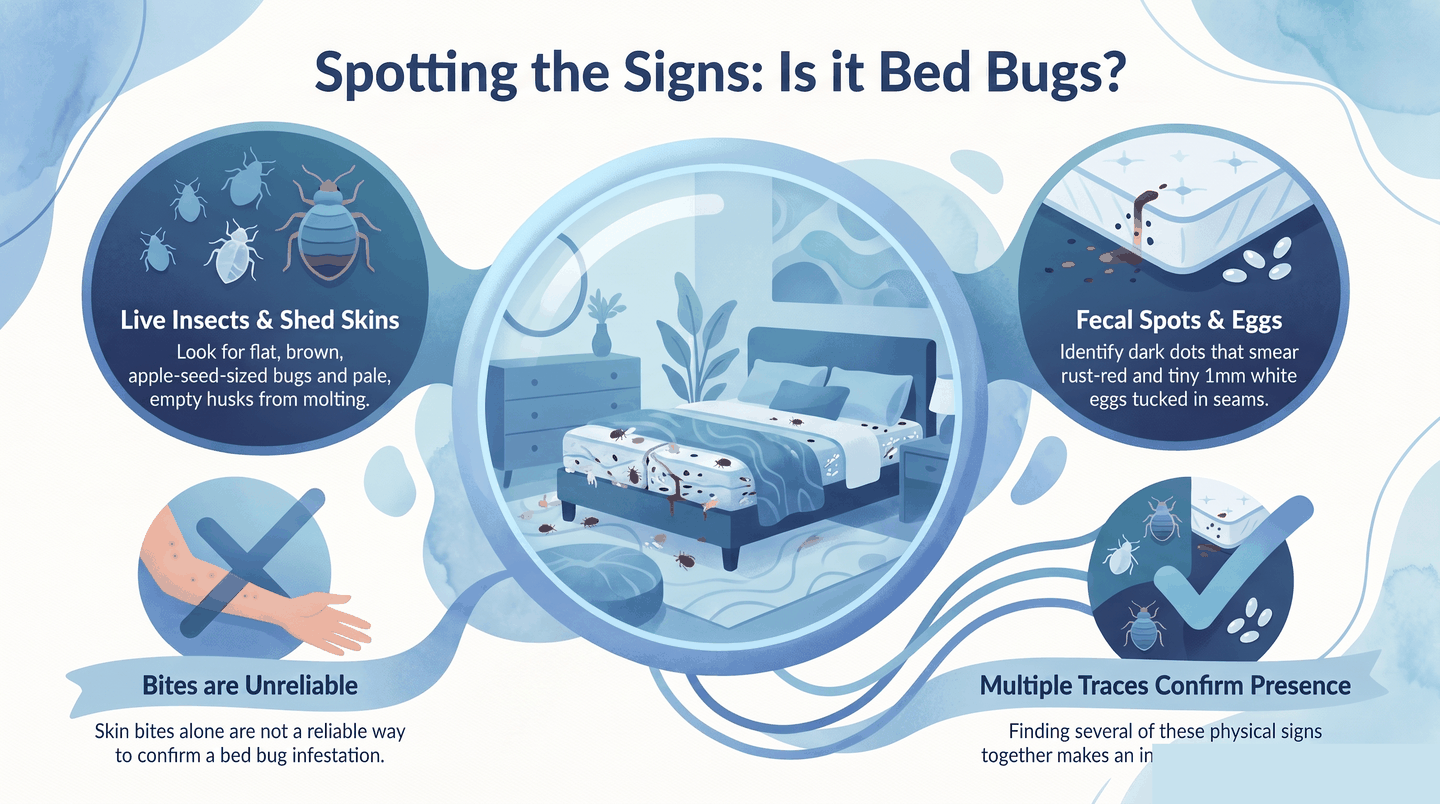
Any one trace is a clue. Several together — fecal spots plus shed skins plus a live bug — make it almost certain. Compare what you find against the four signs in the Sleep-Zone Trace Check above.
If you turn up tiny pale ovals, it helps to know what to expect from bed bug eggs and from the young, which look different from adults — see baby bed bugs.
How to Know if You Got Bed Bugs
To know if you got bed bugs after a trip or a secondhand purchase, inspect your luggage, the new item, and your bed within a day or two. Bed bugs are hitchhikers, so the question of how you got them often traces back to travel or used furniture — covered in where do bed bugs come from.
Look in the same places you would check a bed: zippers, seams, and folds. Finding even one live bug, a cluster of fecal spots, or a shed skin is enough to act on.
- Unpack onto a hard, light-colored surface, not the bed
- Check suitcase seams and zippers carefully
- Inspect any used furniture before bringing it inside
- Re-check your mattress seams a few days later
How to Identify Bed Bugs
To identify bed bugs, focus on size, shape, and color: adults are flat, oval, reddish-brown, and about 5–7 mm long — the size of an apple seed. Before feeding they are thin and almost translucent at the edges; after feeding they swell and darken.
It is easy to confuse them with other small household insects, so pair the look of the bug with the traces around it. A bug found in a mattress seam alongside dark fecal spots is far more telling than a bug found alone on a kitchen floor.
- Adults: flat, oval, brown, 5–7 mm
- Eggs: white, about 1 mm, in cracks and seams
- Shed skins: pale, empty husks (bed bugs molt five times)
- Location: near the bed, never on your body or in your hair
For a detailed visual breakdown of color and shape at each stage, see what do bed bugs look like.
No Signs of Bed Bugs but I Have Bites
Having bites but no signs of bed bugs is common and confusing, but it does not confirm an infestation. Bites alone are not reliable proof, because skin reactions vary widely from person to person — and some people do not react to bed bug bites at all.
That cuts both ways. One person in a bed can wake up covered in marks while their partner shows nothing, even though both were bitten. So instead of reading too much into the bites, return to the physical traces.
It is also worth remembering that many things bite. Fleas, mosquitoes, and ordinary skin reactions can all leave similar marks, so marks without traces are not enough to blame bed bugs.
Trying to diagnose bed bugs from the bites alone is one of the least reliable approaches. Reactions differ from person to person, and some people show nothing at all. These shortcuts will not confirm bed bugs:
- Judging by how many bites you have, or their pattern
- Assuming no bites means no bed bugs
- Ruling them out because a partner has no marks
- Skipping the seam-and-crack inspection entirely
The reliable move is always the same: look for live bugs, fecal spots, shed skins, and eggs near the bed. If you want to understand the marks themselves, see bed bug bites and bed bug bite symptoms.
Bed Bug Infestation
A bed bug infestation builds quietly from a few hidden bugs into a much larger group over weeks. The early signs are subtle, but as numbers grow the traces become harder to miss — more fecal spotting, more shed skins, and eventually a noticeable, sweet, musty odor in heavy infestations.
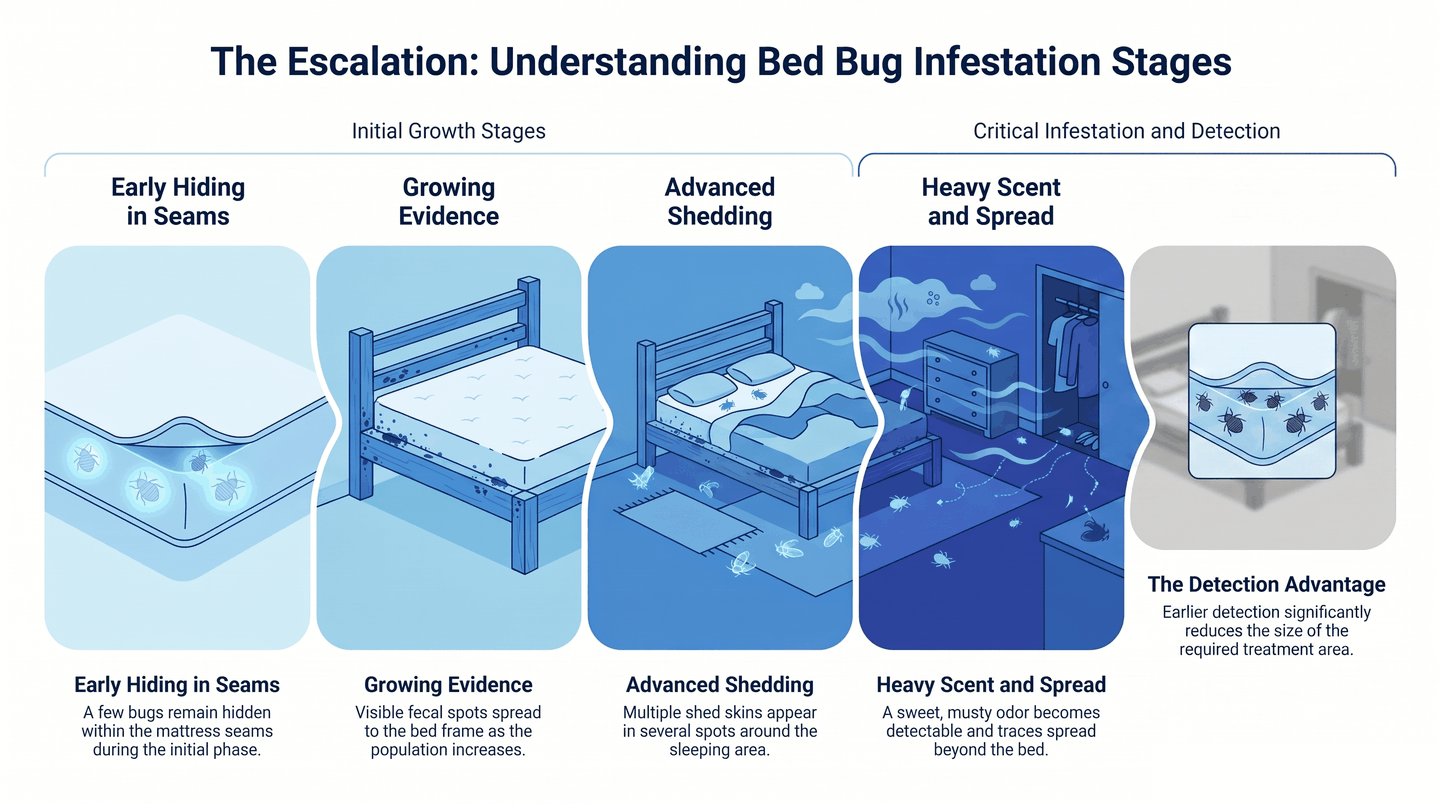
The earlier you catch it, the smaller the area you have to treat. That is why the Sleep-Zone Trace Check matters: it is designed to surface the problem while it is still small.
Signs of Bed Bug Infestation
The signs of a bed bug infestation are the same four traces, but more of them and spread wider. As the colony grows, you see them beyond just the mattress.
- Clusters of dark, rust-colored fecal spots on the mattress, frame, and walls
- Multiple pale shed skins in seams and cracks
- Eggs and live bugs in more than one hiding spot
- A sweet, musty odor in a heavily infested room
If you confirm an active problem, the next step is treatment — start with how to get rid of bed bugs.
Signs of Bed Bugs on Sheets
The clearest signs of bed bugs on sheets are tiny dark spots and rusty smears. Bed bug droppings are digested blood, so they show up as small dark or rust-colored dots — and when you wipe them with a damp cloth, they smear a rusty red. That smear test is one of the simplest early checks you can do.
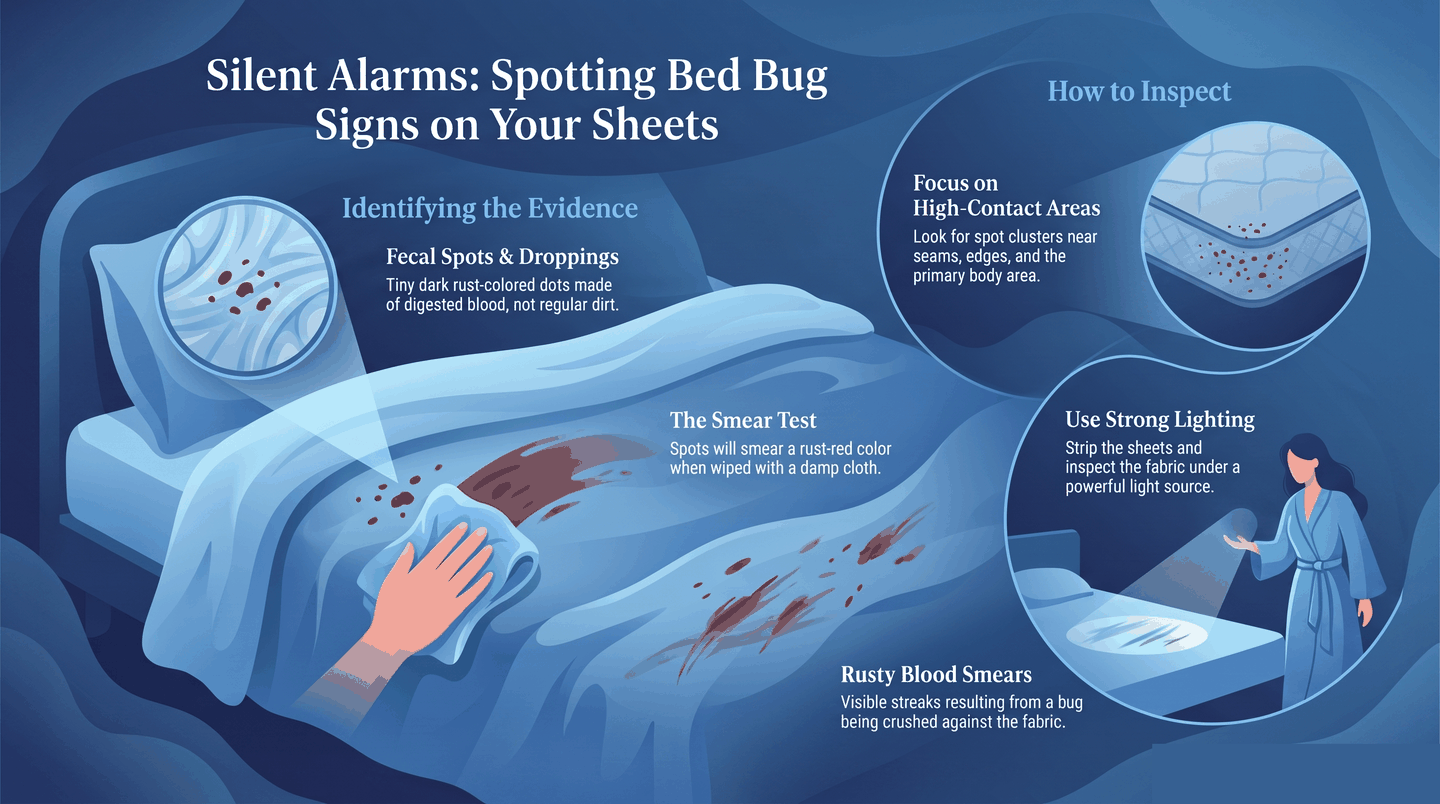
You may also notice small rusty blood smears on the sheets. These usually come from a bug that was crushed while you moved in your sleep, leaving a faint streak behind.
- Fecal spots: tiny dark dots that smear rust-red when wet
- Blood smears: small rusty streaks from a crushed bug
- Where to look: near seams, along edges, and where you lie
For more on what the droppings look like and how to tell them apart from other stains, see bed bug poop.
Early Signs of Bed Bugs on a Mattress
The early signs of bed bugs on a mattress concentrate in the seams, piping, and tufts, because those tight folds are prime hiding spots. Run a flashlight slowly along every seam and look for dark spotting, pale husks, and tiny white eggs.
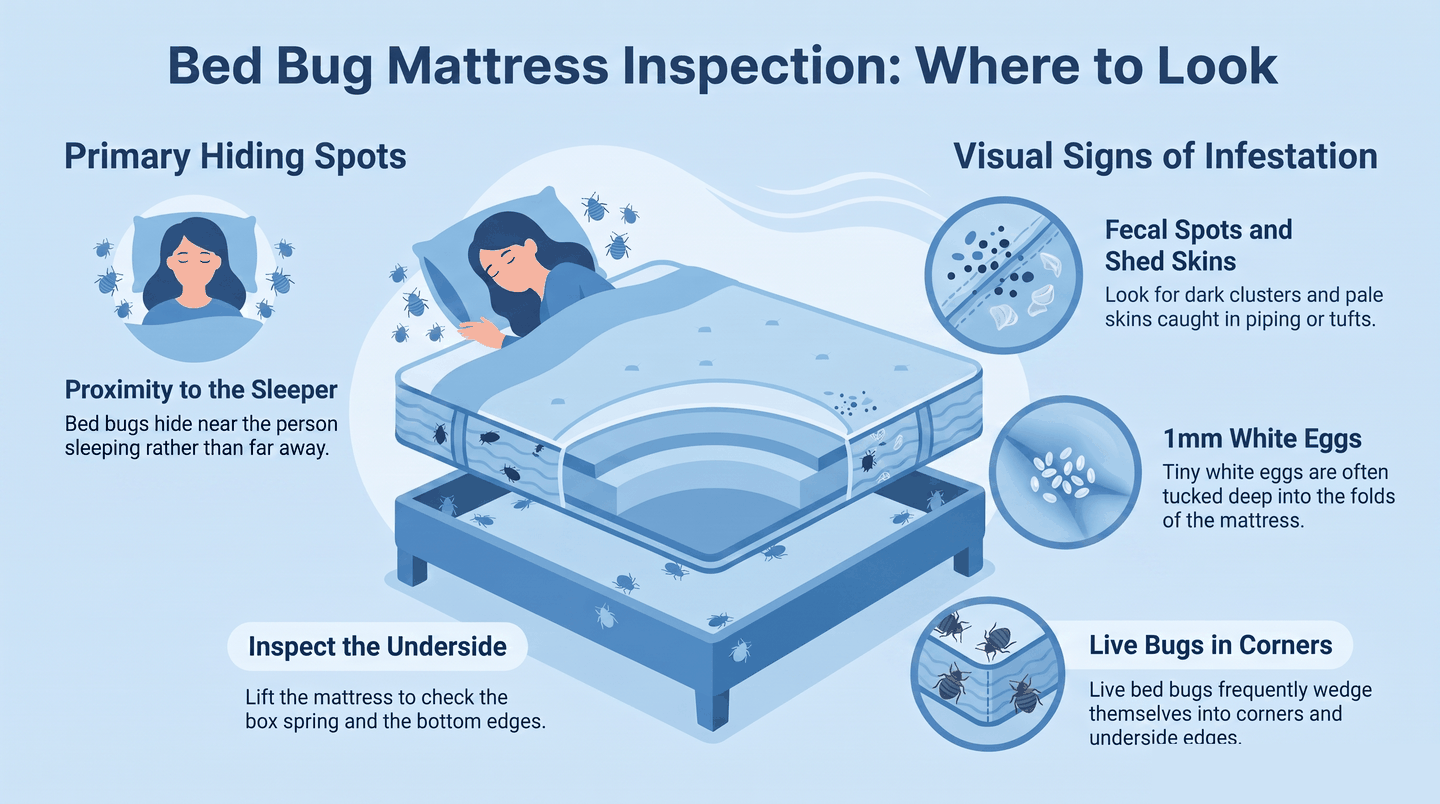
Do not stop at the top surface. Lift the mattress and check the underside edge, then inspect the box spring beneath the dust cover, where bugs often gather out of sight.
- Dark fecal spotting clustered along the seams
- Pale shed skins caught in the piping and tufts
- Tiny white eggs, about 1 mm, tucked into folds
- Live bugs wedged into corners and the underside edge
Remember the boundary of the sleep zone: bed bugs hide in the mattress, box spring, frame, headboard, baseboards, and outlet covers — within a few feet of you — but never on your body or in your hair.
How to Check for Bed Bugs in a Hotel
To check for bed bugs in a hotel, inspect the bed before you bring anything near it. Pull back the sheets and look closely at the mattress seams and the headboard — the two spots where early signs show up first.
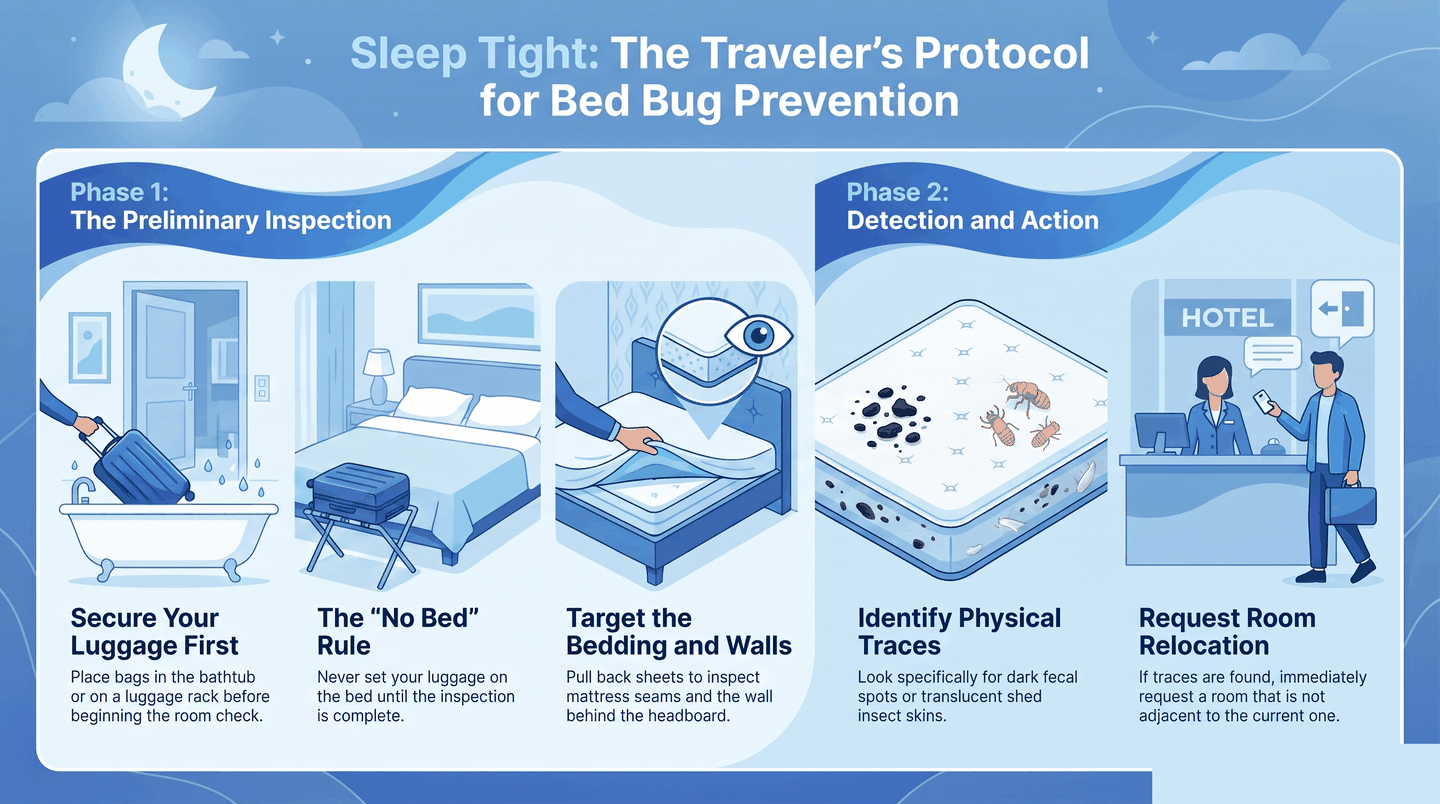
Keep your luggage out of the danger zone while you look. Use the luggage rack or the bathroom, and never set your bag on the bed or upholstered furniture until you have checked.
- Pull back the sheets and inspect the mattress seams
- Check the headboard and the wall behind it
- Look for dark fecal spots, shed skins, and live bugs
- Keep luggage on the rack or in the bathtub, not the bed
If the room is clear, you can unpack. If you find traces, ask to change rooms — ideally not one directly next door, since bed bugs can spread along shared walls.
Frequently Asked Questions
Sources
- U.S. EPA — Bed bugs appearance and life cycle (size, eggs, molts, and what to look for).
- U.S. EPA — How to find bed bugs (where and how to inspect).
- Virginia Cooperative Extension / Virginia Tech — Bed bug biology and behavior (PDF).
- CDC — Bed bugs biology.