Cat Sleep: How Much, Positions & Behaviors
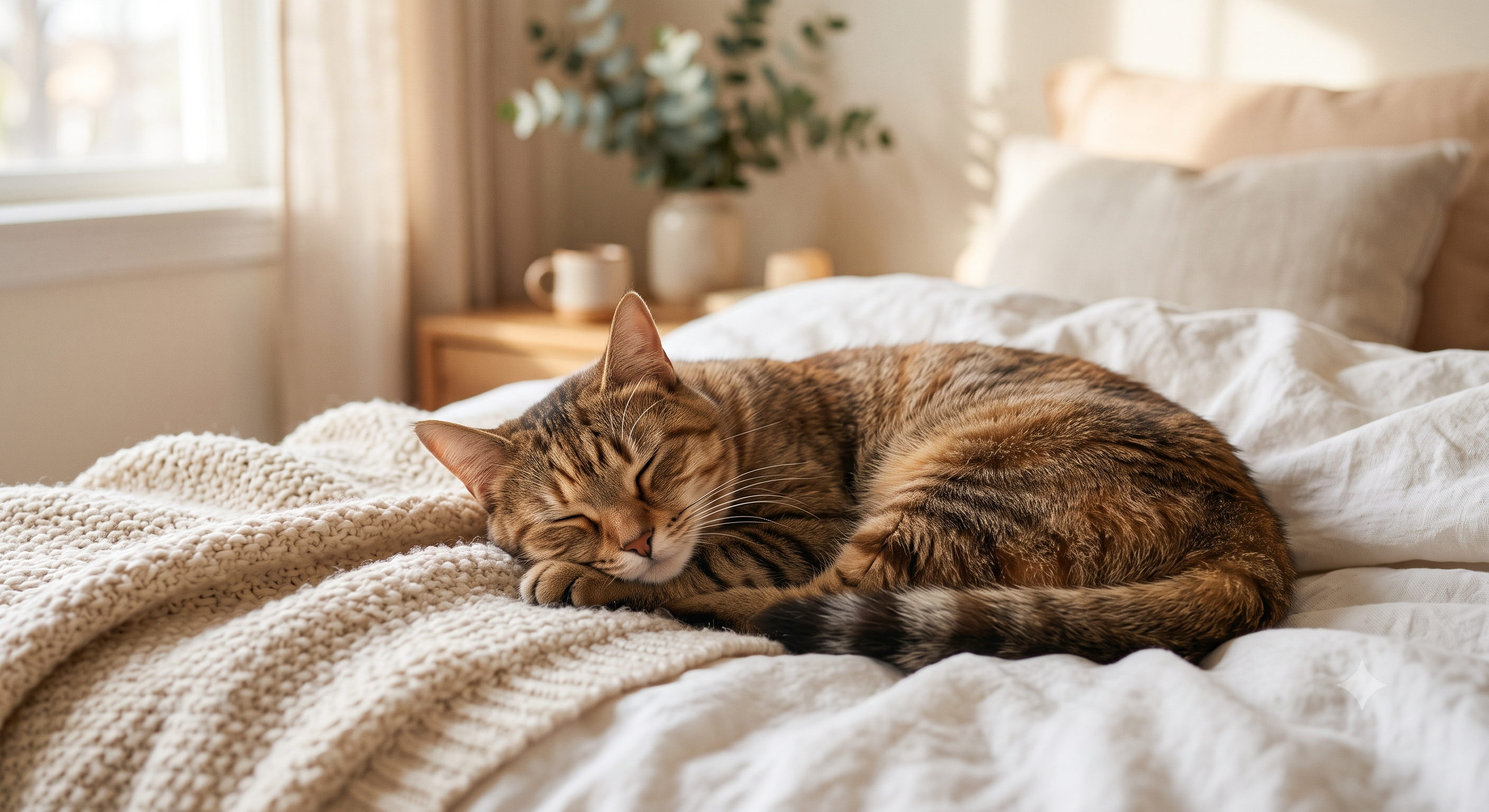
Cats are polyphasic sleepers, resting in many short bouts rather than one long block, and they spend far more of each day asleep than adult humans do. Twitching, curling up at your feet or chest, and dozing with half-open eyes mostly reflect a light, REM-like sleep state built around warmth, vigilance, and trust in you.
Understanding why a cat naps so much starts with the same lens sleep scientists use for people: the Two-Process Model of Sleep Regulation. This framework describes two forces that govern sleep — a homeostatic pressure that builds the longer an animal stays awake, and a circadian rhythm tied to light and dark. Cats run on the same two forces, but because they evolved as hunters built for short, intense bursts of activity around dawn and dusk, their version of "enough sleep" looks very different from a person's.
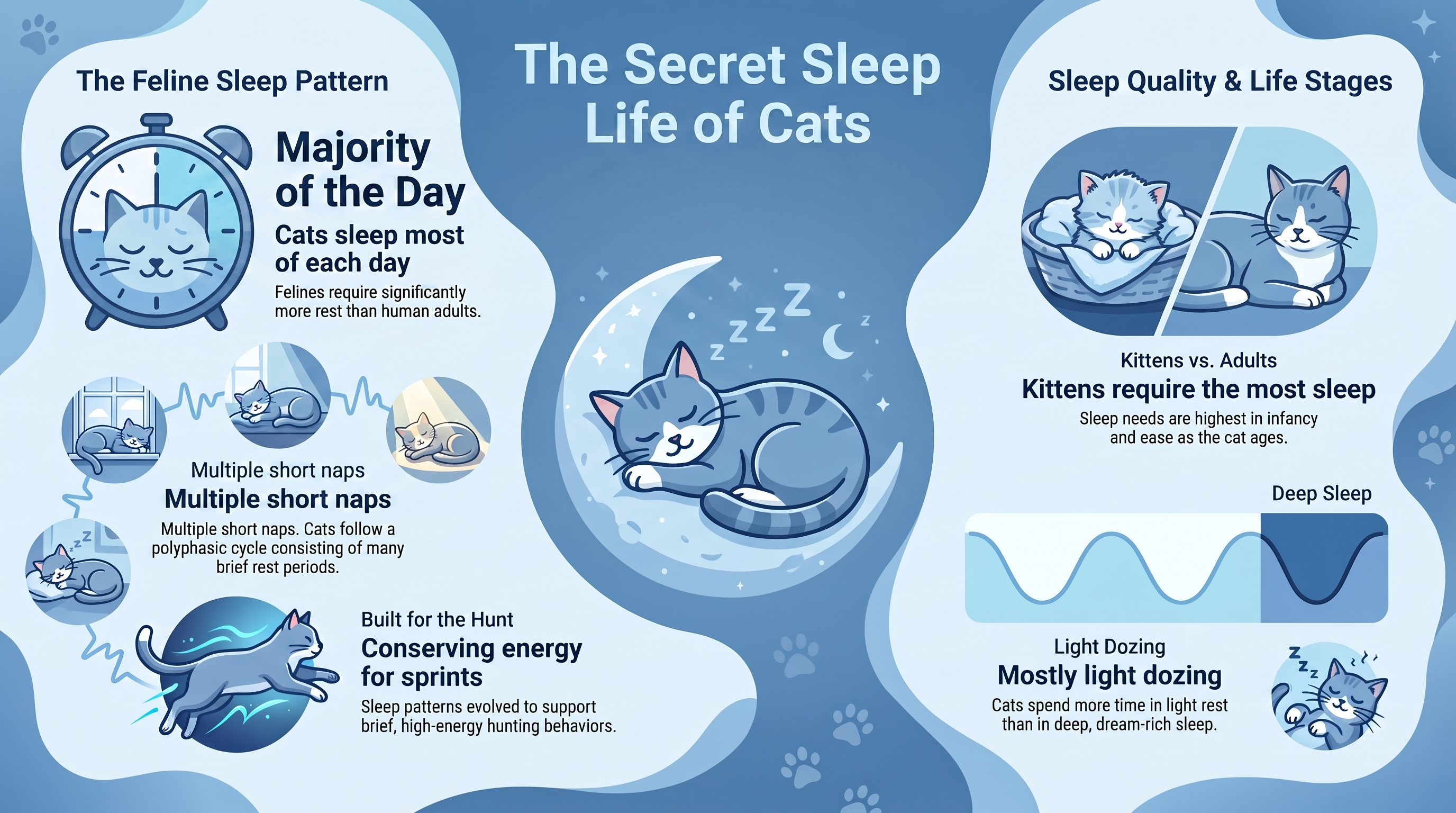
Cats spend the great majority of each day asleep or dozing, far more than the at least seven hours recommended for an adult human. Rather than resting in one long overnight block the way most people do, cats are polyphasic sleepers: they divide rest into many shorter naps spread across the day and night, punctuated by short bursts of activity — a pattern that fits an animal built to hunt in brief, high-energy sprints rather than stay active for long, continuous stretches.
Much of that resting time is light dozing rather than deep sleep, which lets a cat recover energy while staying ready to react. Only a smaller share is the deeper, more dream-rich stage of sleep associated with the twitching and muscle activity many owners notice. See how sleep patterns differ across the animal kingdom for how this compares with other species.
A young kitten spending most of its day curled up asleep is normal, not a sign that something is wrong. Kittens wake mainly for short stretches of eating, play, and using the litter box, then drop back into sleep. As their nervous system and body mature, kittens gradually shift toward the sleep pattern seen in adult cats, spending relatively less of the day asleep as they grow.
Kittens sleep noticeably more than adult cats, because so much of early growth, brain development, and physical recovery happens during rest. This mirrors a pattern seen broadly across young mammals: human newborns need 14–17 hours of sleep a day, far more than the at least 7 hours recommended for adults, because early development places heavy demands on sleep. Kittens follow the same underlying logic — a higher sleep need early in life that eases as the animal matures. Parents comparing this to their own household may find common baby sleep problems a useful point of comparison for how sleep needs shift with age.
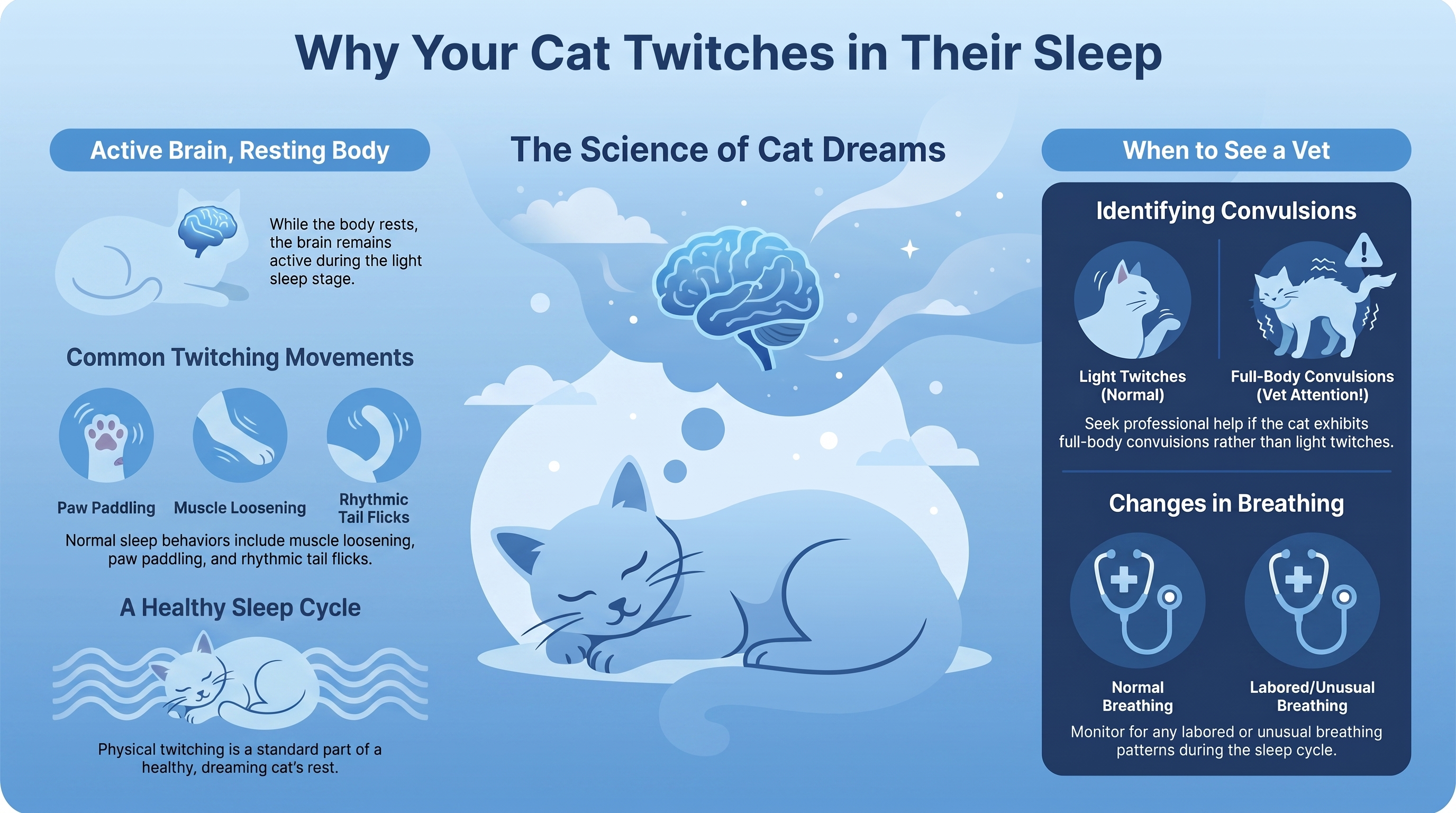
Twitching whiskers, flicking ears, paddling paws, or a flicking tail while a cat sleeps are usually signs of a lighter, more dream-rich stage of rest. During this stage the brain stays highly active even though the body is resting, and muscle control loosens, which is why small, uncoordinated movements can slip through. This kind of twitching is a normal, routine part of a healthy sleep cycle rather than a sign of distress on its own.
Because a cat's muscles are not fully locked down during this lighter stage the way they can be in deeper rest, brief twitches, tiny vocalizations, or soft paw movements are common and typically pass on their own once the cat shifts back into quieter rest.
Occasional twitching is normal, but talk to a veterinarian if you notice any of the following:
A veterinarian can examine your cat directly and rule out underlying issues rather than guessing from behavior alone.
Choosing to sleep on your chest or curled at your feet usually comes down to warmth and a sense of safety. Your body gives off steady heat, and your breathing and heartbeat create a calm, predictable rhythm nearby. A cat resting directly against you, rather than somewhere else in the room, is generally a sign it feels secure enough to lower its guard in your presence — sleep is a vulnerable state for any animal, so where a cat chooses to do it says something about trust.
Sleeping near your head puts a cat close to your scent, warmth, and breathing, which many cats find soothing. It also keeps your face and voice within easy reach, so your cat can react quickly if you stir, get up, or make a sound — a habit that fits a cat's instinct to stay semi-alert even while resting beside someone it trusts.
Yes — cats can doze with their eyes partly or fully open, particularly during lighter rest rather than deeper sleep. Keeping the eyes cracked open lets a cat stay semi-alert to movement and sound around it even while resting, a trait that fits a species that is both a hunter and, in the wild, a potential target for larger predators. It does not necessarily mean your cat is fully awake or having trouble sleeping.
How a cat positions itself while sleeping near you can reflect how relaxed or alert it feels in that moment. A tightly curled ball conserves body heat and keeps vital areas protected, which often goes along with lighter, more easily interrupted rest. A cat sprawled out on its back with its belly exposed, by contrast, generally signals deep relaxation and trust, since the belly is one of the most vulnerable parts of its body.
Tucking into the crook of your arm, along your side, or against your back usually reflects a search for warmth and closeness rather than one single fixed meaning. Some cats favor sleeping back-to-back with an owner, which still keeps contact and warmth while leaving each party a sense of personal space. None of these positions are required for a healthy sleep routine — they simply reflect comfort, temperature, and how safe a cat feels sharing a resting spot with you.