Sleep Sounds: Ocean, Fan, Nature and More
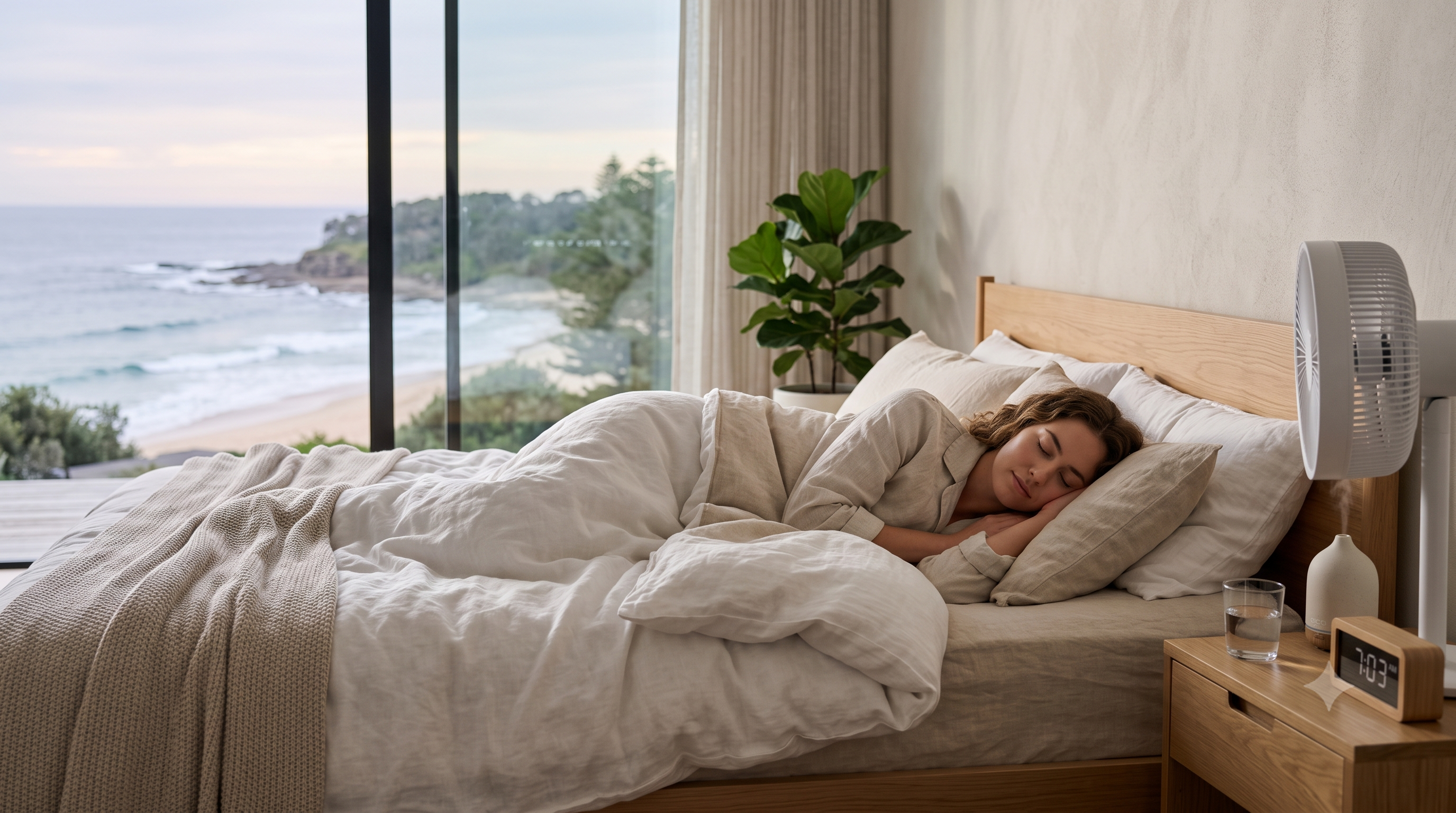
Sleep sounds mainly work by masking sudden noises rather than deepening sleep directly: white noise, like a fan, reduces disruption without proven sleep improvement, while pink noise shows early promise for slow-wave sleep and memory. Ocean, fan, nature, and app-based sounds all use this same masking principle — the best choice is whichever steady sound you find least distracting.
Choosing among ocean sounds, fan noise, nature recordings, and a sleep sounds app is easiest with one framework: the Mask-and-Soothe framework. Every sleep sound works through two possible mechanisms — masking (covering sudden, disruptive noises with a steady layer of sound) and soothing (a calming psychological association with a particular sound). A fan primarily masks; ocean waves and crickets mask and soothe; an app or smart speaker is just the delivery method for either. Understanding which mechanism a sound relies on helps explain why no single option is scientifically "best" — the right pick depends on what is disrupting your sleep and what you personally find calming.
Ocean sounds are one of the most popular sleep sound choices, and they fit the Mask-and-Soothe framework on both counts. The rolling, repetitive pattern of waves provides the same kind of steady background layer as a fan or white noise machine, masking sudden household or street noise, while the rhythm itself is widely experienced as calming. There is no dedicated research specific to ocean recordings in the sleep-sound evidence base, but the underlying mechanism is the same steady-noise masking documented for white noise generally: a consistent sound layer reduces disruption from sporadic noises rather than actively deepening sleep.
Because ocean tracks are usually looped rather than a single flat tone, some people find them less monotonous than a plain fan over a full night. If you are choosing between ocean sound and mechanical noise, treat it as a personal-preference decision rather than one with a clear "better" answer — consistency and how undistracting you find the sound both matter more than the specific source.
A running fan is the classic real-world example of white noise, and it is the specific example used in sleep research on background sound: white noise, such as a fan, reduces disruption to sleep by masking sudden noises, but it has not been shown to improve sleep on its own. In other words, a fan will not deepen your sleep stages, but it can prevent a car door slamming or a housemate's footsteps from waking you.
A fan has a practical advantage over many recorded tracks — it produces genuinely random, non-looping white noise, and it also moves air, which some people find helps with temperature comfort. Bedroom temperature affects sleep separately from sound; a cooler room, generally in the 65–68°F range, is the environment most sleep guidance points to, so a fan can support two goals — masking and cooling — at once. If a fan alone is not enough to solve a noise problem, a dedicated sound machine or app with adjustable volume and looped tracks may offer more control.
Across ocean, fan, and app-based tracks, the sounds that actually help you fall or stay asleep share the same qualities: they are steady, predictable, and free of sudden changes in volume or pitch. This is the masking half of the framework at work — a continuous layer of sound reduces the audibility of the sharp, unpredictable noises (traffic, a door, a snoring partner) most likely to wake a light sleeper. Choosing "the right sound" is less about which category it falls into and more about whether it stays even and does not itself introduce jarring transitions.
Both white noise and pink noise fall under this umbrella, and the choice between them is a good example of how the two mechanisms differ: white noise (a fan) is a well-documented masking tool, while pink noise, which is closer to natural brainwave frequencies, has shown early signs in small studies of supporting slow-wave sleep and memory directly, not just masking disruption. If you want to compare noise colors in more depth, including where brown and other noise types fit in, see our guide to colored noise for sleep.
Soothing sounds lean on the second half of the Mask-and-Soothe framework: the psychological association a sound carries, separate from how well it masks noise. Rain, gentle instrumental tones, and slow nature loops are often described as relaxing specifically because they are linked with calm settings, which can make the wind-down period before sleep feel easier even before sleep itself begins. This is a subjective, associative effect rather than a measured physiological one, so what counts as "soothing" varies a lot from person to person.
A consistent bedtime routine that pairs a soothing sound with dimmed light and a cool room reinforces the wind-down signal more than the sound alone. If restful winding-down time matters to your household with a baby or toddler, our guide to baby sleep music covers age-appropriate soothing options and volume practices.
Nature sounds — rain, wind, crickets, birdsong, distant thunder — are some of the most requested sleep sound categories precisely because they combine masking with a soothing, familiar association. Like ocean sound, they work as a steady background layer; unlike a flat mechanical tone, they carry natural variation that many listeners find more pleasant to fall asleep to over time.
Cricket sounds are a common nature-sound choice, especially for people who associate a quiet outdoor evening with calm. As a background layer, cricket recordings function the same way other nature tracks do — a repetitive, low-intensity sound that masks sharper noises without itself being jarring. There is no dedicated clinical research on crickets specifically; the practical guidance is the same as for other steady nature sounds: keep the volume moderate and the track looped without abrupt changes.
Airplane cabin noise — the low, steady drone many people associate with falling asleep on a flight — is a popular sleep sound request precisely because it behaves like a dense, layered version of white noise. Its steady low-frequency hum masks sudden noises effectively, similar to a fan, and the association many travelers have with dozing off mid-flight adds a soothing element on top of the masking effect. As with other categories here, it has not been studied as a distinct sleep intervention; it fits the same evidence-backed masking principle documented for white noise generally.
A sleep sounds app delivers the same white noise, pink noise, ocean, and nature tracks covered above, with the convenience of a large sound library on a device most people already own. The trade-off against a dedicated sound machine is that a phone brings its screen and notifications into the bedroom, which can undercut the calm, distraction-free environment the sound itself is meant to support — so if you use an app, turning on do-not-disturb and dimming the screen matters as much as the track you choose.
Smart speakers like Alexa-enabled devices can play ambient sound tracks — fan, ocean, rain, white noise — either through built-in routines or third-party skills, and most support a sleep timer so the sound stops automatically rather than playing all night. This is a convenient middle ground between a single-purpose sound machine and a phone app: no screen in bed, but still a large library of tracks and volume control by voice.
Sleep sounds address the bedroom environment, not underlying sleep disorders. Talk to a doctor if: