Brown, Pink and Green Noise for Sleep
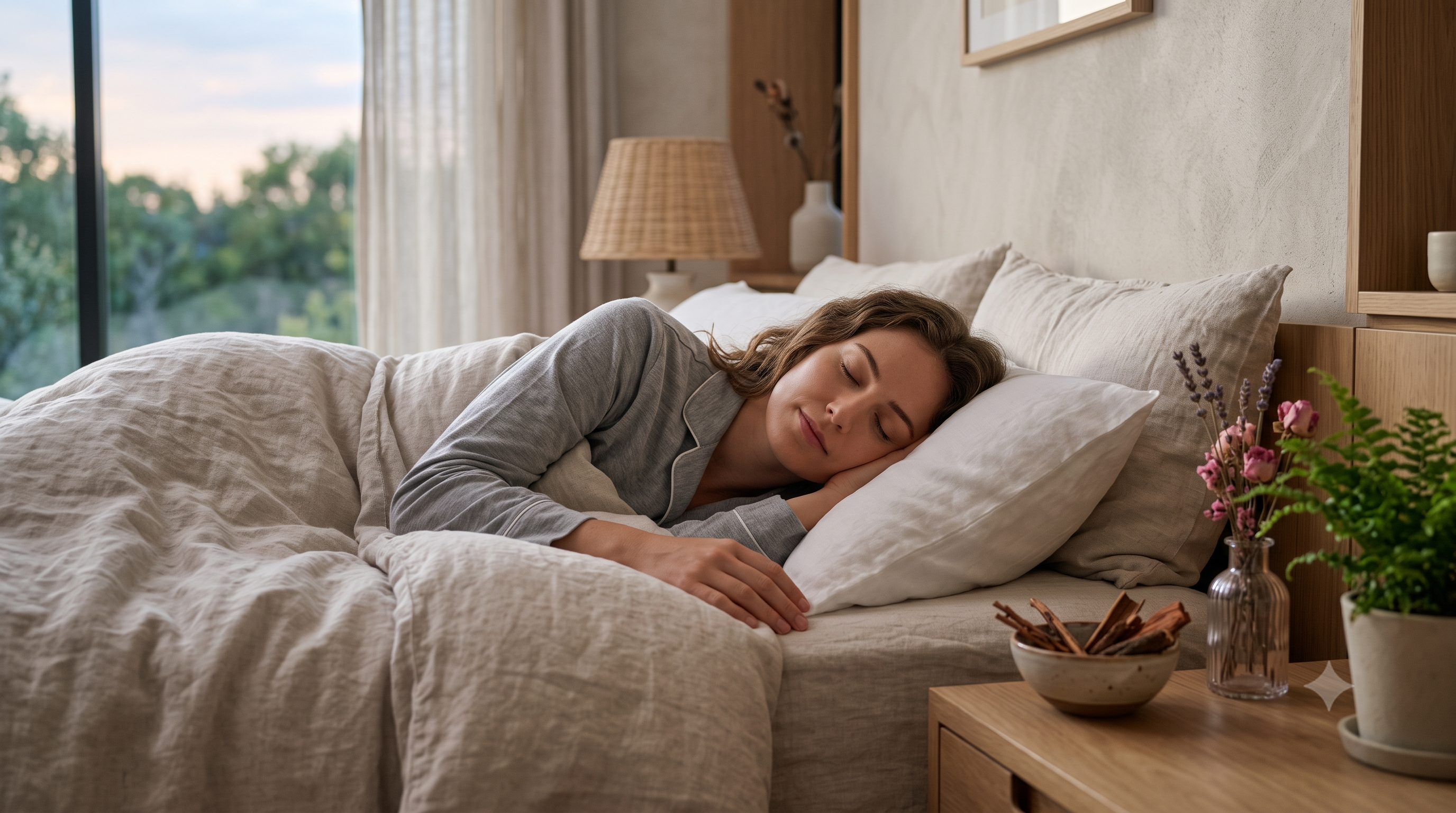
Brown, pink, and green noise are all steady background sounds that mask disruptive noise. Brown is deep and low, pink sits between white and brown and has small early links to deep sleep, and green is a softer, nature-like version of pink. None is scientifically proven best for everyone — try each and keep what helps you sleep.
"Colored noise" is a simple way of describing different balances of low and high frequencies in a steady sound. The colors run on a spectrum: white noise spreads energy evenly across all frequencies and sounds like TV static, while brown, pink, and green noise each shift that balance toward deeper or softer tones. The reason any of them can help at night is the same reason a fan or air conditioner helps: a constant, predictable sound can mask sudden noises like traffic, a barking dog, or a partner's snoring, which otherwise have a chance to interrupt sleep. A steady sound layer reduces disturbance by masking, though it does not have clear evidence of directly improving sleep quality on its own.
Brown noise is the deepest of the common colors, weighted heavily toward low frequencies, so it sounds closer to a heavy waterfall, distant thunder, or a low rumbling engine than the flatter hiss of white noise. That extra bass is why many people describe it as more soothing or less "sharp" than white noise, and why it is often reached for to mask low, droning sounds like traffic, an air conditioner, or a snoring partner.
Like any steady background sound, brown noise works by masking rather than by directly changing sleep architecture. A fan, air conditioner, or white noise machine reduces sleep disturbance from sudden noise, but it does not have solid evidence that it improves sleep on its own. Brown noise fits the same category: useful for covering up disruptive sound, without a proven mechanism for deepening sleep beyond that masking effect. It is a reasonable low-risk option to try, especially in a noisy bedroom or for someone sensitive to a partner's snoring.
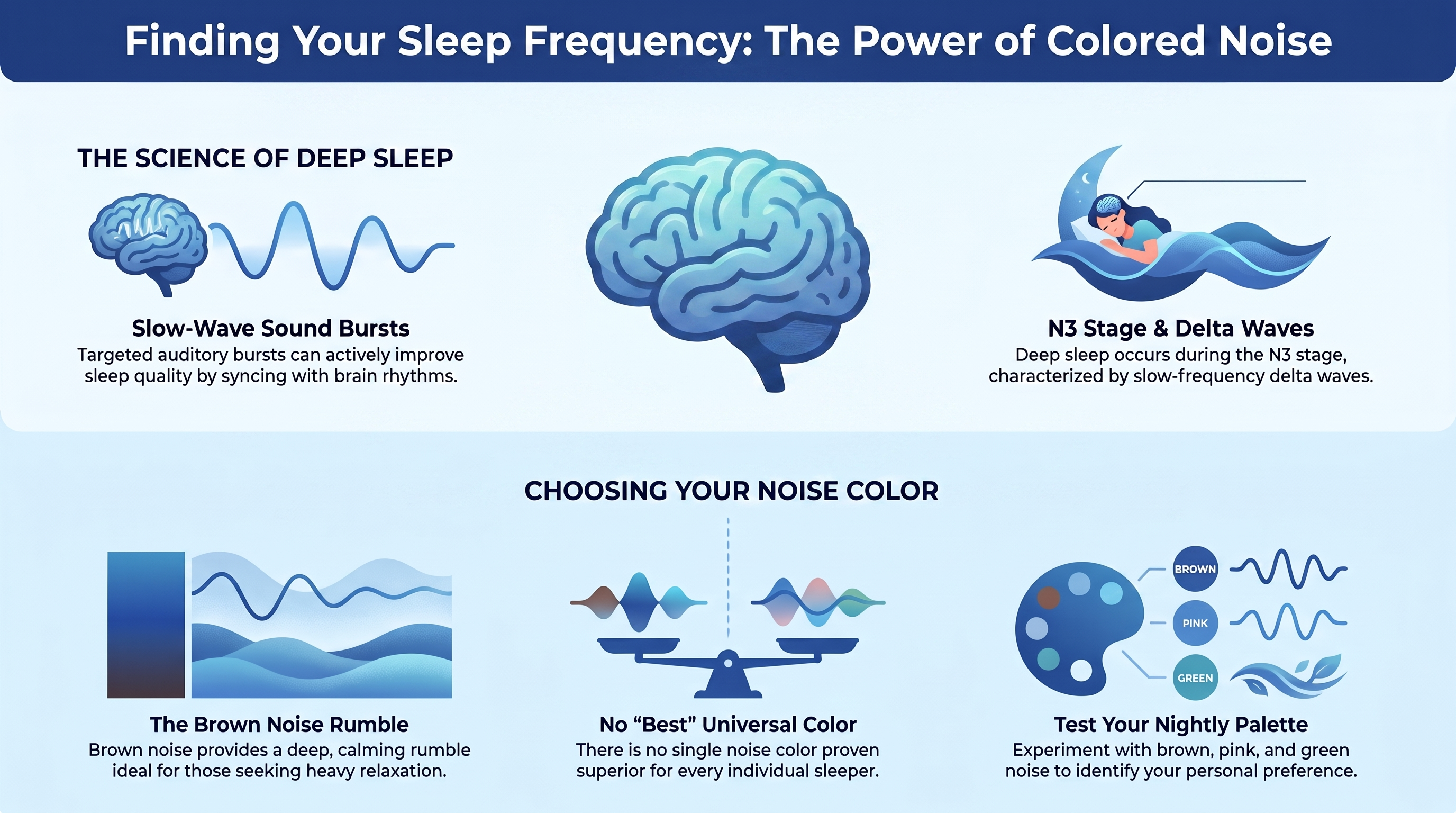
Pink noise falls between white and brown noise in tone, still steady and even but softer and less "hissy" than white noise. It is the color of colored noise with the most direct, if still early, connection to deep sleep research. Small studies have found that when pink noise is played in bursts timed to a sleeper's own slow brain waves during deep, slow-wave sleep (the same N3 stage where the brain shows large, slow delta waves of 0.5–4 Hz), it can boost that stage of sleep and improve next-day memory performance. This is preliminary evidence from small studies, not a guarantee that any pink noise track will produce the same effect, since the studied benefit came from precisely timed audio pulses rather than simply playing pink noise as ambient background sound all night.
There is no color of noise proven best across the board. Brown noise tends to appeal to people who want a deep, calming rumble; pink noise is the most studied for a possible deep-sleep connection, though that evidence is early; and green noise appeals to people who prefer a softer, nature-like sound. Because individual response to sound varies, the most practical approach is to test brown, pink, and green noise (or a fan and rain sounds) for a few nights each and keep whichever one you actually fall asleep to and stay asleep with.
Blue noise sits at the opposite end of the spectrum from brown noise, emphasizing higher frequencies and sounding sharper and more hiss-like. It is used far less often for sleep than brown, pink, or green noise, since higher-frequency sound tends to feel more stimulating rather than calming and is less effective at masking the low rumbling sounds, like traffic or snoring, that most commonly disturb sleep.
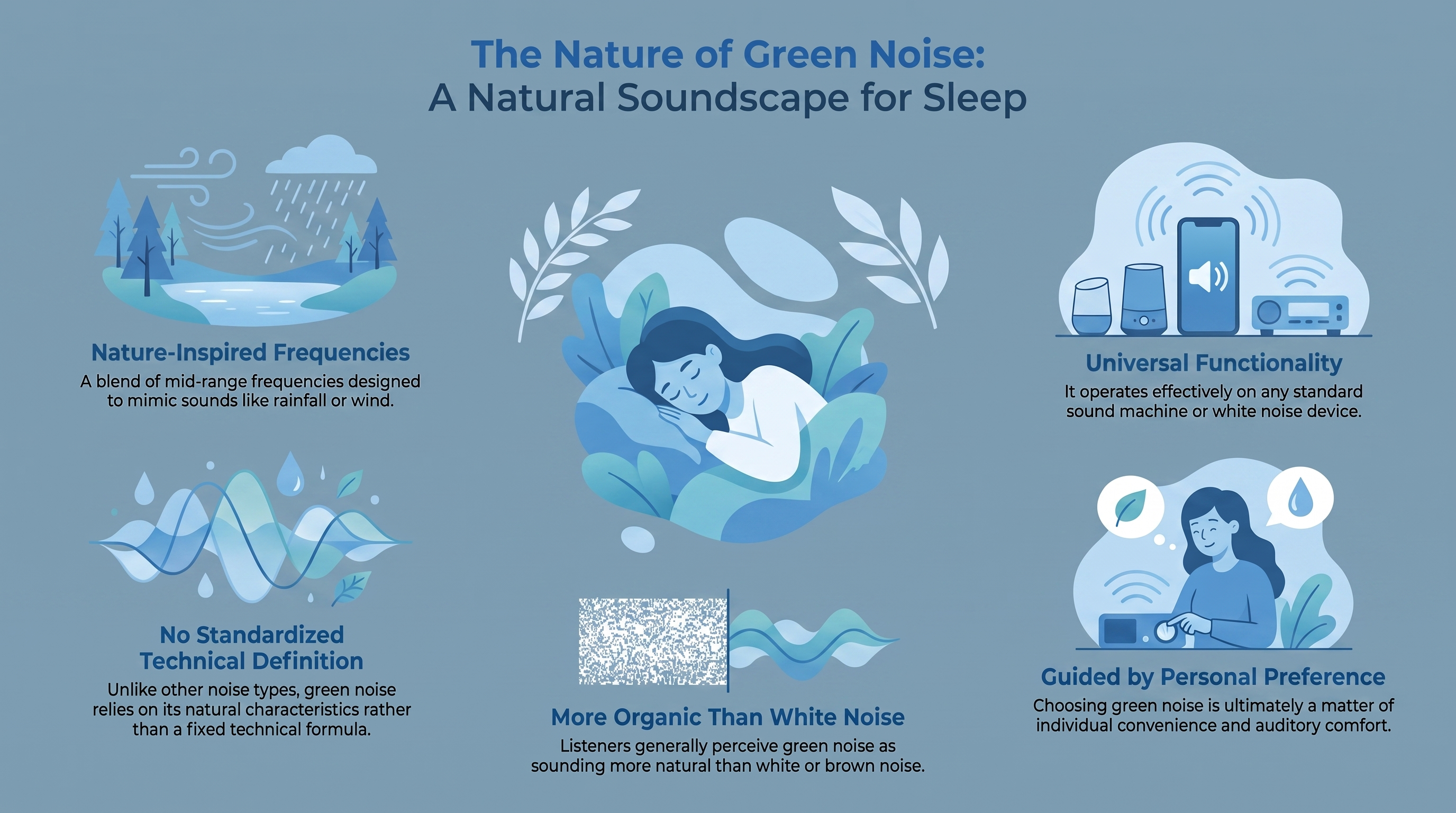
Green noise is generally described as a softer, nature-inspired version of pink noise, leaning on mid-range frequencies that resemble rainfall, wind through trees, or ocean waves rather than a flatter electronic hiss. Unlike white, pink, and brown noise, green noise does not have a single, standardized technical definition, so what one app or sound machine calls "green noise" may sound somewhat different from another's version. For people who find white or brown noise too harsh or mechanical, green noise's more natural quality can make it easier to relax into.
A dedicated green noise machine functions the same way as any other white noise or sound machine: it plays a constant sound at a steady volume through the night to mask disruptive noises. The practical difference is just the tone of the sound produced, not how the device works, so choosing between a standalone green noise machine, a phone app, or a simple fan mostly comes down to convenience, sound quality, and personal preference rather than one being technically superior to another.
Choosing the best noise for sleep is less about finding a universally "correct" color and more about matching the sound to what disturbs your sleep and what you personally find calming. If sudden environmental noise, such as traffic or a partner's snoring, is the main problem, a deeper, steadier sound like brown noise may mask it more effectively. If you are drawn to the (still preliminary) research on deep sleep, pink noise is the most studied option, though the strongest results came from precisely timed audio rather than an all-night loop. If white or brown noise feels too harsh, a softer, nature-like green noise track may be more comfortable to fall asleep to.
Whichever color you choose, keep the volume moderate and comfortable rather than loud, and treat colored noise as one tool among several for a better night's sleep, alongside habits covered in how to sleep better and a cooler bedroom as discussed in relation to deep sleep.
Background noise is a self-help tool, not a treatment. Talk to a doctor if any of the following apply:
See related coverage on CPAP and sleep apnea if disrupted breathing at night is a concern.