How Much Do Newborns and Infants Sleep?

Newborns (0-3 months) typically need 14 to 17 hours of sleep a day, and infants (4-12 months) typically need 12 to 16 hours, per CDC guidance. Sleep comes in many short stretches around frequent feeds rather than one long block. Always place a baby on their back to sleep, and check with a pediatrician about any specific concern.
Newborn and infant sleep looks nothing like adult sleep, and the easiest way to keep it straight is the Age-Range framework: match your expectations to your baby's age bracket, since the CDC sets a different recommended sleep range for newborns than for older infants. A newborn is generally defined as birth through about 3 months, and an infant as roughly 4 through 12 months, and the recommended total sleep — naps and nighttime combined — shifts down slightly between the two.
Keeping that age range in mind also helps when sleep does not go as expected, whether your baby seems to sleep constantly or barely at all between feeds. For the routine side of managing those stretches, see our baby sleep problems guide, and for the sleep environment itself, our baby sleep gear guide covers bassinets and cribs against the same safe sleep standard referenced below.
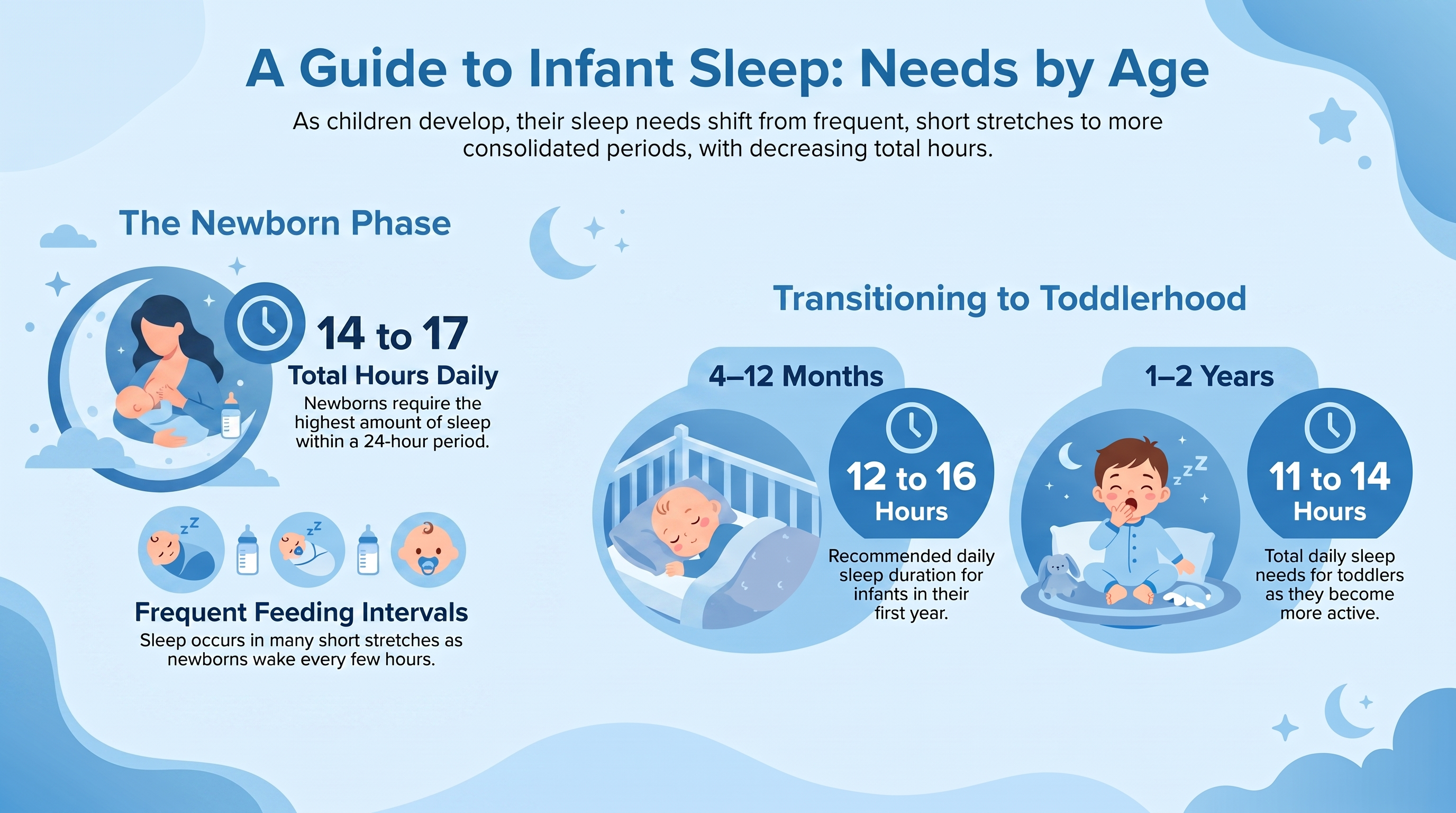
Per CDC guidance, an infant between about 4 and 12 months old typically needs 12 to 16 hours of sleep across a full 24-hour day, including naps. That is somewhat less than the 14 to 17 hours recommended for a newborn, and it reflects how sleep gradually consolidates as babies get a bit older, with longer nighttime stretches and more predictable daytime naps. By comparison, toddlers between 1 and 2 years typically need 11 to 14 hours, so the total sleep need keeps trending down through the first couple of years.
Because the 12 to 16 hour range is broad, two healthy infants of the same age can have noticeably different daily totals and still both be within normal limits. What matters more than hitting an exact number is whether your baby is generally alert during awake windows, feeding well, and gaining weight as expected.
Newborns do not sleep in one long overnight block the way older children and adults do. Instead, they sleep in many short stretches spread across the day and night, waking frequently, often every couple of hours, mainly because they need to feed regularly. This scattered pattern is completely normal in the early weeks and is simply how a newborn accumulates the 14 to 17 total hours of sleep the CDC recommends for that age. As babies move from the newborn stage into the infant range, wake-ups gradually space out and nighttime sleep starts to consolidate into longer stretches.
Because the recommended range for newborns runs as high as 14 to 17 hours a day, a newborn who seems to sleep almost constantly is often still within a normal range rather than sleeping "too much." Sleep needs vary from baby to baby within that range, and long sleep stretches by themselves are not automatically a red flag. What is more useful to watch is the bigger picture: whether your baby wakes for and completes feeds, is generally easy enough to rouse when it is time to eat, and is gaining weight on the schedule your pediatrician expects.
If sleep is interfering with feeding — for example, your baby is very difficult to wake, feeds are consistently short or incomplete, or weight gain seems off track — that is a reason to check in with your pediatrician rather than something to try to diagnose on your own. Ongoing sleep-and-feeding questions are also covered in more depth in our baby sleep problems guide.
An infant who naps heavily and sleeps close to the top of the 12 to 16 hour range can still be entirely normal, especially in the younger part of the 4-to-12-month window, when sleep needs sit closer to the newborn end of the spectrum. What distinguishes a typical heavy-sleep pattern from one worth flagging to a pediatrician is whether your baby still has clear, alert awake windows for feeding and interaction, or whether sleep seems to crowd those out entirely, day after day.
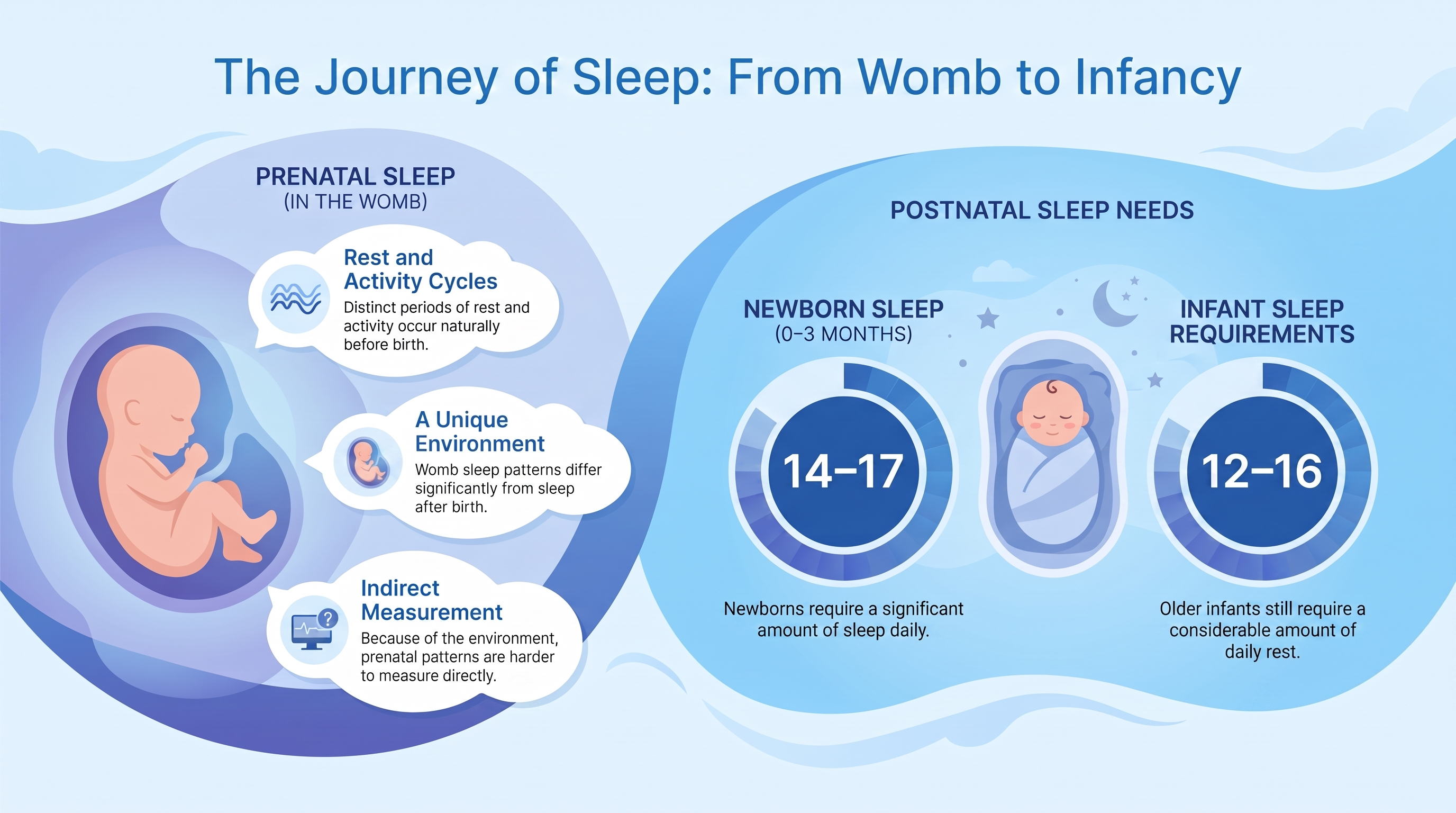
Babies show sleep-like rest and activity cycles before they are born, though the womb is a very different environment from sleep after birth, and those prenatal patterns are harder to measure directly than sleep in an infant who has already arrived. Once a baby is born, sleep is tracked and defined against the age-based ranges pediatric sources such as the CDC publish — 14 to 17 hours for a newborn and 12 to 16 hours for an infant — rather than against womb behavior. If you have specific questions about sleep-like movement or activity you noticed during pregnancy, your OB or pediatrician is the right person to ask.
Bring any sleep question to your pediatrician, per AAP safe sleep guidance, and especially if:
Your pediatrician's office can confirm current guidance for your baby's specific age and health history.