To sleep with a congested nose, elevate your head and upper body so mucus can drain instead of pooling, keep the bedroom cool and humidified, and try a nasal strip or saline rinse before bed. Lying flat makes congestion worse; propping up on an extra pillow or wedge is the single most useful change.
The reason a blocked nose feels worse the moment you lie down comes down to one mechanism worth remembering: the Elevate-and-Drain framework. Lying flat increases blood flow to the nasal tissue and lets mucus collect at the back of the nasal passage instead of draining forward, which is why congestion that felt manageable all day suddenly blocks both nostrils the second your head hits the pillow. Every practical fix below — propping your head up, running a humidifier, using a nasal strip — works by either helping mucus drain or reducing swelling in nasal tissue, the two levers behind that framework.
A stuffy nose at night also interacts with normal sleep biology. Sleep unfolds in roughly 90–110 minute cycles moving between lighter and deeper stages, and anything that repeatedly disrupts breathing — including forced mouth breathing from a blocked nose — can fragment those cycles and leave you feeling unrested even after a full night in bed. Getting your nose to drain instead of block is less about comfort alone and more about protecting the quality of the sleep you actually get.
How to Sleep With Congested Nose
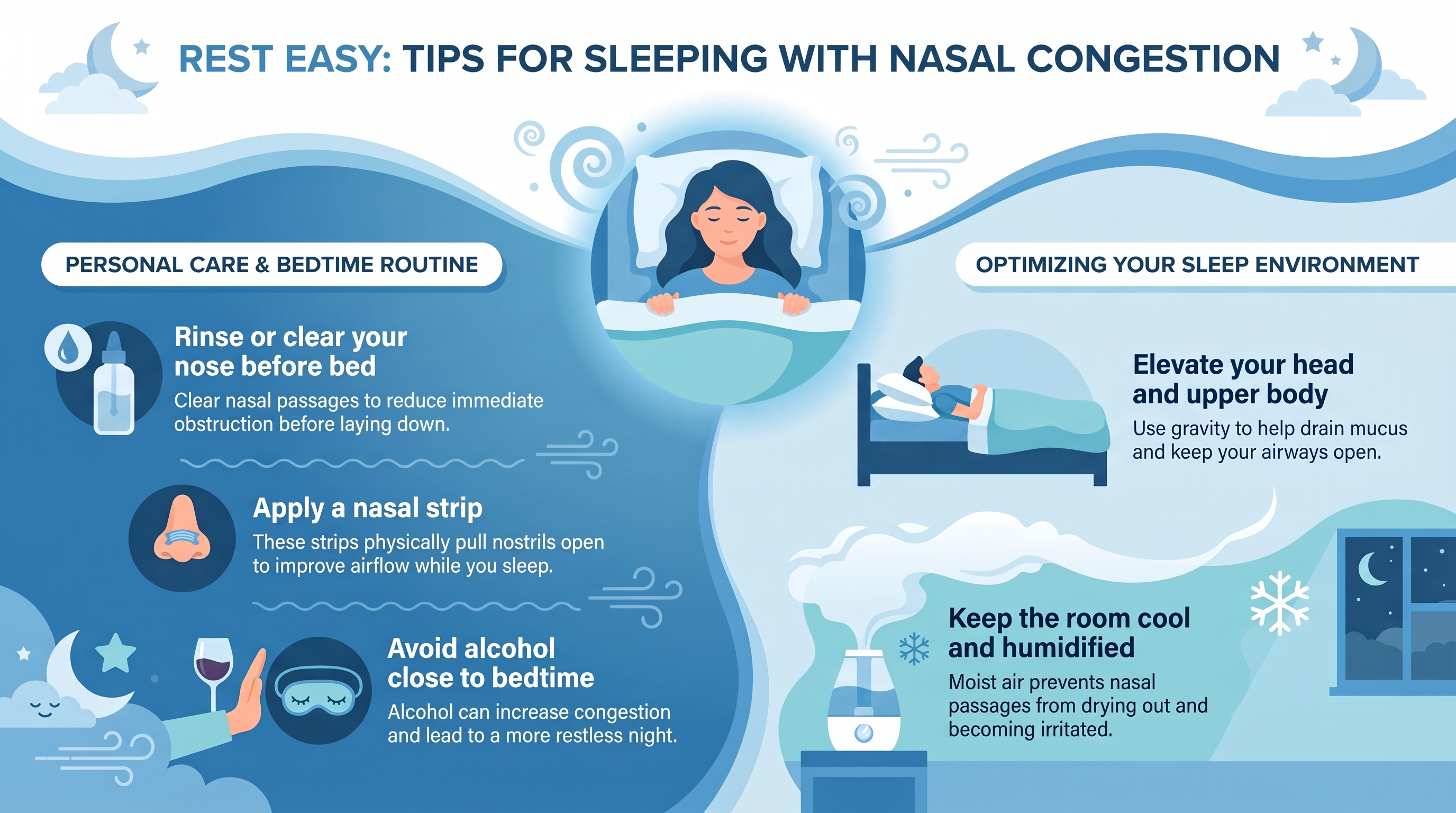
The most effective single change for how to sleep with congested nose is elevation. Prop your head and upper body up with an extra pillow, a wedge pillow, or by raising the head of the bed, so gravity helps mucus drain forward instead of pooling in the nasal passage while you lie flat. Sleeping on your back with your head elevated, or on your side with your head propped, both tend to work better than sleeping flat.
How to Sleep When Congested
Beyond elevation, a few habits make a real difference for how to sleep when congested:
Keep the room cool and humidified. The recommended sleep temperature range is about 65–68°F (roughly 18–20°C); dry indoor air on top of that can thicken mucus and irritate already-inflamed nasal tissue, so a humidifier can make breathing more comfortable even though it does not treat the underlying cause of congestion.
Rinse or clear your nose before bed. A saline rinse close to bedtime can help clear mucus so you start the night with clearer airways rather than fighting congestion from the first minute you lie down.
Try a nasal strip. Discussed in more detail below, a strip can mechanically widen the nostrils for easier nighttime airflow.
Avoid alcohol close to bedtime. Alcohol is sedating but it also fragments sleep in the second half of the night and can worsen sleep-related breathing problems, which compounds poorly with an already-blocked nose — see alcohol and sleep for more.
Stay consistent. If congestion is recurring rather than a one-off cold, keeping a steady sleep schedule and cool, humidified bedroom supports the deeper, restorative stages of sleep even on nights breathing is harder than usual.
None of these steps treat the underlying cause of congestion, whether that is a cold, allergies, or a structural issue like a deviated septum — they only make nighttime breathing more comfortable while your body (or your doctor's treatment plan) handles the cause.
Is It Dangerous to Sleep With a Blocked Nose
An occasional blocked nose from a cold or seasonal allergies is generally not dangerous on its own. The bigger concern is what a blocked nose does to breathing mechanics overnight: forced mouth breathing dries out the airway, can worsen snoring, and in people who already have breathing issues during sleep, it can aggravate them further.
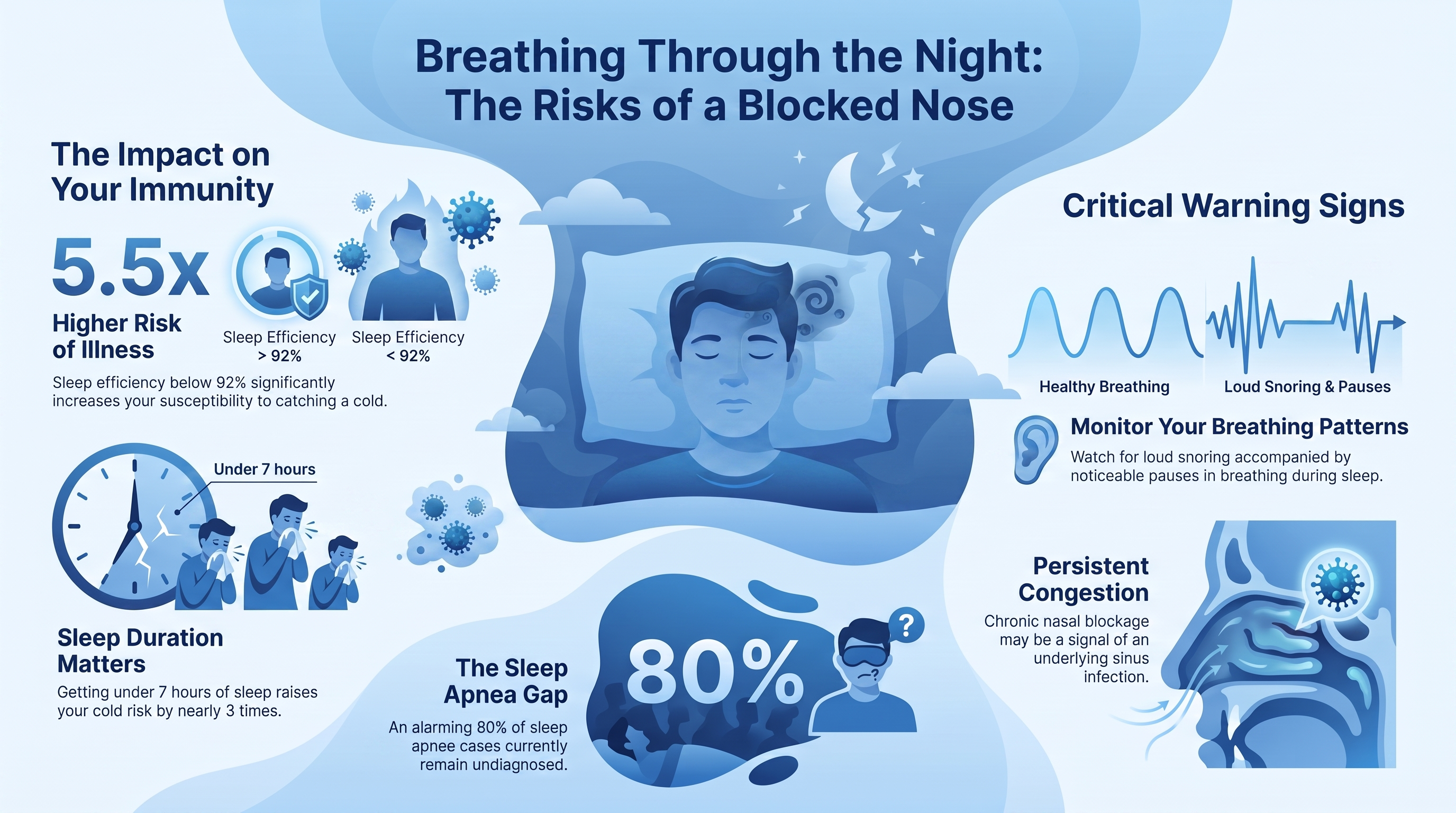
This matters because sleep-related breathing problems are already common and frequently go unrecognized. Obstructive sleep apnea is estimated to affect roughly 24–33% of U.S. adults, and as many as 80% of cases are thought to go undiagnosed. A blocked nose does not cause sleep apnea, but chronic nasal congestion can unmask or worsen airway instability during sleep by forcing mouth breathing, which is one reason persistent nighttime congestion is worth paying attention to rather than dismissing as a minor annoyance.
Poor sleep quality from any cause, including a blocked airway, also has measurable downstream effects: research on sleep and immunity has found that sleeping less than 7 hours is associated with a 2.94-fold higher risk of catching a cold compared with 8 or more hours, and sleep efficiency below 92% carried a 5.5-fold higher risk in the same research. A blocked nose that repeatedly disrupts sleep can become part of a cycle that makes it harder to recover from whatever is causing the congestion in the first place.
When to See a Doctor
Most stuffy noses clear up on their own, but talk to a doctor if you notice any of the following:
Loud snoring with observed pauses in breathing, gasping, or choking sounds during sleep alongside regular congestion — a possible sign of sleep apnea, which is undiagnosed in an estimated 80% of cases
Nasal blockage or breathing trouble lasting well beyond a typical cold, or that keeps returning
Heavy daytime sleepiness that persists even after a full night in bed
Congestion in an infant or young child, or any concern about a baby's breathing during sleep — discuss with a pediatrician
Facial pain, fever, or thick discolored discharge that could point to a sinus infection needing medical evaluation
This article is informational and does not diagnose conditions or recommend medication dosages — a doctor can evaluate the underlying cause of persistent congestion.
Nasal Strips for Sleep
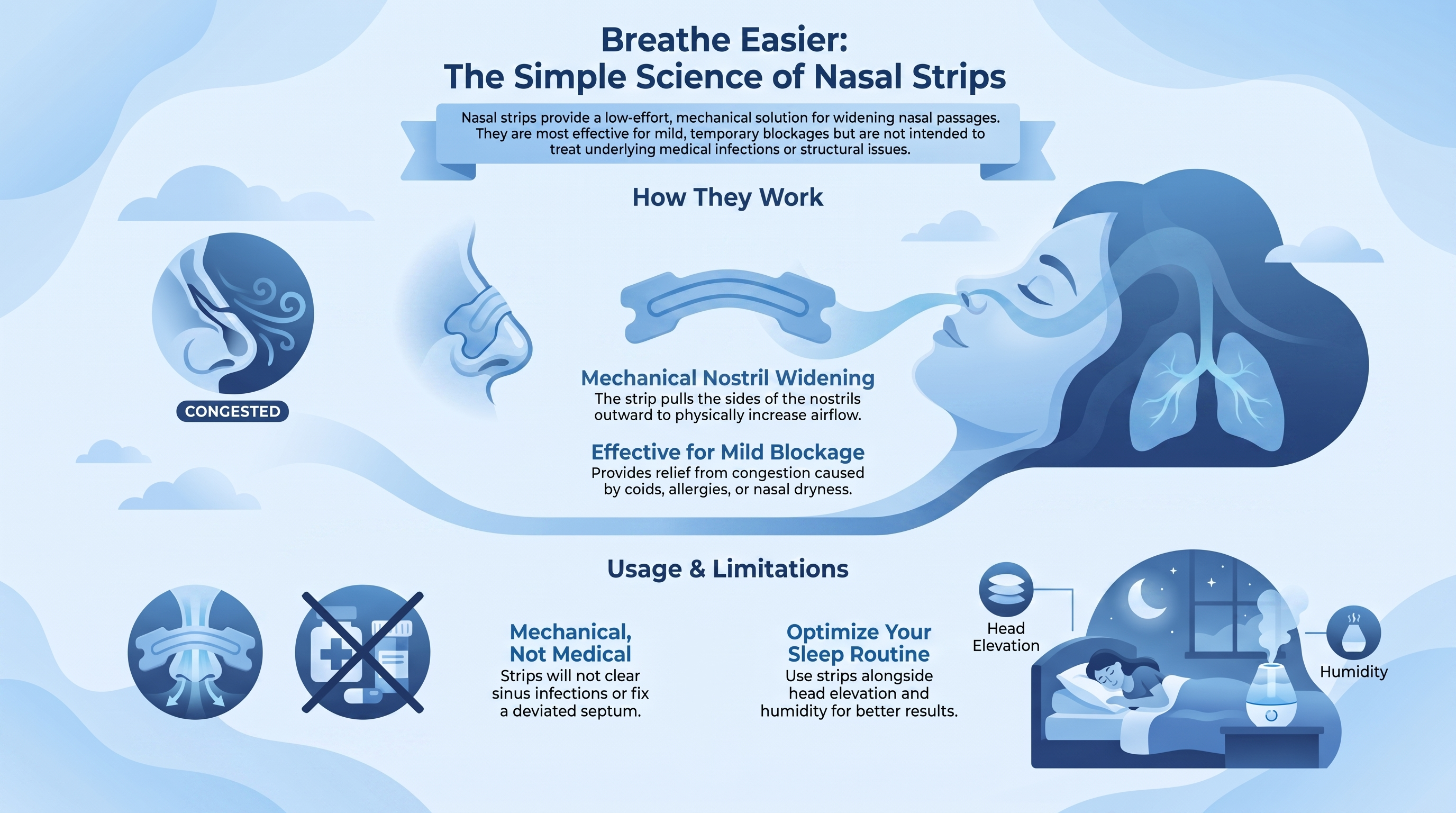
Nasal strips work mechanically rather than medically. The adhesive strip sits across the bridge of the nose and gently pulls the sides of the nostrils outward, physically widening the nasal passage and making it easier to breathe through your nose instead of your mouth. Because they work on the shape of the airway rather than the cause of congestion, they can help with mild blockage from a cold, allergies, or nighttime nasal dryness, but they will not clear a sinus infection or fix a structural issue like a deviated septum.
Nasal strips are a reasonable low-effort addition to the elevation and humidity habits above, especially on nights when congestion is mild enough that a bit of extra airflow is all that is needed. They are not a substitute for seeing a doctor if congestion is severe, recurring, or paired with the warning signs listed above.
Two Levers for a Stuffy Nose at Night
Approach
🛏️ Help Drainage
🌬️ Widen Airflow
What it does
Uses gravity so mucus drains forward instead of pooling
Physically opens or clears the nasal passage
Examples
Elevated head/pillow wedge, sleeping on your back or side
Nasal strips, saline rinse, humidifier for dry air
Best for
Congestion that worsens specifically when lying flat
A cool bedroom, about 65–68°F, supports both approaches and general sleep quality
Most nighttime congestion fixes fall into one of two buckets: helping mucus drain, or physically widening airflow. Combining one from each side works better than relying on a single fix.
Prop your head and upper body up with an extra pillow or a wedge pillow so gravity helps drain congestion instead of letting it pool at the back of your throat while you lie flat. Pair this with a cool, humidified bedroom and a nasal strip or saline rinse before bed, since a very dry room can make a stuffy nose feel worse overnight.
What is the best sleeping position for a stuffy nose?
Sleeping on your back with your head elevated, or on your side with your head propped up, tends to work better than sleeping flat on your stomach or back with no elevation. Elevation keeps nasal passages from pooling with mucus, and side sleeping can also reduce snoring that a blocked nose often makes worse.
Is it dangerous to sleep with a blocked nose?
An occasional blocked nose from a cold or allergies is generally not dangerous on its own, but it can worsen breathing during sleep, especially if you already snore or have sleep apnea. Mouth breathing from constant congestion can dry out your airway and disrupt sleep quality. Loud snoring with gasping or breathing pauses alongside a blocked nose is worth discussing with a doctor.
Do nasal strips actually help you sleep?
Nasal strips work mechanically: the adhesive strip pulls the sides of your nostrils outward, which can widen the nasal passage and make it physically easier to breathe through your nose. Many people find them helpful for mild congestion or nighttime nasal airflow, though they do not treat the underlying cause of a stuffy nose, such as a cold, allergies, or a deviated septum.
Why does my nose get more stuffy when I lie down?
Lying flat increases blood flow to the nasal passages and lets mucus pool instead of draining, which is why congestion often feels worse at night than during the day. Elevating your head and upper body with pillows counteracts this by helping mucus drain and reducing the swelling in nasal tissue.
Should I use a humidifier if I have a stuffy nose at night?
A humidifier can help if your bedroom air is very dry, since dry air can thicken mucus and irritate already-inflamed nasal tissue, making congestion feel worse. It is not a fix for the underlying cause of congestion, but as part of a cool, humidified sleep environment it can make breathing more comfortable.
Can a stuffy nose be a sign of sleep apnea?
A stuffy nose itself is not sleep apnea, but chronic nasal congestion can worsen or unmask breathing problems during sleep, including snoring and obstructive sleep apnea, by forcing mouth breathing and airway instability. If you have loud snoring, gasping, witnessed breathing pauses, or heavy daytime sleepiness along with regular congestion, that combination is worth discussing with a doctor.