Curious Sleep Questions Answered
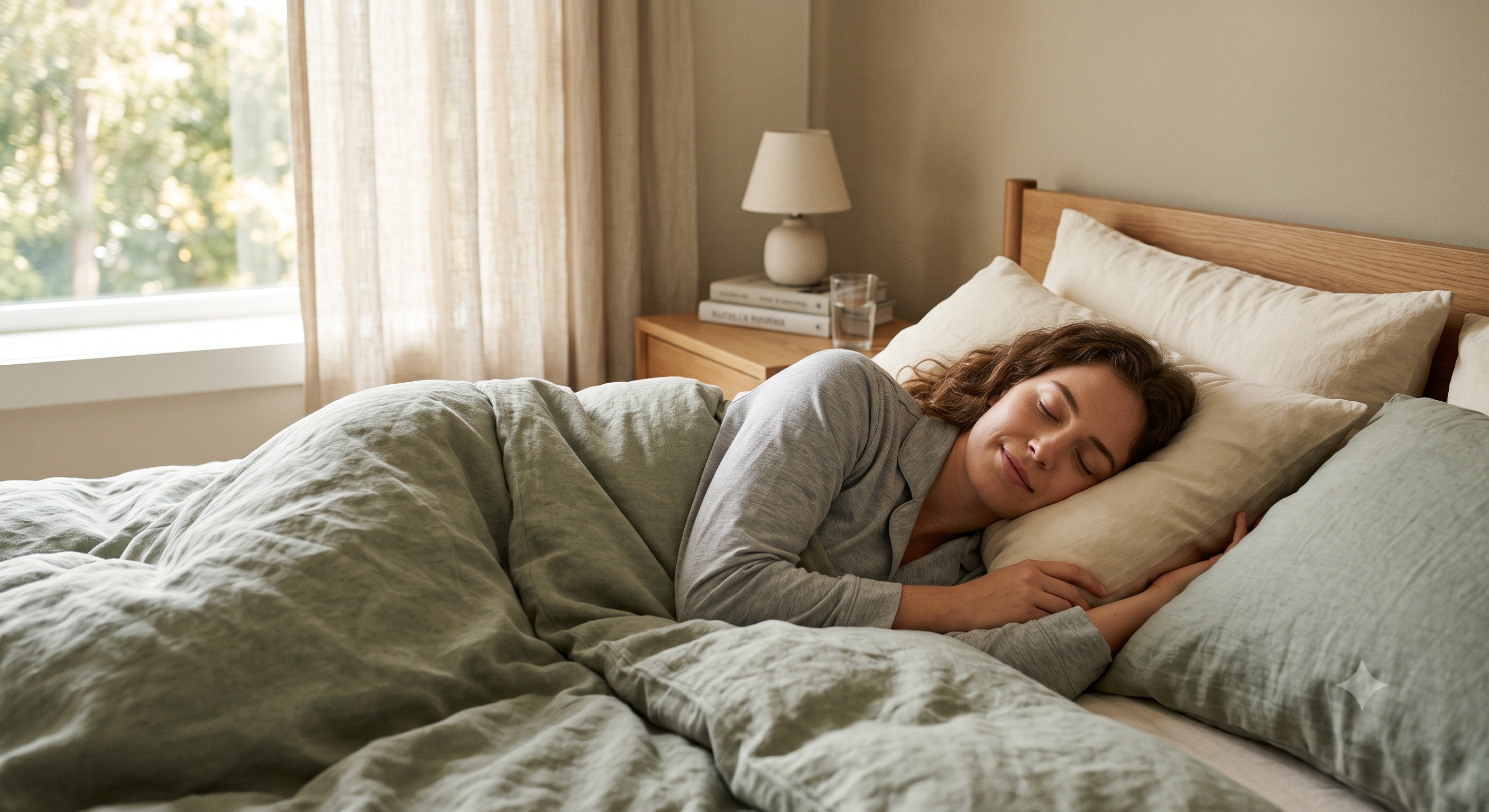
The extra hour only comes once a year, at the end of Daylight Saving Time. You can fart, drool, and occasionally cry in your sleep, but a true full-force sneeze is unusual because REM sleep paralyzes most skeletal muscle. Deep sleep supports growth hormone release, not overnight height gain, and you cannot learn a new language from audio alone while unconscious — only reinforce what you already studied.
Sleep raises some genuinely strange questions once you start paying attention to what the body actually does overnight. This guide works through the most-searched ones using a simple Reflex-or-Rhythm framework: is the phenomenon in question governed by a reflex that gets suppressed during sleep (like sneezing or yawning), or by a rhythm the body keeps running regardless of consciousness (like digestion or the circadian clock)? Sorting each question into one of those two buckets explains why some things happen in your sleep and others almost never do.
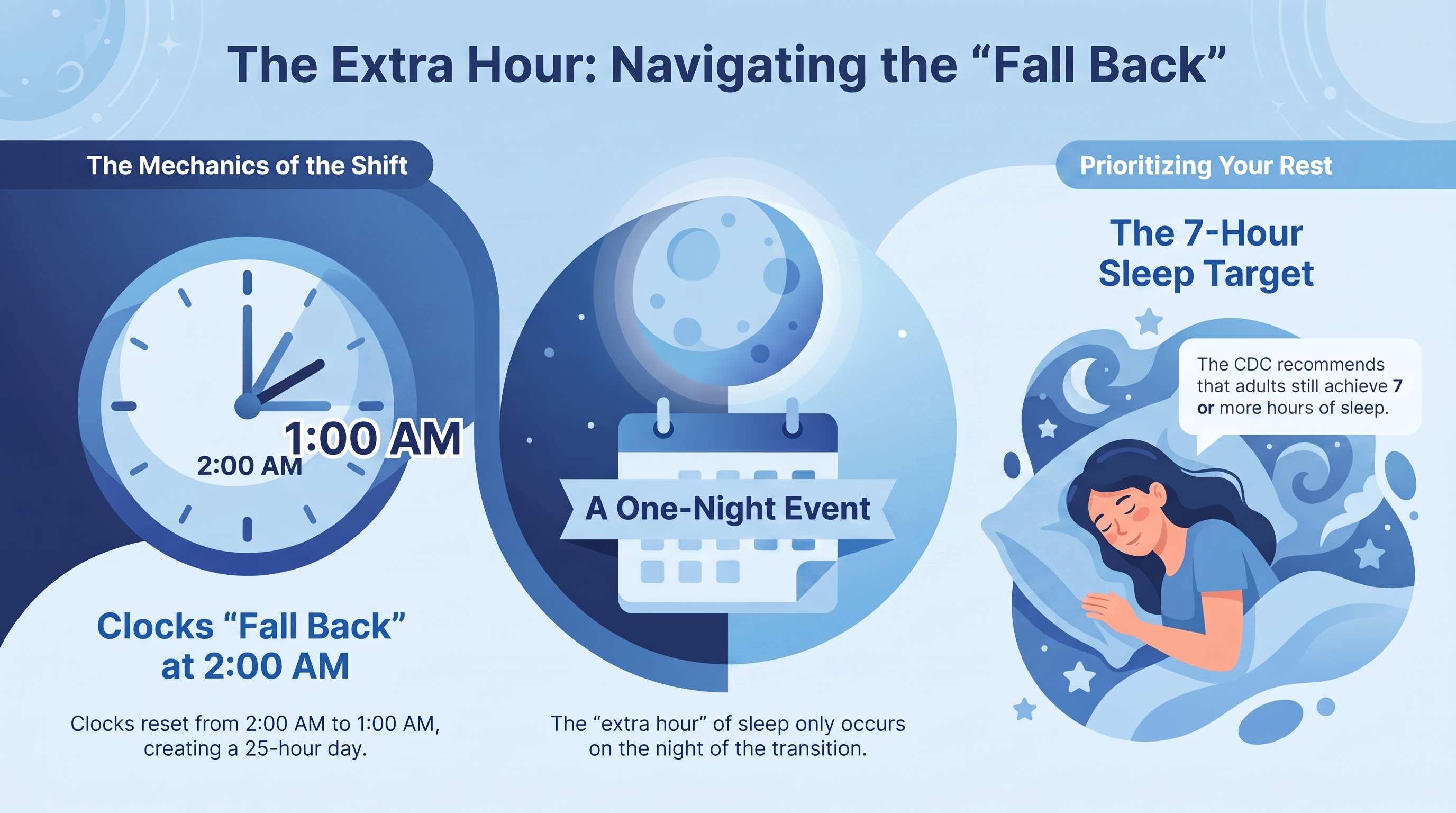
This question spikes every year around the Daylight Saving Time change. The honest answer is: only on one specific night. When clocks "fall back" at the end of Daylight Saving Time, 2 a.m. becomes 1 a.m., which turns that day into a 25-hour day and effectively hands you one extra hour of clock time to sleep through. On every other night of the year, the day is a standard 24 hours, so there is no bonus hour hiding anywhere.
The opposite happens in spring, when clocks "spring forward" and 2 a.m. becomes 3 a.m. — that day is only 23 hours long, and you lose an hour instead of gaining one. Either way, the shift is a clock adjustment, not a change in how much sleep your body actually needs; adults still do best with 7 or more hours a night, in line with the recommendation from the CDC.
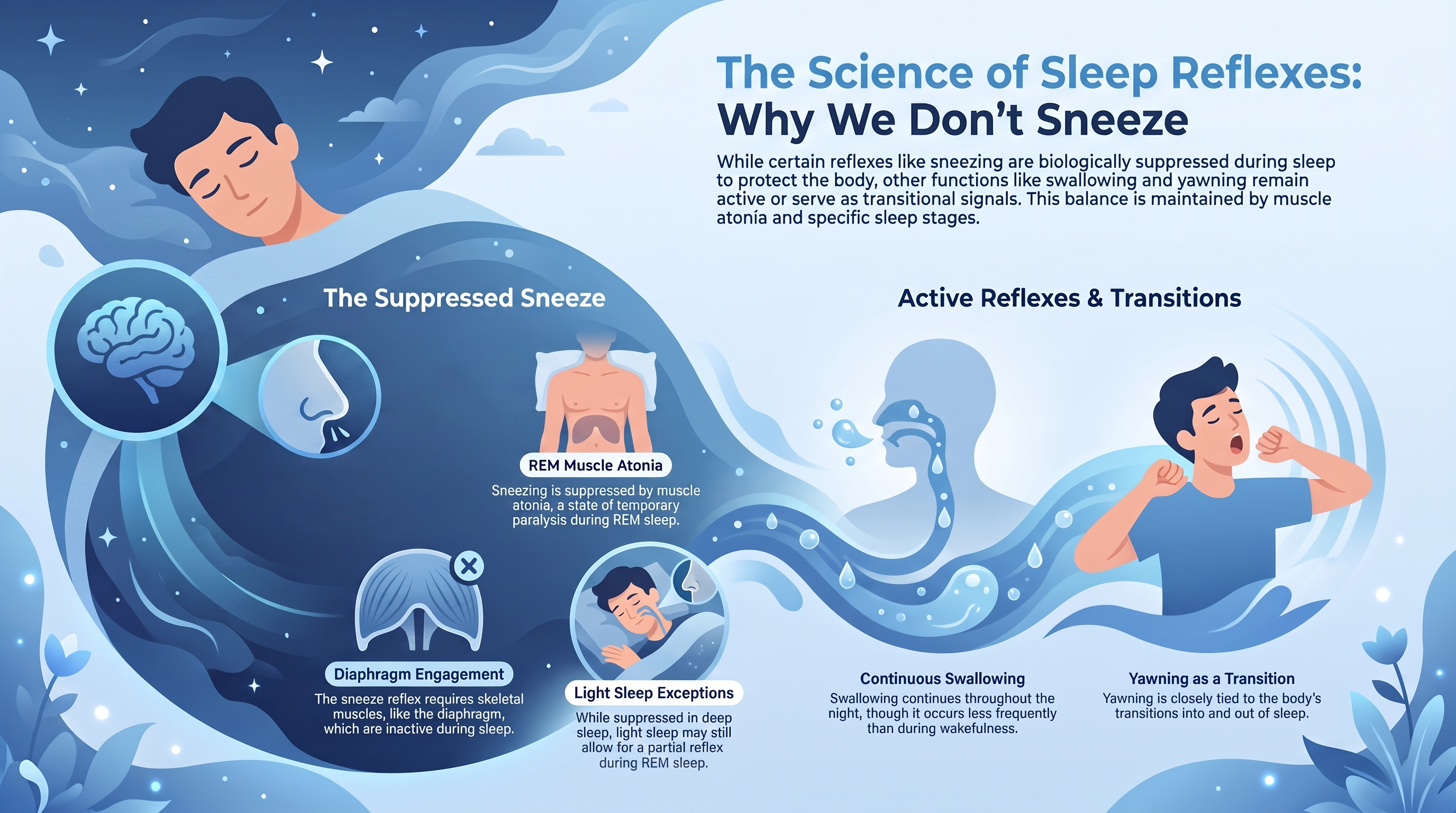
Sneezing in your sleep is unusual, and there is a physiological reason why. During REM sleep, the body enters muscle atonia — a temporary, near-total paralysis of skeletal muscle that is thought to keep you from acting out dreams. A full sneeze reflex relies on that same skeletal musculature (diaphragm, chest, throat), so REM sleep tends to blunt or suppress it.
That does not make it flatly impossible. Outside of REM, in lighter stages of sleep, a strong irritant like dust or pollen could in theory still trigger a partial reflex. In most cases where someone says they sneezed while asleep, they had actually drifted into a brief, often unremembered awakening first, sneezed, and fallen back asleep.
Yes, swallowing continues during sleep, just far less frequently than during the day, since saliva production slows down overnight. The swallow reflex itself is not switched off the way skeletal-muscle reflexes are during REM, which is part of why things like reflux, a night guard, or even a tick still register even while you are unconscious.
Yawning is more closely tied to the transition into and out of sleep than to sleep itself. It is linked to shifts in arousal level, controlled by the same brainstem and hypothalamic wake-promoting circuits (involving areas like the locus coeruleus and lateral hypothalamus) that manage the switch between sleep and wakefulness. A yawn that seems to happen "in sleep" is usually caught during a brief, shallow lightening of sleep depth rather than during deep, stable sleep.
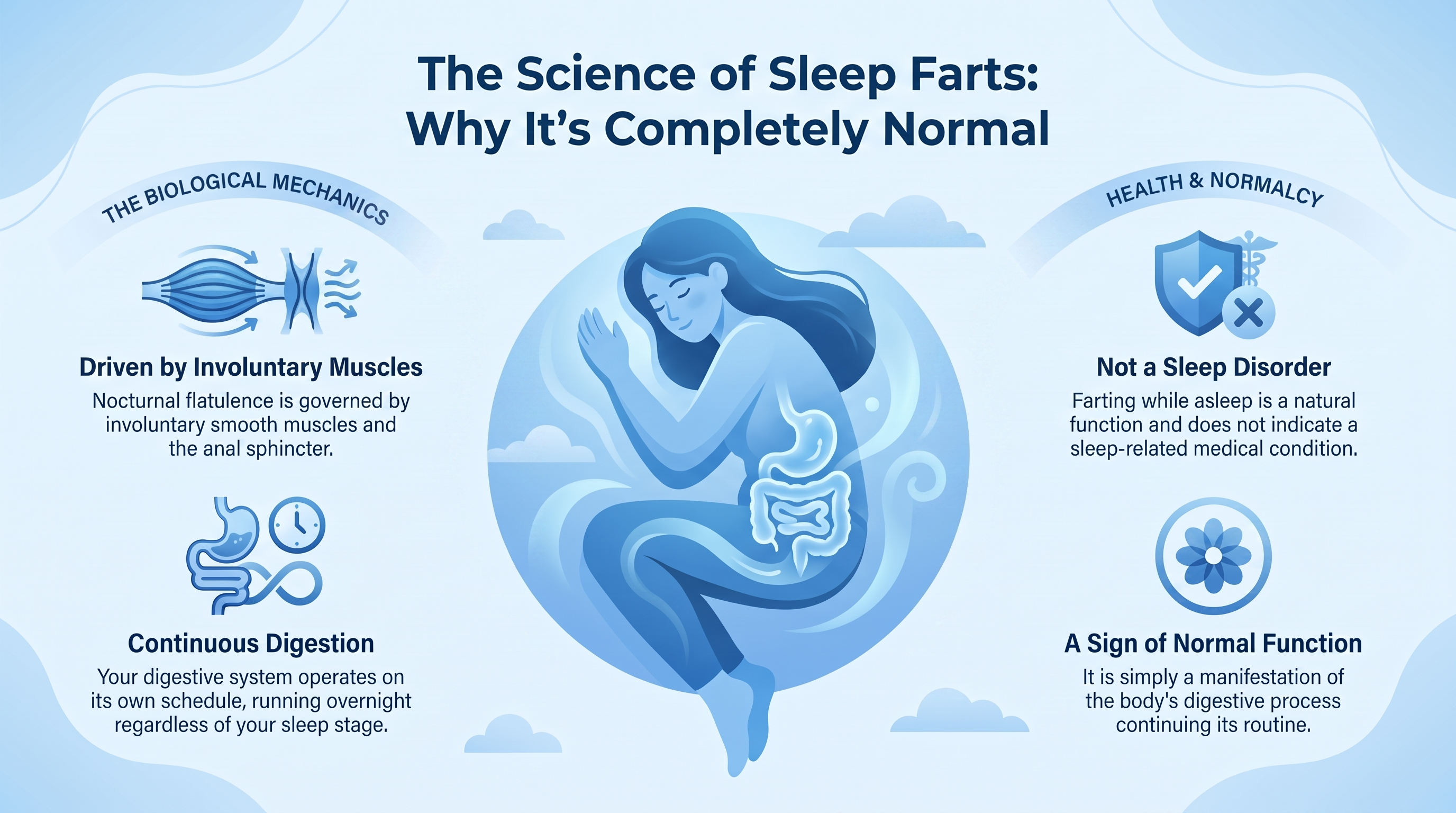
Yes — and unlike sneezing, this one is common and entirely normal. Passing gas is governed by involuntary smooth muscle and the anal sphincter, not the skeletal muscles that go slack under REM atonia. Digestion keeps running overnight regardless of sleep stage, so gas can pass without waking you and without any conscious control involved. It is simply digestion continuing on its own schedule, not a sign of a sleep disorder.
You can wake up mid-cry, or find tears on your face, after an emotionally intense dream — REM sleep is when the brain does much of its emotional memory processing, which is thought to make emotionally charged dreams more common in that stage. Full, sustained sobbing while remaining completely asleep is less common, because it usually involves enough physical activation (breathing changes, movement) to at least briefly rouse you.
Sleep will not stretch you taller overnight, but it plays a real role in growth. Deep sleep — the N3, slow-wave stage — is when the body releases the most growth hormone, and that hormone drives tissue repair and, in children and teens whose growth plates are still open, bone growth. Skimping on deep sleep during childhood and adolescence can mean less of that growth-hormone-driven repair window.
In adults, whose growth plates have closed, consistent sleep will not add height, but the same growth-hormone release still supports tissue repair and recovery. It is one more reason consistent, adequate sleep across the recommended 7 or more hours range matters at every age, not just for children.
This saying is about behavior in the moment of waking, not about dogs having fundamentally different sleep physiology. A dog jolted awake from deep sleep can react defensively before it is fully oriented — startled, disoriented, and quicker to snap — in much the same way a person abruptly shaken out of slow-wave sleep can feel groggy, confused, or irritable (a state often called sleep inertia). The advice is really a caution about the abruptness of forced awakenings from deep sleep, applied to a species that cannot warn you it is startled.
Not from a standing start. Playing vocabulary audio while you are unconscious will not teach you words or grammar you have never encountered before — the brain cannot absorb entirely new information with no waking exposure to it. What sleep does support is consolidation of material you already studied while awake.
During N3 deep sleep, the coupling of cortical slow oscillations, sleep spindles, and hippocampal activity helps move recently learned material — including new vocabulary studied that day — into more durable, longer-term memory. In other words, sleep can help you keep what you studied, but it cannot replace the studying itself.
The brain does not actually switch hearing off during sleep — it filters it. This is sometimes called sensory gating: incoming sound is still processed by the ears and lower auditory pathways, but far less of it reaches conscious awareness, especially during deep N3 sleep, when the threshold needed to trigger an awakening is highest. That filtering is why a smoke alarm or a shouted name can still wake you, while a quiet conversation in the next room usually will not.
Vampires are fictional, so there is no biological study to cite here — but the folklore detail of a nocturnal creature that avoids daylight loosely tracks real circadian biology. The body's master clock, the suprachiasmatic nucleus, is set primarily by light exposure detected through the eyes. Any organism built around avoiding daylight, real or imagined, would effectively be running an inverted circadian rhythm, active when it is dark and dormant when the sun is up — which is exactly the pattern vampire folklore describes.
Most of the phenomena above are harmless quirks of normal sleep physiology. Talk to a doctor if you notice any of the following instead:
For infants, discuss any persistent breathing or sleep concerns with a pediatrician rather than relying on general guidance like this.