Bed bugs are a real nuisance but only a low health danger. They spread no disease to humans. The main risks are itchy bites, the occasional allergic reaction, skin infection from scratching, and lost sleep. They are not deadly, and serious harm is rare.
So, are bed bugs dangerous? For nearly everyone, the honest answer is that they are far more distressing than they are physically harmful. They do not poison you, they do not give you a disease, and they will not kill you. What they do cause — itching, broken sleep, and stress — is real, but it sits at the milder end of the danger scale. To keep this clear, we will use one simple tool throughout: the Bed Bug Risk Ladder, which sorts the possible effects from common and minor up to rare and serious.
Knowing where each risk sits on that ladder is the difference between needless panic and a calm, sensible response. If you are still working out whether bed bugs are even your problem, it helps to first understand what are bed bugs before reading about the risks below.
Do Bed Bugs Bite Dogs
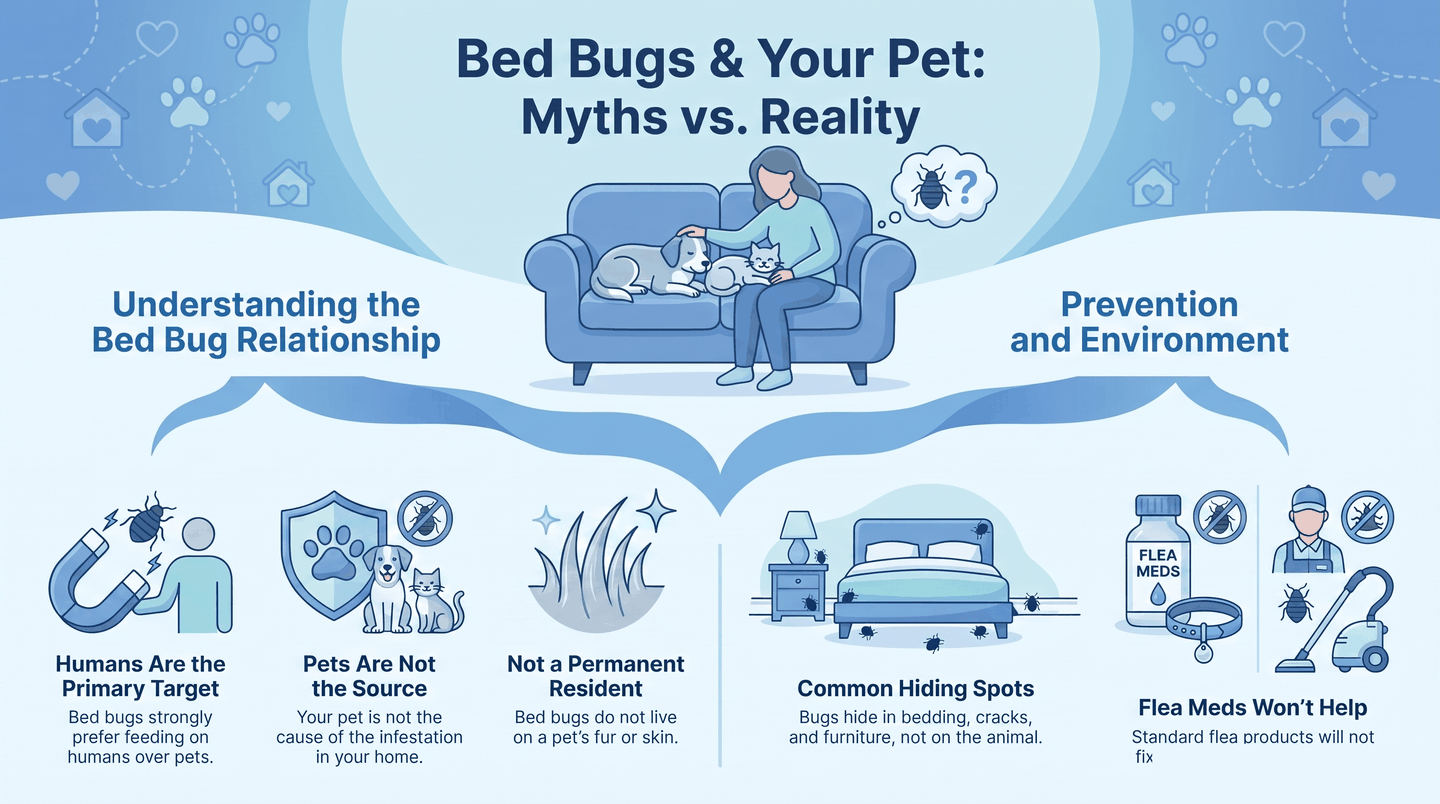
A worry many pet owners share is whether bed bugs bite dogs — and yes, they can. Bed bugs will feed on dogs, cats, and other warm-blooded animals if no person is within reach, but they strongly prefer human blood. Your pet is rarely their first choice.
The important point is that an infestation does not start with your animal. Bed bugs are drawn to body heat and the carbon dioxide a sleeping body gives off, so a person in the room is the bigger target. A pet may pick up a bite, but the bugs came from the surroundings, not the dog.
Bed Bug Dogs (Pets)
When people talk about bed bug dogs, they often mix up two ideas: pets that get bitten, and the trained detection dogs used by professionals. For the household pet, the key fact is reassuring — unlike fleas and ticks, bed bugs do not live on your dog's or cat's body.
- Bed bugs hide in cracks, seams, and bedding — not in fur
- They climb on only to feed, then return to their hiding spot
- Your pet is not the source or the carrier of the infestation
- Treating the animal with flea products will not solve a bed bug problem
So you do not need to fear that your dog is "infested" the way it might be with fleas. The bugs are in the room, and that is where the focus belongs.
Can Bed Bugs Make You Sick
The honest answer to can bed bugs make you sick is: not by giving you an illness, but they can still affect your health in other ways. They do not infect you with anything, yet the bites and the stress they cause are genuine problems for some people.
Here is how the real effects line up, from most to least common:
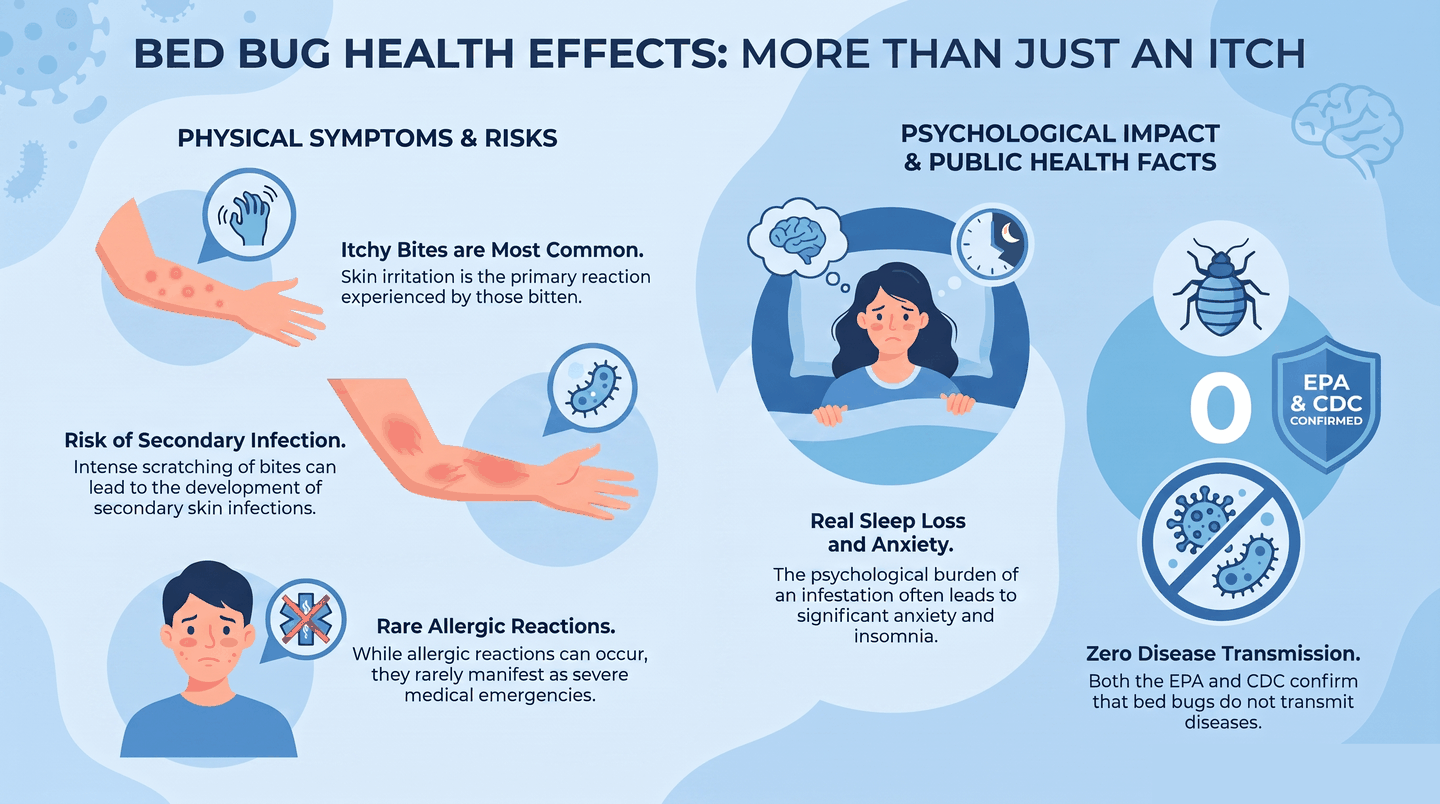
- Itchy bites — the usual reaction, though some people show no marks at all
- Allergic reactions — less common, and only rarely severe
- Secondary infection — when bites are scratched open and bacteria get in
- Sleep loss and anxiety — easy to underestimate but very real
In very heavy, long-running infestations, repeated feeding has in rare cases been associated with anemia, mostly in already vulnerable people such as the elderly or those in poor health. This is uncommon and not what a typical case looks like. If you are trying to tell bites apart from other causes, our guide to bed bug bite symptoms walks through what they usually look like.
Do Bed Bugs Carry Disease
The single most reassuring fact in this whole topic is the answer to do bed bugs carry disease: no. Health agencies including the U.S. EPA and the CDC state that bed bugs are not known to transmit any disease to humans through their bites.
This sets them apart from blood-feeding pests like mosquitoes and ticks, which can pass on pathogens. With bed bugs, the bite itself is the issue — the itch and the body's reaction to it — not any germ being injected. That is why the danger from bed bugs stays low on the ladder for almost everyone.
Are Bed Bugs Contagious
People often ask are bed bugs contagious, and the answer depends on what you mean. In the medical sense — passing an illness from one person to another — they are not contagious at all. You cannot "catch" bed bugs from someone the way you catch a cold.
What they do is spread by travel. A bed bug problem moves from place to place by physically hitchhiking, not by infecting people:
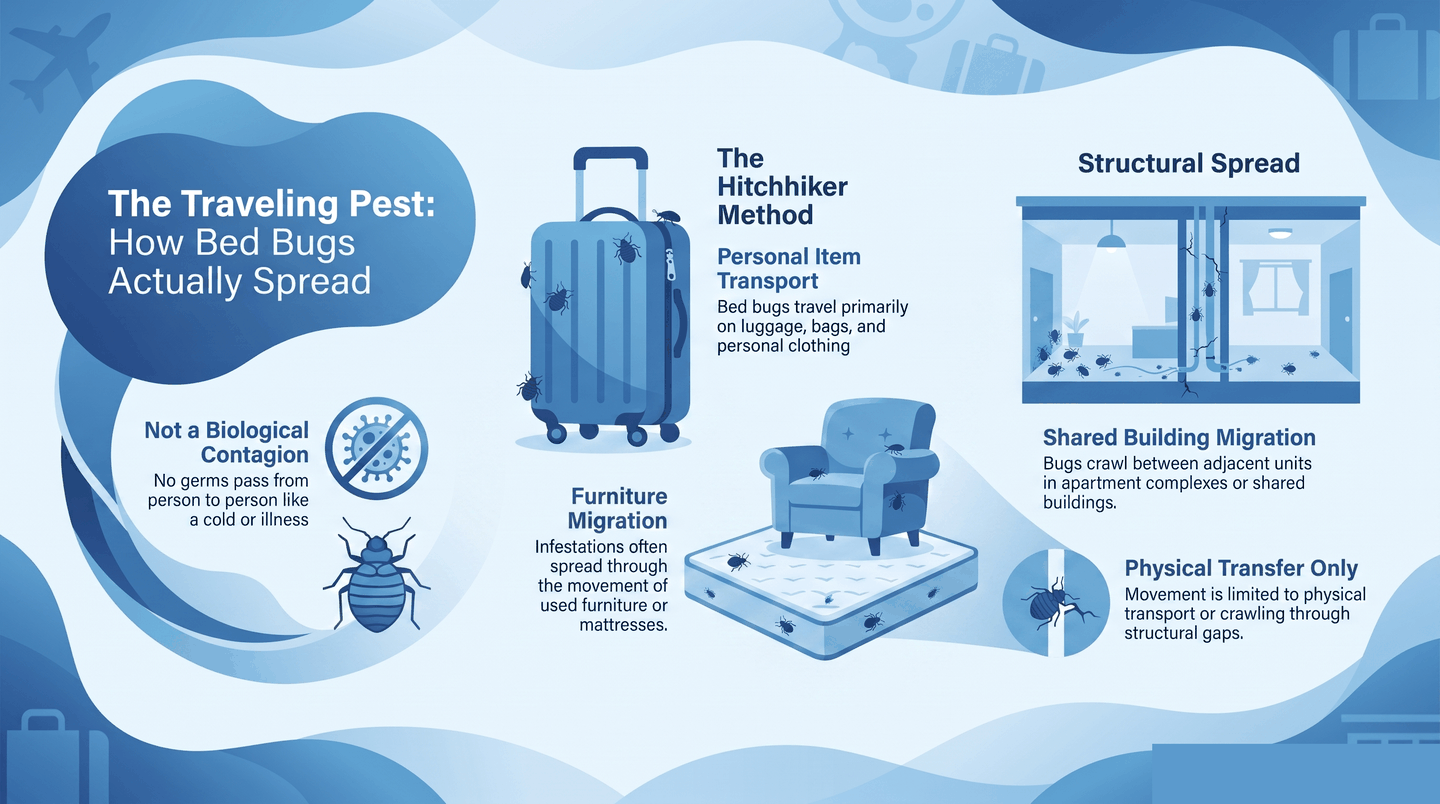
- Riding in on luggage, bags, and clothing
- Hiding in used furniture or mattresses
- Crawling between units in shared buildings
So having bites does not make you a health risk to others, and you are not spreading a germ. You are simply dealing with insects that travel on objects. They cannot fly to a new home either; if you are curious how they actually get around, see can bed bugs fly.
Mental Health & Sleep Effects
The most underrated danger of bed bugs is not on your skin at all — it is the toll on your mental health and sleep. Because the bites happen at night and the bugs are hard to spot, many people lie awake anxious, dreading the next one.
This part of the risk ladder is easy to dismiss but genuinely matters. Disrupted sleep affects mood, focus, and well-being, and the worry can linger even after the bugs are gone.
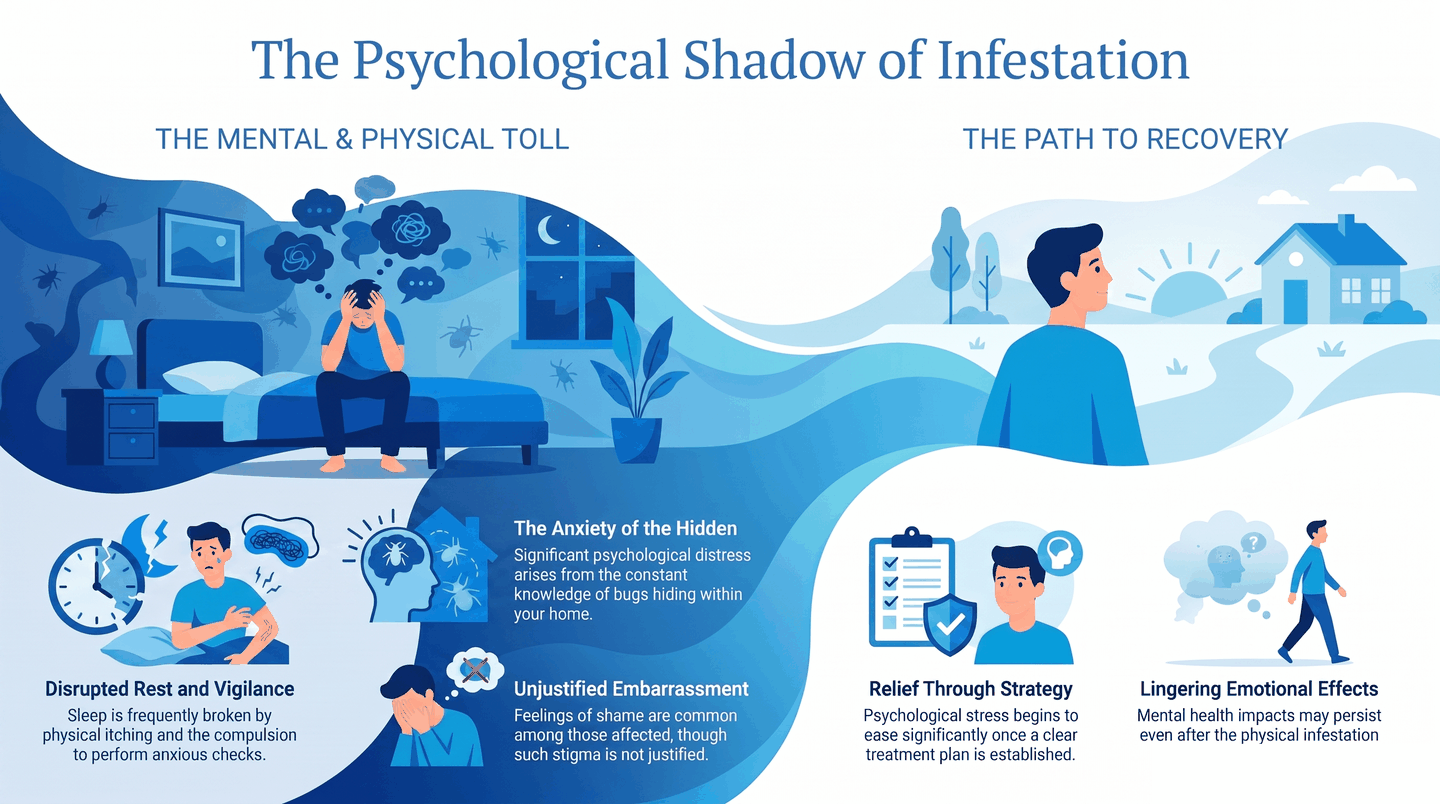
- Sleep loss — checking the bed, waking at every itch
- Anxiety and stress — feeling on edge in your own home
- Embarrassment — needless, since infestations are not about cleanliness
These feelings are normal and they tend to ease once you have a clear plan. The most effective thing for peace of mind is dealing with the bugs directly, which is why many people move straight to how to get rid of bed bugs. If bites are keeping you up, it can also help to confirm what you are seeing against typical bed bug bites.
Most bed bug bites heal on their own and need no treatment. But contact a healthcare professional if you notice any of the following:
- Signs of a skin infection — spreading redness, warmth, pus, or a fever after scratching
- A severe allergic reaction such as trouble breathing, widespread hives, or swelling of the face, lips, or tongue (seek urgent care)
- Bites that are extremely painful, blistering, or not healing
- Lasting anxiety, sleeplessness, or distress affecting daily life
This page is general information, not medical advice. A doctor can assess your situation properly.
Frequently Asked Questions
Sources
- U.S. EPA — Bed bugs and public health (bed bugs are not known to transmit disease to humans).
- CDC — Bed bugs (biology and human impact).
- Virginia Cooperative Extension / Virginia Tech — Bed bug biology and behavior (PDF).