Heat kills bed bugs instantly: 122°F (50°C) destroys bugs and eggs on contact, and sustained cold of 0°F (-18°C) works in about four days. Home remedies like alcohol, bleach, or vinegar only kill bugs they directly soak — they will not end a hidden infestation.
When bed bugs turn up, almost everyone asks the same thing: what kills bed bugs instantly? The honest answer is that heat is the only widely available method that kills both bugs and eggs on contact. Most sprays and home remedies only kill the few bugs they directly touch, while the rest stay hidden in cracks and seams. This guide separates what truly works fast from what just feels productive.
To keep things clear, we use one simple idea throughout: The Three-Tier Kill Test. Every method falls into one of three tiers — instant (kills bugs and eggs fast), contact-only (kills a bug it directly soaks but misses the infestation), or ineffective (no reliable evidence it works at all). Judge any "instant" claim against this test before you trust it.
How to Kill Bed Bugs
If you want to know how to kill bed bugs for good, start with the methods that reach eggs as well as adults. Heat and cold are the two physical methods with the strongest evidence, and both work without spraying chemicals around where you sleep.
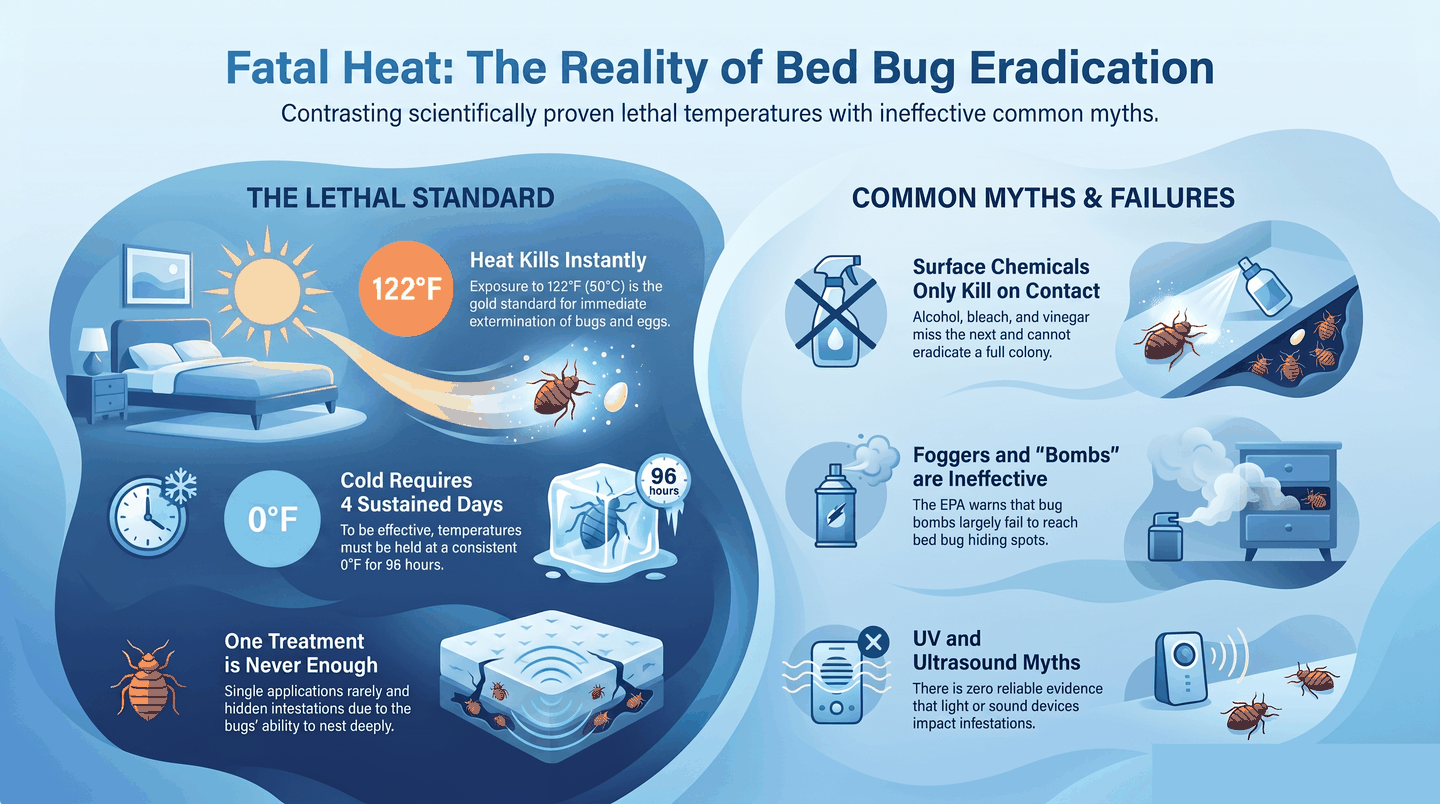
Heat is the standout. According to the U.S. EPA, sustained temperatures around 122°F (50°C) kill bed bugs and their eggs. You can use this at home in two practical ways:
- Wash infested bedding and clothing in hot water, then dry on the hottest setting your fabric allows.
- Run dryable items through a full hot dryer cycle to kill any hidden bugs and eggs.
For whole-room heating, professionals use specialized equipment — see bed bug heat treatment for how that works.
Cold also works, just slowly. Freezing items at 0°F (-18°C) for around four days can kill bed bugs, which makes a freezer useful for small items that cannot be washed. Because heat and home remedies alone rarely reach every hidden bug, most infestations also need targeted products and a repeat plan — see bed bug spray and bed bug treatment for the full approach.
Does Alcohol Kill Bed Bugs?
Does alcohol kill bed bugs? Rubbing alcohol can kill a bed bug it directly soaks, but it is a contact-only method that misses everything hidden away. It evaporates within minutes, leaving no lasting protection, so the bugs and eggs tucked into cracks, seams, and the bed frame survive.
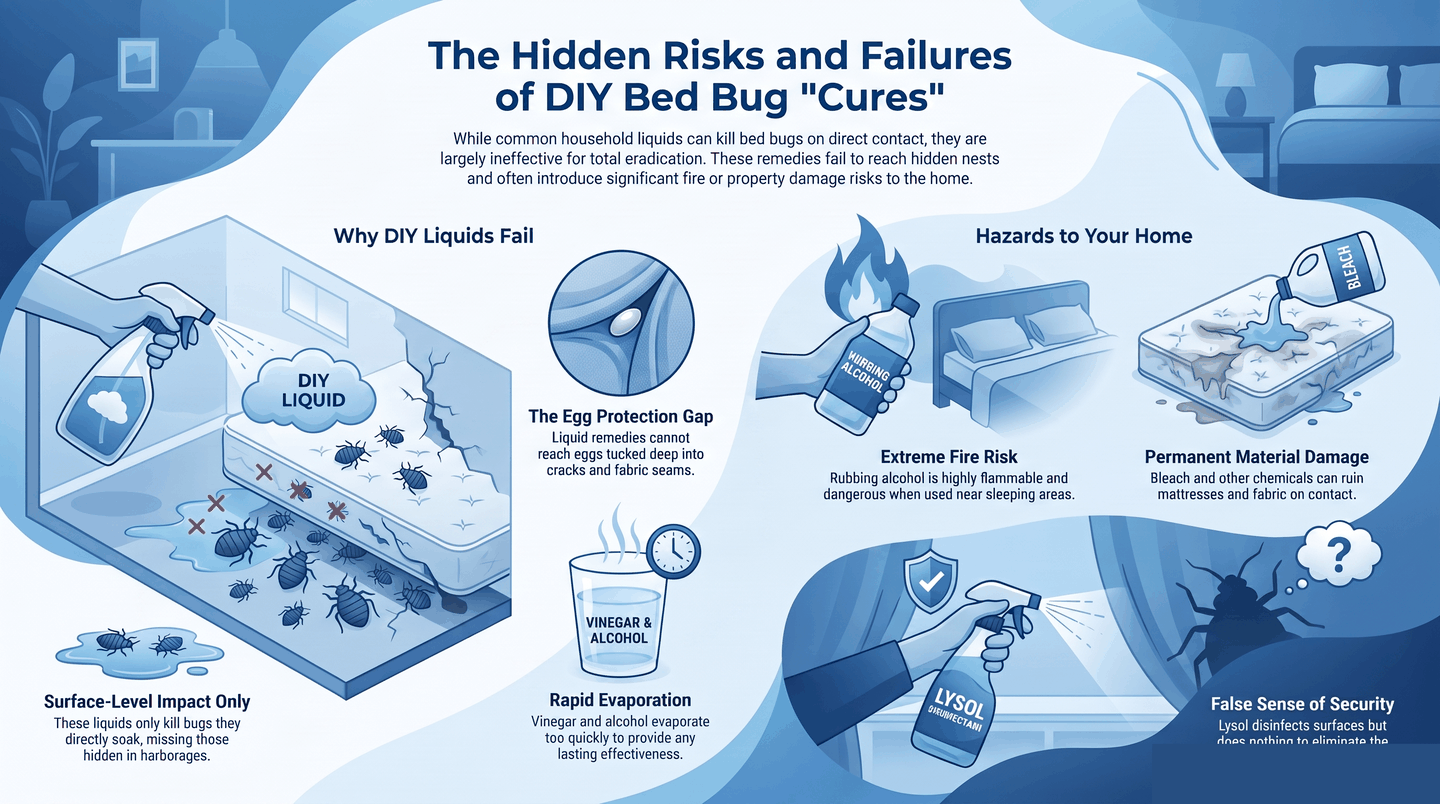
There is a more serious problem: alcohol is highly flammable. Spraying it around a mattress, headboard, or electrical outlets near the bed is a genuine fire hazard, and people have started fires this way. On the Three-Tier Kill Test, alcohol is firmly contact-only — and a risky one at that.
Does Bleach Kill Bed Bugs?
Does bleach kill bed bugs? Bleach may kill a bed bug on direct contact, but like alcohol it only works exactly where it lands. It will not soak into the hidden harborages where most of the infestation lives, so it cannot clear the problem on its own.
Bleach also damages what you spray it on — it stains and weakens mattresses, fabrics, carpet, and finished surfaces, and the fumes are harsh to breathe in a bedroom. There is no reliable evidence that bleach controls a bed bug infestation, so it stays in the contact-only tier and is best avoided around sleeping areas.
Does Lysol Kill Bed Bugs?
Does Lysol kill bed bugs? A disinfectant spray such as Lysol can kill a bed bug if you spray it directly and thoroughly soak the bug, but it is not a bed bug treatment. It is designed to disinfect surfaces, not to penetrate the deep cracks and seams where bed bugs and their eggs hide.
Because it only acts on contact and leaves no meaningful residual effect against bed bugs, Lysol cannot reach the protected eggs that hatch days later. It sits in the contact-only tier: useful for nothing more than the occasional bug you happen to see and spray.
Does Vinegar Kill Bed Bugs?
Does vinegar kill bed bugs? Vinegar is a popular home remedy, and its acidity may kill a bed bug that gets directly drenched. But it is contact-only, harmless to bugs it does not touch, and it evaporates without leaving anything that keeps working.
That makes vinegar one of the weaker "instant" options. It will not reach hidden bugs or eggs, and it does nothing to stop the infestation from rebuilding. If you are searching for a true home remedy that works fast, heat from your washer and dryer is far more effective than any pantry liquid.
Does UV Light Kill Bed Bugs?
Does UV light kill bed bugs? There is no good evidence that UV light kills or repels bed bugs. The same goes for ultrasonic plug-in devices that claim to drive pests away with sound — independent testing has not shown them to work against bed bugs.
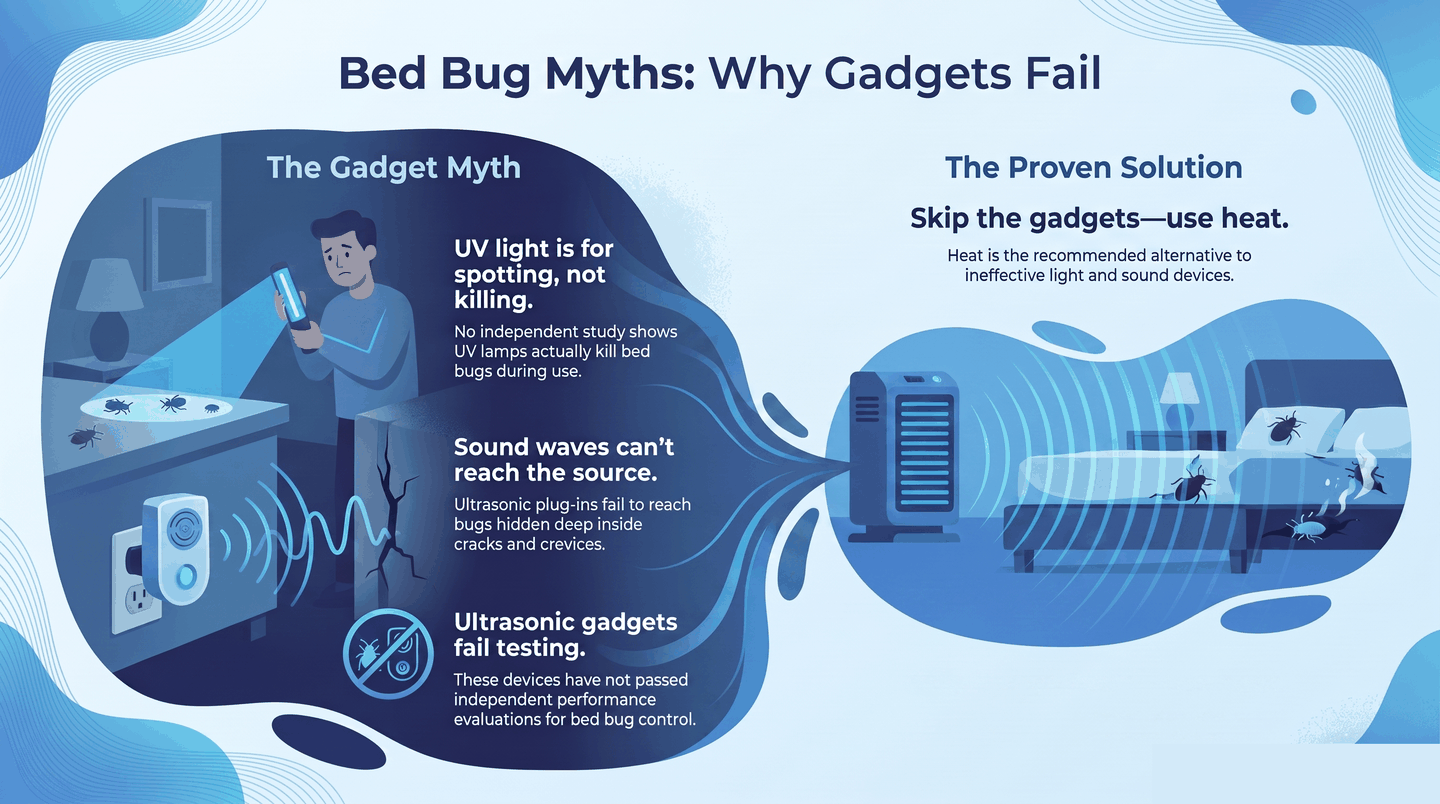
UV lamps do have one minor, legitimate use: they can help you spot bugs and stains during an inspection. But spotting is not killing. Treat any product that promises to zap or repel bed bugs with light or sound as ineffective, and put your effort into methods that actually reach the bugs.
Tea Tree Oil for Bed Bugs
Tea tree oil for bed bugs is another remedy that gets passed around online, usually as a spray or a few drops added to laundry. Like the other household liquids, undiluted tea tree oil may harm a bug it directly coats, but it is a contact-only approach with no reliable evidence that it controls an infestation.
Essential oils also come with their own cautions: they can irritate skin, are not safe to apply to bedding you sleep against without care, and can be toxic to pets. There is no scientific basis for relying on tea tree oil as an instant bed bug killer, so it belongs in the same contact-only-to-ineffective territory as vinegar and alcohol.
What Chemical Kills Bed Bugs and Their Eggs?
So what chemical kills bed bugs and their eggs? There is no single household chemical that instantly wipes out an entire infestation, eggs included. The most reliable egg-killing method is not a chemical at all — it is heat at 122°F (50°C), which destroys both bugs and eggs on contact.
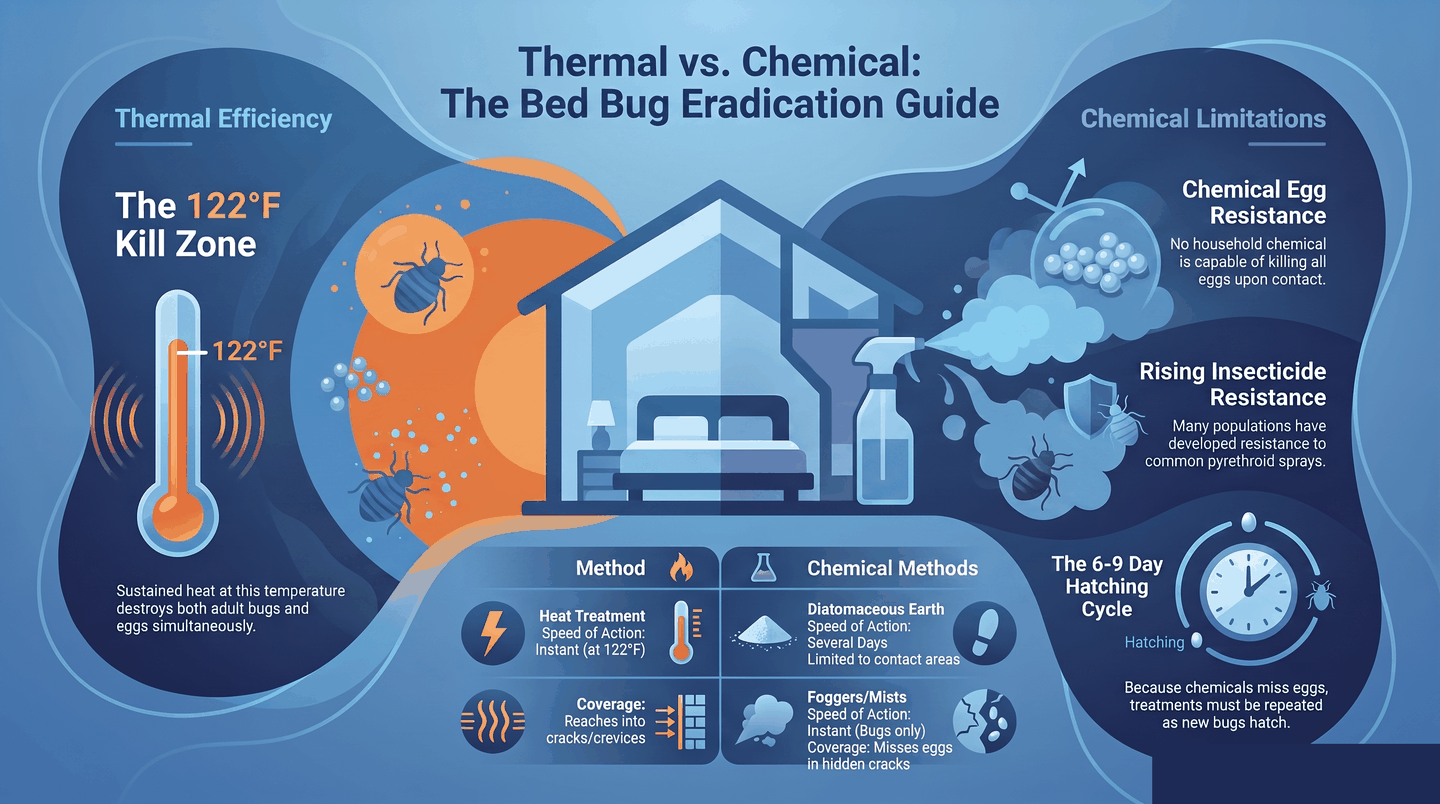
Two important cautions apply to chemicals. First, the EPA reports that foggers and bug bombs are largely ineffective against bed bugs, because the mist does not reach the cracks where they hide — and misusing them can be dangerous. Second, many bed bug populations have become resistant to pyrethroid insecticides, the active ingredients in many over-the-counter sprays, so a product that worked years ago may barely dent today's bugs.
Diatomaceous earth deserves a brief mention here: it is a mechanical dust that damages a bug's outer layer and works over a period of days, not instantly. It is not a quick fix, but it can be a useful part of a wider plan — see diatomaceous earth for bed bugs for how to use it safely. For the eggs specifically, understanding their timing matters; learn more about bed bug eggs.
Even when a method kills on contact, it does not end the problem. Bed bug eggs hatch in about six to nine days, and it takes roughly 37 days for an egg to grow into a breeding adult. A one-time spray or wipe always misses protected eggs that hatch later. Keep these safety points in mind:
- Alcohol is a fire hazard — never spray it around the bed or outlets.
- Bleach, Lysol, and vinegar are contact-only and will not reach hidden bugs or eggs.
- Foggers and bug bombs are largely ineffective against bed bugs (EPA) and can be unsafe.
- One treatment is never enough — you need a repeat plan over several weeks.
Because no instant remedy solves an infestation, build a real plan instead — start with how to get rid of bed bugs.
Frequently Asked Questions
Sources
- U.S. EPA — Do-it-yourself bed bug control (heat at 122°F/50°C kills bugs and eggs; cold at 0°F/-18°C kills over several days; treatment must be repeated).
- U.S. EPA — Should I use a fogger? (foggers and bug bombs are largely ineffective against bed bugs and can be hazardous).
- Virginia Department of Agriculture & Consumer Services / Virginia Tech — Bed bug biology and behavior (egg-to-adult development timing and life cycle).