For most people, the best bed bug treatment medicine is simple over-the-counter care: wash the bites, use 1% hydrocortisone cream or calamine for itch, add a cold compress, and take an oral antihistamine if needed. Most bites clear on their own in one to two weeks.
You wake up with a row of red, itchy bumps and your first thought is, "What do I put on this?" That panic is normal. The good news is that the bites themselves are usually harmless, and the right medicine is already on most drugstore shelves. This guide walks you through what actually helps, what to skip, and when to call a doctor.
A quick note before we start: bites and the bugs are two different problems. Treating your skin soothes the symptoms. To stop new bites, you still need to learn how to get rid of bed bugs at the source. New to all this? Start with the full guide to bed bug bites.
How to Get Rid of Bed Bug Bites
To get rid of bed bug bites, you treat the skin reaction, not the bug itself. The bumps are your body's response to the bite, and they fade once the itching is under control and you stop scratching. Think of it like calming an irritated patch of skin.
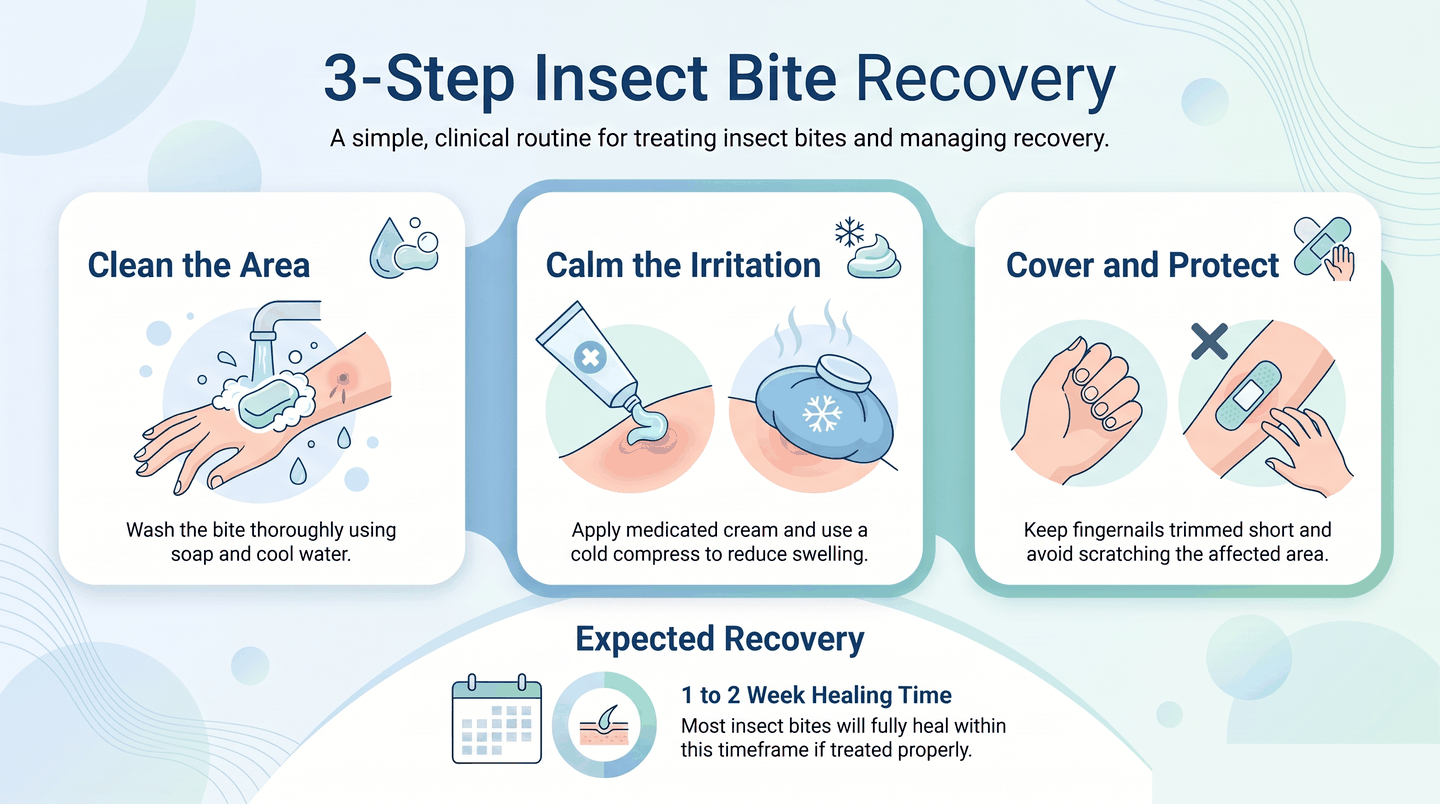
Here is the routine that works for almost everyone. I call it The 3-Step Bite-Relief Routine:
Why this order matters: cleaning first removes germs. Calming second stops the urge to scratch. Protecting third prevents the scarring and infection that scratching causes.
Most bites heal in one to two weeks. If yours look worse instead of better, skip ahead to the self-care section for the warning signs.
Bed Bug Bites Remedy
The most reliable bed bug bites remedy is a small toolkit of cheap, common items you can buy without a prescription. None of them is fancy, and that is the point. Research suggests that simple itch-and-swelling relief is all most healthy adults need.
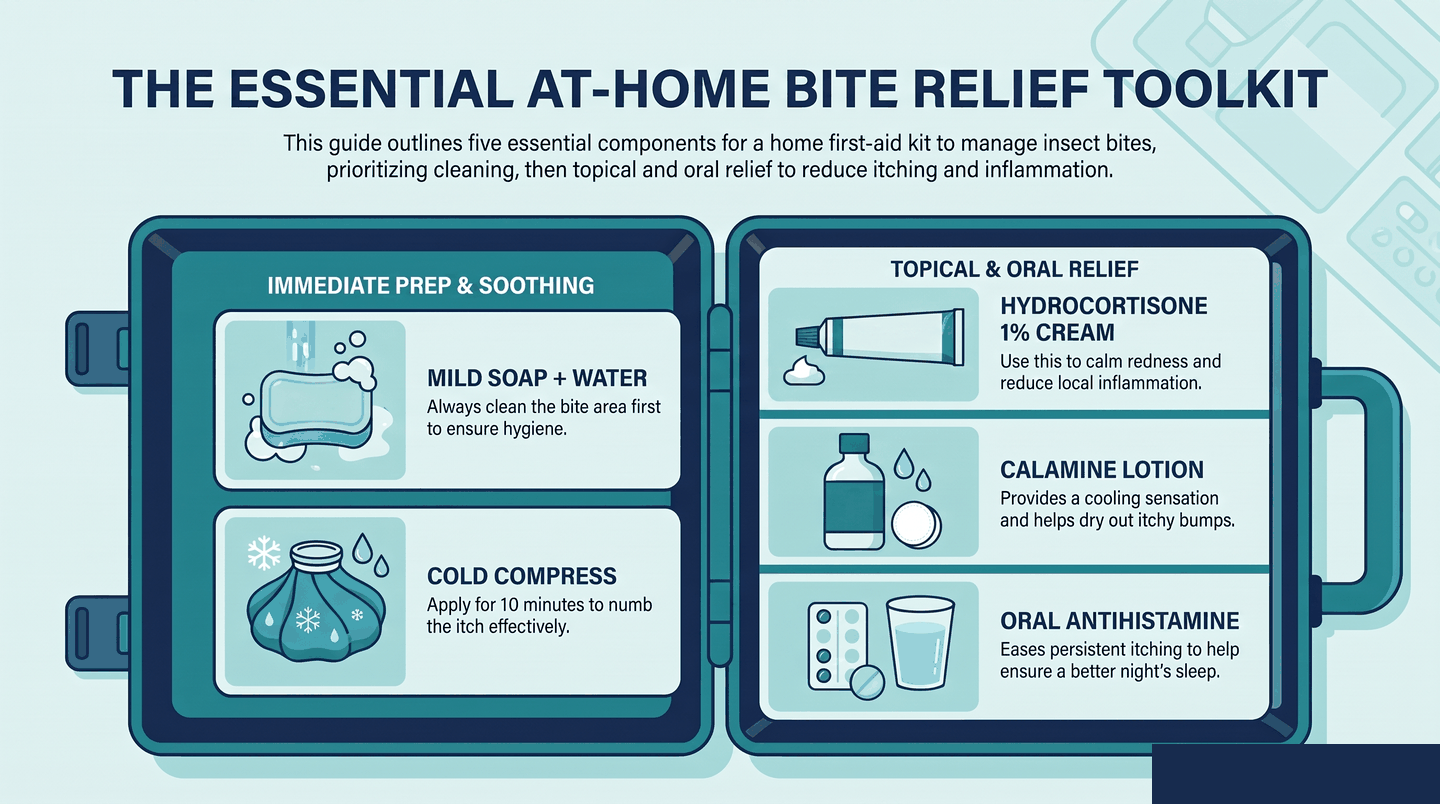
Your at-home toolkit:
- Cold compress — a clean cloth around ice, ten minutes at a time, to numb itch and shrink swelling.
- 1% hydrocortisone cream — a mild anti-itch cream that calms the red, inflamed skin.
- Calamine lotion — a classic soothing lotion that dries and cools the bites.
- Oral antihistamine — an allergy pill that can ease itching from the inside, especially at night.
- Mild soap and water — the first and simplest step.
A few of these are medicines, so treat them as such. Follow the label, do not use more than directed, and ask a pharmacist if you are pregnant, treating a child, or already take other drugs. A pharmacist is free to talk to and happy to help.
Good to know: you do not need all of these at once. Pick one anti-itch option and add a cold compress. That covers most cases.
Anti-Itch Cream for Bed Bug Bites
An anti-itch cream for bed bug bites is usually the first thing people reach for, and for good reason. The itch is the worst part, and the right cream calms it fast. The two go-to choices are hydrocortisone cream and calamine lotion. They work differently, so here is how to pick.
- Best forRed, swollen, inflamed bites
- ActionCalms the skin reaction
- TextureLight cream, soaks in
- NoteIt's a medicine — follow the label, max ~1 week
- Best forPlain itch
- ActionCools and dries the bumps
- TexturePink lotion, sits on top
- NoteVery gentle, low-risk for most people
Either one is fine to start with. If your bites are very red and puffy, the hydrocortisone is often the better pick. If they are mostly just itchy, calamine feels soothing right away. The details for each are below.
Hydrocortisone Cream for Bed Bug Bites
Hydrocortisone cream for bed bug bites is a mild medicine that quiets the inflamed, swollen skin around each bump. "Inflamed" just means red, puffy, and angry-looking. The 1% strength is the everyday version sold over the counter without a prescription.
How to use it:
- Dab a thin layer on each bite, not a thick blob.
- Use it up to a few times a day, following the package label.
- Do not use it on broken or oozing skin.
- Avoid using it for more than a week without asking a pharmacist or doctor.
It is generally not recommended for young children or for use on the face unless a doctor says so. Because it is a medicine, keep it to the directions on the box. If the bites are not calming down after several days, that is your cue to check in with a professional.
Calamine for Bed Bug Bites
Calamine for bed bug bites is the pink lotion many of us remember from childhood, and it still earns its place. It cools the skin and gently dries the itchy bumps, which makes them easier to leave alone. It is very gentle and widely considered safe for most people.
How to use it:
- Shake the bottle, then dab the lotion onto each bite with a cotton ball.
- Let it air-dry into a thin film, then leave it.
- Reapply when the itch comes back.
- Wash it off before bed if it feels flaky or tight.
Calamine soothes but does not bring down swelling the way hydrocortisone can. If your bites are puffy and inflamed, the cream may serve you better. For plain itch, calamine is a calm, low-risk choice.
Bed Bug Bite Self-Care
Good bed bug bite self-care is mostly about patience and not making things worse. The bites will fade on their own. Your job is to manage the itch and protect the skin while you wait. Here are the habits that help the most.
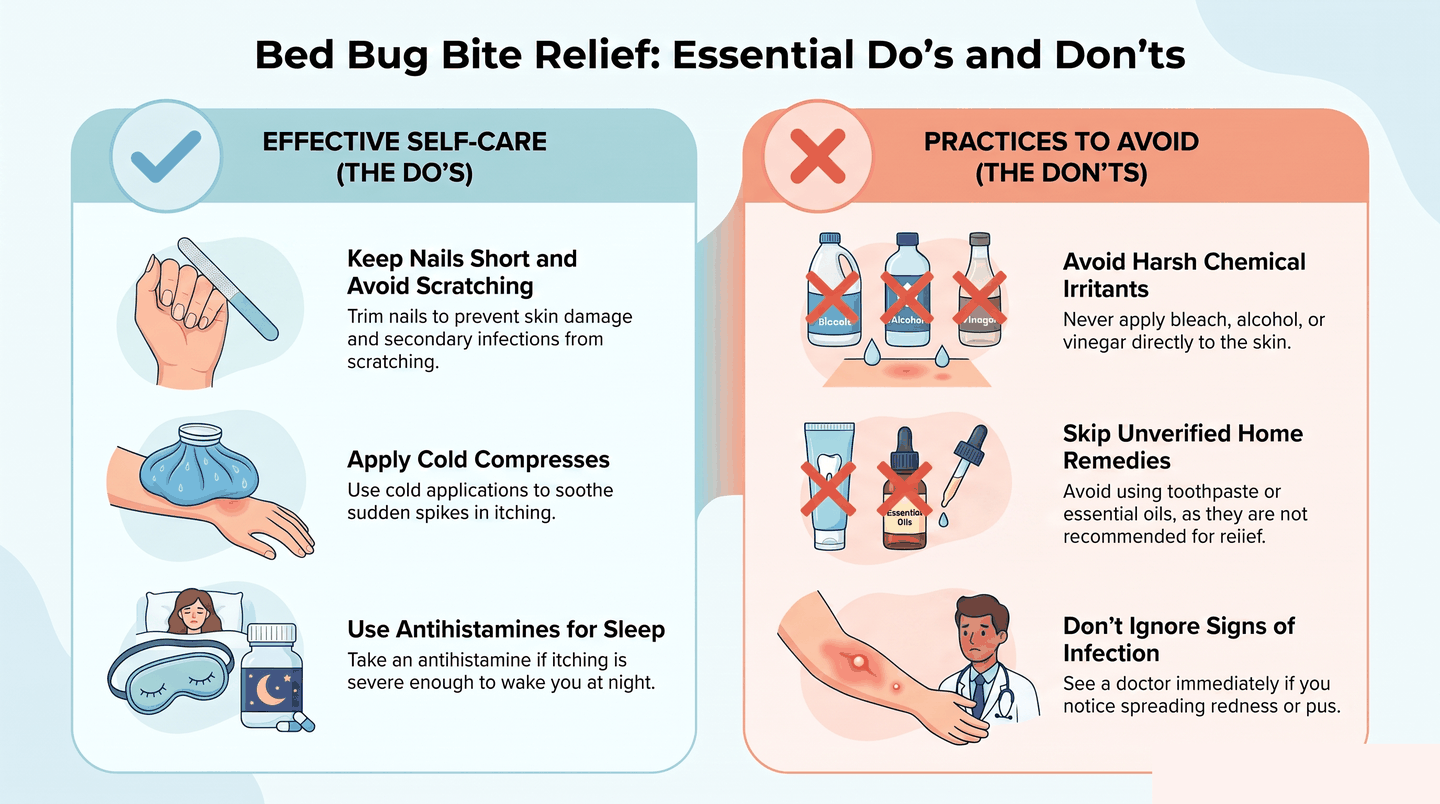
Do these:
- Keep fingernails short so scratching does less damage.
- Use a cold compress when the itch spikes.
- Wear loose clothing over the bites.
- Take an oral antihistamine at night if itching keeps you awake.
One more thing about shame: bed bug bites have nothing to do with how clean you are. Bed bugs hitch rides on luggage and furniture and turn up in spotless homes and five-star hotels alike. You did nothing wrong, and you are far from alone.
- Bleach, alcohol, or vinegar on the skin — these sting, dry out skin, and can cause irritation, not healing.
- Scratching "just once" — it breaks the skin, invites infection, and can leave dark marks.
- Toothpaste or essential oils — old internet tips with no real backing that can irritate sensitive skin.
- Antibiotic ointment by default — only useful if a bite is actually infected, not as a routine itch fix.
- Treating the bites and ignoring the bugs — your skin heals, then you get bitten again. Address both.
If you are not sure whether your spots are even bites, compare them against what bed bug bites look like. Knowing what you are dealing with takes a lot of the fear out of it.
Frequently Asked Questions
Sources
The treatment advice in this guide is based on guidance from these organizations:
- American Academy of Dermatology — How to treat bug bites — dermatologists' advice on washing bites, cooling the skin, easing the itch, and when to see a doctor.
- CDC — Bed Bugs (DPDx) — background on bed bug biology and why the bites are not known to transmit disease.
- EPA — Bed Bugs — how to recognize an infestation and get rid of the bugs at the source.