A bed bug exterminator is a licensed pest professional who finds, treats, and verifies the removal of an infestation, usually with heat, targeted chemicals, or both. Most homes need two or three visits over several weeks, and treatment typically costs a few hundred to a few thousand dollars, depending on size and severity.
You found live bugs, washed everything twice, and they came back anyway. That sinking feeling is normal, and it is not a sign you did anything wrong. Bed bugs hide in places you can't reach and lay eggs that most sprays miss. This is exactly when a professional starts to make sense.
This guide explains how professional removal works, what it should cost, and how to pick a pro you can trust. None of it has anything to do with how clean your home is. Anyone can get bed bugs.
If your infestation is small and brand new, you may still be able to handle it yourself first. Our pillar on how to get rid of bed bugs walks through the DIY route step by step. Come back here when you're ready to bring in help.
Professional Bed Bug Exterminator
A professional bed bug exterminator does three things a spray bottle can't: they inspect every hiding spot, treat the whole room at once, and come back to confirm the bugs are gone. That follow-through is the real difference. One treatment alone rarely ends an infestation.
What a typical job looks like:
- Inspection. They check seams, frames, baseboards, and outlets. Some use trained dogs or monitors.
- Treatment. They apply heat, targeted products, or a mix of both across the room.
- Prep guidance. They tell you what to bag, wash, and move before they arrive.
- Follow-up. They return in one to three weeks to catch newly hatched bugs.
That last visit matters more than people expect. Bed bug eggs can survive a first round, then hatch days later. The return trip is what breaks the cycle.
Why a pro often beats DIY for stubborn cases: a professional treats the whole room as one connected space, not bug by bug. Store sprays hit what you can see and miss the rest. A pro also reads the signs you'd overlook: faint blood spots, shed skins, the tiny dark dots along a seam. That trained eye is half the value.
Pros also tailor the method to your home. A studio apartment, a cluttered bedroom, and a three-floor house each call for a different plan. Part of what you pay for is someone deciding whether heat, chemical, or a mix fits your situation best.
- L — Licensed. Confirm a current state pest-control license.
- I — Insured. Ask for proof of liability insurance, in writing.
- C — Clear plan. Method, number of visits, and timeline up front.
- E — Experience with bed bugs. A specialty, not the same as ants or roaches.
- N — Named warranty. A written guarantee that covers re-treatment if bugs return.
- S — Specific quote. A real inspection comes before a real price, not a phone estimate.
- E — Expectations honest. A trustworthy pro promises follow-up, not a one-day miracle.
If a company fails two or more letters, keep looking. It also helps to ask for references or recent reviews. A good pro explains things plainly and doesn't rush you toward the most expensive option on the spot.
Bed Bug Exterminator Cost
A bed bug exterminator cost usually lands somewhere between a few hundred and a few thousand dollars, and the spread is wide for a reason. You are not paying for one spray. You are paying for inspection, multiple visits, and a method matched to how bad things have gotten.
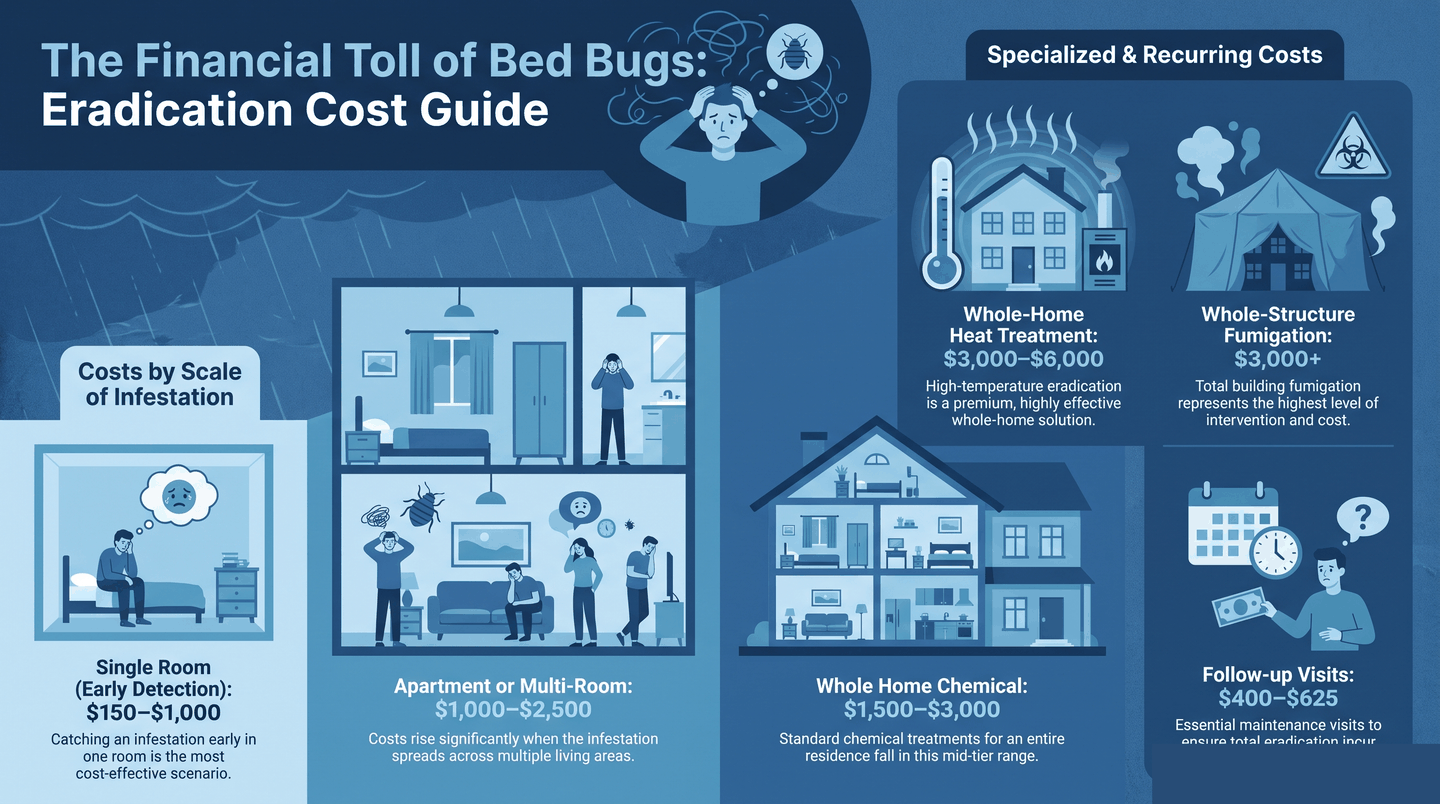
Here is how the numbers tend to break down in the U.S. (2025 figures). They vary a lot by region, severity, and the size of your home.
| Situation | Typical US range |
|---|---|
| Single room, caught early | $150–$1,000 |
| Whole apartment / several rooms | $1,000–$2,500 |
| Whole home (chemical) | $1,500–$3,000 |
| Whole-home heat treatment | $3,000–$6,000 |
| Per follow-up visit | ~$400–$625 |
| Whole-structure fumigation | Several thousand+ |
What pushes the price up or down:
- Size of the treated area. More rooms means more time and product.
- Severity. A heavy, established infestation costs more than a fresh one.
- Method. Heat treatment usually costs more than chemical, because of the equipment.
- Number of visits. Most plans include two or three; more visits add cost.
- Where you live. Labor rates differ a lot between regions.
A reputable company quotes after an in-person inspection, not over the phone. Be cautious with any flat price offered before someone has seen the problem. That said, the cost of waiting is real too. Bed bugs multiply, and a small job left alone becomes a big one.
A word on warranties: many established companies offer a written guarantee. If bugs return within a set window, they re-treat at no extra charge — worth real money, so weigh it against a cheaper quote that has none. Renters should also check who pays. In many states, landlords carry some responsibility for bed bugs in a rental, so ask before you spend.
For the lower-cost end of the spectrum, products and DIY options live in our guides on bed bug treatment and overall bed bug control.
Bed Bug Removal
Bed bug removal is the full process of getting every bug, egg, and nymph out of your home, not just knocking down the ones you can see. That distinction is the whole game. The bugs you spot are a fraction of the population. The eggs are the hard part.
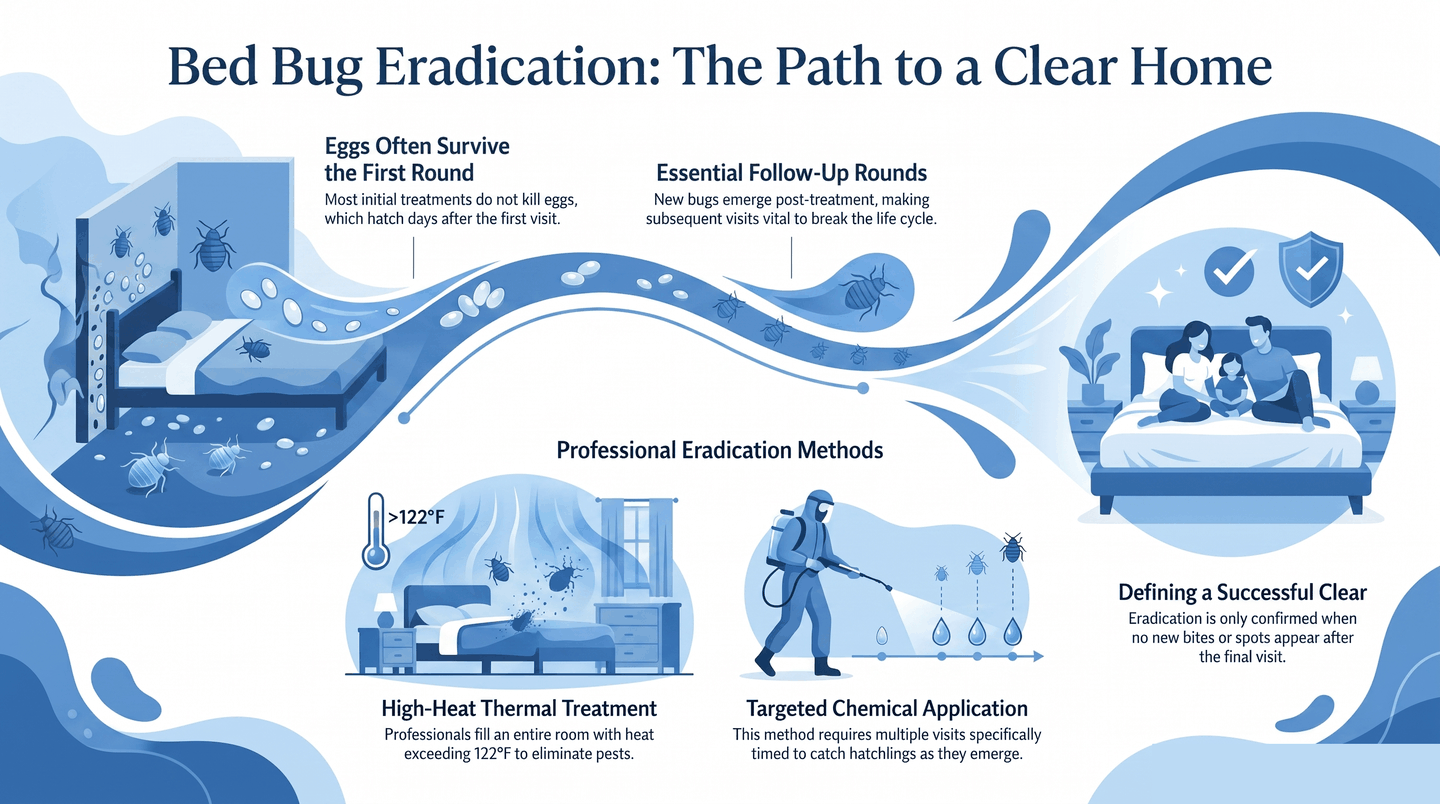
Why removal takes more than one try:
- Eggs are tiny, glued to surfaces, and resist many sprays.
- New bugs hatch days after the first treatment.
- They hide deep in cracks, frames, and walls.
This is why pros plan for repeat visits from the start. Removal is a sequence, not a single event.
The two main professional methods:
- Heat. The room is heated until the temperature is lethal to bugs and eggs. Heat is well-supported as effective when applied correctly, because it reaches hidden spots all at once. Learn more in our guide to bed bug heat treatment.
- Chemical. Targeted products are applied to cracks, seams, and harborage areas, often over several visits to catch newly hatched bugs.
Many pros combine both for stubborn cases. Your job during removal is prep and patience: bag and wash what they tell you, then resist the urge to move things around, which can scatter bugs to new rooms.
You will likely still see a few bugs in the days right after treatment. That alone doesn't mean it failed — the follow-up visit is what confirms whether removal worked. Try not to read every old bite as a failure either; bumps can take days to show up and longer to fade, so watch for new evidence, not the marks that were already there.
How you'll know it actually worked: the real test is the weeks after the last visit. No fresh bites, no new dark spots on the sheets, and nothing caught in monitors placed under the bed legs. If those signs stay clear for a few weeks, the removal held. If new bites appear, tell your pro right away, since that's exactly what a warranty re-treatment is for.
Bed Bug Fumigation
Bed bug fumigation is the heavy-duty option: the whole structure is sealed and filled with a gas that penetrates everywhere bugs hide. It is well-established as effective for severe, whole-building infestations, because the gas reaches places heat and spray can't. It is also the most disruptive and usually the most costly choice.
How fumigation works, in plain terms:
- The building is sealed, often tented.
- A fumigant gas — for bed bugs this is commonly sulfuryl fluoride, sold under the name Vikane — fills the space. It is a restricted-use pesticide applied only by certified professionals.
- The gas reaches deep into walls, furniture, and cracks.
- After treatment, the building is aired out and tested before anyone returns.
Fumigation is usually reserved for the worst cases, or for whole apartment buildings, because of its cost and the need to vacate. For a single room or a typical home, heat or chemical treatment is far more common. If a company pushes fumigation for a small, fresh problem, get a second opinion.
How it compares to the other methods: think of it as the difference in reach. Chemical treatment targets the spots a pro can find. Heat fills one room with lethal temperatures. Fumigation fills an entire sealed structure with gas. Each step up covers more ground, costs more, and disrupts your life more. That's why most homes never need the top tier.
For nearly all readers, the right path is a careful professional using heat or chemical, with proper follow-up. Save fumigation for the cases that genuinely call for it, and lean on your exterminator's honest read of which one fits.
- Choosing on price alone. The cheapest quote often means fewer visits or no warranty. Bugs come back, and you pay twice.
- Expecting one visit to finish it. Eggs hatch after the first treatment. A single visit with no follow-up almost never clears an infestation.
- DIY on a heavy infestation. Store sprays can scatter bugs to new rooms and rarely reach eggs. For an established spread, that delay lets the problem grow.
- Phone quotes without inspection. A real price comes after someone sees the bugs. A firm number sight-unseen is a red flag.
- Skipping prep. If you don't bag, wash, and clear what the pro asks, even a good treatment loses effectiveness.
- Moving infested items to another room. This is how a one-room problem becomes a whole-home one. Bag things in place.
The honest takeaway: professional removal works, but only when it's done in full. Half-measures are what fail, not the methods themselves.
Frequently Asked Questions
Sources
- U.S. EPA — Bed bugs: integrated pest management & control.
- National Pesticide Information Center — Structural fumigation and sulfuryl fluoride fact sheet (Vikane is a registered residential fumigant; restricted-use).
- U.S. EPA — Sulfuryl fluoride ingredient page.
- Cost figures (2025 U.S. market ranges): aggregated from HomeAdvisor, Angi, and Thumbtack bed-bug treatment cost guides.
- Doggett, S. L., et al. (2012). The resurgence of bed bugs in the 21st century. Clinical Microbiology Reviews, 25(1), 164–192.